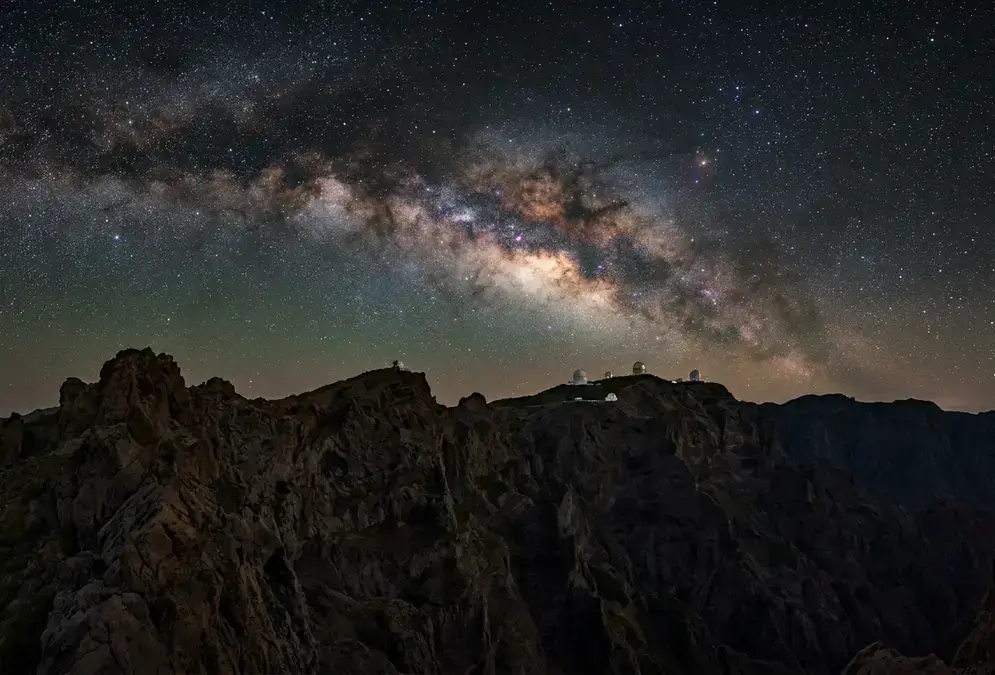
Two nights: one guided session, one independent buffer
If you're pressed for time, two nights is the floor, not a good plan. Roque de los Muchachos Observatory (ORM) is a day-visit-only site[1]: the Instituto de Astrofísica de Canarias runs guided daytime tours of roughly 90-110 minutes, priced around €20 (€15 for La Palma residents or groups), with a minimum age of 6 and reservation required[13], but the gates close after dark and stay closed. That single rule reshapes the whole itinerary question. You can't stack an observatory visit onto an evening session the way some destinations let you; your two nights have to do two separate jobs instead.
Split them like this. Night one is a guided stargazing session, ideally your first evening, so a local guide handles the drive into Garafía or wherever the group meets and you don't waste your one clear-weather shot learning unfamiliar mountain roads in the dark. Night two is independent observation, your buffer against whatever went wrong the first night, whether that's a cloud bank rolling in off the Atlantic or a telescope that wouldn't cooperate. La Palma's guided-tour market is smaller and newer than Tenerife's, so book that first night several days ahead rather than assuming you can walk up.
The honest catch: two nights gives you zero room for moon phase or a calima dust event. If your dates land within a few days of full moon, or you're travelling in December or February when Saharan dust risk peaks, a two-night trip can simply fail to deliver, and there's no third night left to recover it. Treat two nights as a genuine gamble you take because your schedule forces it, not because it's the ideal way to see La Palma stargazing.
Three nights: La Palma's stargazing sweet spot
Three nights is where the odds turn genuinely favorable, and where the trip stops feeling like a bet. The Isaac Newton Group, which co-runs the observatory, logs roughly 70% of nights as clear at Roque de los Muchachos across a full year, with about 60% classified as fully photometric[2], numbers that hold up against Mauna Kea and Chile's Atacama. Stack three nights together and even a single evening lost to cloud or calima still leaves you two genuine chances.
The rhythm that works:
- Night one: arrival, the drive into Garafía or your chosen base, and orientation, not your best shot, just getting settled
- Night two: your main session, ideally paired with the daytime ORM visit that same day so you see the Gran Telescopio Canarias' 10.4-metre mirror[3] up close before dark
- Night three: the backup, or, if night two delivered, a second look from a different spot in Garafía
70%
Three nights also buys you something Tenerife's much busier stargazing scene can't offer at any length: real quiet. La Palma's population sits around 84,000 across the whole island, against Tenerife's roughly 964,000[4], and that gap shows up directly in how empty the mountain roads and viewpoints are after dark, even in August. You're not fighting for space at a pull-off; you're mostly just alone with the sky.
Five nights: pairing the sky with the Caldera and the Tajogaite volcano
Five nights is where a La Palma trip stops being only about the sky. Where Tenerife's five-night version revolves around cable-car timing and a Pico del Teide summit permit, La Palma's extra two nights go toward two daytime experiences the island does better than almost anywhere else in the Canaries: hiking Caldera de Taburiente, and walking the 2021 Tajogaite eruption's lava field.
The Caldera de Taburiente National Park is worth a full day on its own: an eroded volcanic amphitheatre of cliffs and laurel-and-pine forest, with trails long enough that you shouldn't try to squeeze it in around an evening session. Budget the whole daylight block for it, then plan your stargazing for that same night rather than splitting the day further.
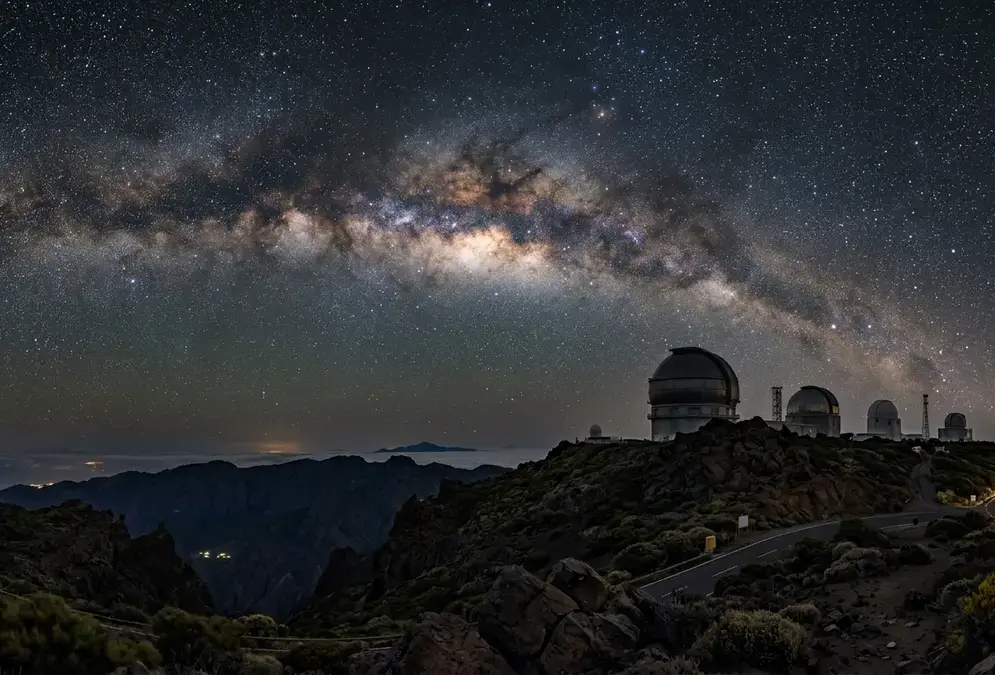
Featured · Destination
La Palma Stargazing
La Palma stargazing guide: the world's first Starlight Reserve since 2012, Bortle 1-2 skies above Roque de los Muchachos, plus where to stay and go year-round.
The Tajogaite route needs a separate booking again: a roughly 5 km moderate walk across the black lava field, open only to authorized guided treks because the ground still vents CO2 and parts of it remain genuinely unstable, priced around €35-50 per person[5]. That eruption ran 85 days, from 19 September to 13 December 2021, destroying more than 3,000 buildings in the Aridane valley[6]. No single ticket covers both the volcano trek and an evening sky session either: you book a separate stargazing evening (roughly €35-49 per person)[7] and pair the two yourself, using the La Palma Volcano & Stars Day as the template for how the timing actually works.
Five nights lets you add:
- A full day inside Caldera de Taburiente, with the evening free for independent stargazing
- A volcano-and-stars day: walking Tajogaite's lava field by afternoon, a guided sky session that same evening
- A genuine spare night, so a bad-weather day doesn't cost you the volcano trek, the Caldera hike, or your main observing session
That spare night matters more here than on a pure stargazing trip. Losing a day to rain or calima on a three-night trip means losing your buffer entirely; on five nights, you can shuffle the volcano day and the Caldera hike around the weather and still get a dedicated dark-sky night in whatever's left.
The moon decides more than the calendar
Season and trip length decide which nights are available. The moon decides whether you can actually see anything once you're there. A lunar synodic cycle runs about 29.5 days from new moon to new moon, and the genuinely dark window inside it is roughly five nights either side of new moon. Land three nights inside that window and you'll see Milky Way structure a full-moon week simply won't show you, regardless of how many nights you've booked.
Book your La Palma dates around the new-moon calendar first, then decide how many nights to spend inside that window. The same three- or five-night trip mapped onto a full-moon week wastes La Palma's Bortle 1-2 sky almost entirely; the galactic core washes into a pale smear and the dust lanes that make this island's sky worth the flight disappear.
Calima adds a second layer worth checking before you lock dates. Saharan dust risk on La Palma peaks in December, which averages roughly 17 days of calima conditions in that month alone, and in February; the safest months, by the same model, are March and May[8]. Pack for the cold regardless of when you land: AEMET's own weather station at the observatory has recorded a coldest monthly average of 2.6°C and a record low of -4.1°C, against a warmest monthly average of 21.3°C[9]. None of that changes the moon math above; it just decides how many layers you're wearing while you wait for your eyes to adjust.
For the full month-by-month breakdown of calima risk, temperature, and Milky Way visibility, the best time to stargaze in La Palma covers each month in depth.
Read next · Article
Best Time for Stargazing in La Palma
La Palma stargazing peaks May-September, but real AEMET data shows calima risk spikes in December and February, not January. Month-by-month planning inside.
Getting there, getting around, and where the nights actually happen
La Palma Airport (SPC) sits about 8 km south of Santa Cruz de La Palma[10], with most routes connecting through Tenerife or Gran Canaria and a handful of seasonal direct flights from mainland Spain and a few European cities. Fred Olsen Express and Naviera Armas also run a ferry from Los Cristianos on Tenerife's south coast, a genuine option if you want to bring a rental car across, though flying is faster for a dedicated trip.
A rental car isn't optional. There's no meaningful public transport once you leave Santa Cruz de la Palma or Los Llanos de Aridane, and the road up toward the observatory climbs high into the mountains on switchbacks that take longer to drive than the map distance suggests. Fuel up before you leave the coast; stations thin out fast above the main towns.
Where you sleep decides how much of the night you actually use. Garafía, on the remote north side, is the island's darkest, least populated municipality, and this restored Garafía rural house is the strongest current base there: a restored rural house at 1,042 metres, inside the altitude band where the Atlantic cloud layer typically breaks up, running from roughly €31 per person per night with an early 10/10 guest score[11]. If you're travelling as a group of four or more, Casa Rural Los Barranquitos, in the same municipality with a stated 40-to-60-minute drive to the observatory, works out cheaper per person at €86 a night for the whole house[12]. For a full ranked comparison across five properties, see Best Places to Stay on La Palma for Stargazing.
One reassurance worth repeating for anyone still hesitant: the 2021 eruption affected the Aridane valley on the island's west side. It doesn't overlap with the Roque de los Muchachos or Caldera de Taburiente stargazing area on the opposite side of the island, so it has no bearing on where or how you plan your nights.
Match your trip length to your goal: a decision framework
The table below compresses everything above into a single reference. Find your situation on the left, then read across for the trip length, priority, and moon strategy that fits it.
| Trip length | Best for | Night breakdown | Moon flexibility |
|---|---|---|---|
| 2 nights | Quick add-on to another trip | 1 guided + 1 independent | None: must pick new moon |
| 3 nights | First dedicated stargazing trip | Arrival, main session, backup | Low: dark window essential |
| 5 nights | Stargazing plus Caldera and Tajogaite volcano | Caldera day, volcano-and-stars day, main night, spare night | Moderate: spans most of dark window |
| 7+ nights | Slower island trip, stargazing as one part | Flexible, absorbs weather and moon | High: can ride out a full moon |
- Quick stop, already on the island for other reasons: two nights, one guided and one independent, timed as close to new moon as your schedule allows. Accept the gamble; there's no backup night if calima or cloud shows up.
- First dedicated stargazing trip: three nights, built around the arrival-orient, main-session, backup rhythm, ideally May through September when the trade-wind cloud layer sits lowest.
- Combining stargazing with the Caldera and the volcano: five nights, splitting the stay across a Caldera de Taburiente hiking day, a Tajogaite volcano-and-stars day, one main observing night, and one true spare night for weather.
- A slower island trip with stargazing as one part of it: seven-plus nights, which absorbs a full-moon week or a multi-day calima event without derailing anything else on the itinerary.
Whichever length you land on, book your dates around the new-moon calendar first. A longer trip on a full-moon week still under-delivers next to a shorter one timed properly.