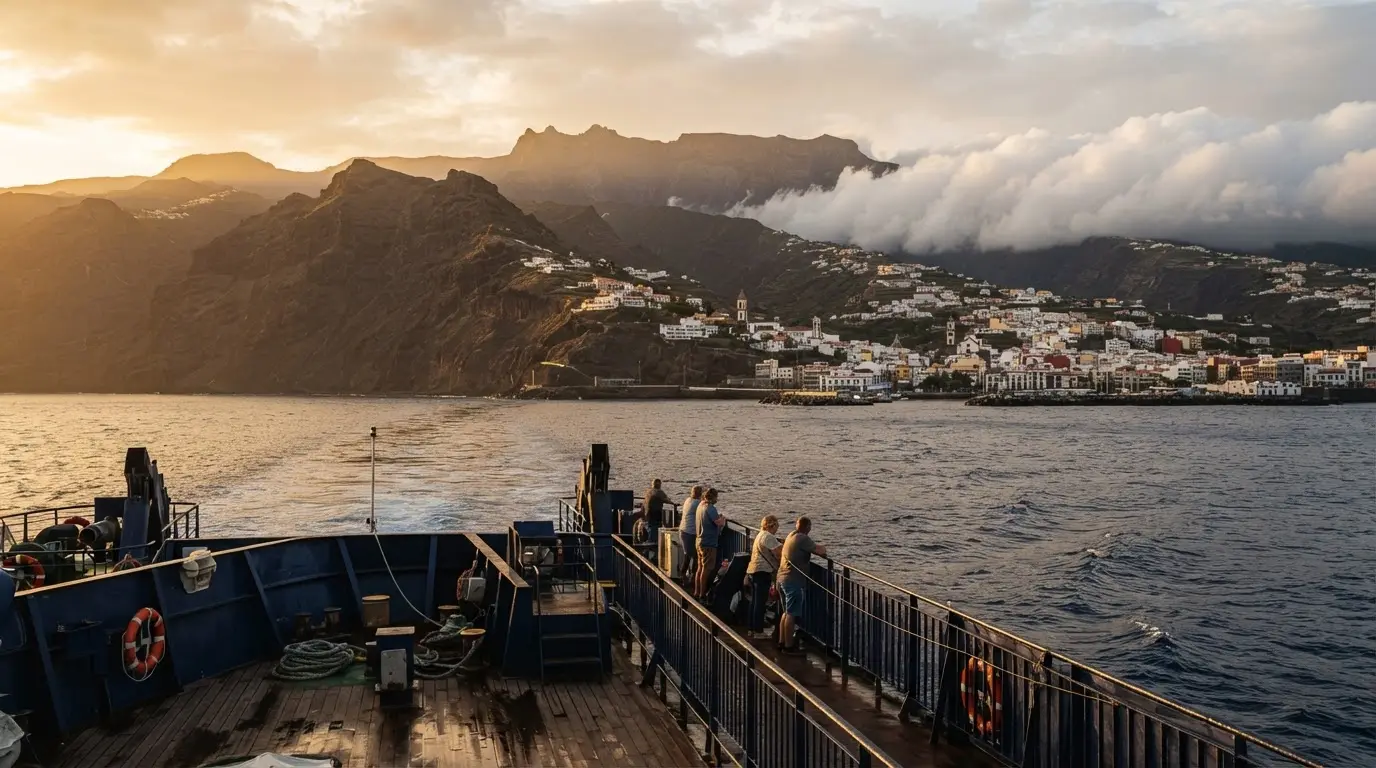

The simple answer: no, a day trip doesn't work
Featured · Destination
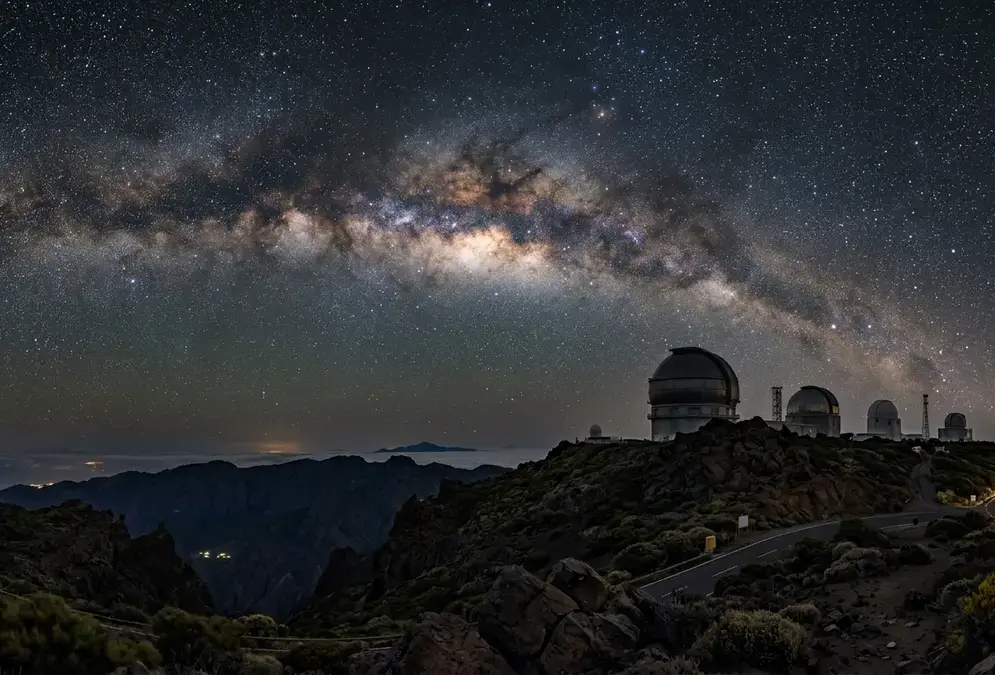
La Palma Stargazing
La Palma stargazing guide: the world's first Starlight Reserve since 2012, Bortle 1-2 skies above Roque de los Muchachos, plus where to stay and go year-round.
The ferry math: 5 to 6.5 hours at sea
7-8 hours
The flight math: faster in the air, still tight on the ground
Why the ORM day-visit window and stargazing don't overlap
The tours run during daylight hours only. The gates close after dark because vehicle headlights and stray illumination would disrupt live observation runs on working research telescopes[1]. That single rule creates a timing problem no day-tripper can solve:
- The last day tour typically finishes by late afternoon, around 16:00 to 17:00
- You need to be off the summit road before the gate closes at nightfall
- Astronomical twilight, the moment the sky is genuinely dark enough for meaningful stargazing, arrives roughly 2.5 to 3 hours after sunset
- On a summer evening, that means the sky isn't properly dark until 22:30 or later
- There is a 5 to 6 hour gap between the end of a day tour and the start of usable darkness
| Timing element | Day trip reality | Overnight trip |
|---|---|---|
| ORM day tour finishes | 16:00-17:00, same as anyone else | 16:00-17:00, then you rest |
| Astronomical twilight (summer) | 22:30 — you're already gone | 22:30 — you're outside waiting |
| Return transport | Ferry or flight departs before dark | No pressure, tomorrow morning |
| Actual stargazing time | Zero usable hours | 2-4 hours of Bortle 1-2 sky |
Recommended tours
Tours are selected for quality, not commission. I earn a small fee if you book — at no extra cost to you.


What you'd actually see (and miss) on a day trip
Calling it a stargazing trip when you don't stay for the stars is like calling a vineyard tour a wine tasting and leaving before the bottle is opened.
Here is what a day-tripper genuinely misses:
- Milky Way core visibility: from La Palma's Bortle 1-2 sky, the galactic core is visible to the naked eye, with dust lanes and structure your eye resolves without optical aid. The core is up and photogenic from March through October, but only after astronomical twilight.
- Dark adaptation: your eyes need 20 to 30 minutes of darkness to reach useful night vision, longer for full scotopic sensitivity. The kind of observing where you can pick out faint deep-sky objects through a telescope doesn't start until you've been in the dark for half an hour or more.
- The quiet: Garafía after midnight, with no traffic, no coach parties, no one else at the pull-off except maybe one other tripod. A day tripper never gets to stand in that silence, because by the time it descends, they've already left.
- Any telescope time at all: guided stargazing sessions, whether you book one or self-guide, need darkness. A day trip gives you exactly zero minutes of usable telescope sky.
The alternative: turn it into an overnight
Featured · Article
Uluru Cultural Significance and Visitor Etiquette
Uluru is Anangu land under joint management. Here's why the 2019 climb closure is settled policy, what you can't photograph, and real visitor etiquette.