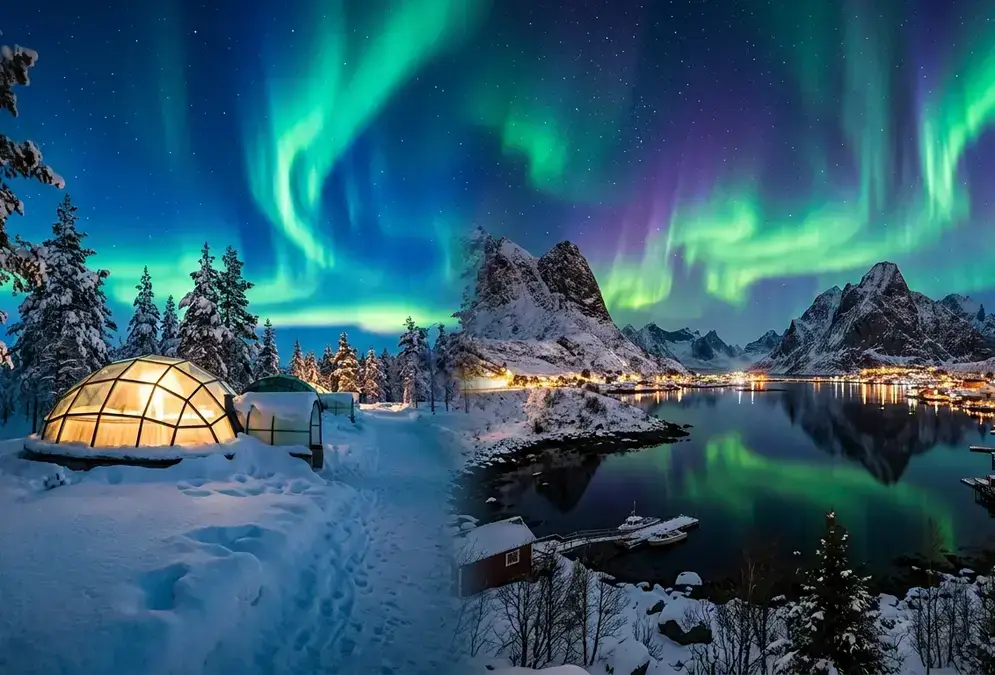

Two Different Climates: Continental Cold vs Coastal Fjords
Lapland and Norway's aurora zones share similar latitudes, but they run on opposite weather systems. Finland's Lapland region is largely inland, with a dry continental climate where places like Saariselkä and Ivalo often see more stable, clearer winter skies; coastal Norway, warmed by the Gulf Stream, runs milder on the thermometer, typically 0°F to −14°F (roughly −18°C to −10°C), but pays for that warmth in cloud cover, more rain and snow showers rolling in off the Atlantic than Lapland ever sees[1].
Lapland's own cold is the trade you're making for those clearer skies. Winter temperatures range from around −20°C during the Christmas stretch to −30°C, with the coldest snaps of January and February reaching −45°C to −50°C[2]. September–October and February–March run considerably milder, closer to −10°C to −20°C, without giving up much aurora activity. Lapland's December–January stretch is its kaamos, the polar night, when the sun doesn't rise above the horizon at all.
Neither system is a trap; they're just different bargains. Lapland asks you to dress for real cold in exchange for a more predictable clear night. Norway asks you to accept more cloud-cover roulette in exchange for milder days and dramatic fjord scenery.
Aurora Odds: Raw Latitude vs Clear Skies
Position matters, and Tromsø has a real edge on paper. The city sits directly beneath the auroral oval, the ring of peak geomagnetic activity, which puts more raw activity in the sky overhead on a given night than farther-south Lapland ever sees. If sheer probability of activity overhead is all you're measuring, Norway's coastal position wins.
But activity overhead only matters if you can actually see it, and this is where Lapland's own numbers pull ahead. Finland's inland Lapland, especially Saariselkä and Ivalo, reports roughly 200 aurora nights a year[1], often under clearer skies than the Norwegian coast manages. The same Gulf Stream that keeps Tromsø's temperatures milder also keeps its cloud cover thicker and more persistent, so a high-activity night wasted under solid cloud delivers nothing, while a modest night under a genuinely clear Lapland sky can outperform it.
The honest summary: Norway sits closer to the oval's core and offers more theoretical activity overhead; Lapland converts more of what's actually up there into a display you can see, which is why its own frequency numbers hold up so well against Norway's raw activity edge. For a full breakdown of Tromsø's own viewing spots and logistics, the Northern Lights in Tromsø destination guide covers the city in more depth.
~200 nights/year
What a Week Costs: Tours, Stays, and Activities
Cost is one of the clearer differentiators here, and it splits cleanly by category. Aurora tours in Finland tend to run cheaper than comparable tours out of Tromsø, for what is, on a given clear night, the same phenomenon. Accommodation and dining follow the same pattern: Finland runs meaningfully more budget-friendly across nearly every category, while Norway's coastal cities carry premium pricing that shows up hardest at restaurant tables.
| What you're paying for | Finnish Lapland | Norway |
|---|---|---|
| Aurora tour (per person) | Generally cheaper | Generally pricier |
| Standard hotel | Generally budget-friendly | Premium, especially coastal cities |
| Glass igloo / aurora lodge | Upper-budget bracket | Upper-budget bracket, comparable |
| Dining | 30–50% cheaper on average | Coastal premium pricing |
Where the gap narrows is glamour accommodation. Lapland's glass igloos, Kakslauttanen chief among them, and Norway's own fjord cabins and aurora-view lodges both fall in the same upper-budget bracket once you're paying for a dedicated aurora-view stay; check current listings before assuming either country is automatically cheaper at that tier.
Beyond the Aurora: Santa Village, Huskies, and Fjord Adventures
Take the aurora out of the itinerary and the two trips barely resemble each other. Lapland packages the northern lights around a genuinely family-oriented identity: Santa Claus Village sits directly on the Arctic Circle line just outside Rovaniemi, a year-round draw that pulls multi-generational groups onto an aurora trip in a way Norway's adventure-first branding rarely does[3]. Beyond Santa Village:
- Husky and reindeer sledding, available at every base, with the reindeer sleigh doubling as a slower, more traditional Sámi-culture experience
- Snowmobiling across extensive wilderness routes, often paired directly with the aurora hunt itself
- Ski resorts at Levi, Ylläs, and Pyhä, adding a genuine winter-sports layer alongside the nighttime hunt
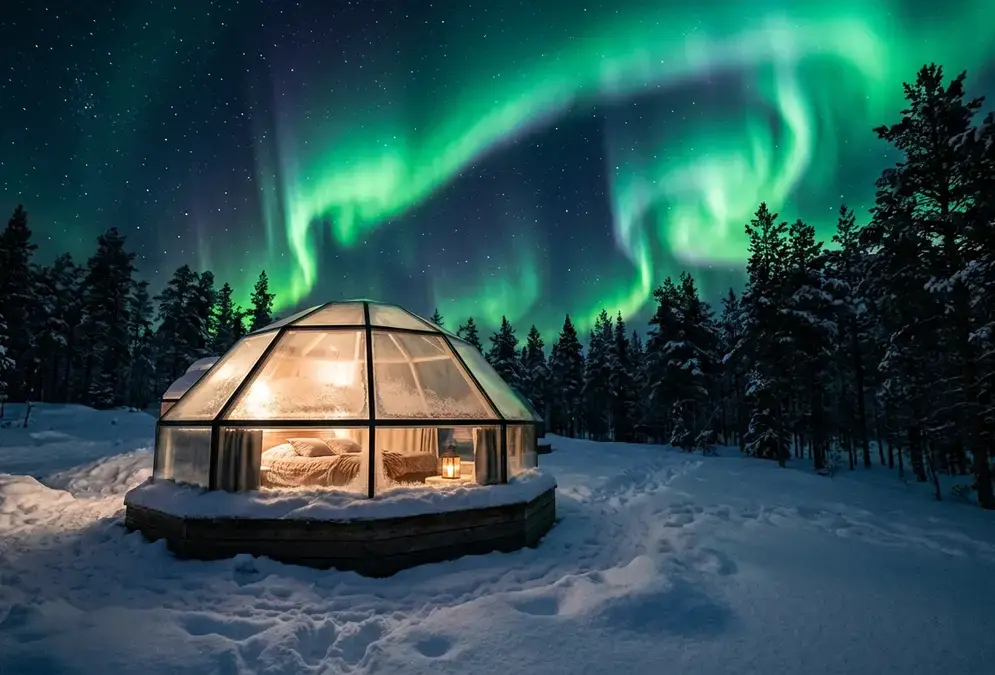
- Glass igloo stays, the region's signature accommodation, letting you watch the sky without leaving bed
Featured · Destination
Northern Lights in Finnish Lapland
Finnish Lapland's whole-region aurora guide: glass igloos, Santa Claus Village, six bases from Rovaniemi to Inari, aurora season Sep–Mar, no road drama.
Norway runs the opposite model, coastal and adventure-first rather than family-and-Christmas-themed:
- Aurora cruises and fjord-based tours, an active, boat-driven version of the hunt
- Whale watching, seasonal but genuinely spectacular, right outside cities like Tromsø
- Mountain hiking and cable-car rides for daytime scenery between aurora nights
- A more urban nightlife and restaurant scene, especially in Tromsø itself
See the best glass igloos in Finnish Lapland guide for how six of the region's properties actually compare. If a Christmas theme park on the Arctic Circle and a bed with a glass ceiling sound like the trip, Lapland wins this category outright. If fjords, whales, and a livelier city base matter more, Norway does.
Best Months and Getting There
Both destinations run on roughly the same calendar, late August through April, but the shoulder months carry a real advantage in each. Finland's September–October and February–March windows combine strong aurora activity around the equinoxes with noticeably more manageable temperatures and smaller crowds than deep winter[4]. Norway's shoulder months work similarly: September–October catches its own equinox boost, while November–January delivers the longest darkness at the cost of the coldest, cloudiest stretch of the year.
Getting there differs more than the calendar does. Rovaniemi Airport connects through Helsinki, with most North American and UK routes transiting Helsinki regardless of final destination; the romantic alternative is the overnight Santa Claus Express train. Tromsø Airport sits five kilometers from downtown, generally easier logistically for a city-based trip, though fewer direct international routes serve it compared to Helsinki's hub status.
If you're still deciding and want the specific answers to timing, odds, and cold, the Finnish Lapland northern lights FAQ covers the nine questions travelers ask most before booking.
Choose Your Style: Which Fits Your Trip
Run these two lists honestly and the decision mostly makes itself.
Choose Finnish Lapland if:
- You want stable, clearer skies and a better shot at actually seeing whatever activity is overhead
- Family logistics matter, kids, Santa Claus Village, and glass igloos built for lying down and watching
- Budget matters: cheaper tours, generally cheaper everything else
- You'd rather layer for dry, predictable cold than gamble on coastal weather
Recommended tours
Tours are selected for quality, not commission. I earn a small fee if you book — at no extra cost to you.


Choose Norway if:
- Raw aurora activity and Tromsø's position under the oval matter more to you than clear-sky odds
- You want fjords, whale watching, and a livelier city base between aurora nights
- Milder coastal temperatures appeal more than Lapland's deeper continental cold
- A more adult, adventure-and-nightlife trip fits your group better than a family-Christmas one
Neither destination is the objectively correct choice. Finland trades some raw activity for reliability and value; Norway trades some of that reliability for scenery, wildlife, and a higher activity ceiling. Whichever you pick, check the Northern Lights in Finnish Lapland hub before booking, and pack for the cold you're actually choosing: the Finnish Lapland winter packing list covers exactly what dry −30°C cold requires.