
Why Finnish Lapland's Cold Is Dry, Not Wet
Winter in Finnish Lapland runs on a continental climate, meaning cold air masses settle in and stay, rather than the damp, wind-driven systems Iceland and coastal Norway deal with all winter. Expect around −10°C during September–October, dropping to −20°C to −30°C through the Christmas and deep-winter stretch, with the coldest snaps of January and February reaching −45°C to −50°C[1]. That stretch, called kaamos, the polar night, brings near-continuous darkness alongside that cold. It's colder, on the worst nights, than Iceland ever gets, but it's a fundamentally different kind of cold to dress for.
Dry continental cold changes the entire packing calculation. Iceland's winter list leads with waterproofing, a breathable Gore-Tex shell, because the real enemy there is wind-driven rain and sea spray, not the thermometer itself; see the Iceland winter packing list for that version of the problem. Lapland's list leads with insulation and moisture management from your own body, because dry cold air pulls moisture out of everything, sweat included, and a damp base layer in −30°C air chills you fast even without a drop of rain in sight.
Cotton is the single most common mistake, here just as much as anywhere else. Once cotton gets wet, whether from snow, sweat, or a spilled drink at a rest stop, it loses its insulating properties entirely and can make you colder than wearing nothing at all[2]. Lapland's cold isn't quite Fairbanks' stand-still −40°F extremes (see the Fairbanks winter packing list for that end of the spectrum), but the cotton rule holds regardless of exactly how many degrees below zero you're dealing with.
Read next · Article
Stargazing Gear for Beginners: Binoculars to Telescopes
New to stargazing gear? This guide breaks down binoculars, telescopes, and smart telescopes, so you know what to buy first and what to skip for right now.
The Three-Layer System, Built for Movement Too
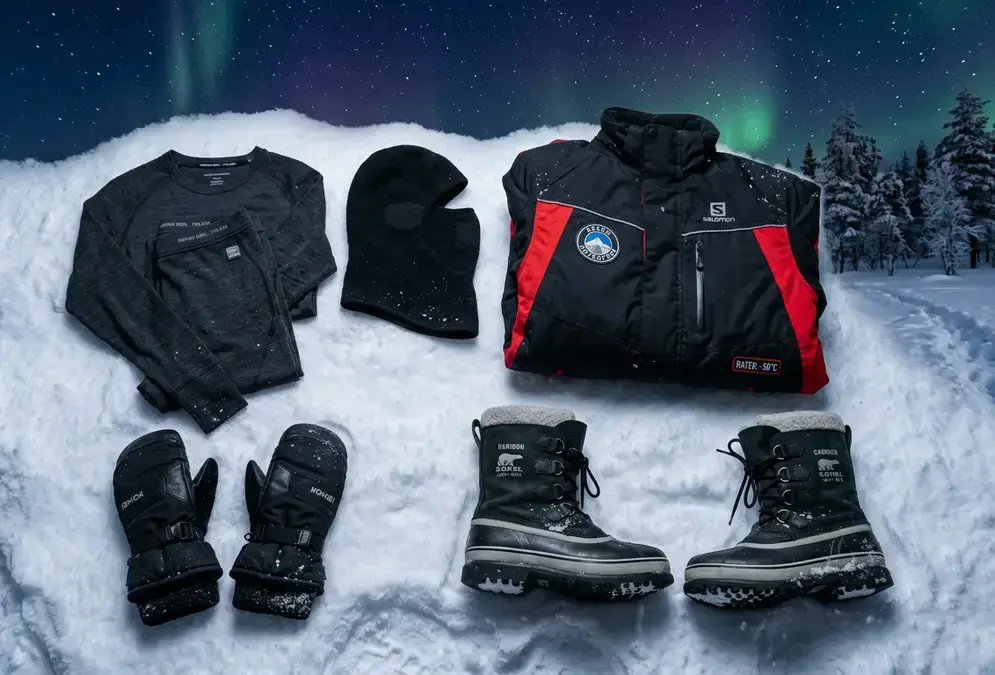
Base, mid, and shell, the same three-layer layering system that works anywhere cold, but Lapland's trips demand a system that handles both standing still on an aurora hunt and working hard on a husky sled or snowmobile.
Merino wool base layers are the safer default over synthetic alternatives. Merino regulates body temperature and won't leave you feeling cold and damp if you sweat, and it keeps meaningful insulating value even when it does get damp, unlike cotton, which simply fails[2]. Pack multiple sets: one to wear, one drying, and a spare for the day you're out longer than expected.
Mid layers need real flexibility here. A down jacket or fleece works for the standing-still portion of the evening, but a fast-moving husky-sled or snowmobile session generates real body heat, enough that over-layering becomes its own hazard. Piling on too many layers causes sweating, and if cold air then reaches that sweat, you end up colder than if you'd worn less[3]. The fix is a system you can actually adjust: a base and mid-layer you keep on throughout, and an outer shell or snowmobile suit you can vent, unzip, or shed between the active and stationary parts of the day.
| Destination | Cold type | What the packing list prioritizes |
|---|---|---|
| Finnish Lapland | Dry continental cold, −20°C to −30°C+ | Insulation and moisture management from your own body, layers you can vent during active tours |
| Iceland | Wet, windy coastal cold, milder on the thermometer | Waterproofing and wind protection over raw insulation |
| Fairbanks, Alaska | Extreme dry cold, −30°F to −40°F+ | Maximum insulation for standing motionless for hours, minimal active-tour layering needed |
A an evening out on a dog sled watching for the lights is the clearest example of why this matters: you're working hard mushing or riding for stretches, then standing still at a rest stop watching the sky, sometimes within the same hour, which is exactly why husky sledding gear needs to breathe as much as it needs to insulate.
Boots, Gloves, and the Two-Sock System for Active Days
Buy boots rated at least 20°C colder than the coldest temperature you actually expect. If Lapland can hit −30°C on your trip, that means boots rated to −50°C, not a pair built for an average city winter[4]. Undersized, under-rated boots are one of the most common and most avoidable mistakes travelers make here.
A two-sock system helps regardless of activity: a thin, moisture-wicking liner sock against the skin, managing sweat, under a heavy, insulated wool outer sock for the actual warmth. Bring several pairs and change them the moment they feel damp, not once they're visibly wet.
Featured · Destination
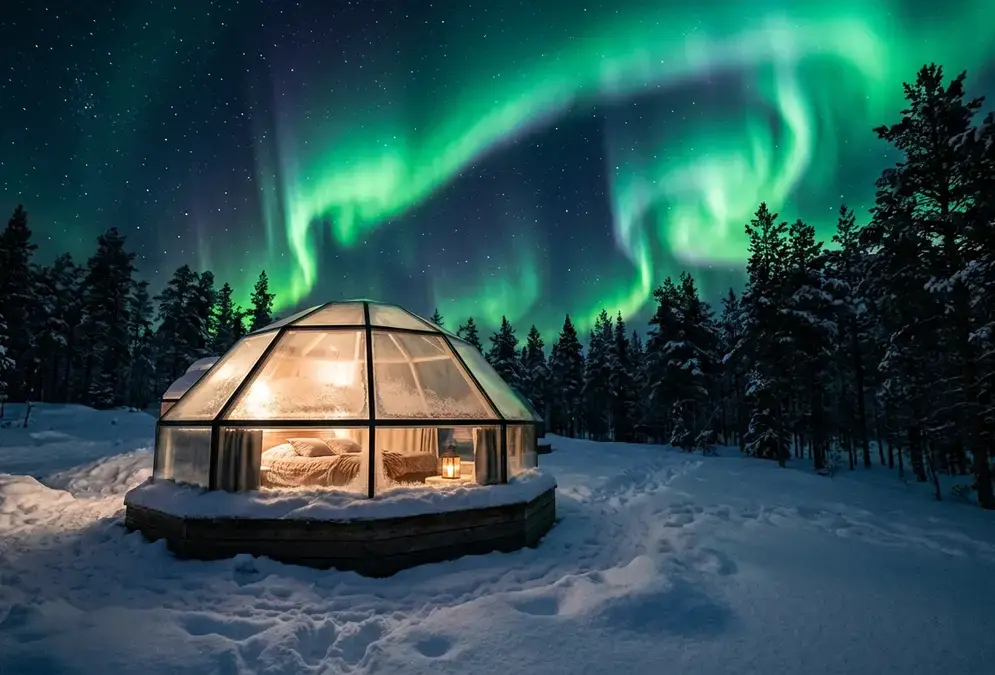
Northern Lights in Finnish Lapland
Finnish Lapland's whole-region aurora guide: glass igloos, Santa Claus Village, six bases from Rovaniemi to Inari, aurora season Sep–Mar, no road drama.
Gloves versus mittens is a genuine trade-off, and Lapland's mixed itinerary makes the answer less clean-cut than a pure stand-and-watch destination. Mittens keep every finger together, sharing warmth, and win on raw insulation for a long stationary aurora watch. Gloves win on dexterity: you need it for camera settings, and you need it far more for husky-sled reins or a snowmobile throttle, neither of which works in a bulky mitten. Most Lapland-based guides split the difference: mittens for the standing-still portion of the night, thinner insulated gloves for anything active, swapped between the two rather than picking just one.
Cover everything else, too. A balaclava or full face mask matters more here than travelers expect: exposed skin can crystallize the moisture in your own breath within minutes at deep-winter temperatures[2], and covering ears and cheeks is basic frostbite prevention, not optional. A wool hat with full ear coverage, plus ski goggles for snowmobile speed, round out the head and face kit.
Camera Gear in Dry Extreme Cold: Batteries and Condensation
Cold drains camera batteries faster than almost anyone plans for. In genuinely extreme cold, a battery can drain in as little as 45 minutes, which is why most polar-photography guides recommend carrying at least two to three spares per camera, kept in an inner jacket pocket against your body rather than in the camera bag[5]. The batteries aren't damaged permanently; they recover once warmed, but a dead battery mid-aurora-display is still a dead battery.
45 minutes
Plastic rain covers and cheap camera covers are a genuine liability here. Standard plastic becomes brittle below about −15°C and can shatter like glass below −20°C, exactly the range Lapland sits in for most of the season[6]. A fabric cover handles the same job without the risk, and it packs down smaller besides.
Lithium batteries need one more piece of caution: never attempt to charge a battery that's still cold from being outside. Warm it fully first, against your body or indoors, before it goes anywhere near a charger.
What to Leave Home, and the Condensation Mistake
Condensation, not the cold itself, does the most lasting damage to a camera. Walk a frozen camera straight into a heated cabin or hotel room and moisture from the warm indoor air condenses directly onto the optics and inside the body. Seal the camera in a waterproof bag with a silica gel packet while you're still outside, and leave it sealed for a while once you're indoors; the moisture forms on the bag instead of your lens[5].
Leave these behind entirely:
Recommended tours
Tours are selected for quality, not commission. I earn a small fee if you book — at no extra cost to you.

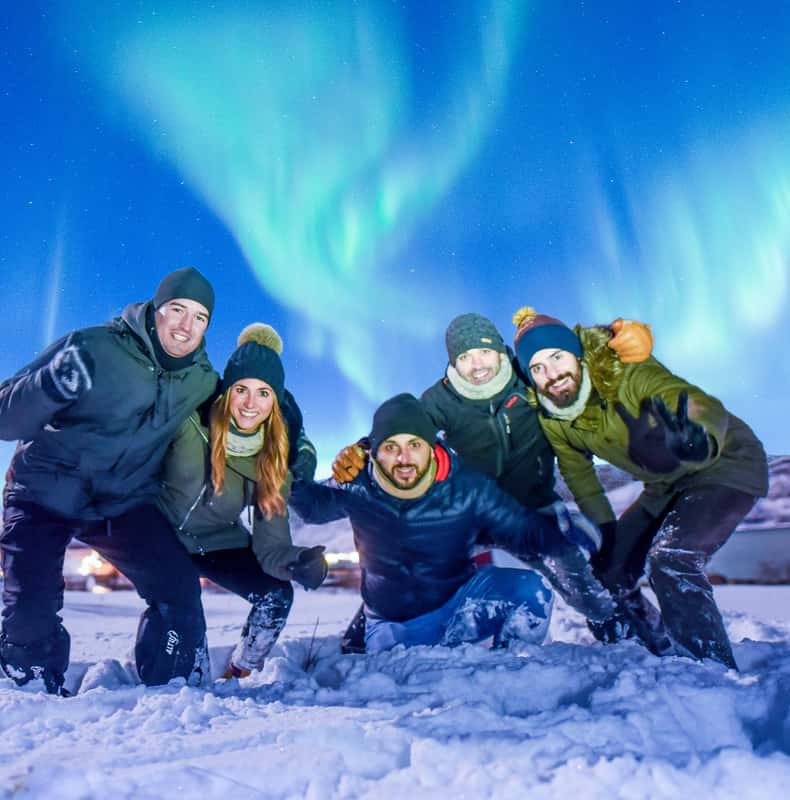
- Cotton socks, base layers, or anything with meaningful cotton content, which loses insulation the moment it gets damp[2]
- Denim, for the same reason, just worse
- A casual winter coat rated for above-freezing commuting, not genuine Arctic cold
- Cheap plastic camera or gear covers, which turn brittle and can crack in the cold you're actually packing for
None of this is exotic gear. It's mostly about picking the right material and the right rating, then actually using the layering system instead of defaulting to just wear more.
What Tour Operators Provide vs What You Need to Bring
Most guided husky, snowmobile, and aurora-hunt operators in Lapland supply an outer insulated snowmobile suit or thermal overall as part of the tour price, along with boots and sometimes mittens. That covers the outer shell for the activity itself, but it doesn't replace your own base and mid layers underneath; borrowed outerwear over your own thermal system works far better than borrowed layers head to toe.
Don't assume the supplied suit covers everything. Bring your own:
- Merino base layers, top and bottom
- A warm mid-layer for the walk between buildings and any time you're not actively suited up
- Your own gloves or mittens, since rental gear is rarely dexterous enough for camera work
- A hat, balaclava, and neck gaiter, since tour-supplied gear rarely covers the face fully
For the aurora-hunt portion specifically, a Lapland aurora snowmobile tour typically issues the full suit and boots; check the packing list on your specific booking, since coverage varies by operator. Whatever you're doing during the day, the Finnish Lapland northern lights FAQ covers the timing and odds questions this packing list is built to support.