NamibRand Nature Reserve doesn't run a stargazing tour you can search for and book on its own. Instead, guided astronomy is folded into an overnight stay at one of the handful of luxury lodges scattered across this 200,000-hectare private reserve in southwestern Namibia. Book a night at NamibRand and an evening astronomy session comes with it, run by a guide trained to point out what's overhead rather than sell you a photo.
Why there's no ticket to buy
Search "NamibRand stargazing tour" on GetYourGuide, Viator, or Klook and you'll come up empty. That's not an oversight. Access runs through a small consortium of private lodge properties rather than a public gate or a day-tour desk, so the astronomy programme lives inside each lodge's evening schedule instead of existing as a separately ticketed activity. In 2012, NamibRand earned Gold Tier International Dark Sky Reserve status, one of the strictest categories going, making it Africa's first Dark Sky Reserve and, at the time, only the second Gold Tier reserve on Earth. That designation is the whole reason people fly or drive hours into the Namib for a night outdoors. It's worth remembering you're paying for the lodge, not for a separate sky show.
What actually happens after dark
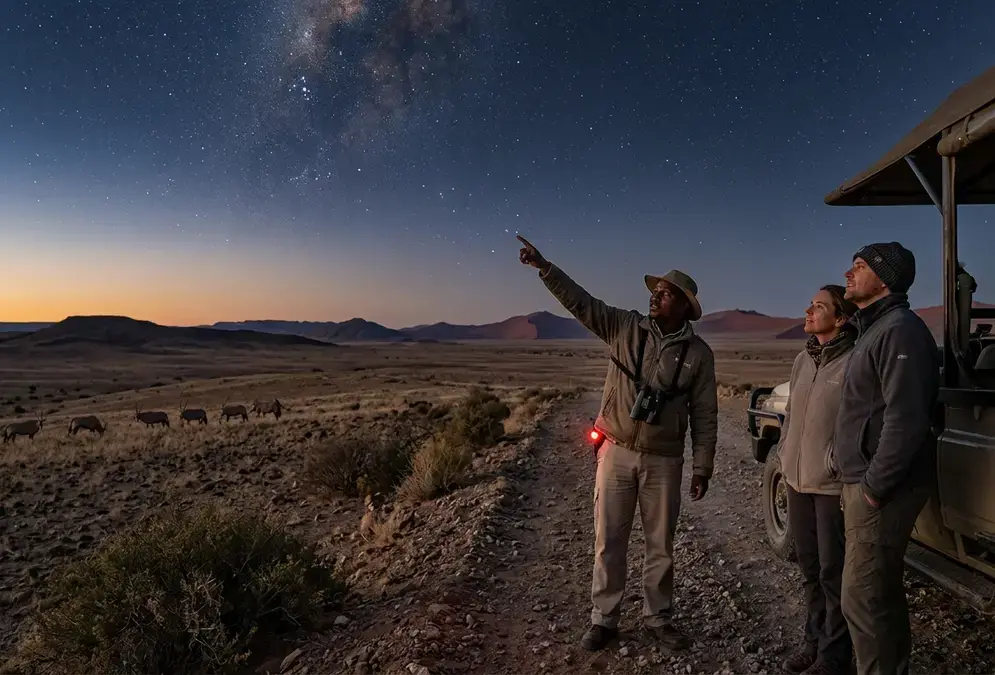
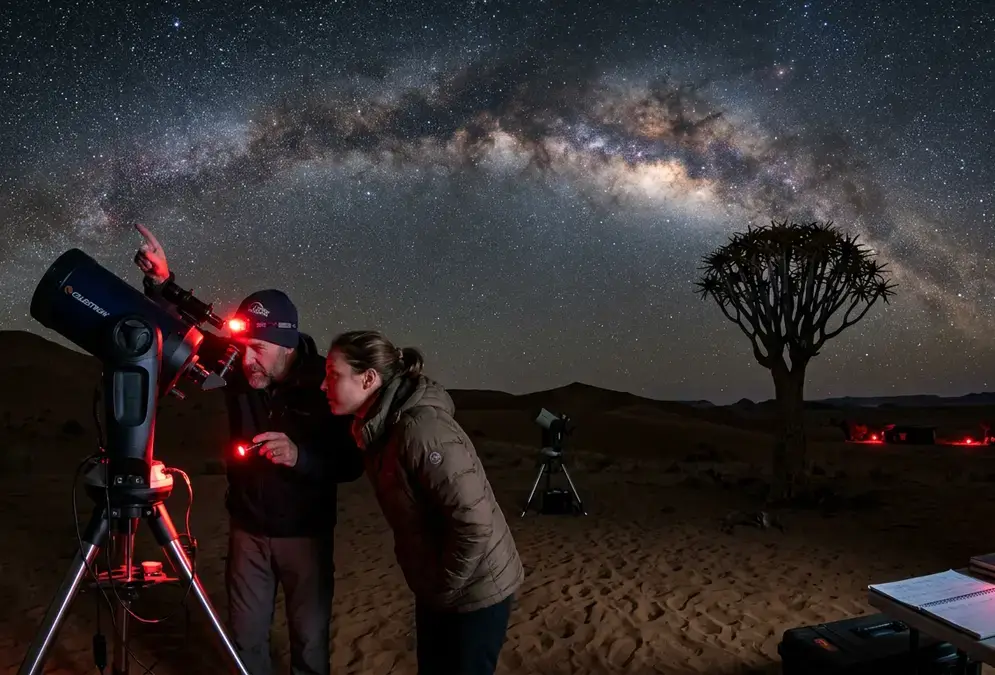
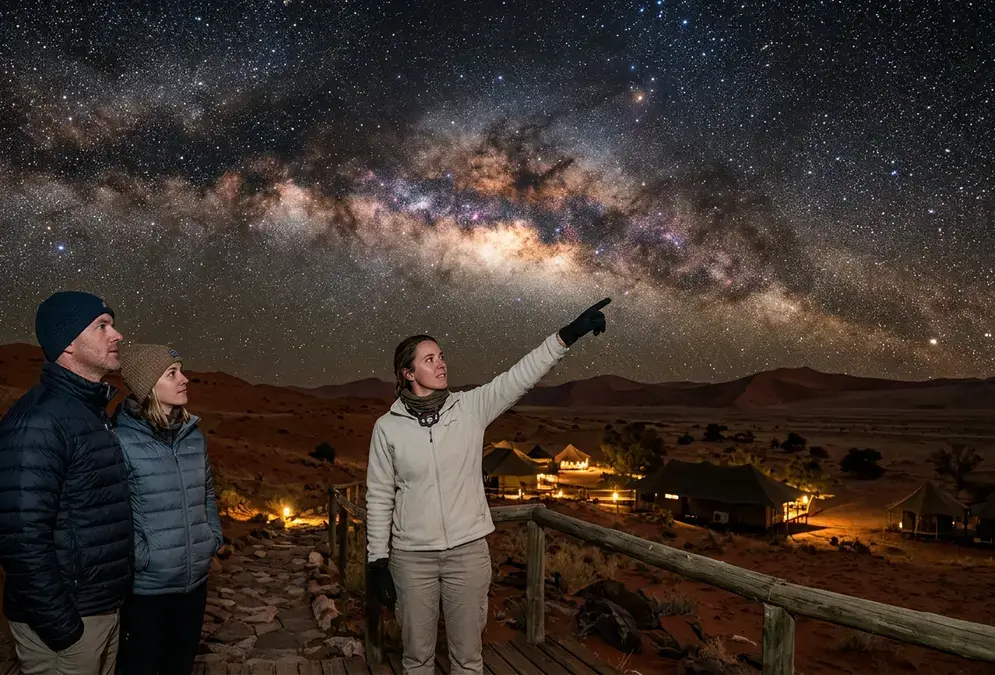
Most evenings follow a similar shape: a guide walks guests through naked-eye orientation first, pointing out the Southern Cross and the Milky Way's galactic core, visible here as a genuinely broad, luminous band rather than a faint smudge. Where a lodge has a telescope on hand, the session moves to closer looks at the Carina Nebula, Saturn's rings, or Jupiter's moons when either planet is above the horizon. Expect commentary that mixes the practical (what you're looking at, why it's visible tonight) with the mythological, and expect shooting stars, they're frequent enough here that guides rarely need to point them out. The darkest sky I've personally seen was over this reserve, and what did it wasn't a Bortle rating, it was no glow anywhere on the horizon, in any direction at all.
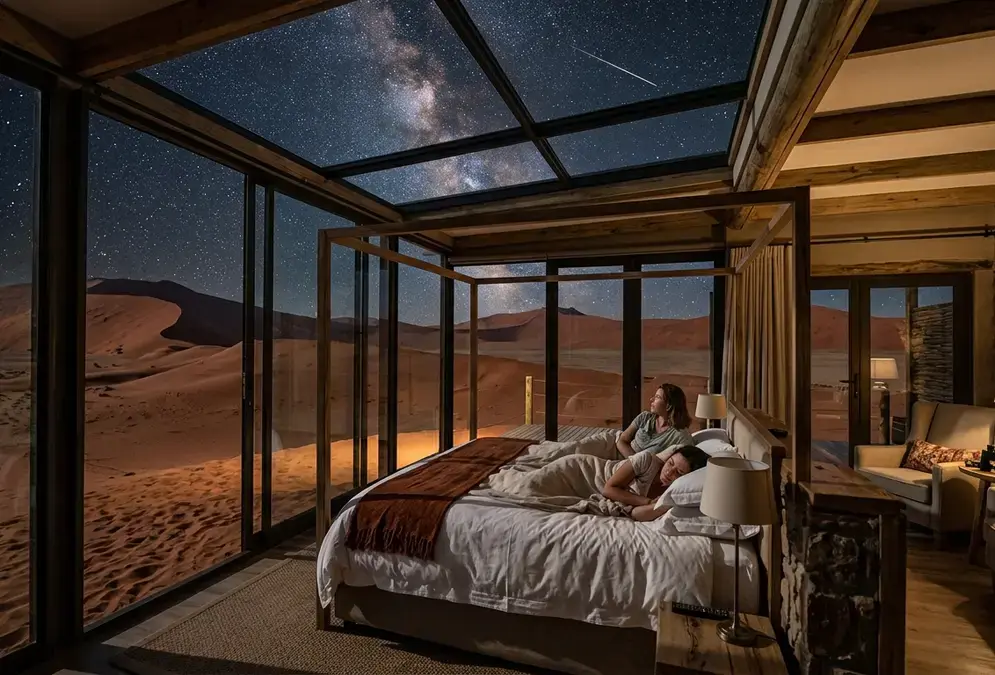
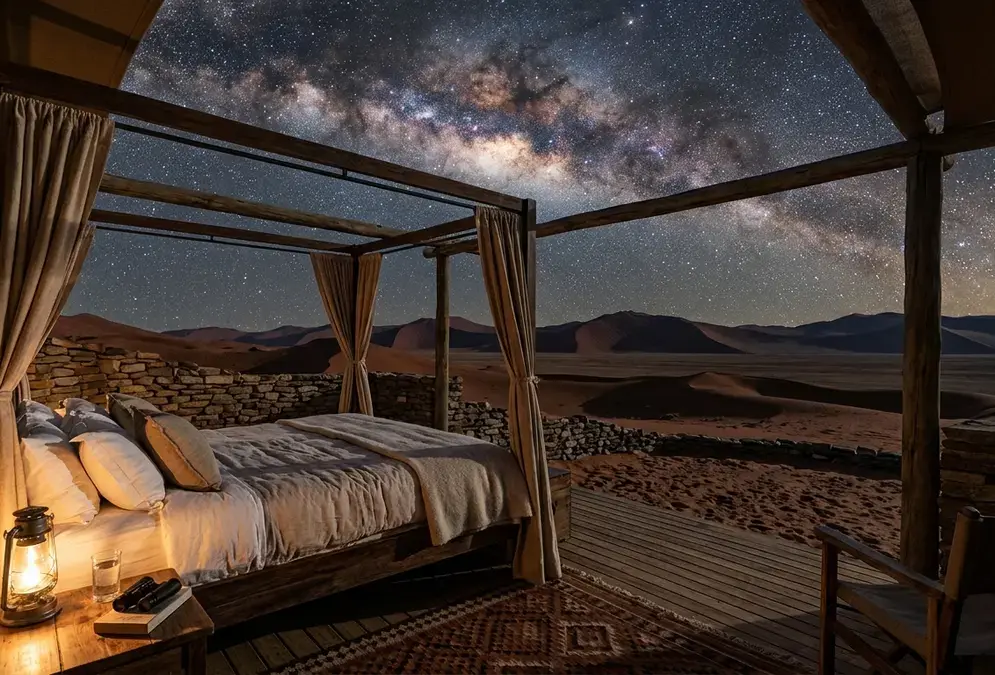
Three properties show how differently this can look. the dune camp run by Wolwedans built its reputation on star beds, open-air sleeping platforms where you fall asleep with no roof between you and the sky. Kwessi Dunes Lodge goes further, giving every room a separate "star-gazer" annex that's open to the air. The reserve-bordering desert lodge runs its astronomy as a scheduled evening session rather than a sleeping arrangement, closer to a briefing than a bedroom feature. None of these lodges, or the reserve's other partner properties, publishes exact telescope specifications or fixed group-size caps, so if the gear matters to you, ask the lodge directly before you book. The full ranked guide to NamibRand's stargazing lodges compares all four on facilities, exclusivity, and booking path.
When to go, and what it costs
May through August is the dry season and the reliable window: skies are clearest, weather is most stable, and the Milky Way's core sits high overhead. It's also winter, so nights are cold. Outside that window you're gambling more on cloud.
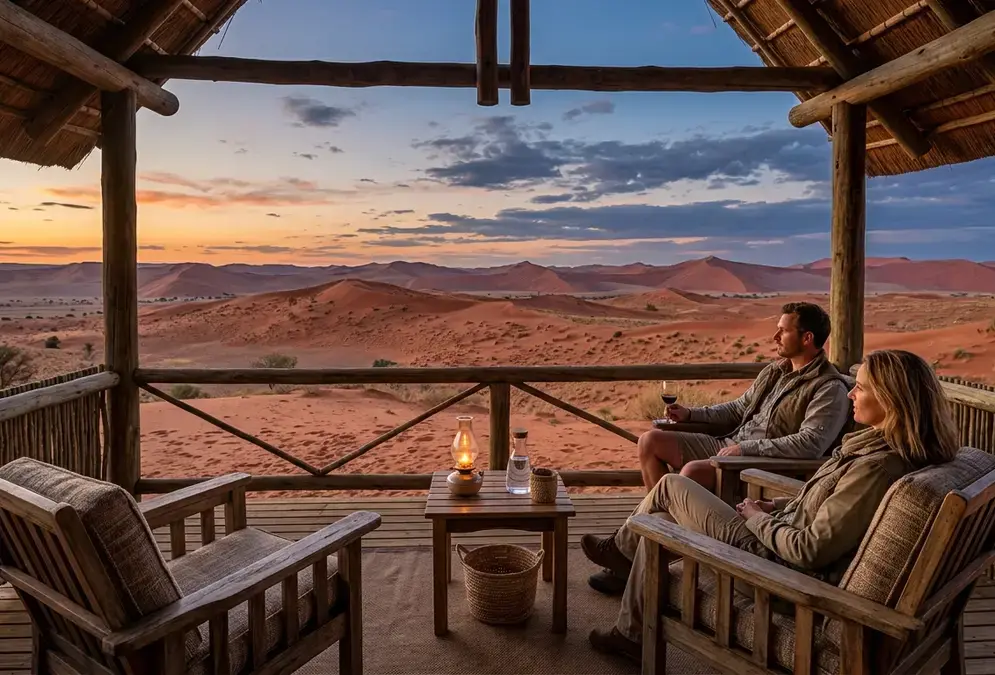
There's no separate stargazing fee. Wolwedans Dune Camp runs roughly USD 800 to 1,500 per person per night, all-inclusive, representative of the price band across NamibRand's lodge collection, though rates vary by property and season. Treat the astronomy as one of several reasons you're paying that rate, alongside the game drives, the dunes, and the isolation, not as a line item purchased separately. If a session gets clouded out, lodges typically offer the next clear night rather than a refund, since there's no fixed ticket to refund in the first place.
Booking it
Because there's no dedicated stargazing product, you book a room, not a tour. Reserve directly with Wolwedans, &Beyond, Kwessi Dunes, or another NamibRand partner property, and ask specifically what the evening astronomy programme includes at that lodge. Some run structured sessions nightly; others offer it more informally depending on staff availability and weather. Given NamibRand's remote, fly-in-or-long-drive access and limited bed count across the reserve, book your stay well ahead of a dry-season trip.