Most first-time Namibia itineraries run into the same scheduling problem: the country's two headline draws sit barely an hour apart by road but pull in opposite directions on the clock. Sossusvlei's dunes reward full daylight and dry heat. NamibRand Nature Reserve, Africa's first International Dark Sky Reserve, rewards full dark and a wide-open horizon. This 3-day, 2-night combo tour solves that mismatch by design: mornings and afternoons go to the dune icons, and both evenings end under one of the darkest skies ever measured on the continent.
Three days, one departure from Windhoek
The tour runs as a loop out of Windhoek, with small groups typically capped around 12 travelers. A 4x4 vehicle and English-speaking guide are included throughout, so there's no self-driving or route-planning to worry about, only early alarms.
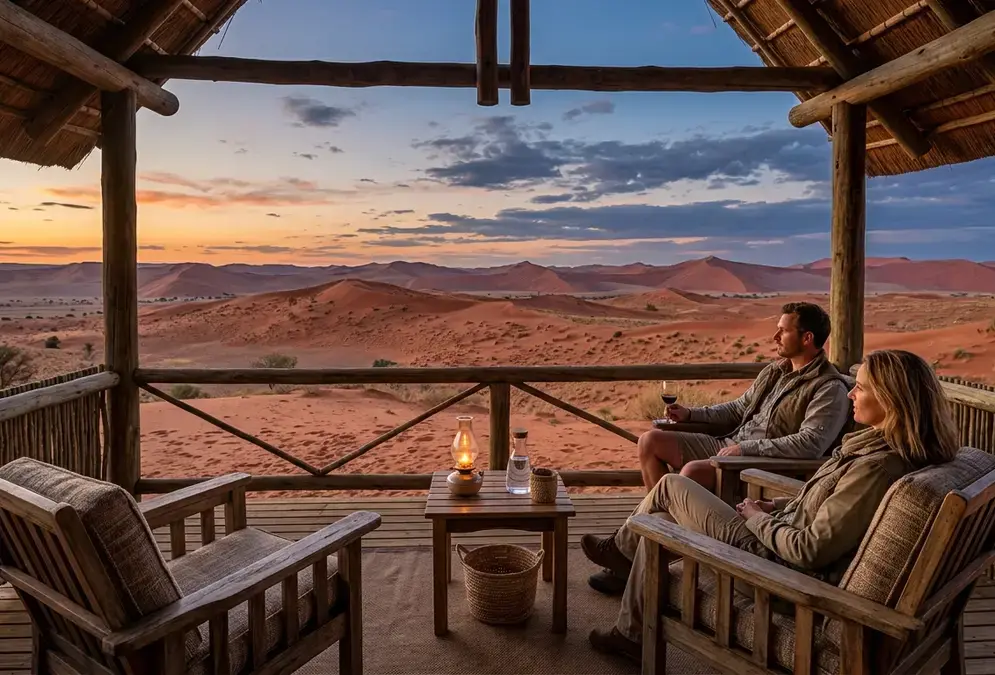
- Day 1 — Depart Windhoek, cross the Spreetshoogte Pass, stop in the tiny village of Solitaire, then catch a sunset dune drive inside Gondwana Namib Park. Overnight at Namib Desert Lodge or an equivalent property.
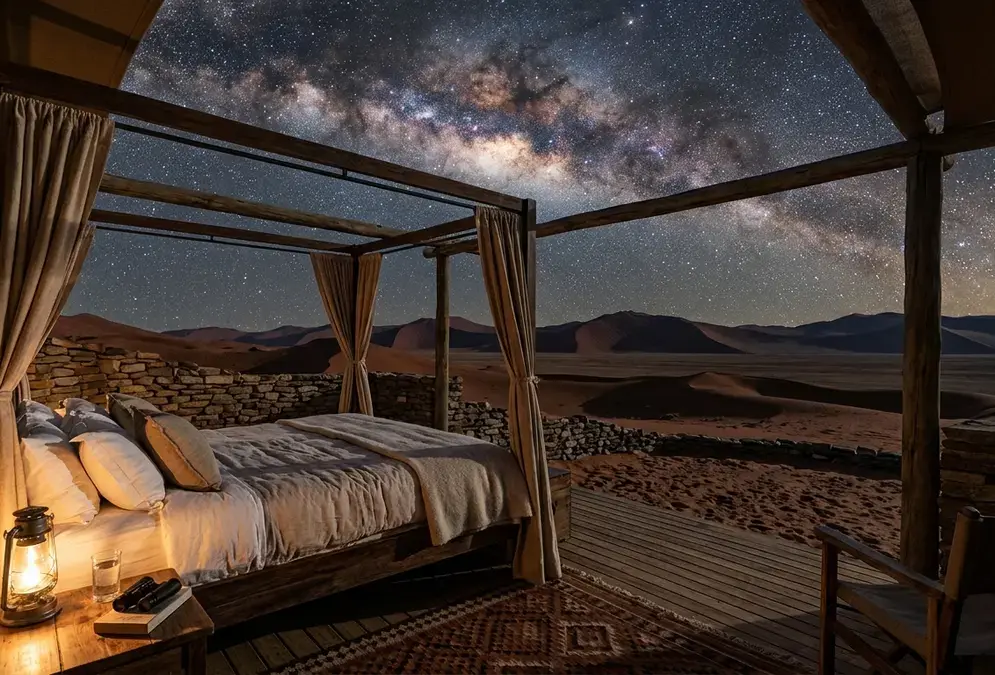
- Day 2 — The full Sossusvlei day: Dune 45 at first light, the Big Daddy climb, Deadvlei, Sesriem Canyon, and an afternoon dune walk, followed by a guided evening stargazing session. Overnight at a dark-sky lodge such as Dune Star Camp or a similar property with open-air sleeping decks (amenities vary by lodge — confirm what's included at booking).
- Day 3 — An optional sunrise dune walk, breakfast, then the scenic drive back to Windhoek, arriving around 6:00 PM.
The dune day: Big Daddy, Deadvlei, Sesriem Canyon
Day 2 is the reason most travelers book this tour, and it's built around three distinct landscapes rather than one long dune walk:
- Dune 45 — a shorter climb than Big Daddy, and the one guides favour for first-light photography, since its ridge catches the sunrise before the valley floor does.
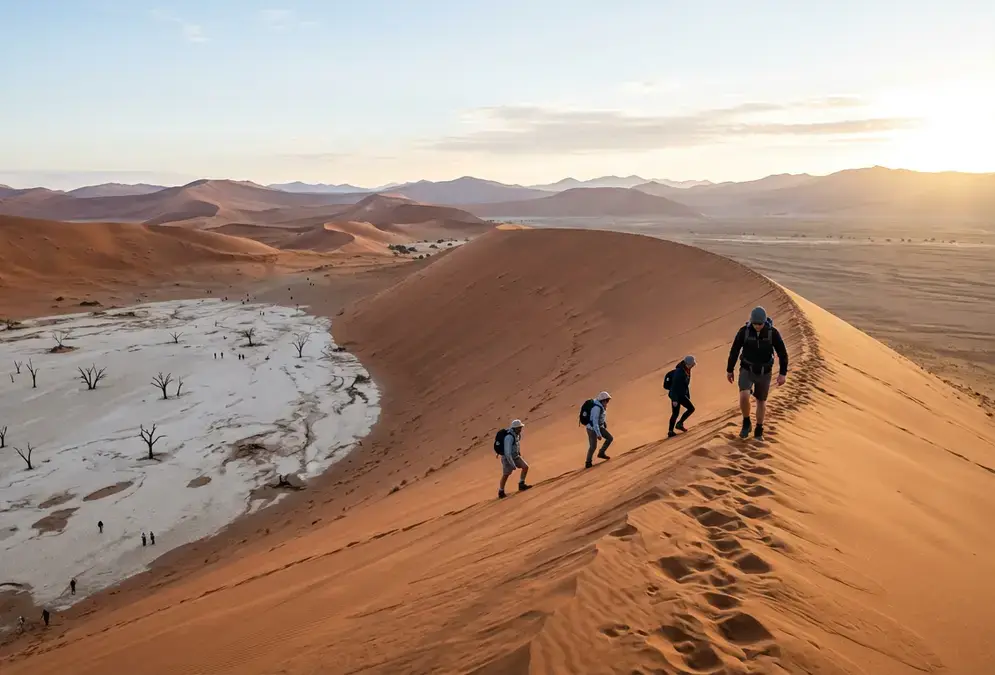
- Big Daddy — roughly a 20- to 30-minute walk from the road just to reach the base, then 45 minutes to an hour and a half to climb the ridge itself, depending on fitness and pace. The payoff is a full view down onto Deadvlei from above.
- Deadvlei — a cracked white clay pan ringed by rust-red dunes, where camel-thorn trees, dead for centuries in the dry desert air, still stand blackened and upright. It's one of the most photographed scenes in Namibia, and it earns that reputation on sight.
- Sesriem Canyon — a narrow, shaded valley hike carved into sedimentary rock, a cooler contrast to the open dune walks earlier in the day.
For the wider list of dune walks, wildlife, and balloon flights this itinerary only samples in a single afternoon, see what to do in NamibRand beyond stargazing.
Stargazing inside a Gold Tier dark sky reserve
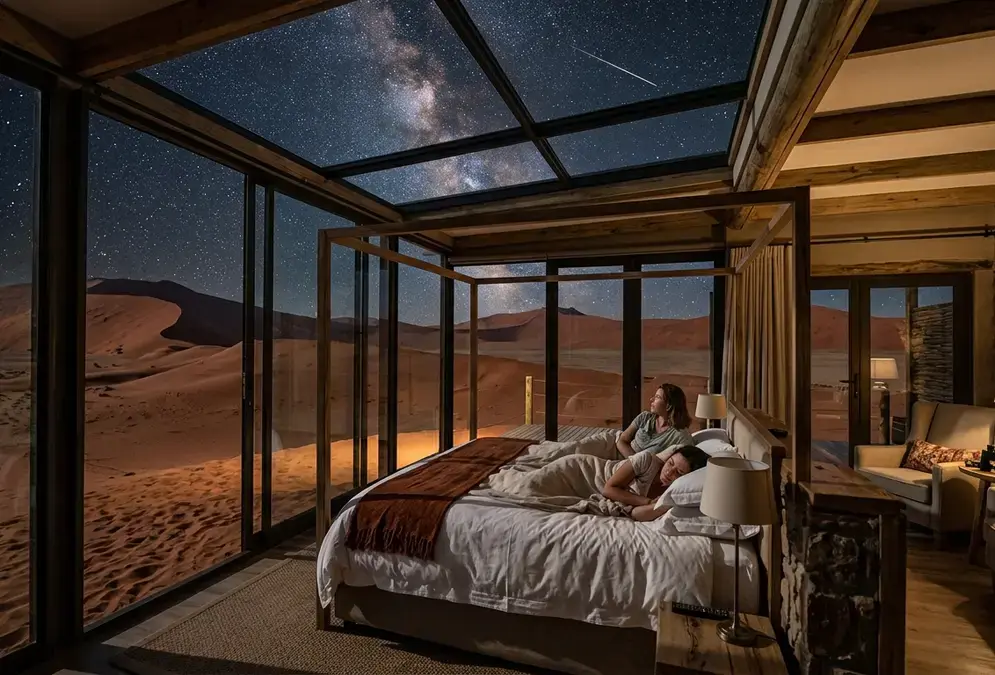
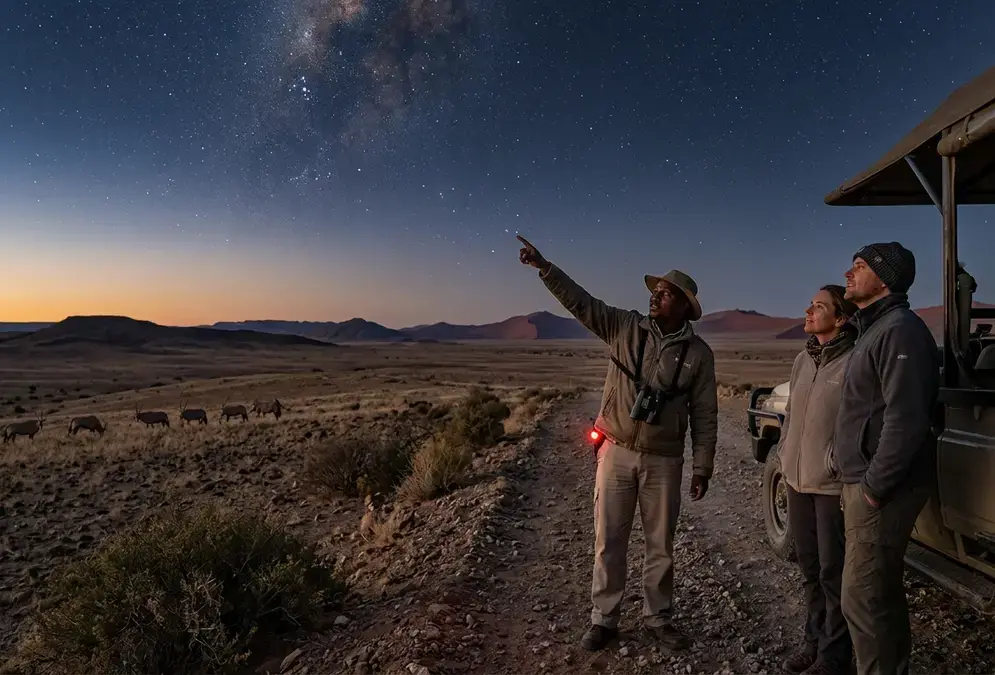
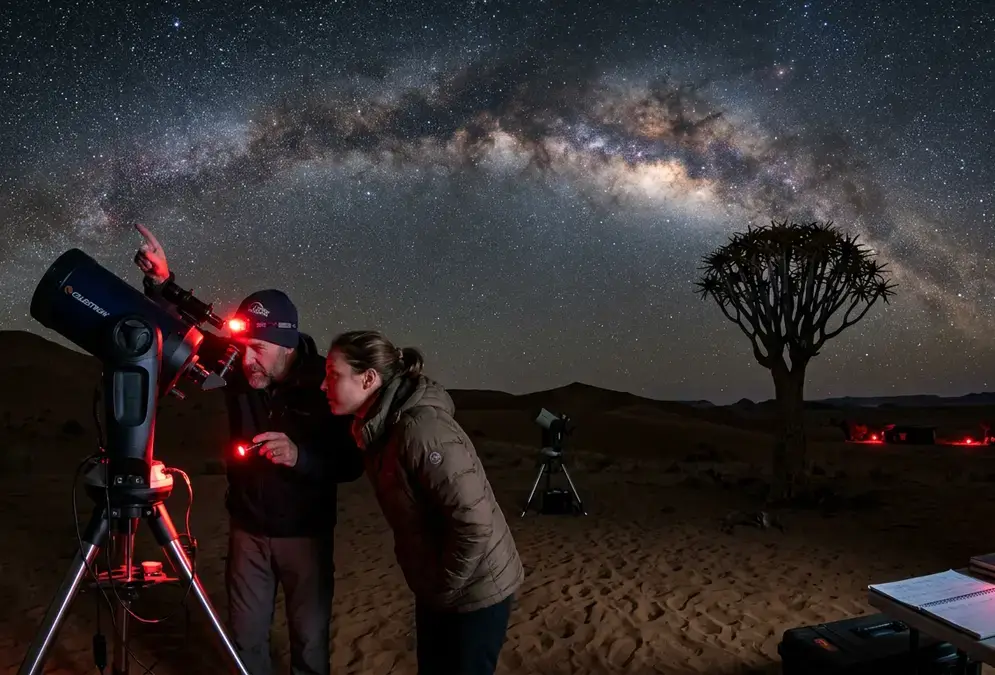
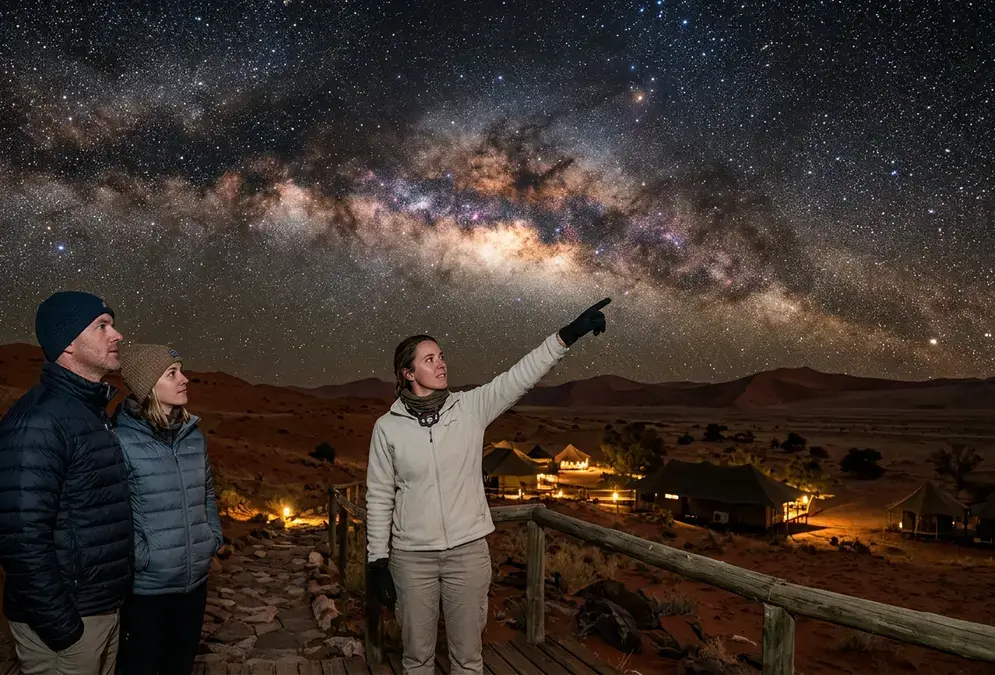
Both evenings end with a guided stargazing session led by a qualified astronomy guide, timed to make the most of NamibRand's near-total absence of ambient light. The reserve earned Gold Tier status, the strictest classification DarkSky International awards, in 2012, becoming the first Dark Sky Reserve on the continent. Some lodges within the wider reserve push the experience further still: Kwessi Dunes builds separate star-gazer rooms open to the sky into its rooms, Wolwedans offers open-air star beds for sleeping directly under the Milky Way, and &Beyond's Sossusvlei Desert Lodge runs a dedicated observatory with a Celestron telescope. Those extras belong to specific lodges rather than to every departure of this combo tour, so treat them as a flavour of what the region offers rather than a guaranteed inclusion. What is guaranteed is a guide, a dark sky, and enough isolation that the Milky Way reads as a genuine band of light rather than a smudge.
What's included, what it costs
The per-person price includes a qualified guide and 4x4 transport throughout, Sossusvlei National Park entrance fees, two nights' accommodation, two breakfasts and two dinners, all dune drives and canyon walks, and the guided evening stargazing sessions. It does not include alcoholic drinks (some lodges allow you to bring your own), laundry, travel insurance, or visa costs. Namibia's e-visa requirements changed as of April 2025; check the current rules with the Namibian embassy or your booking operator well before departure rather than assuming your last Namibia trip's process still applies.
Requirements, fitness, and what to pack
- Valid passport, ideally with six or more months' validity remaining
- Travel or medical insurance (treat this as mandatory, not optional, given how remote the route is)
- Reasonable fitness for dune climbing and walking in heat — Big Daddy in particular is a sustained ridge climb, not a stroll
- Closed-toe hiking boots for the Big Daddy climb and Sesriem Canyon
- Luggage capped at 20 kg per person; space in the 4x4 is genuinely tight
- Sunscreen, a hat, and more water than feels necessary — desert heat dehydrates faster than it seems to
No 4x4 driving skills are required of travelers, since the vehicle and driver are part of the package. If you're pairing this tour with your own onward self-drive elsewhere in Namibia, rent a genuine 4x4 for that leg — gravel and sand roads outside the main highways aren't forgiving of anything less.
Best time to book
May through September, Namibia's dry season, is the safer stargazing bet: cooler days, and skies that hold up clear night after night. December through February can push daytime temperatures past 35°C, and while Namibia's aridity keeps the wet season drier than most travelers expect, book the winter months if the night sky is the priority. Whatever the season, check the moon phase before locking in dates — a full moon mutes the same fine detail here as it does anywhere else on Earth.