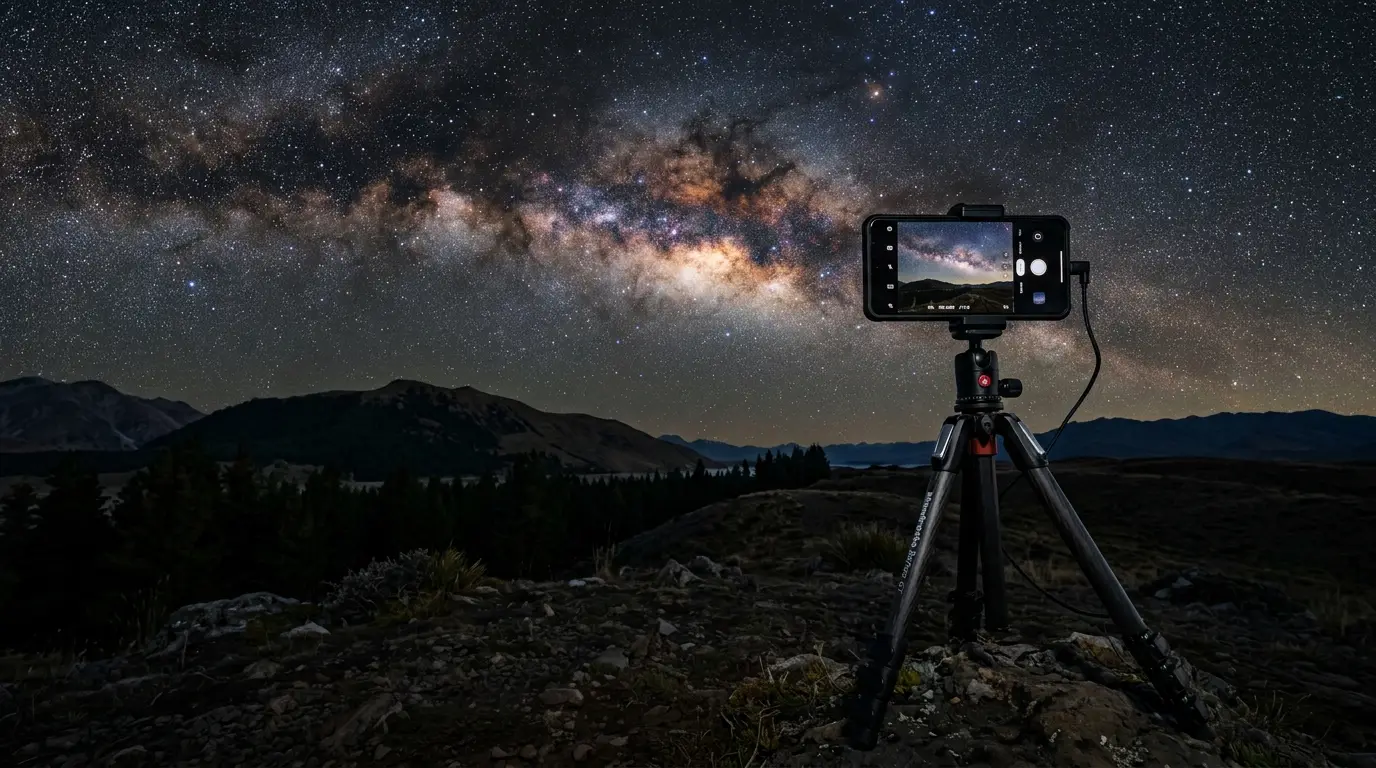
A modern flagship phone can genuinely capture the night sky, but only within limits worth naming upfront. On a tripod, in a dark enough location, an iPhone or Galaxy phone can render the Milky Way as a real, structured band of light rather than a vague smudge, and can pull genuine color out of an aurora display that might look pale green or grey to the naked eye. What it cannot do is resolve individual faint stars, star clusters, or nebula detail the way even an inexpensive tracked mirrorless camera can. The sensor is too small, and multi-frame computational stacking cannot manufacture resolution the optics never captured.
Getting a phone to do what it can do reliably comes down to accessories that eliminate two specific failure modes: a wobbling phone, and shake at the moment of exposure. A blurry, noisy phone photo of the night sky is almost always one of those two problems, not a phone limitation. A rigid clamp and a stable tripod remove the wobble; a Bluetooth remote or the phone's own timer removes the shake that comes from tapping the screen.
Cold is the other quiet failure mode nobody plans for. A phone battery that reads 90 percent at the hotel can die in twenty minutes at a windy, freezing overlook, and a bargain power bank riding in the same jacket pocket usually can't save it either. This kit sorts the accessories that solve real problems from the one item most beginners can skip because their phone already does the job: a clip-on wide-angle lens, mostly redundant on any phone with a built-in ultra-wide camera.