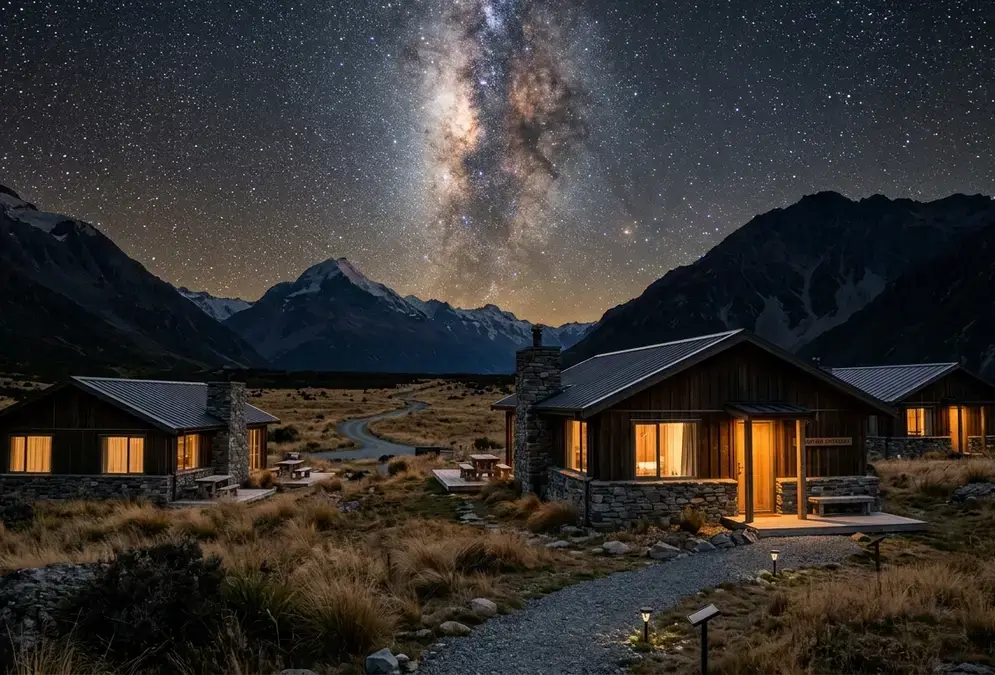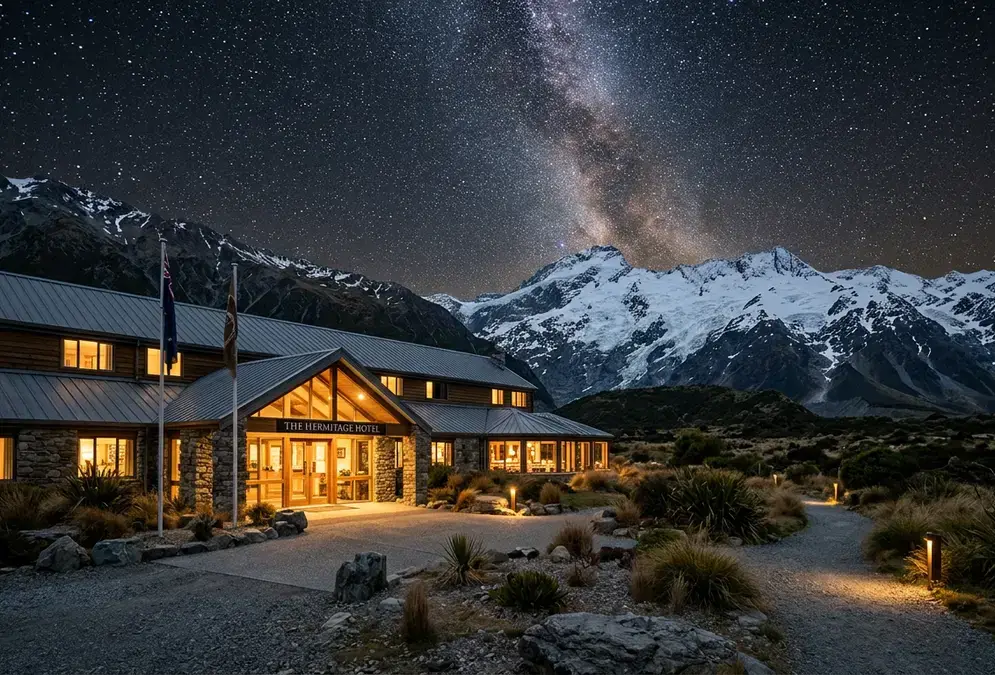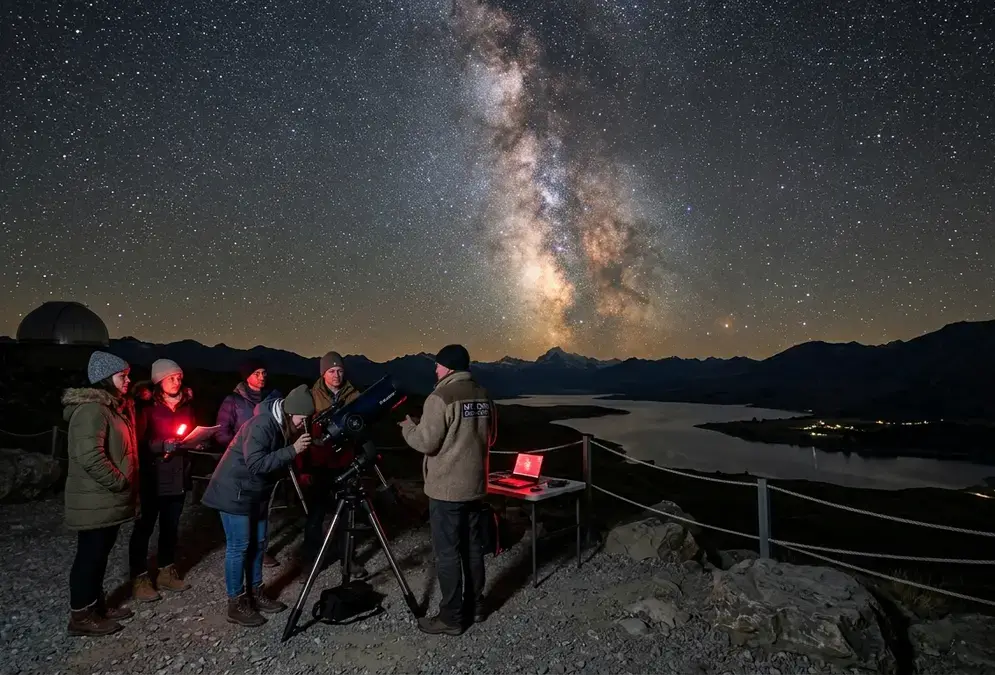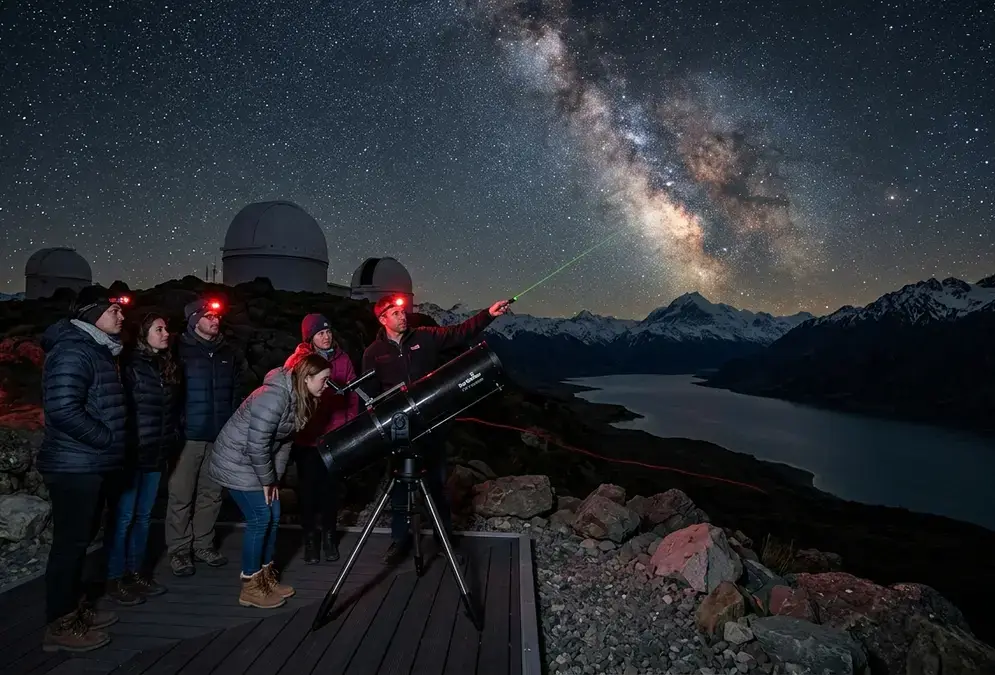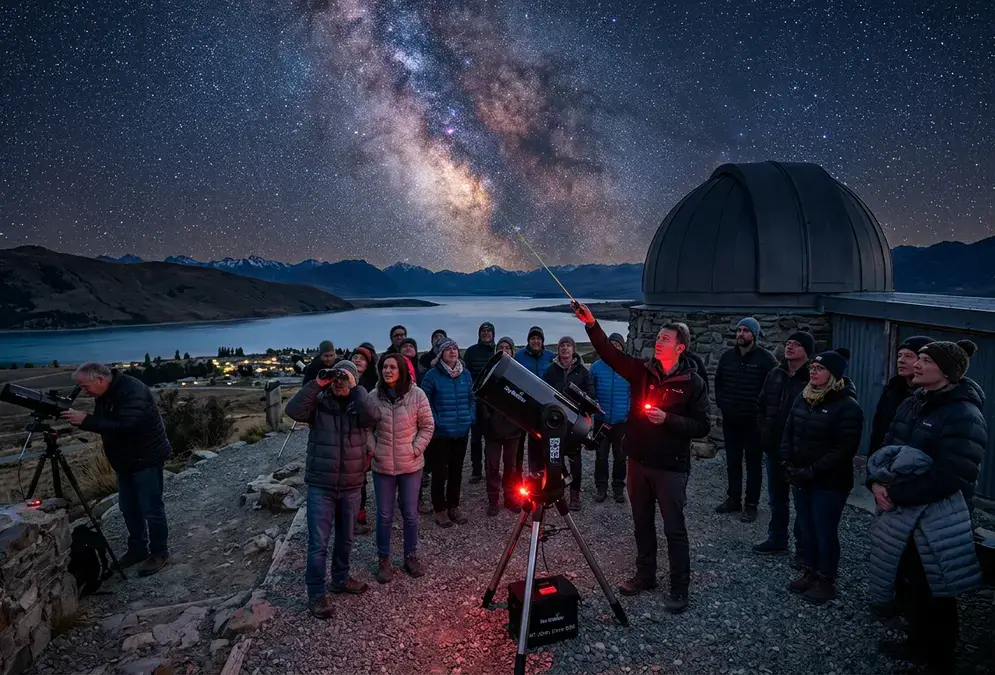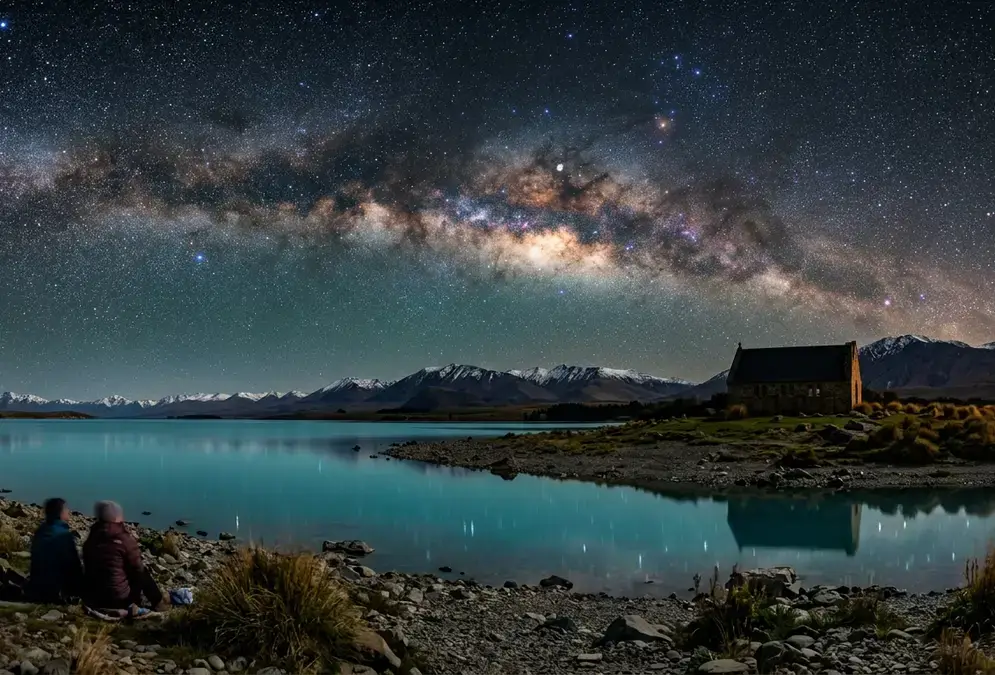
Milky Way over Lake Tekapo's shoreline near the Church of the Good Shepherd, viewed from the public lakefront path at night, New Zealand
Guided Stargazing Free

Free, self-guided stargazing from Lake Tekapo's shoreline — no telescope, no booking

30 minutes to 2 hours, self-paced — no fixed schedule
Any clear night, year-round. Best roughly 1–2 hours after sunset once true darkness sets in, and better still on a moonless or near-full-dark night. No booking, no departure time, no operator.
No fixed meeting point. Start from the Lake Tekapo village lakefront, near the Dark Sky Project base at 1 Motuariki Lane or the Sheepdog Memorial, and walk south along the paved path toward the Church of the Good Shepherd and beyond.
All activities

Not every good stargazing spot in the Mackenzie Basin needs a booking. Walk out of Lake Tekapo village after dark, follow the paved lakefront path a few hundred metres past the shopfronts, and the sky does the rest: no ticket, no telescope, no guide, no schedule. This is the free alternative to the region's paid tours, sitting inside the same Aoraki Mackenzie International Dark Sky Reserve that rates Bortle Class 2, dark enough for the Milky Way to cast a faint shadow on a clear, moonless night, right down to the water's edge.

Where to actually stand

The lakefront walking path runs from the village, past the Church of the Good Shepherd, over the footbridge, and on toward Tekapo Springs, roughly 5 km round trip if you walk the whole thing, flat and paved the entire way. You don't need to go that far for a dark view: the stretch immediately past the church, away from the shopfront lighting, is dark enough on its own.

One detail trips up a lot of visitors. The church's own grounds were fenced off in late 2017 after damage to the site and disruption to services, and that fence is for daytime visiting hours only, not an after-dark stargazing spot. The famous photo of the Milky Way arcing over the church roofline is shot from the public path and roadside outside that fence, not from inside the churchyard at night. Treat the fence line as the boundary and you won't have an awkward conversation with anyone.

Further along the path, past the crowds who stop right at the church for photos, the shoreline gets quieter and darker. That's the better spot if you want to actually stand still and look up for a while rather than jostle for a foreground shot.

What you'll see with just your eyes

Give your eyes about 20 to 30 minutes to complete dark adaptation before judging what's visible; a phone screen or a car's headlights resets that clock instantly. Once adapted, the naked-eye view from the lakeshore covers the same southern sky the paid tours point telescopes at:

  • The Southern Cross, circumpolar from this latitude, meaning it's up every night of the year, not just in certain seasons
  • The Magellanic Clouds, two companion galaxies to the Milky Way bright enough to pick out without any optical aid, low in the southern sky
  • The galactic core, sitting close to overhead rather than skimming the horizon, on a clear night away from the shopfront lights

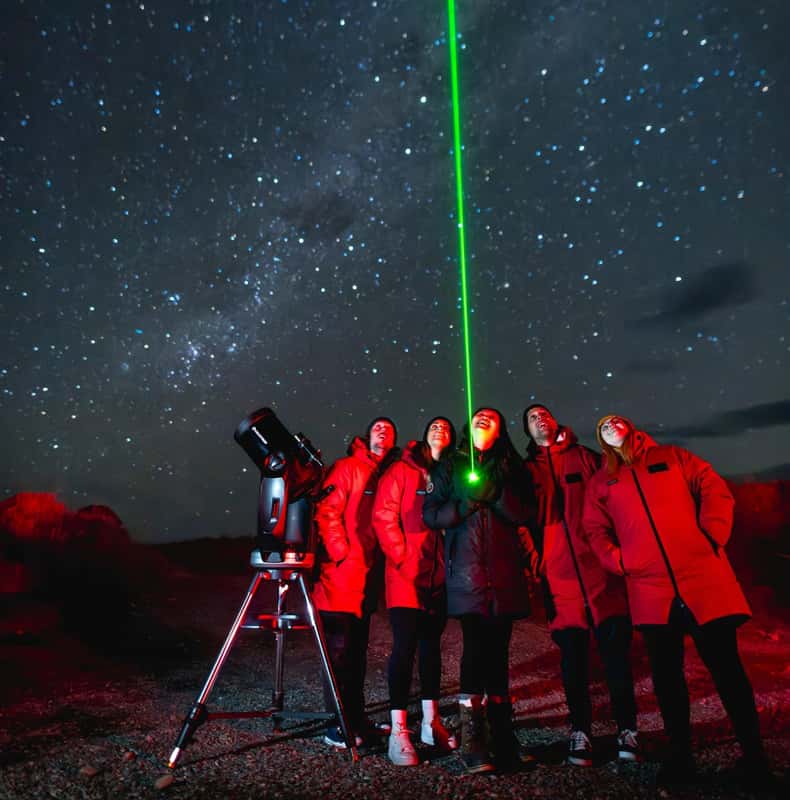
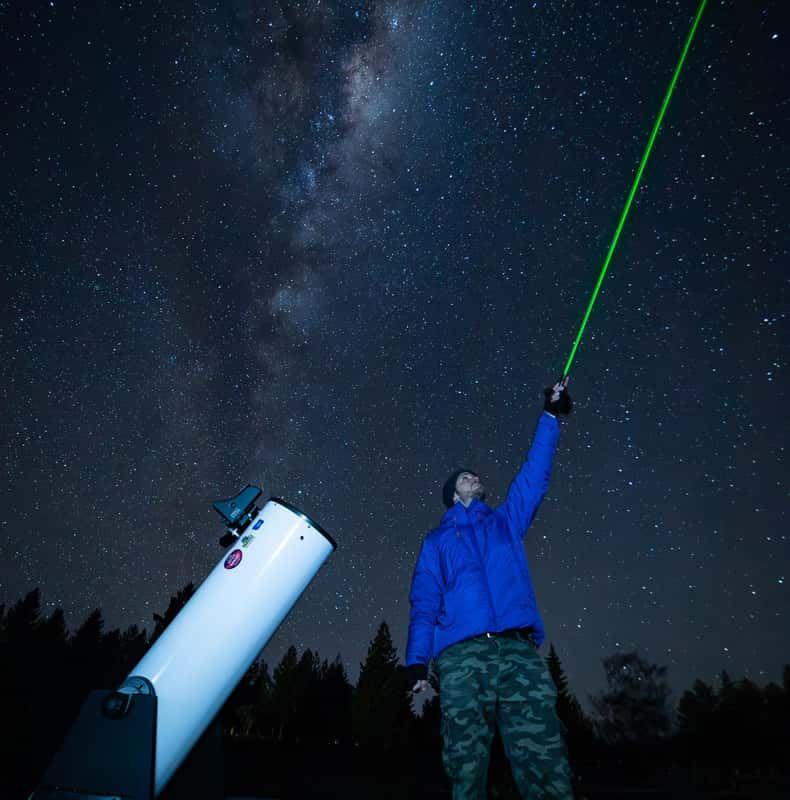
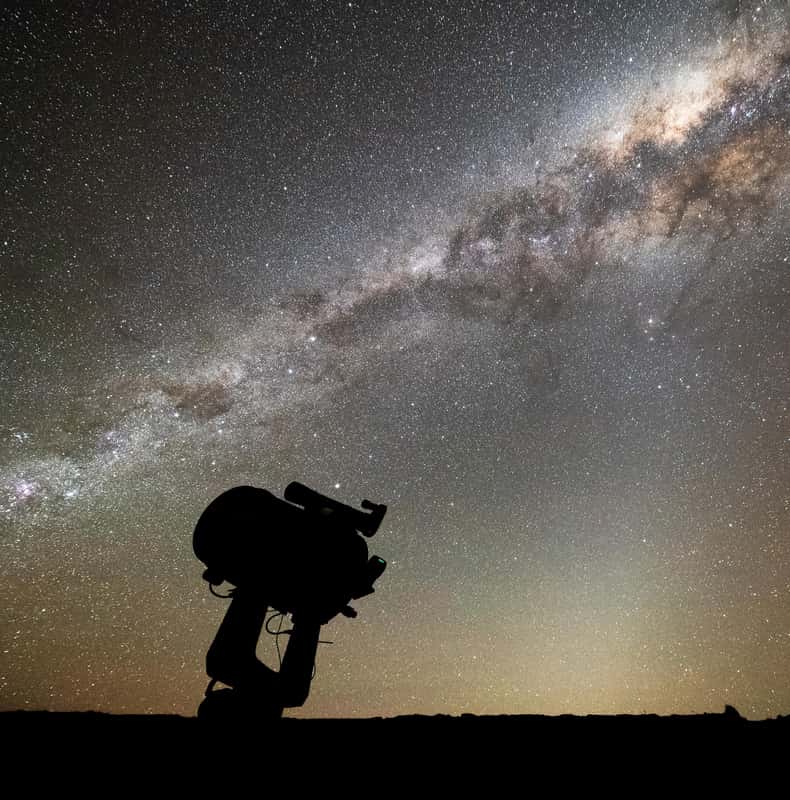
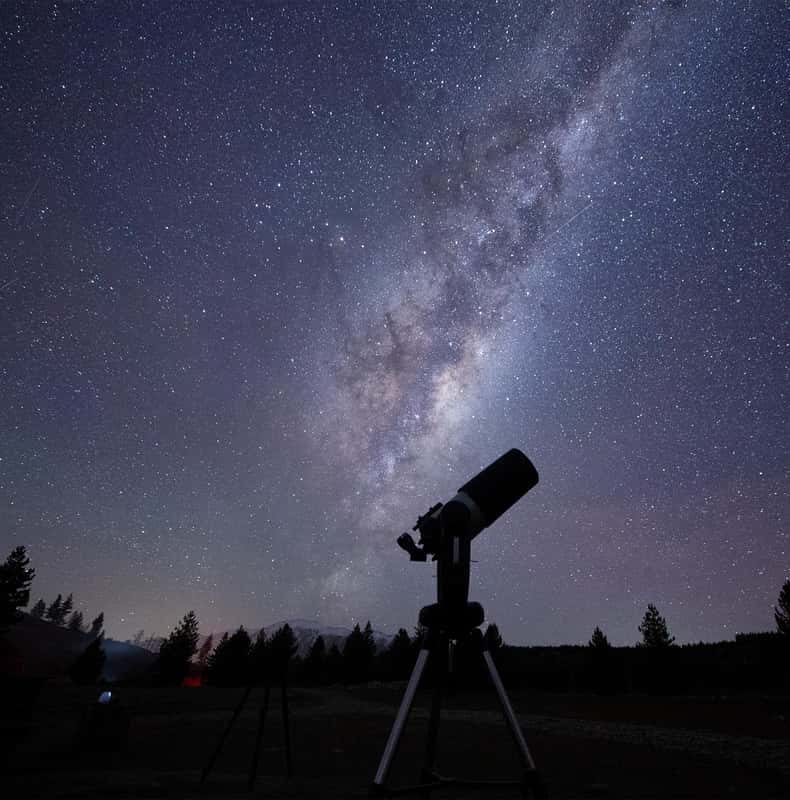
What you don't get is a telescope. Omega Centauri stays a smudge instead of resolving into individual stars, and nobody's standing next to you explaining which faint patch is a globular cluster and which is a galaxy. That trade-off is the whole point: this costs nothing and asks nothing of your schedule, in exchange for staying naked-eye.

Timing it against the moon, not just the weather

Cloud is the one variable nobody controls, guided tour or free walk alike, and there's no meaningful way to quantify how often it ruins a given night here; check a weather and cloud-cover forecast for the evening you're planning, not just the daytime one. Moon phase matters more than most first-time visitors expect: a bright moon washes out the Magellanic Clouds and dims the galactic core to almost nothing, so a walk timed around new moon delivers a genuinely different sky than the same walk during a full moon, independent of cloud cover entirely.

Seasonally, New Zealand's winter, June through August, delivers the longest and driest nights of the year and puts the galactic core highest overhead, the reverse of what a Northern Hemisphere trip trains you to expect. December through February gives shorter true darkness but far easier travel logistics and warmer standing-around temperatures, which matters more than it sounds like when you're out on an open lakeshore at 11pm.

When it's worth paying instead

This walk earns its keep as the option for anyone who can't or doesn't want to book a paid tour: no minimum age, no fitness test, no fixed departure time to build an evening around. If you've done it once and want more, the upgrade path in this reserve is Mt John Observatory Summit Experience, which puts a 16-inch telescope and a guide's narration between you and the same sky, or the Southern Sky Guided Tour, a lower-priced beginner session with naked-eye orientation before the telescope segment. Both cost money and run on a schedule; this doesn't.

Getting there and what to bring

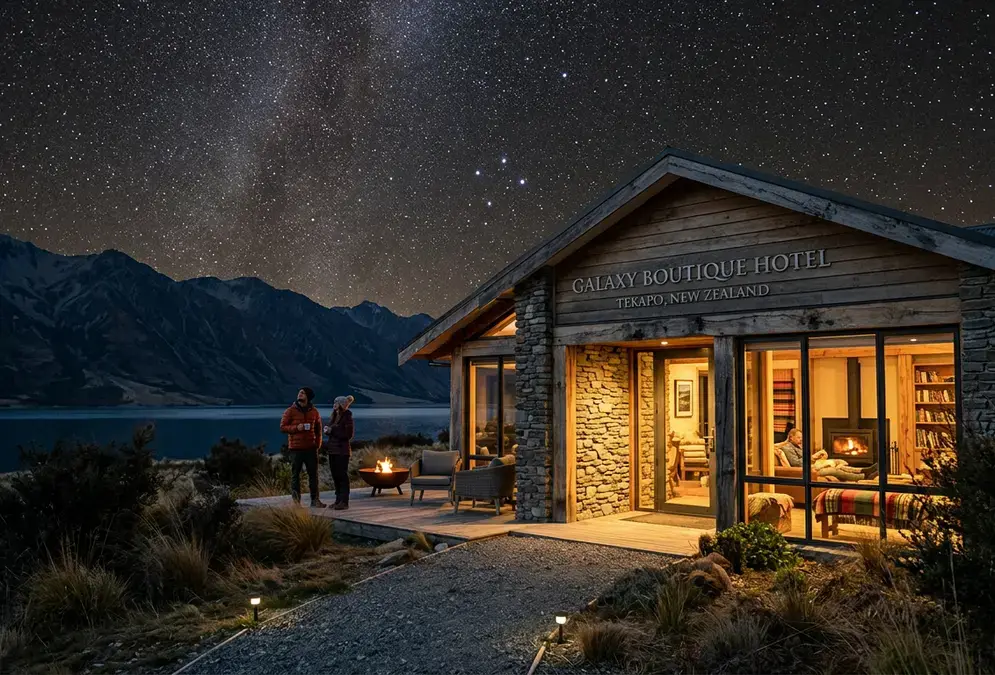
Start from the village lakefront, near the Dark Sky Project base or the Sheepdog Memorial, and walk south along the paved path. Dress for standing still outdoors well after dark, colder than the daytime temperature suggests, and bring a red-light headlamp rather than your phone's white torch if you want to check a map or a stargazing app without wrecking your night vision. Stay close enough to walk back easily: Lake Tekapo Lodge sits a short stroll from this stretch of shoreline, so the night doesn't have to end the moment you're tired of standing outside.
Highlights

  • Free, no-booking access to Bortle Class 2 skies at the water's edge
  • Paved, flat lakefront path from the village past the Church of the Good Shepherd toward Tekapo Springs
  • Naked-eye views of the Southern Cross, Magellanic Clouds, and the near-overhead galactic core
  • No minimum age, no fitness requirement, no fixed schedule to plan around
  • Set inside the Aoraki Mackenzie International Dark Sky Reserve, the largest reserve in the Southern Hemisphere

Included

  • Free, unrestricted public access to the lakefront walking path at any hour
  • A naked-eye view of the same dark sky the reserve's paid tours are built around

Not included

  • A telescope — Omega Centauri and other deep-sky targets stay naked-eye smudges here
  • A guide to explain what you're looking at
  • Any weather guarantee — cloud can blank out the sky on a free walk exactly as it can on a paid tour

Practical information

Accessibility

The paved lakefront path nearest the village is flat and suitable for wheelchairs and strollers; sections further along toward Tekapo Springs may be less formed and unlit. No facilities, seating, or staff on-site after dark.

Good to know before booking

  • None — no booking, no minimum age, no fitness test; the path nearest the village is flat and paved
  • Respect the Church of the Good Shepherd's fence line: its grounds are daytime-access only since a 2017 fence installation, so view from the public path or roadside, not from inside the churchyard at night

Prices & Booking

Free — no ticket, no booking, no minimum spend

Any clear night, year-round. Best roughly 1–2 hours after sunset once true darkness sets in, and better still on a moonless or near-full-dark night. No booking, no departure time, no operator.

An editorial guide to this experience. Book directly with the operator when you plan your trip.

Tags

lake tekapo aoraki mackenzie new zealand south island free activity self guided stargazing dark sky church of the good shepherd milky way

Frequently asked questions

Is stargazing at Lake Tekapo free?

Yes. Walking the paved lakefront path after dark costs nothing and needs no booking. It's naked-eye only, without a telescope or a guide, but it sits inside the same Bortle Class 2 dark-sky reserve that the paid tours use.

Where's the best spot to stand for lakeside stargazing at Lake Tekapo?

Walk past the Church of the Good Shepherd rather than stopping right at it. The shoreline further along the path, away from shopfront lighting and the small crowd the church draws for photos, is darker and better suited to standing still and looking up.

Can I go inside the Church of the Good Shepherd grounds at night to stargaze?

No. The church's grounds were fenced in late 2017 after damage and disruption to services, and access is daytime hours only. The well-known after-dark photo of the Milky Way over the church roofline is taken from the public path or roadside outside the fence, not from inside the churchyard.

Do I need a tour to see the Milky Way at Lake Tekapo?

No. The lakefront path delivers a naked-eye view of the Southern Cross, the Magellanic Clouds, and the galactic core for free. A paid tour like the Mt John Observatory Summit Experience adds a telescope and a guide's narration, which the free lakeshore walk doesn't include.

What's the best time of night and moon phase for lakeside stargazing at Lake Tekapo?

Aim for roughly 1 to 2 hours after sunset, once true darkness has set in, and check the moon phase before you go. A bright moon washes out the Magellanic Clouds and dims the galactic core, so a walk timed around new moon shows a noticeably darker, denser sky than the same walk during a full moon.

Is the Lake Tekapo lakefront path safe and accessible at night?

The stretch nearest the village is flat, paved, and lit close to the shopfronts, becoming genuinely dark once you're past the Church of the Good Shepherd. Sections further toward Tekapo Springs may be less formed and unlit, so bring a light source and know your own comfort level with walking an unlit path after dark.

What should I bring for self-guided stargazing at Lake Tekapo?

Warmer layers than the daytime temperature suggests, since you'll be standing still outdoors well after dark. A red-light headlamp is worth packing too — it lets you check a map or a stargazing app without a white phone screen wrecking the dark adaptation your eyes need about 20 to 30 minutes to complete.

What's the difference between this and a paid stargazing tour at Lake Tekapo?

This is naked-eye only, free, and available any clear night with no booking. Paid tours such as the Mt John Observatory Summit Experience or the Southern Sky Guided Tour add a telescope, a guide who explains what you're looking at, and a fixed schedule — useful if you want more than what your own eyes can pick out, but not required to see the Milky Way from this shoreline.

Further reading

Sources