Most stargazing tours put you shoulder to shoulder with a dozen strangers around one shared telescope. Alpha CruX's Astrophotography Tour and Tuition is a private lesson instead: up to three hours, one instructor, and a camera in your hands under one of the darkest skies on Earth. You leave with actual photographs of the Milky Way core, and with the manual-settings knowledge to shoot it again wherever the next dark sky takes you.
Alpha CruX: built around one-on-one instruction
Alpha CruX is a fully mobile operation based out of Lake Tekapo, holding a Department of Conservation (DOC) concession that lets it work the public land around Twizel, Tekapo, and Aoraki/Mount Cook rather than run from a single fixed site. That mobility is the point: the guide picks wherever the sky is clearest and the foreground works best on the night, rather than following the same fixed itinerary regardless of conditions.
Sessions are private and tailored to whoever books them, which is also why the price sits well above a shared-telescope tour. You are paying for one instructor's full attention for up to three hours, not a seat in a rotating group.
What three hours actually gets you
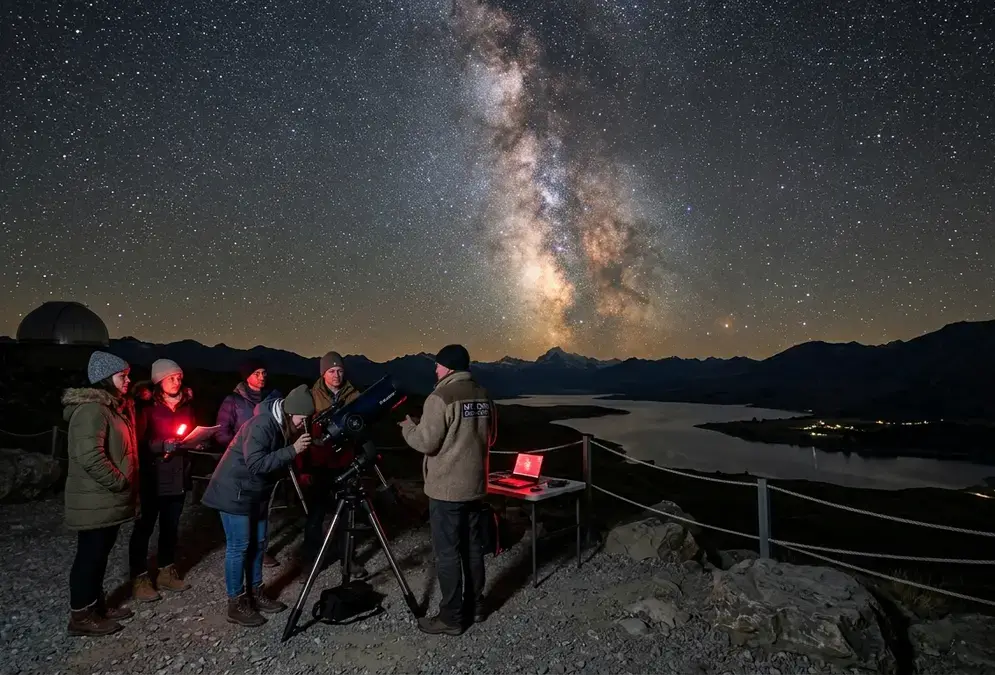
Every session opens with a conversation about your camera and what you actually want to come home with, then works through:
- Camera settings and equipment discussion tailored to what you brought
- Night-sky target selection and composition guidance
- Fundamental astrophotography on a static tripod
- Deep-sky astrophotography instruction, including access to equatorial tracking equipment that compensates for Earth's rotation during long exposures
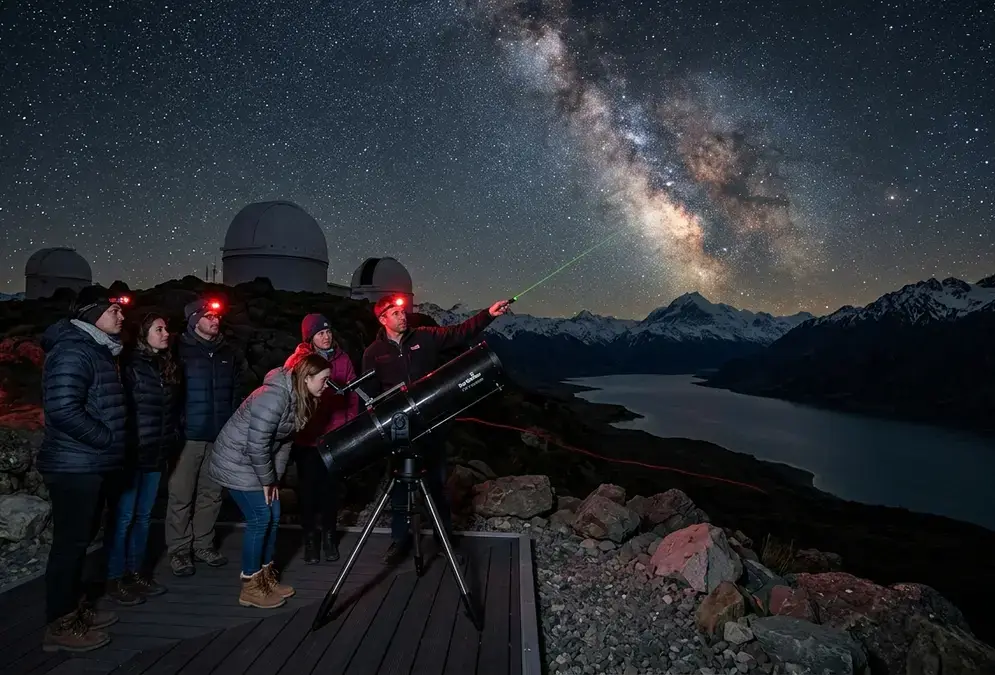
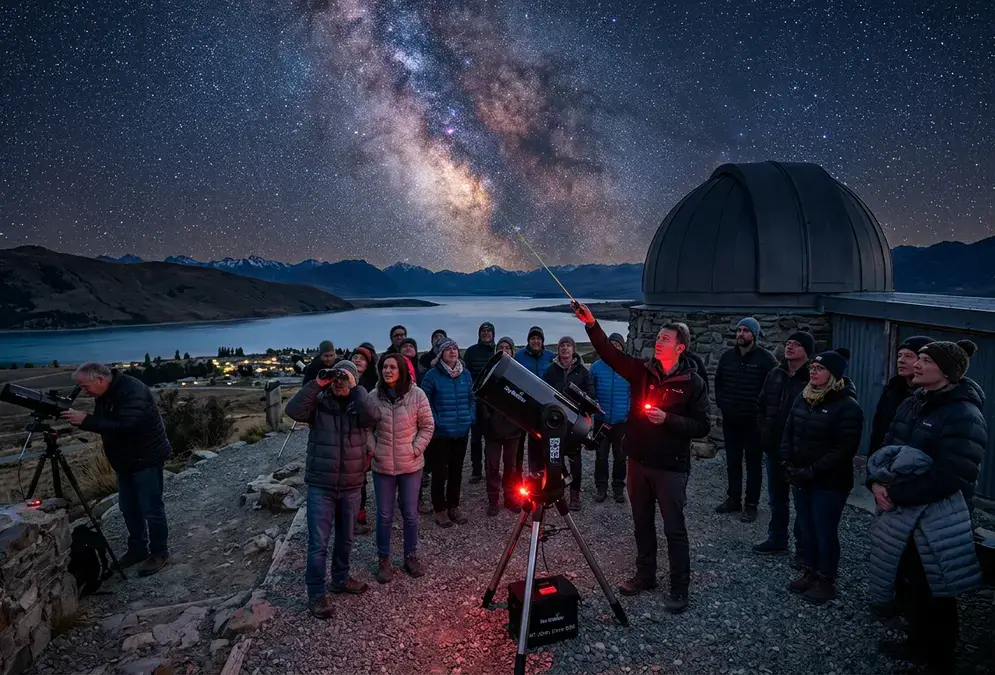
- Laser-pointer sky orientation, with instructional guides and red headlamps supplied on the night
Red light matters more than it sounds like it should: switching to red-only illumination protects the night vision you need for both framing shots and simply seeing where you are standing.
The gear you need to bring
Alpha CruX supplies tracking hardware, laser pointers, and site knowledge, not camera bodies or lenses. Bring:
- A DSLR or mirrorless camera with full manual control over aperture, shutter speed, and ISO
- A wide-angle lens, the kind that gets a useful slice of the Milky Way in frame rather than a single star cluster
- A sturdy tripod, non-negotiable for anything beyond a few seconds' exposure
If your gear stops at a phone camera, this specific tour is not built for you. Look instead at Dark Sky Project's Summit Experience, covered below, which needs no equipment of your own.
Composing against the Church of the Good Shepherd
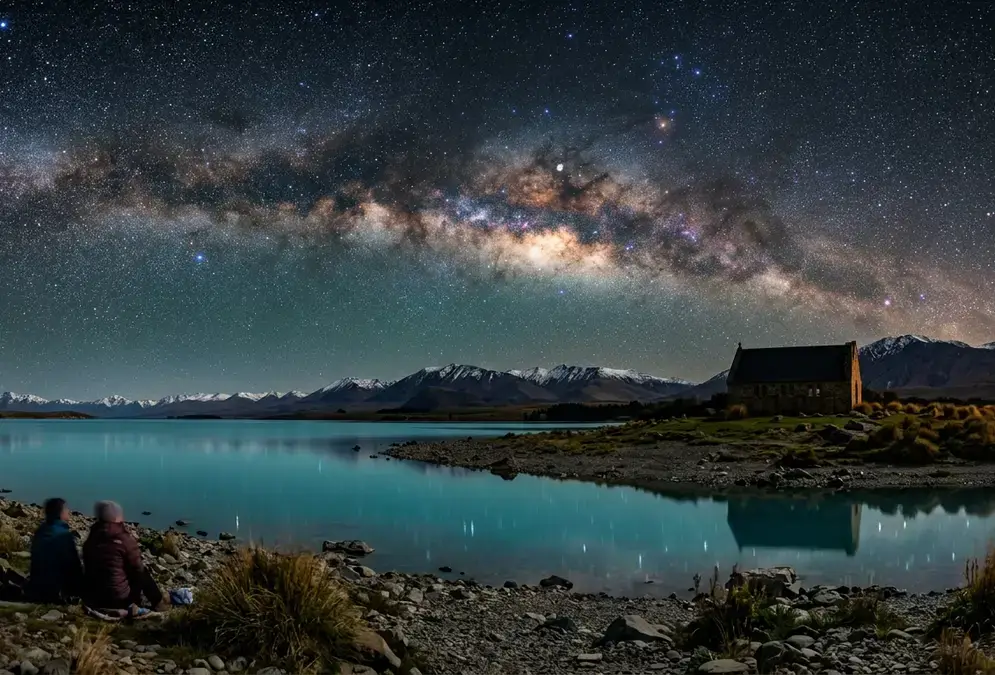
Alpha CruX uses the Church of the Good Shepherd, the small stone chapel on Lake Tekapo's shore, as a reference point in its own promotional shots, and it is worth asking your guide to work it into your composition too. A low, dark silhouette against the lake with the galactic core rising behind it is one of the most photographed frames in New Zealand astrophotography. Depending on where the guide takes you that night, you might also end up working with open views toward Mount John Observatory on the ridge above Tekapo, or the wider lakeshore itself. None of it is fixed in advance; the itinerary follows the sky and the moon, not a script.
When to book: New Zealand's inverted dark-sky calendar
If you are used to Northern Hemisphere stargazing seasons, recalibrate. In the Mackenzie Basin, winter runs June through August, and it is the strongest season for astrophotography: the longest nights, the driest air, and the Milky Way's galactic core climbing nearly overhead rather than skimming the horizon. Alpha CruX runs sessions year-round, but if the trip is built around one serious photography session, winter is the safer bet.
December through February (New Zealand summer) is the busiest and priciest season to book in Tekapo, and it carries a real cost in cloud cover: cloud is the main risk to any Mackenzie Basin astro session, and cancellations happen often enough that no operator in the region promises clear skies on a given night. Because Alpha CruX sessions are private and arranged around your dates rather than run on a fixed nightly timetable, build slack into your trip, two or three possible nights rather than one, whichever month you travel.
Moon phase matters just as much as season. Deep-sky targets wash out under a bright moon regardless of how dark the surrounding reserve is, so check the lunar calendar before locking in dates and aim for the days either side of new moon.
Price, booking, and what to do if Alpha CruX is booked out
A private, three-hour astrophotography lesson costs $590 NZD, booked directly through alphacrux.co.nz. There is no GetYourGuide listing for this specific tour, only general Lake Tekapo stargazing tours that skip the camera tuition entirely. That price is a genuine premium against the $58 to $124 USD range of shared-telescope tours in the region, and it reflects what you are actually buying: one instructor's undivided attention for the length of the session, not a rotation through a shared eyepiece.
If Alpha CruX is booked out, or the price does not fit the trip, three alternatives cover different needs:
- Dark Sky Project's Summit Experience at Mount John Observatory: guided stargazing through a fixed 16-inch telescope, with some astrophotography elements and partnered nighttime access to the Church of the Good Shepherd
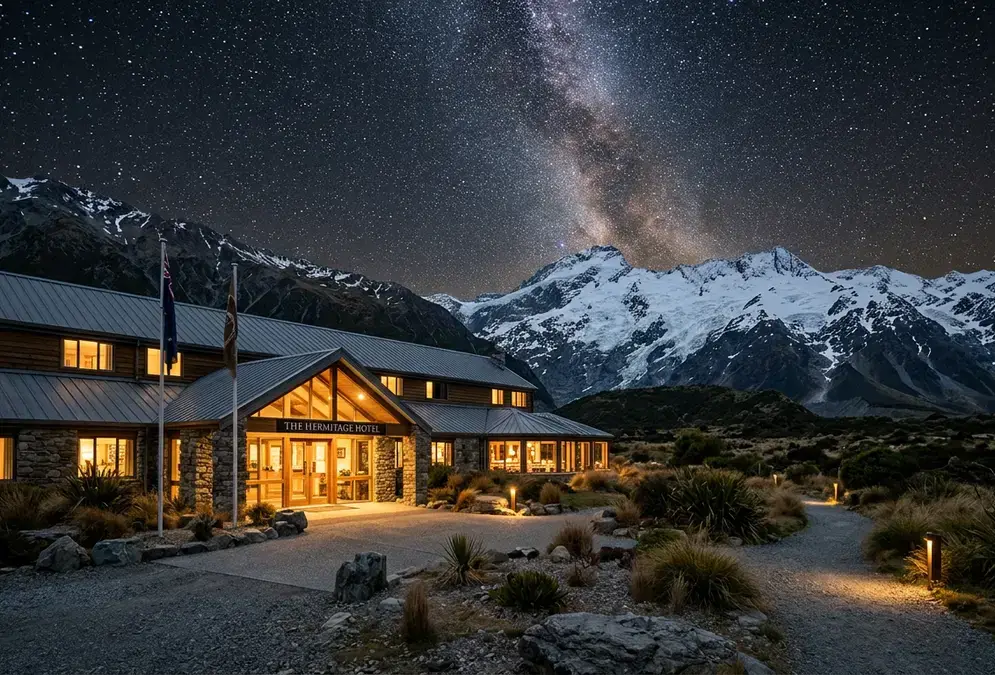
- Big Sky Stargazing, a 90-minute telescope-based tour run through the Hermitage Hotel, general astronomy rather than camera instruction
- Lake Pukaki Observatory, which can arrange private astrophotography workshops with a professional photographer on request
None of the three replicate Alpha CruX's dedicated camera coaching, but they are worth knowing about if your dates or budget do not line up.