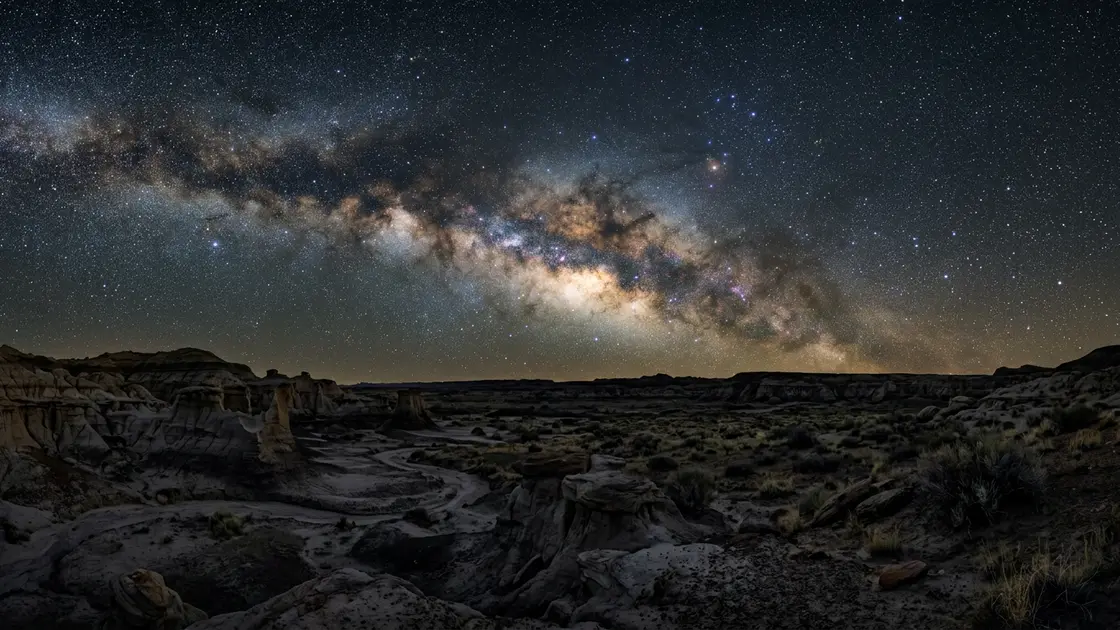
The Milky Way is visible on every clear night of the year, but its brightest stretch, the dense star field toward Sagittarius known as the galactic core, only clears the horizon for part of it. Miss core season and a camera points at a washed-out gap of sky; time it right and the core rises dense enough to throw faint structure onto open ground below. That window runs roughly February to October in the Northern Hemisphere and January to November in the Southern Hemisphere, and the hemisphere difference matters as much as the calendar month.
When the galactic core is visible: hemisphere by hemisphere
North of the celestial equator, the core stays low. It clears the southeastern horizon before dawn as the season opens in February and March, climbs to its highest point through June and July, then fades back into pre-dawn glow by October. Even at its best, a Northern Hemisphere observer is looking at the core skimming the southern sky rather than passing overhead, which is why hazy air near the horizon does more damage here than it does further south.
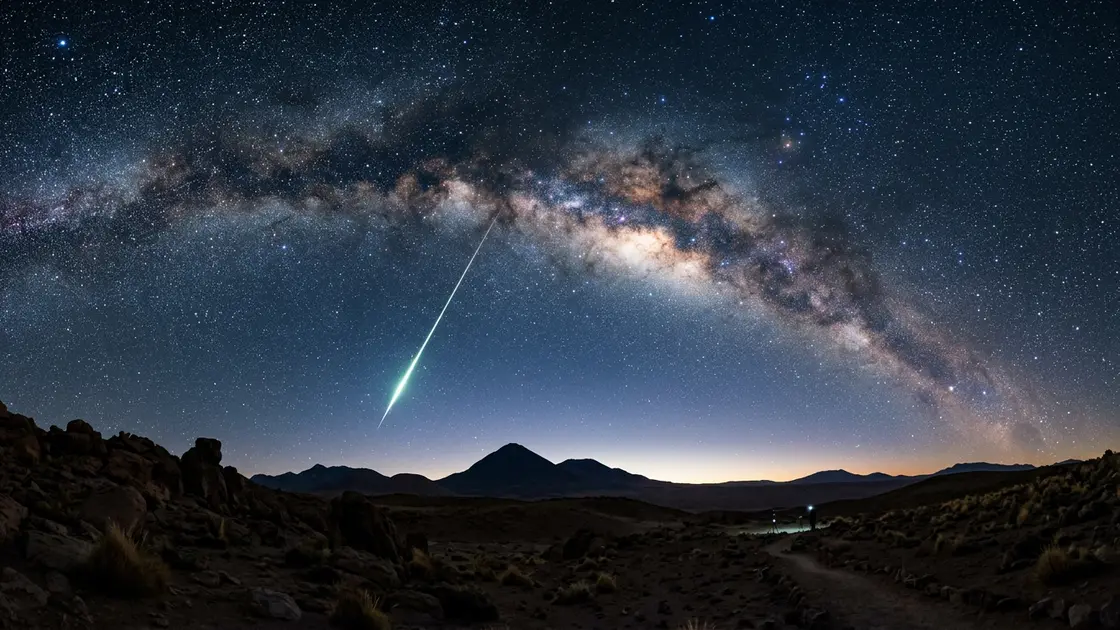
South of the equator, the geometry works in the viewer's favor. The core passes nearly overhead from sites in the Atacama and the Namib rather than hugging a horizon, and the season itself stretches longer, from late January through late November, broadest through the southern winter of June to August. That overhead pass is the single biggest reason the Southern Hemisphere sky delivers a sharper, more detailed core: less atmosphere to look through, and none of the horizon haze that flattens contrast in Northern Hemisphere shots.
Timing it right: the new moon window
Getting the month right only gets you halfway there. Moonless nights matter as much as core season itself: once lunar illumination climbs past roughly 30%, its glow washes out the core's fine structure even from a genuinely dark site, and a full moon can outshine the fainter half of the galaxy entirely. The best viewing sits inside a new moon window, a few nights either side of each month's new moon, generally between midnight and 5am, when the core is both well-placed and the sky is at its darkest.
Which means the real planning question isn't "which month" but "which nights inside it." Check a lunar calendar before locking in travel dates, not after, and build the trip around the darkest nights rather than a fixed departure date. How to photograph the Milky Way works through the camera side of that same new-moon math, once the timing itself is settled.
Dark sky requirements: the Bortle scale
None of the above matters if light pollution drowns the sky before the moon even gets a vote. The Bortle scale ranks night-sky darkness from Class 1, a site so dark starlight alone casts a shadow, to Class 9, inner-city glow that erases everything but the brightest planets. A full moon alone can turn a genuinely dark Class 2 sky into something as washed out as Class 6, which is why a serious core-season trip plans around both variables at once rather than either alone.
For the core to show real structure, in a photo or to the naked eye, aim for a site rated Bortle Class 4 or darker. Below that threshold the core survives but fades fast; past Class 6, it's essentially gone. Every destination below clears that bar comfortably, most of them by several classes.
Where to go: four destinations built for core season
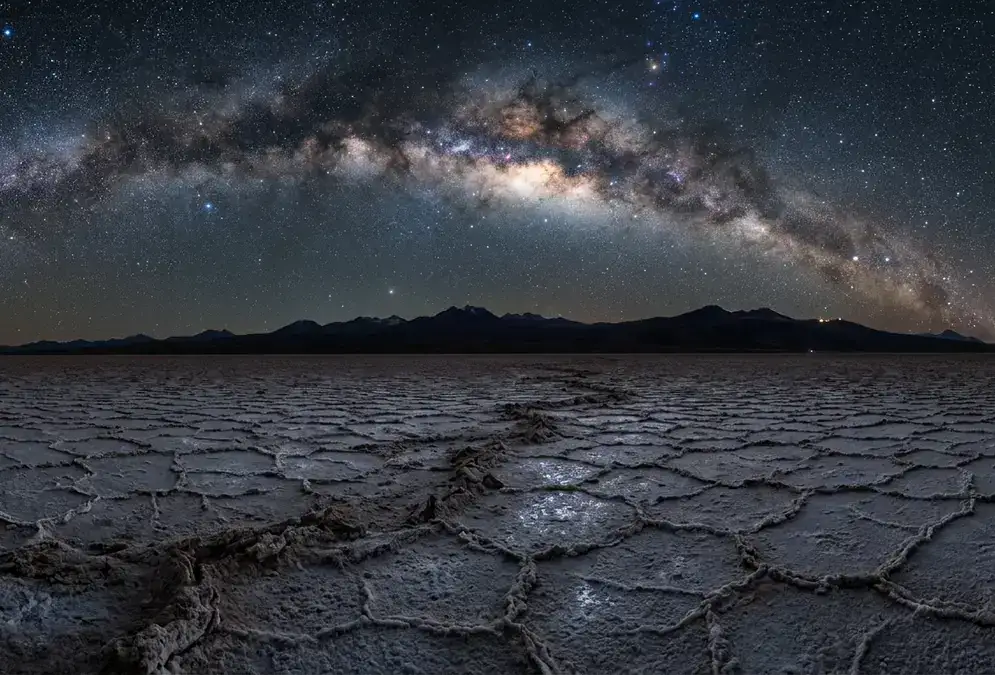
- Atacama Desert, Chile — Bortle 1–2 skies and 300+ clear nights a year; the core transits 80–85° above the horizon from roughly 23°S, essentially overhead and among the highest passes anywhere on Earth.
- NamibRand Nature Reserve, Namibia — Africa's first Gold Tier Dark Sky Reserve; the core climbs high and holds for hours from March through September, with no meaningful light source on any horizon.
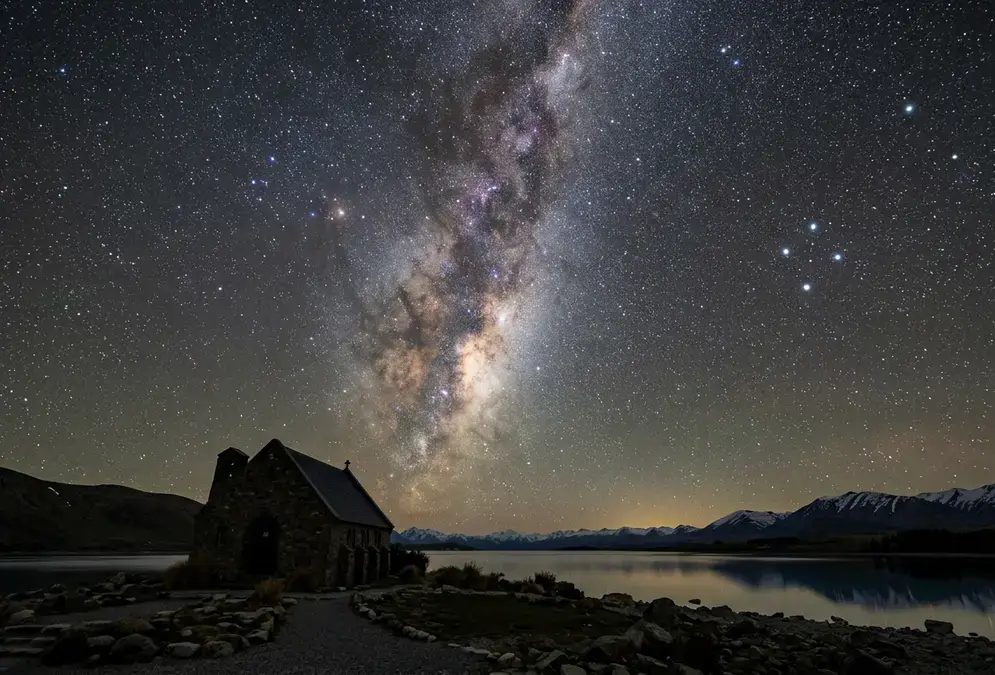
- Aoraki Mackenzie, New Zealand — a Bortle 2 Gold Tier reserve where the core sits directly overhead during the southern winter (June–August), with a broader clear-night window from March to October.
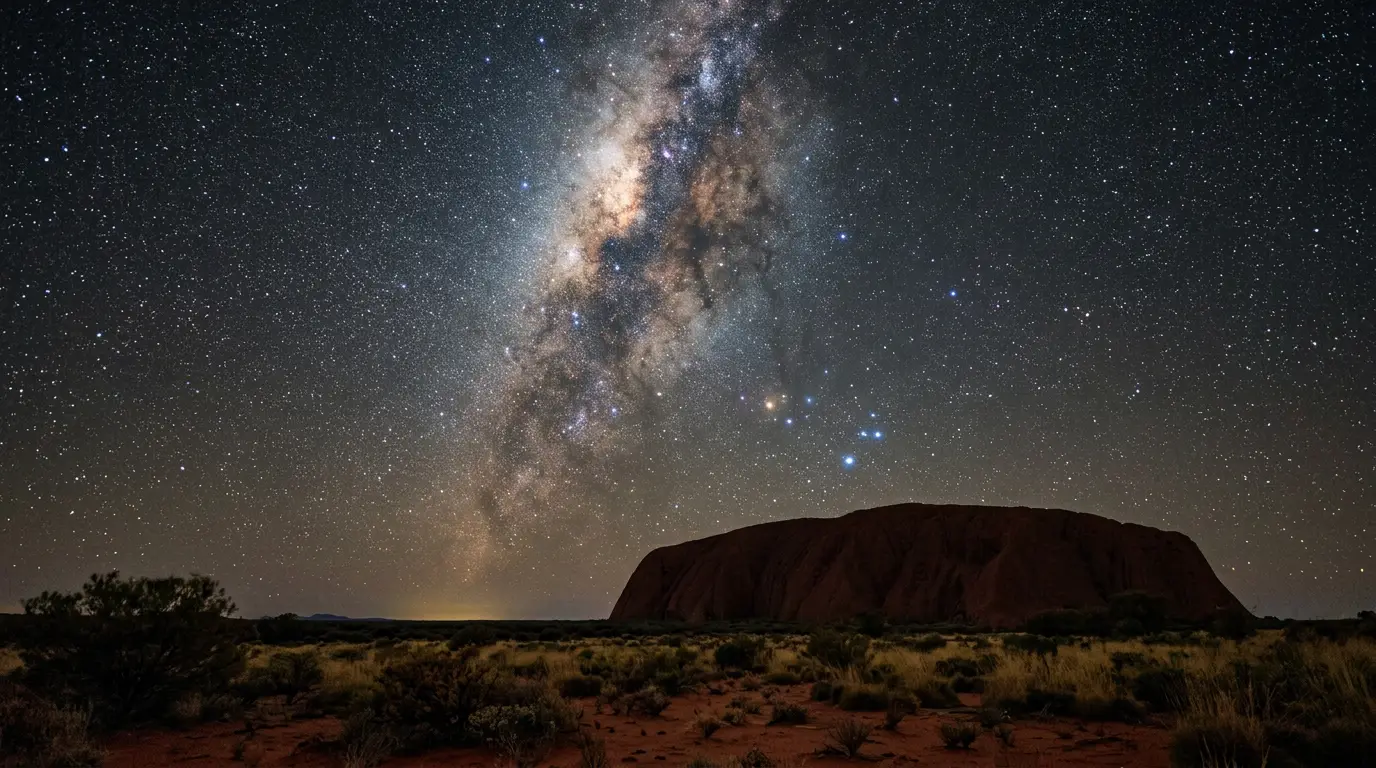
- Uluru, Australia — no certified Bortle rating, but the nearest town, Yulara, is about 20 km away, though Alice Springs, the nearest city, is roughly 470 km by road; the core rises highest May through September, on land jointly managed by the Anangu and Parks Australia.
All four sit south of the equator, which is exactly the point: this is where the core passes overhead instead of skimming a horizon, and where a first astrotourism trip built around core season pays off most obviously.
Planning around the season, not the calendar year
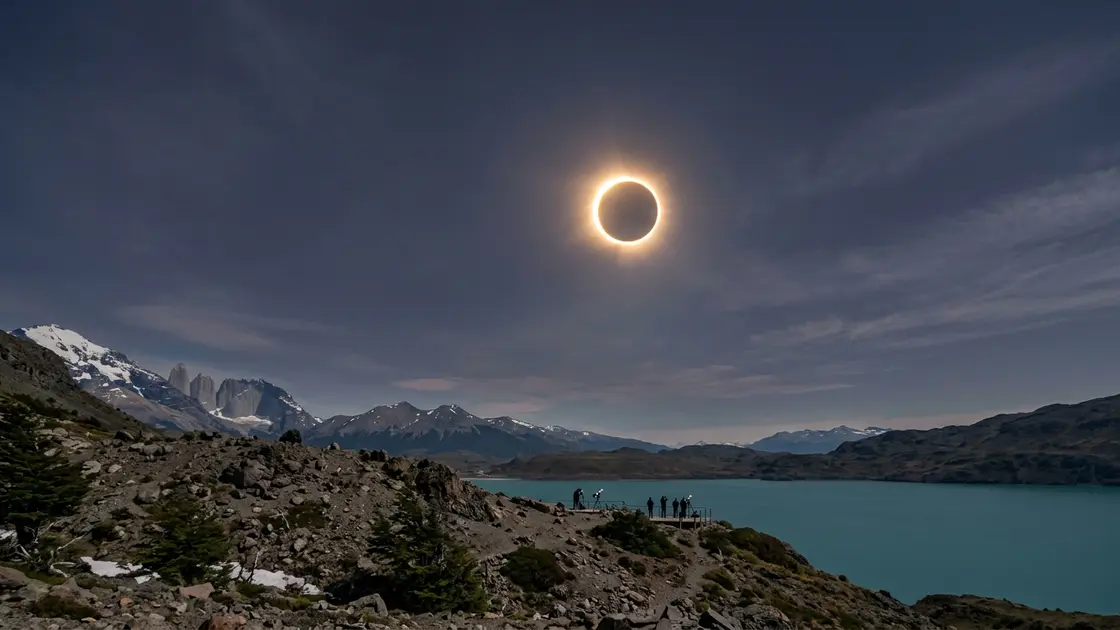
None of these destinations need a record year or a rare astronomical event to earn a visit. Core season repeats on schedule, every year, at every latitude; what actually changes trip to trip is which nights inside it land on a new moon and a clear sky. Pick the hemisphere, pick the destination, then let the moon phase, not the plane ticket, decide the exact dates.