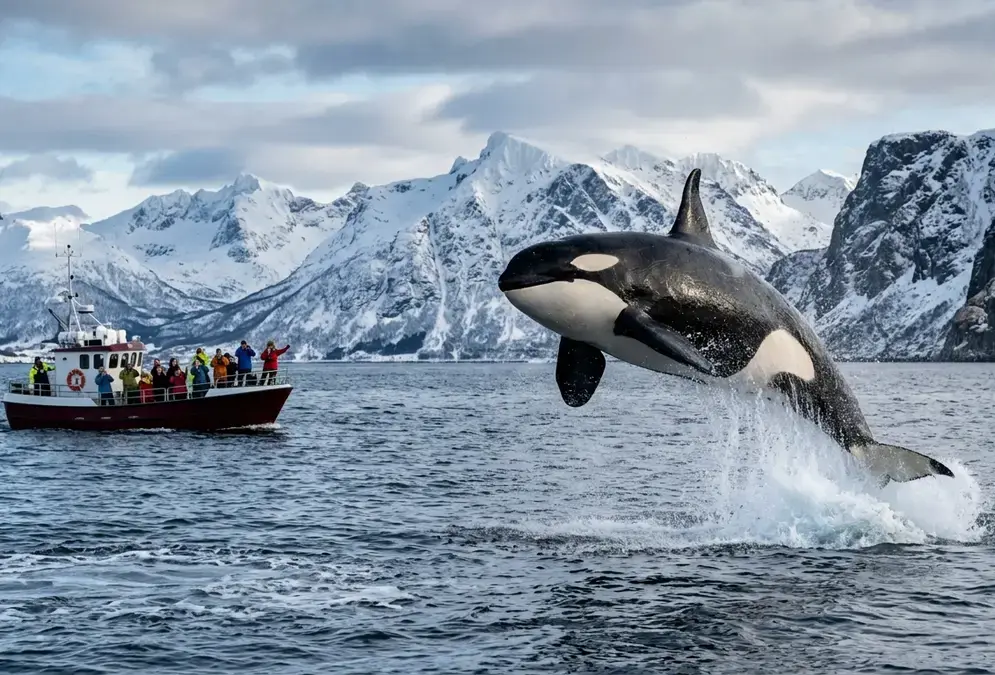
The orca arrive when the herring do, usually early November, and some years the pods working Skjervøy fjord — 120 km north of Tromsø — number 60 animals or more. Norwegian spring-spawning herring winter in these coastal waters in dense shoals, and the predators work them in coordinated groups: orca pods drive fish into tight bait balls near the surface, then stun them with powerful fluke slaps, a technique called carousel feeding. Humpback whales lunge-feed on the same schools, occasionally breaching entirely clear of the water. Full-day tours run from Tromsø Harbour, transiting two hours north to where active feeding concentrates.
Which species you'll encounter
Orca are toothed whales that hunt in family pods using cooperative, learned technique. Humpbacks are baleen whales that feed with long, low-speed lunges and surface periodically in dramatic fashion. Beyond those two, encounters with minke whales, fin whales, and harbor porpoises are possible on any given day. Some operators carry hydrophones and lower them overboard when cetaceans are nearby, designed to pick up orca vocalizations — clicks, whistles, coordinated calls — over the engine hum. Sightings are never guaranteed: herring migration routes shift year to year, and when the shoals move, the whales move with them. Most operators offer free rebooking for a second day if no whales appear.
Why November to January
Norwegian spring-spawning herring began wintering reliably in the fjords around Skjervøy from approximately 2017, when their migration route shifted north into more accessible coastal waters. Before that, winter cetacean concentrations here were rare. Orca arrive as soon as herring do, typically early November; humpbacks follow within weeks. The peak window for sightings is mid-November through mid-December, when herring density is highest and cetacean pods are most active. By late January the shoals begin dispersing offshore and the whales follow. Calling the operator in October to ask whether herring have been confirmed that season is worth the extra step.
A day at sea in polar night
Boats depart Tromsø Harbour at 08:30 and take roughly two hours to reach the primary feeding grounds around Skjervøy. Total time at sea runs six to eight hours. From November 21 through January 21, the sun stays below the horizon; in practice, this means two to three hours of amber and deep pink twilight each day, low on the horizon, before fading back to dark. Purpose-built catamarans carry heated indoor lounges and open viewing decks. The Barents Sea can run rough. Take seasickness medication before boarding, not after, and dress in merino wool base layers with a waterproof outer shell. Chemical hand warmers make a real difference when you're standing on an open deck in −10°C wind chill for hours.
Northern lights at sea
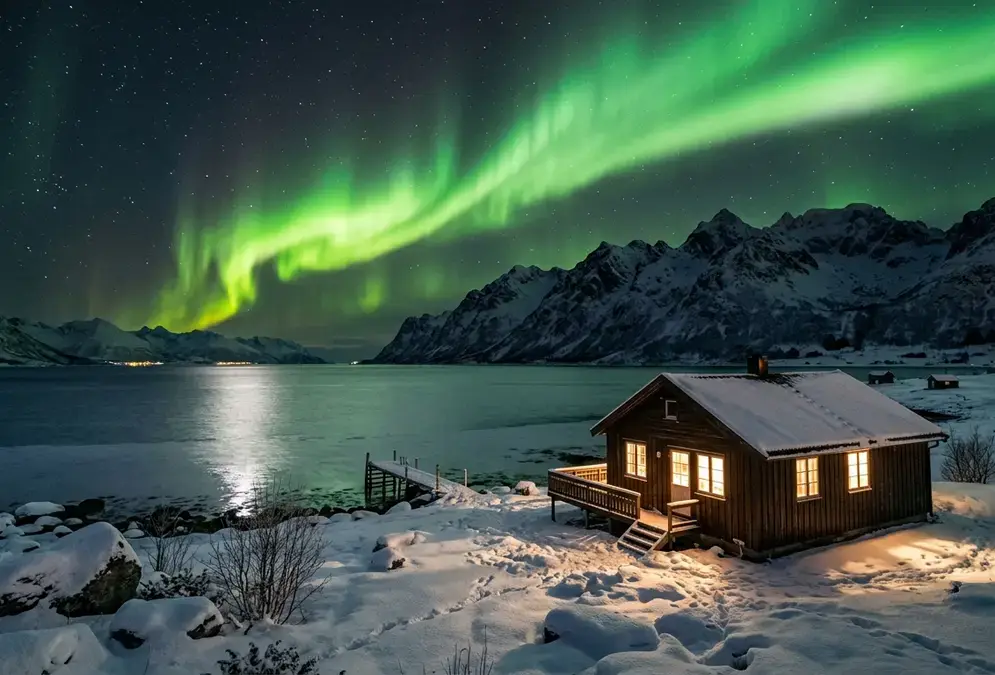
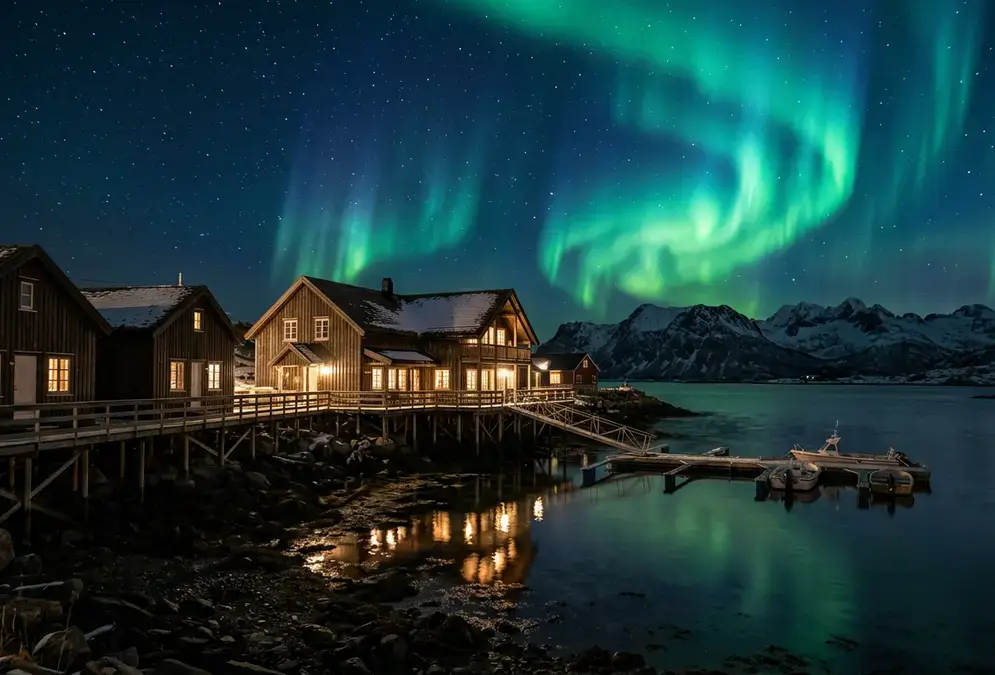
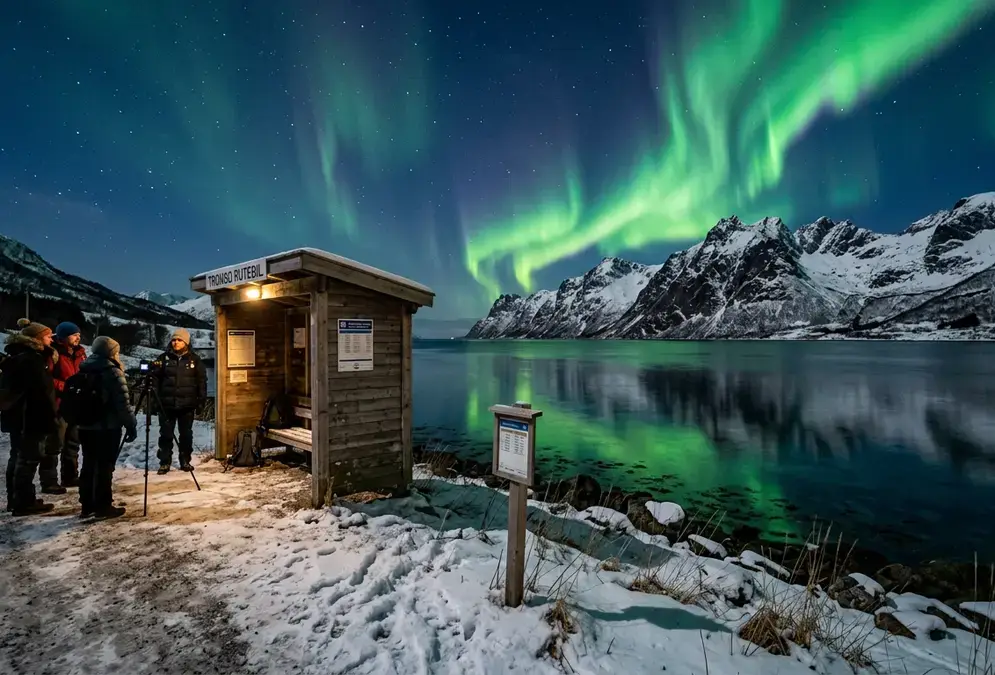
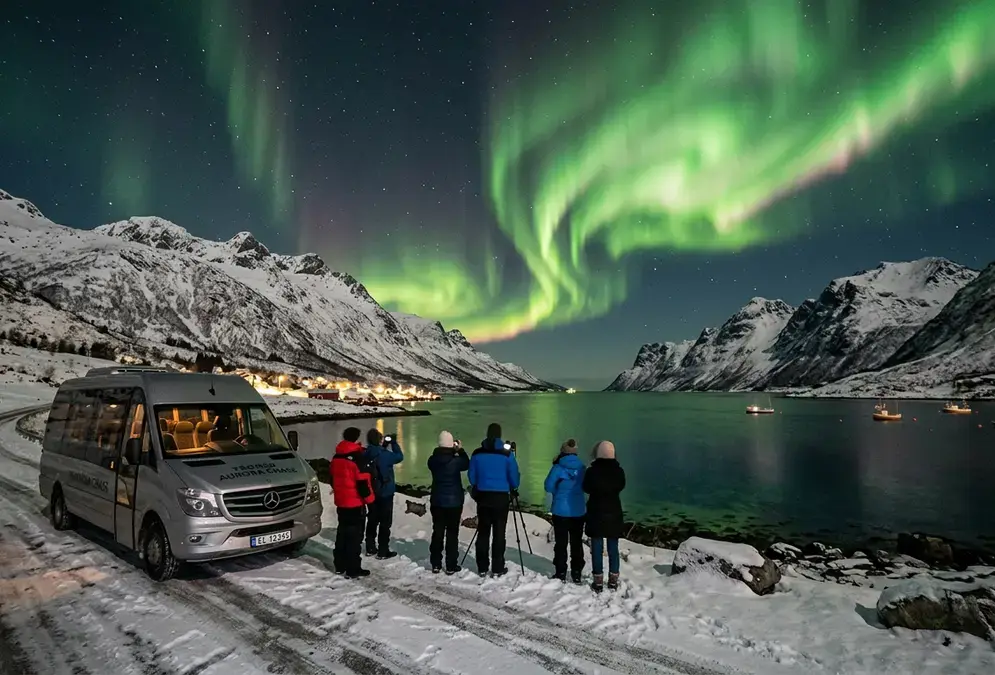
Whale watching season falls inside the heart of the aurora borealis window. A Kp index of 3 or above combined with clear skies produces visible northern lights, and at sea you have a full 360-degree horizon away from Tromsø's ambient light. If aurora appears during the return transit, you're watching it from an open deck over black water. It isn't why you book this tour; the whales are. But it's a genuine possibility between November and January, not a marketing claim, and some of the strongest aurora displays over northern Norway happen offshore, where nothing stands between you and the sky.