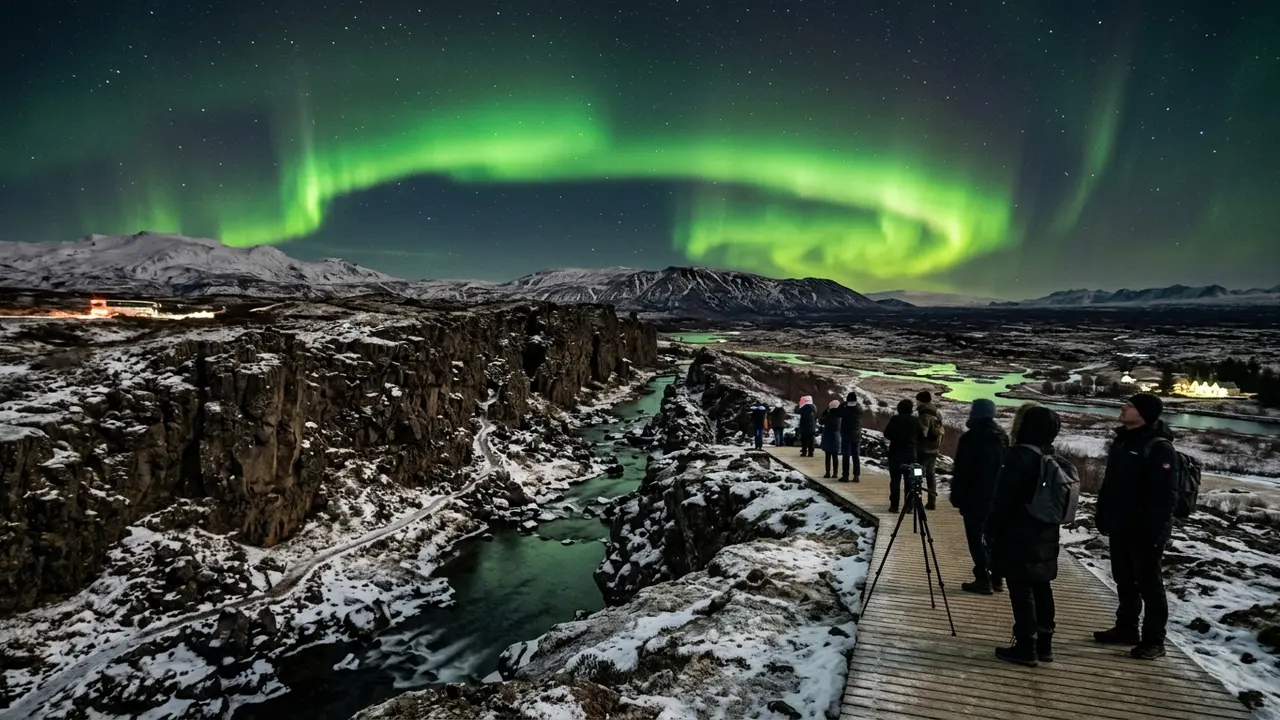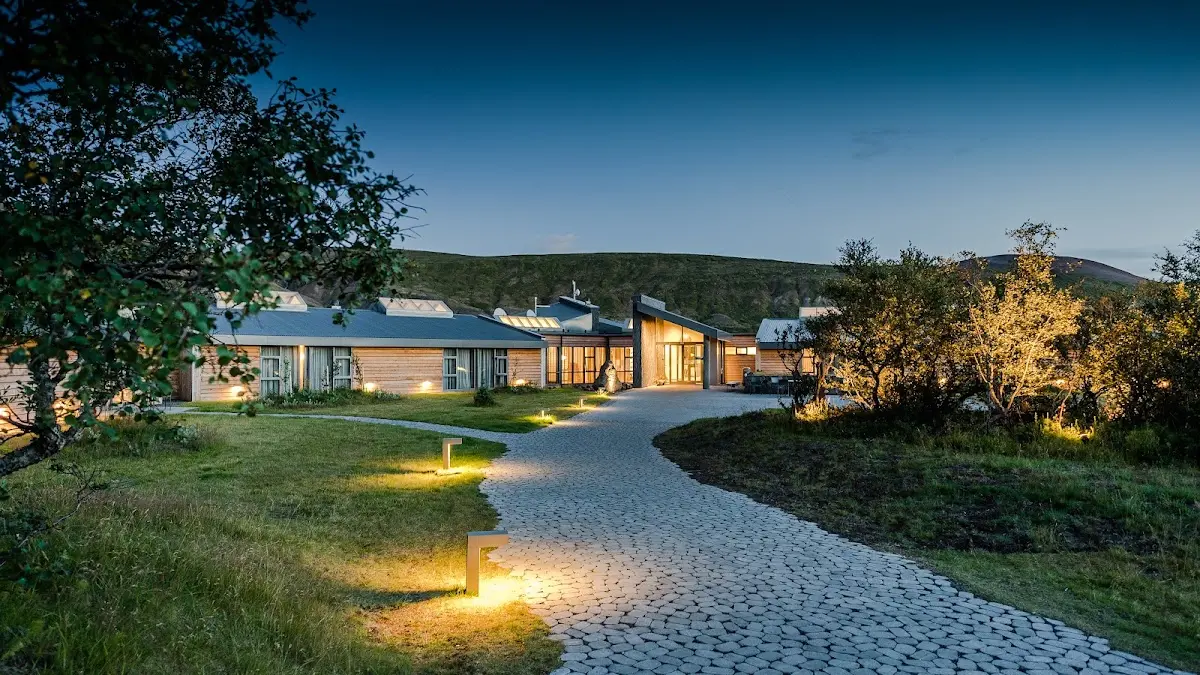
Hotel Húsafell sits two hours inland from Reykjavík, where Langjökull's ice-white dome fills the northern horizon and the nearest town with real light pollution is an hour's drive away. The payoff for that isolation: guests average three northern lights sightings a week through the winter, and Húsafell built an automated aurora wake-up call into every room, so nobody sleeps through it. Forbes has named Húsafell among the world's best hotels for watching the northern lights, and the reputation is earned by geography as much as by service.
The aurora case: Langjökull's cold sky and a phone that rings three times
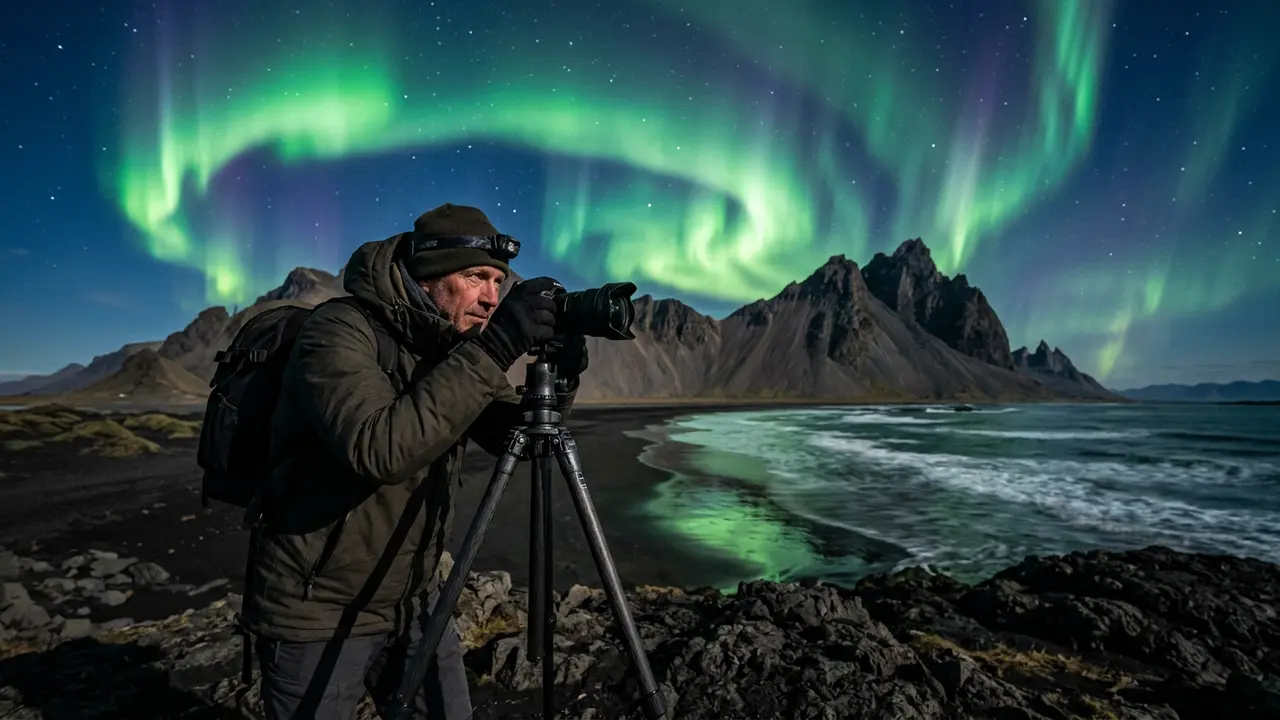
Iceland's northern lights season runs roughly October through March, and Húsafell's advantage is almost entirely about where it sits. The hotel is 132 km from Reykjavík, about 1 hour 45 minutes by car, far enough into the West Iceland countryside that streetlight glow stops being a factor. Above it, the high snowy dome of Langjökull glacier keeps the local air cold, dry, and stable. Húsafell averages three sightings a week between October and March, according to guest reviews on Booking.com.
The hotel's answer to "what if I fall asleep waiting" is a genuinely useful piece of low-tech: when the aurora appears, the room phone rings three times. No app, no notification you might swipe away by accident, just a landline call to wherever you're sleeping. It's a small thing and also the reason Forbes singled the hotel out. Guests in a Superior Deluxe or Suite room get a private patio, which turns the wake-up call into a five-second walk instead of a full dressing-and-stumbling-outside routine.
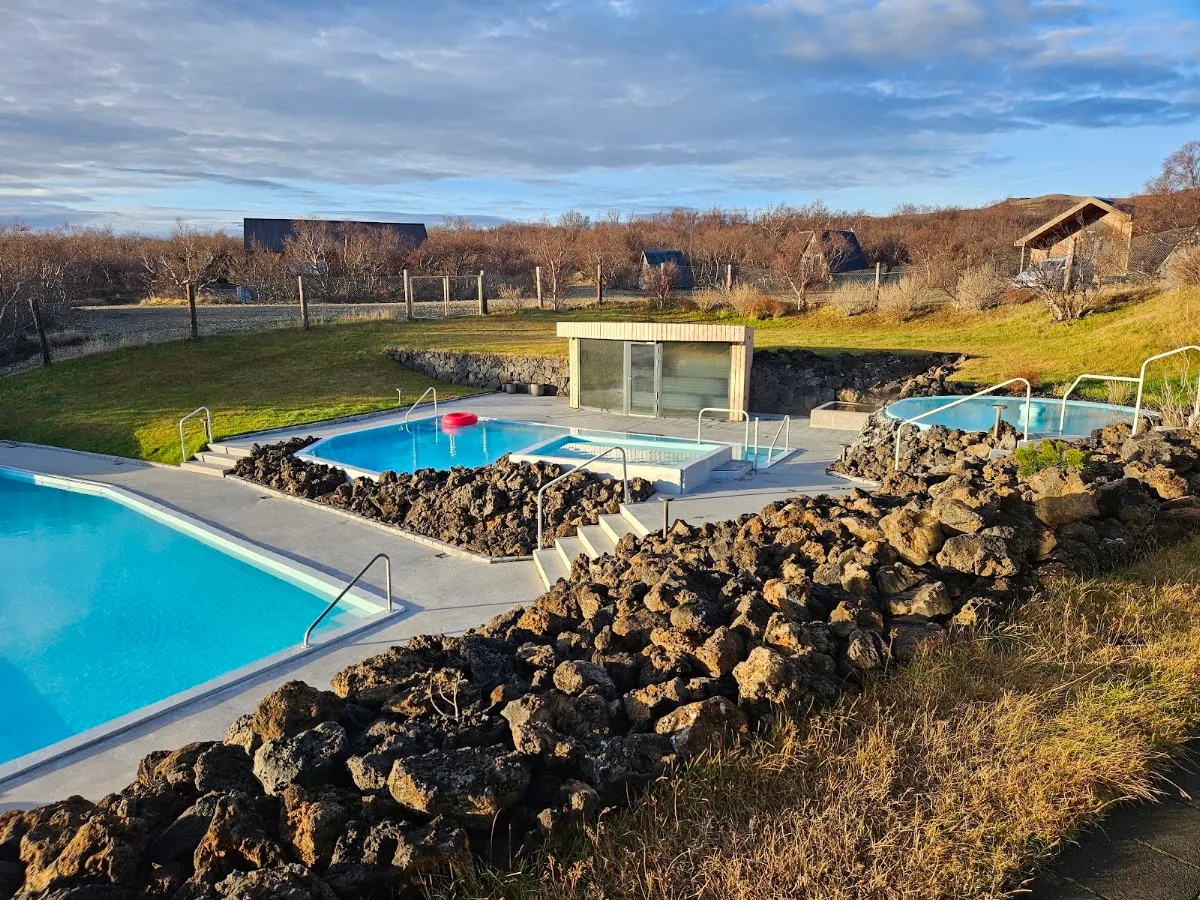
For open-air viewing without leaving the warmth entirely behind, the hotel's own Líndin thermal pools sit outdoors on the property. Soaking in geothermal water while watching for green light overhead is a real pairing, not a marketing invention: the pools are uncovered and open after dark.
Rooms: 48 across four categories, heated floors, patios if you pay for them
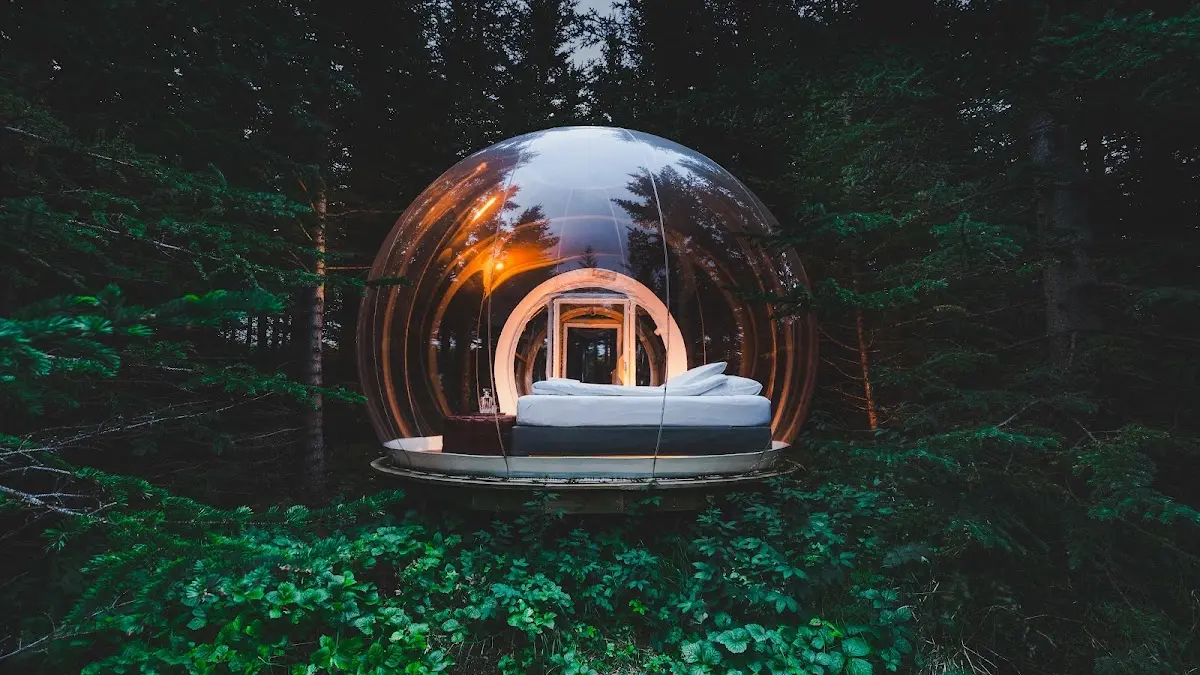
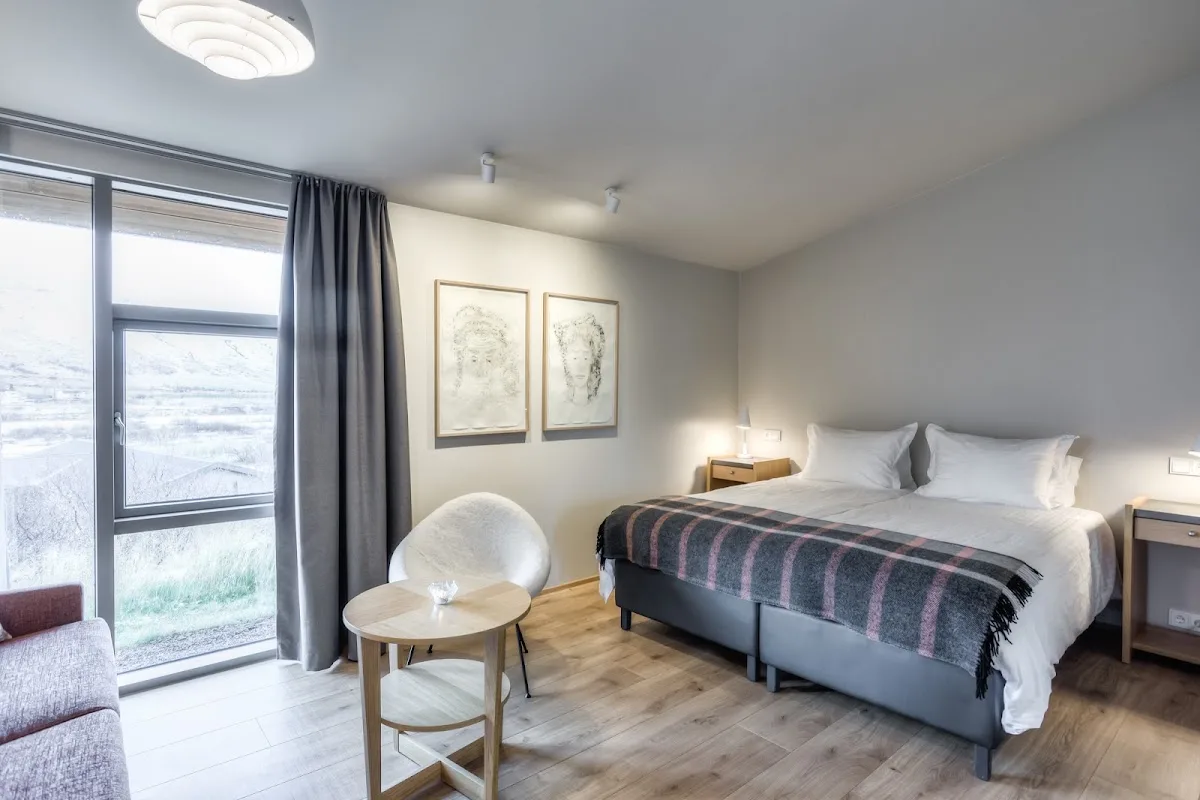
Húsafell has 48 rooms split into four categories. Standard rooms (22 m², 39 of the 48) are compact but heated-floor comfortable; Deluxe steps up to 28 m²; Superior Deluxe reaches 31 m² and adds a private patio and sleeper sofa; the Suite tops out at 45 m² with the same patio. Every room carries the same base features: heated floors, a flat-screen TV, tea and coffee facilities, and organic toiletries from the Icelandic Sóley brand. Handicap-accessible rooms are available on request.
The patio is the detail worth paying for if aurora viewing is the priority. Standard and Deluxe guests watching for the phone to ring still have to dress and walk outside; Superior Deluxe and Suite guests can step onto their own patio in slippers. It's not a large price jump for a considerably shorter distance between bed and sky.
Ice caves and hot springs within driving distance
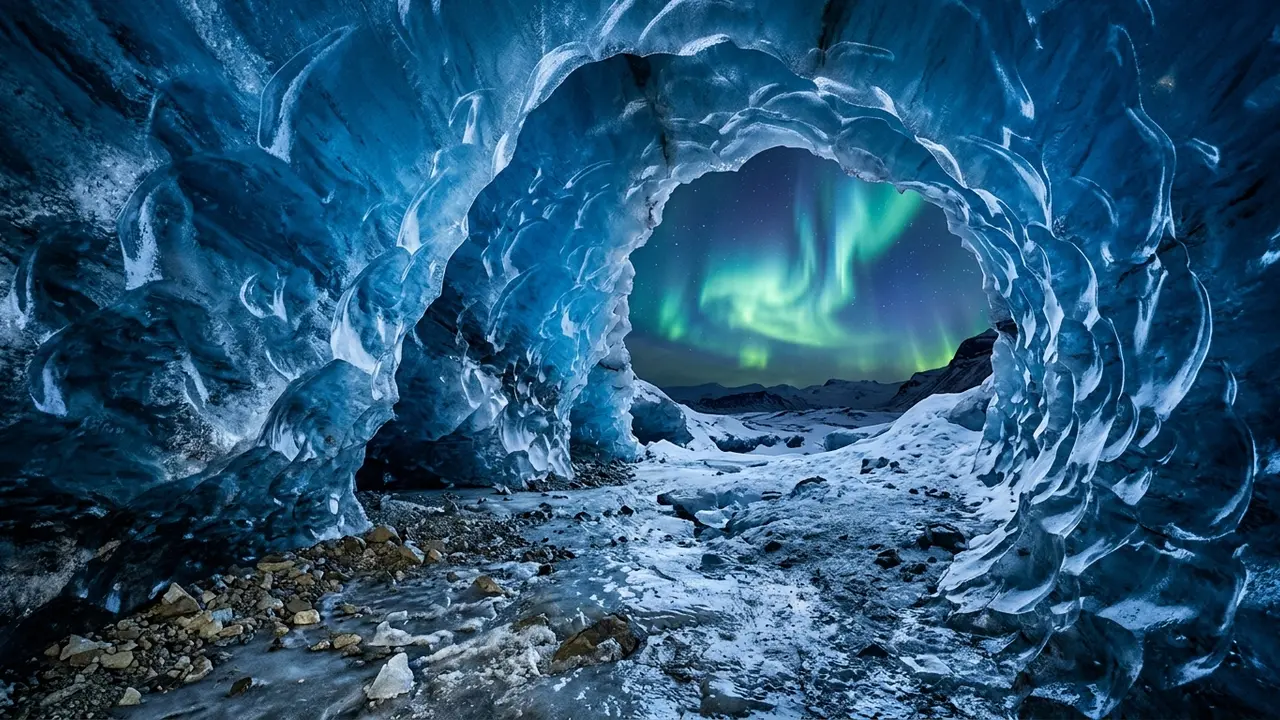
Húsafell's location earns it a second reputation beyond aurora: it's the departure point for Into the Glacier, the Langjökull ice cave tour. Glacier-proof trucks take groups of about 18 people roughly 45 minutes from the hotel area up onto the ice, where an hour-long walk through luminous blue corridors reveals ice layers more than 1,000 years old. The hotel's own tour desk books it, along with most other regional activities, so you're not juggling separate reservation systems.
Geothermally, the area around Húsafell is stacked. Deildartunguhver, described as Europe's most powerful hot spring, is a short drive away and feeds the Krauma baths. Húsafell Canyon Baths, opened in 2019, add two more geothermal pools in a canyon setting. None of this replaces the hotel's own Líndin pools, included with every stay, but it means a two- or three-night booking has enough daylight activity to fill the hours before dark.
Dining, spa, and the practical stuff
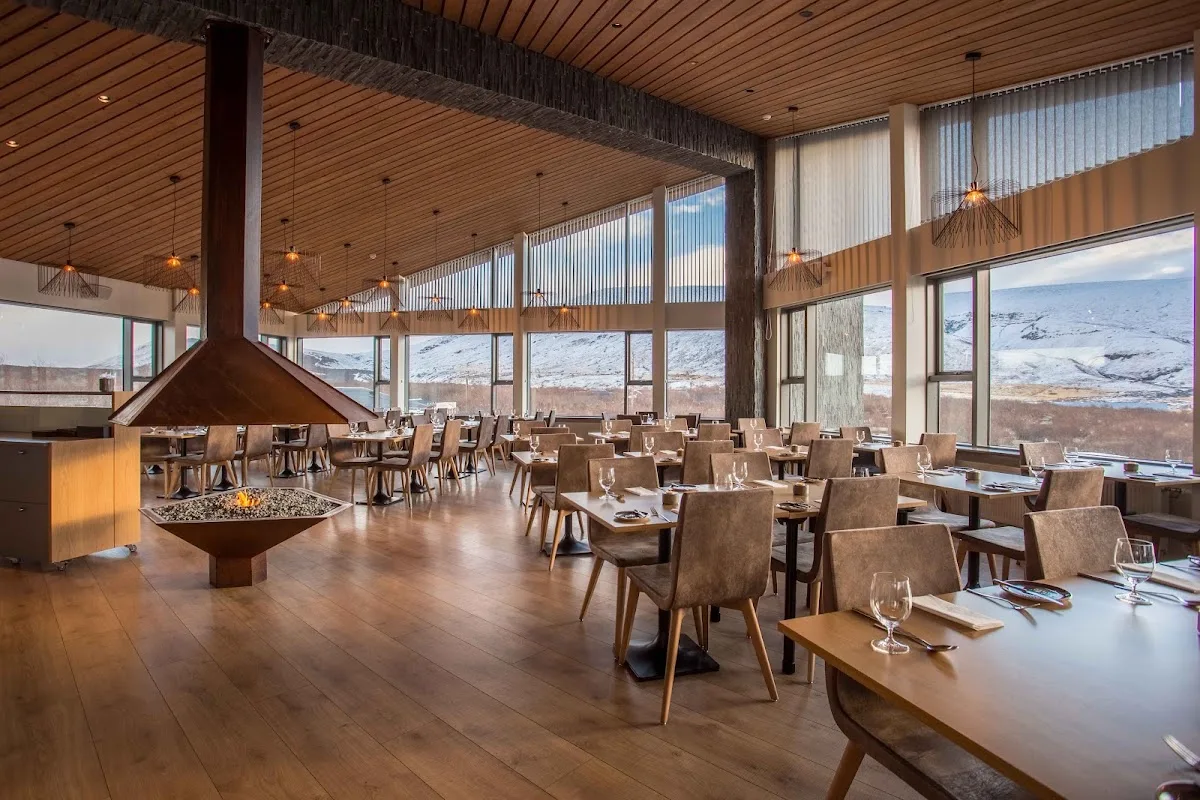
Two restaurants across four dining rooms cover breakfast, included with all room rates, through dinner, built around Icelandic ingredients. The full-service spa and Líndin pools are open to guests, and Wi-Fi is free throughout. Free on-site parking removes one Iceland-specific headache: finding somewhere to leave a rental car overnight at a remote countryside hotel.
Guest reviews put Húsafell at 8.9 out of 10 on Booking.com from 714 reviews, a strong score for a rural Icelandic property. The consistency of the praise (heated floors, staff, the aurora alert system) suggests the hotel delivers on its own pitch rather than overselling it.
Caveats: the drive, the odds, and why this isn't a guarantee
None of this promises you will see anything. Three sightings a week during peak season is a real average, not a certainty for your specific three nights, and Icelandic weather in winter is genuinely unpredictable: cloud cover kills aurora visibility no matter how strong the geomagnetic activity is underneath it. Book at least three nights if the northern lights are the whole point of the trip; two clear nights out of three is a reasonable expectation, not a promise.
The 1 hour 45 minute drive from Reykjavík also means winter road conditions matter, and a rental car with proper tires is worth confirming before committing to December or January. If you'd rather stay closer to Reykjavík and drive out for single-night aurora chases, or want to compare Húsafell against other West Iceland options, the best lodges for Iceland's northern lights covers the trade-offs between a city base and a remote lodge in more detail.