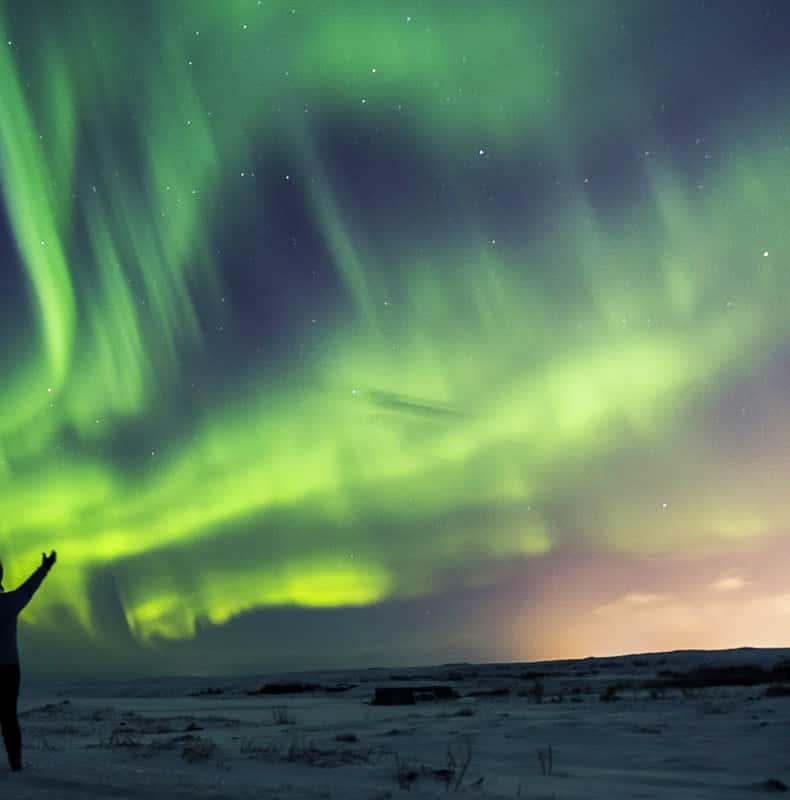
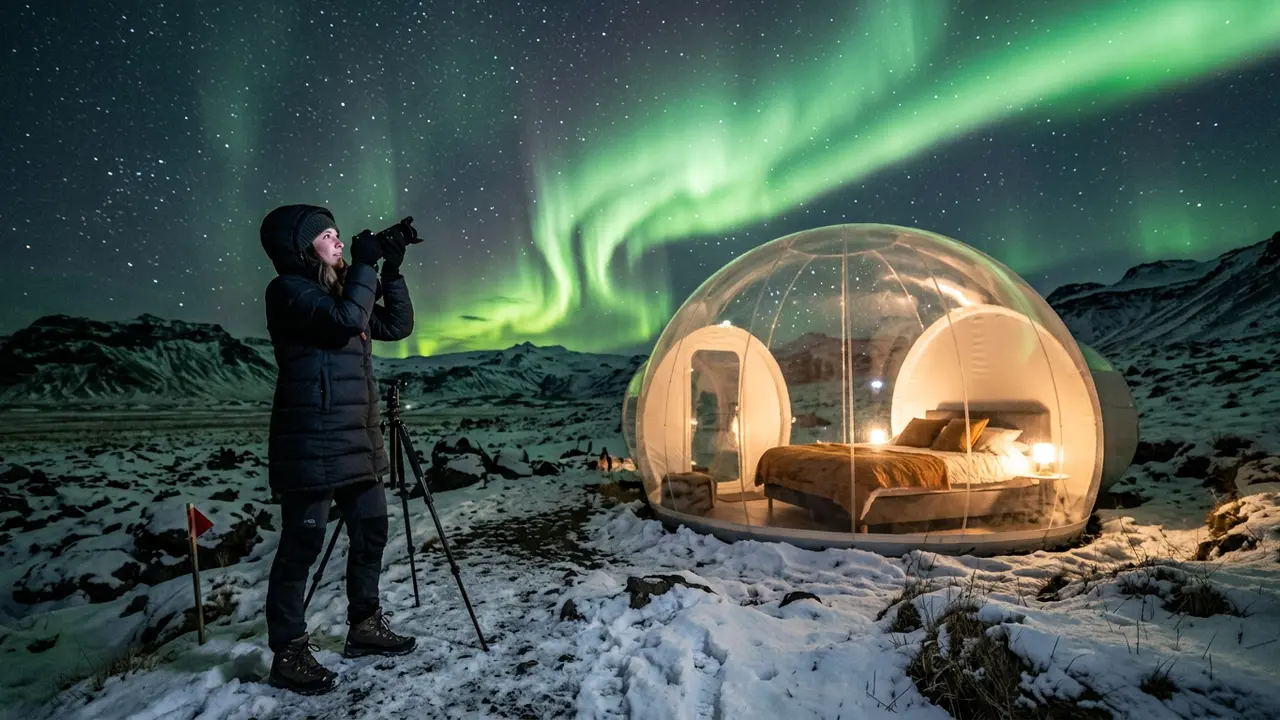
Traveler photographing green aurora borealis swirling above a transparent bubble-pod hotel in the Icelandic countryside, snow on the ground, stars visible through the dome

Best Lodges for Northern Lights in Iceland

Five Iceland lodges ranked for northern lights: aurora wake-up calls, dark-sky access, and value. From a transparent bubble pod to a glacier-side retreat.

Our top pick

Buubble Ölvisholt Bubble Hotel

Best value & most immersive

The Buubble Ölvisholt Bubble Hotel wins this list because no other Icelandic aurora lodge removes as much friction between you and the sky: no drive, no tour booking, no getting out of bed. At €229/night it also costs less than any competing option here, which makes it the rare case where the best aurora experience and the cheapest bed are the same booking. If you want the chase managed by professionals with an observatory and two decades of aurora wake-up calls, Hotel Rangá is the better fit, at roughly double the price.

Nine transparent bubble pods, an 8.8/10 Booking.com score across 144 reviews, and the lowest price on the list at €229 a night.

Runner-up: Hotel Rangá, which pioneered the aurora wake-up call in 2005 and runs its own observatory, for travellers who want the search for the lights handled by staff rather than done from a bubble.

Iceland's northern lights season runs roughly late August through mid-April, when the auroral oval dips low enough over the island that a moderate geomagnetic storm (Kp 3 or higher) often puts green light directly overhead. The catch is weather, not solar activity: Iceland's clear-sky odds swing hard from one valley to the next, and the lodge you pick decides whether you watch from your bed or drive an hour into the dark to find a gap in the clouds.

These five lodges are ranked on the aurora-viewing setup itself (wake-up calls, glass walls, unobstructed sightlines from the room), how far the property sits from Reykjavík's light dome, the novelty of the accommodation, guest satisfaction scores on Booking.com and TripAdvisor, and price-to-value. The Buubble Ölvisholt Bubble Hotel ranks first for a simple reason: no other property here lets you watch the aurora from bed without leaving the warmth, and at €229 a night it also costs less than any other hotel on the list. For the full picture of when and where to base yourself, see the Iceland northern lights destination guide. Traveling in August 2026 instead of aurora season proper? These same south-coast and Snæfellsnes bases are worth booking early for the August 12, 2026 total solar eclipse, Iceland's first since 1954. A rental car is close to mandatory for four of the five; none of these lodges sit within walking distance of Reykjavík, and no taxi is waiting for you in a farm field at 2 a.m.

Ranked list

How we chose

The places on this list were selected against the following editorial criteria.

  • Aurora-viewing setup at the property itself: wake-up calls, glass walls, or in-bed visibility versus having to drive somewhere dark
  • Distance from Reykjavík's light pollution and drive time to the property
  • Novelty and comfort of the accommodation type, from transparent pods to traditional luxury suites
  • Guest satisfaction scores on Booking.com and TripAdvisor
  • Price-to-value ratio for the aurora experience delivered, not just the room

All picks at a glance

  • Buubble Ölvisholt Bubble Hotel

    Best value & most immersive
    From ($/night)
    $$$ · from €229/night
    Key aurora-viewing feature
    Transparent bubble pods near Selfoss, aurora visible from bed, from €229/night
  • Hotel Rangá

    Best aurora programme
    From ($/night)
    $$$ · from €431/night
    Key aurora-viewing feature
    On-site observatory, pioneering wake-up call service since 2005, from $360/night
  • ION Adventure Hotel

    Best design, Golden Circle base
    From ($/night)
    $$$ · from $279/night
    Key aurora-viewing feature
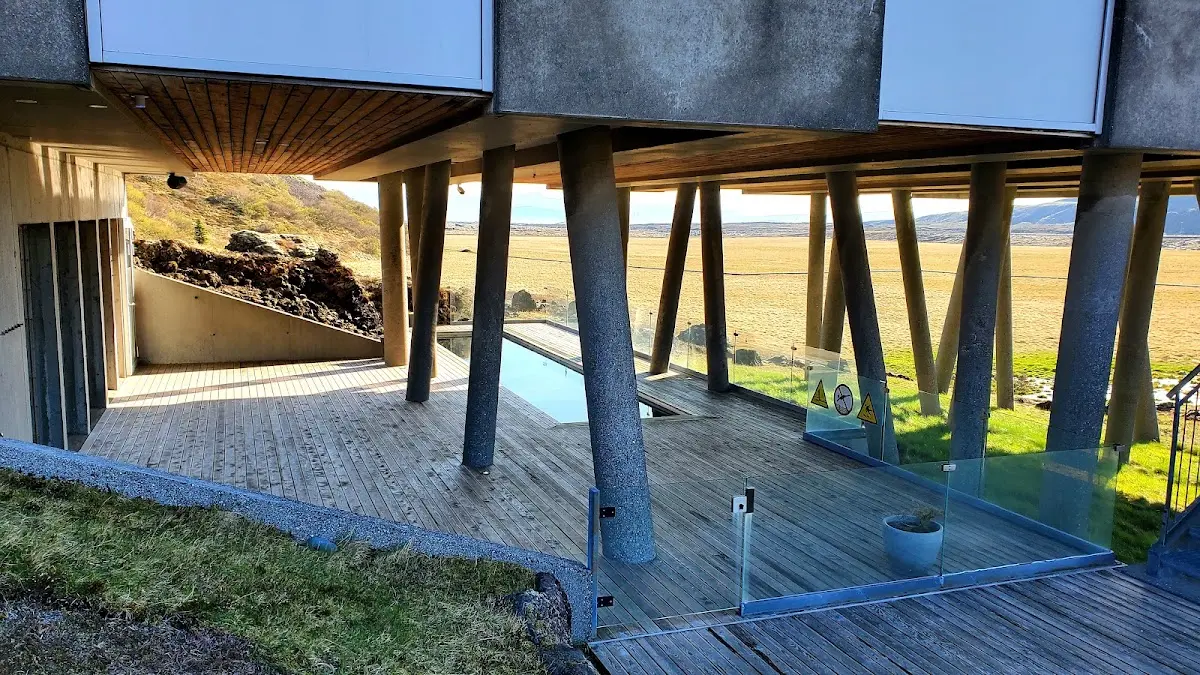
    Floor-to-ceiling glass near Þingvellir NP, Design Hotels member, from $279/night
  • Hotel Húsafell

    Best dark-sky odds
    From ($/night)
    $$$ · from $136/night
    Key aurora-viewing feature
    Forbes-recognised aurora hotel near Langjökull Glacier, ~3 sightings/week, from $249/night
  • Center Hotels Arnarhvoll

    Reykjavík city base, not a dark-sky pick
    From ($/night)
    $$ · from $135/night
    Key aurora-viewing feature
    Old Harbour city hotel with a staff-run aurora wake-up call, from $135/night

On the map

Pin numbers match the ranking below.

Interactive map — loads as you scroll (requires JavaScript)

When to go

Iceland's aurora season runs from roughly late August through mid-April, whenever the nights are dark enough to see it. Midsummer (May-July) rules out viewing almost entirely: Iceland sits far enough north that the sky never gets properly dark. Geomagnetic activity itself doesn't follow a clean seasonal pattern, but statistically the weeks around the spring and autumn equinoxes see more frequent storms, a real effect tied to the angle between Earth's magnetic field and the solar wind. Cloud cover, not solar activity, is the biggest variable working against you in an Icelandic winter.

  • January: Peak — Nearly 19 hours of darkness and reliably strong aurora activity; the main risk is winter storms rolling in cloud cover for days at a time.
  • February: Peak — Still dark enough for a full evening of viewing; roads to remote lodges like Húsafell can close briefly after heavy snow.
  • March: Peak — The spring equinox brings a statistical uptick in geomagnetic storms; days lengthen fast but nights are still long enough for solid viewing windows.
  • April: Good — Darkness shortens quickly through the month; early April still works well, late April is marginal past the first week or two.
  • May: Off-season — Nights barely get dark enough to see stars, let alone the aurora; this is the start of Iceland's bright-season shutdown.
  • June: Off-season — Near-continuous daylight around the summer solstice rules out aurora viewing entirely.
  • July: Off-season — Still too light most nights; this is midnight-sun territory, not aurora territory.
  • August: Fair — Darkness returns in the last two weeks; late-August trips can catch the season's first sightings on a clear, moonless night.
  • September: Good — Nights lengthen fast after the equinox and geomagnetic activity often ticks up; a genuinely good month with fewer crowds than winter.
  • October: Peak — Long nights, workable weather before the worst winter storms set in, and a shoulder-season price advantage most of these lodges still carry.
  • November: Good — Nights are long but Atlantic storm systems bring the year's most persistent cloud cover; patience matters more than any other month.
  • December: Peak — The longest nights of the year; cold and occasionally stormy, but clear windows between fronts can deliver hours of dark sky.

Reporter notebook

Insider tips

Best time

Match your dates to the Kp forecast, not just the calendar

The Icelandic Met Office publishes a 3-day aurora and cloud-cover forecast; check it before you lock in which night you'll drive or step outside, rather than assuming any night in the September-April window will deliver. The weeks around the spring and autumn equinoxes carry a statistical edge in geomagnetic activity, but a clear sky on a low-Kp night beats a cloudy sky on a high-Kp one every time.

Booking tip

Book Rangá's observatory sessions and Buubble's pods months ahead for winter

Hotel Rangá's astronomer-led observatory sessions and the Buubble Ölvisholt Bubble Hotel's nine pods both sell out well in advance for the peak December-to-February window. If your dates are fixed, book the lodge first and build flights and a rental car around it, not the other way round.

In this guide

5 places
  1. Buubble Ölvisholt Bubble Hotel

    Best value & most immersive

    Buubble Ölvisholt Bubble Hotel

    $$$ · from €229/night 4.4 (83)

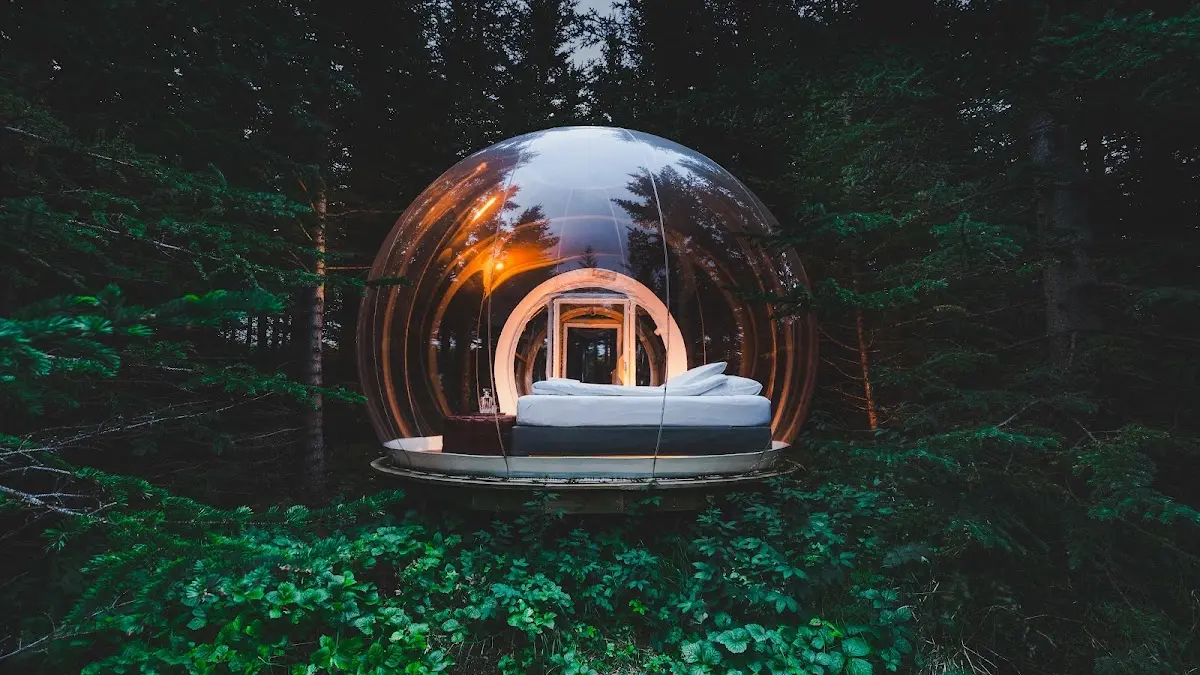
    The Buubble Ölvisholt Bubble Hotel, marketed as the "5 Million Star Hotel," is a cluster of nine transparent geodesic pods set in a forest clearing 14 km (8 miles) from Selfoss on the South Coast. There is no partition between your pillow and the sky: the pod itself is the window. On a clear night between September and April, you watch the aurora appear directly overhead without getting out of the heated bed.

    The trade-offs are the point. There is no Wi-Fi, no TV, and no in-pod bathroom; the shared shower house sits 30-50 metres away, a deliberate design choice so light from the bathroom doesn't spill into the sleeping pods and wash out the sky. Guests rate it 8.8/10 on Booking.com across 144 reviews, and at €229 a night, it is the cheapest bed on this list by a wide margin. Book directly through buubble.com rather than a third-party site; the property's own page confirms real-time pod availability and sets clear expectations about the forest-hike bathroom situation before you arrive.

    Condensation on the dome is a known quirk in extreme cold; guests report wiping it clear once or twice a night. If that sounds like a dealbreaker, move down this list to Hotel Rangá.

    Pros

    • Aurora visible directly overhead from the heated bed, no driving or tour booking required
    • Cheapest bed on this list at €229/night, with an 8.8/10 rating across 144 Booking.com reviews
    • Forest-clearing location well clear of Selfoss's lights, suited to the September-April aurora season

    Cons

    • Shared shower house 30-50 metres away means a cold walk across the site in winter
    • No Wi-Fi, TV, or in-pod amenities by design; not for guests wanting a conventional hotel stay
  2. Hotel Rangá

    Best aurora programme

    Hotel Rangá

    $$$ · from €431/night 4.7 (729)

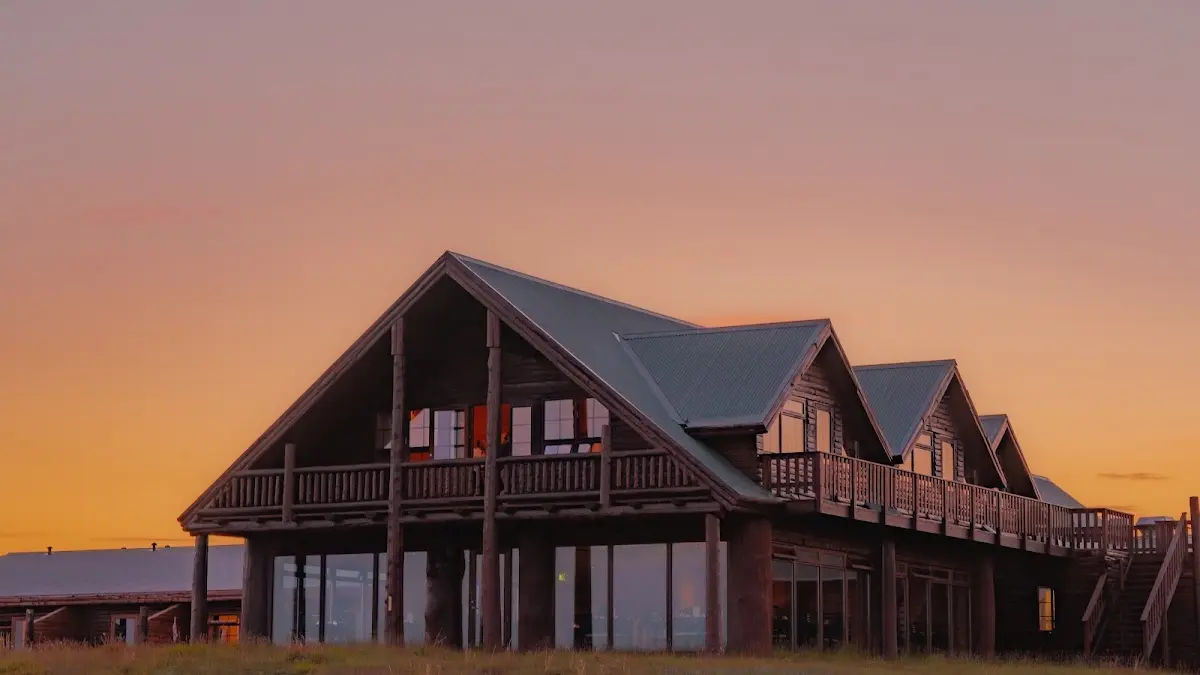
    Hotel Rangá sits between the towns of Hella and Hvolsvöllur on the South Coast, and it is the property that invented the aurora wake-up call: press a button on the in-room phone and staff who watch the sky all night will ring you the moment green light appears overhead. Rangá introduced the service in 2005, and it remains the benchmark every other Icelandic aurora hotel is copying.

    The hotel runs its own observatory with two telescopes, and astronomer-led sessions run September through April, on top of outdoor hot tubs, complimentary snowsuits for guests who want to wait outside, and hot chocolate available around the clock. Booking.com guests rate it 9.0/10 across 351 reviews, the highest score on this list, and it appears on Visit Iceland's own recommended-hotel pages. None of that is cheap: rooms run $360-566 a night, and the à la carte menu is priced to match.

    Rangá is the pick for travellers who want the aurora chase managed by people who have been doing it since 2005, and who don't mind paying luxury rates for that reassurance.

    Pros

    • On-site observatory with two telescopes and astronomer-led tours, September through April
    • Aurora wake-up call service, pioneered here in 2005 and still the benchmark for Icelandic hotels
    • Highest guest score on this list: 9.0/10 across 351 Booking.com reviews
    • Outdoor hot tubs, complimentary snowsuits, and round-the-clock hot chocolate for cold-weather waiting

    Cons

    • Premium pricing at $360-566/night, with expensive à la carte dining
    • No aurora guarantee; even the best-equipped hotel still depends on solar activity and clear skies
  3. ION Adventure Hotel

    Best design, Golden Circle base

    ION Adventure Hotel

    $$$ · from $279/night 4.1 (677)

    The ION Adventure Hotel sits 18 km from Þingvellir National Park, about 45 minutes from Reykjavík, and its whole design leans on glass: floor-to-ceiling windows through the rooms and a dedicated Northern Lights Bar built around panoramic views. It's a Design Hotels member property, and the Nordic architecture photographs as well as any hotel in Iceland.

    The catch is guest sentiment. Booking.com carries 810 reviews here, more volume than anywhere else on this list, but ION's TripAdvisor score sits at a middling 3.5/5, with recurring complaints about pricing relative to what you get: rooms run $279-566 a night, and the on-site restaurant is expensive even by Icelandic standards. The geothermal spa and hot-spring pool are genuine assets, and if you want aurora views without standing outside in the cold, the glass-walled common spaces deliver. Just don't expect Rangá-level guest satisfaction at a similar price.

    Pros

    • Floor-to-ceiling glass throughout, including a dedicated Northern Lights Bar for indoor viewing
    • 18 km from Þingvellir National Park, about 45 minutes from Reykjavík
    • Geothermal spa and hot-spring pool on site

    Cons

    • TripAdvisor rating sits at a middling 3.5/5, with recurring complaints about value for the price
    • Rooms run $279-566/night, and the restaurant is priced at the high end even for Iceland
  4. Hotel Húsafell

    Best dark-sky odds

    Hotel Húsafell

    $$$ · from $136/night 4.5 (538)

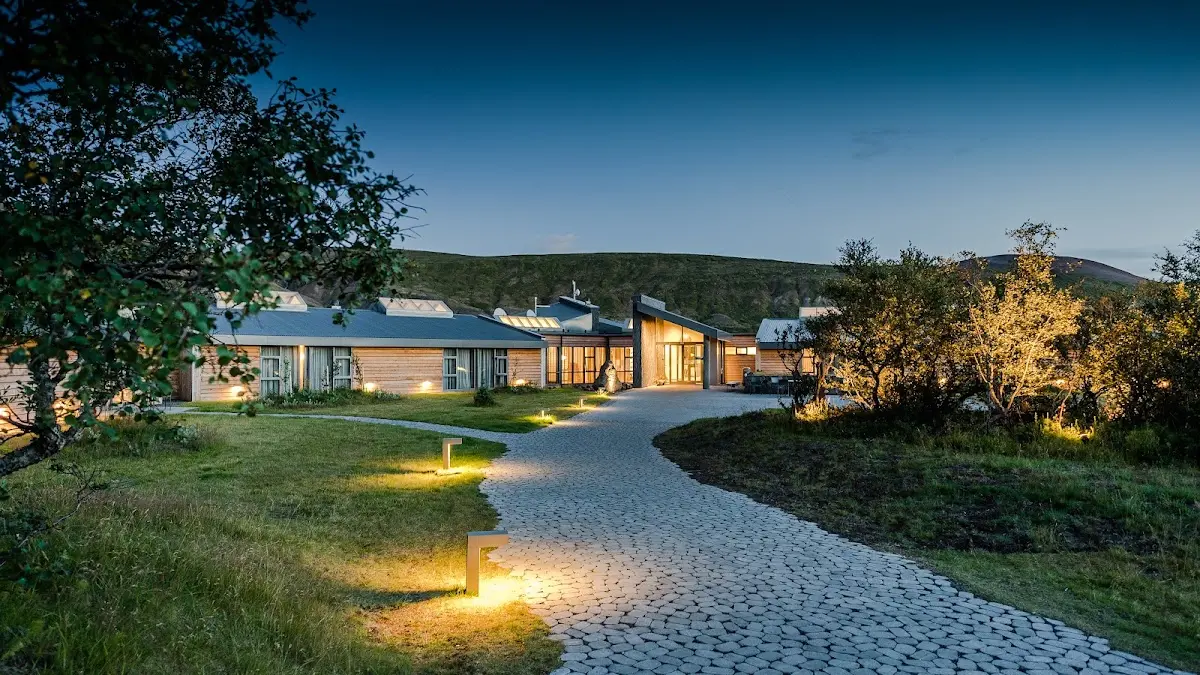
    Hotel Húsafell sits in the West Iceland highlands near Langjökull Glacier, roughly two hours from Reykjavík, the steepest drive-time tax on this list. Forbes named it one of the world's best hotels for the northern lights, and the hotel reports an average of three aurora sightings a week during the October-to-March peak, a specific claim most competitors don't make.

    The 48-room property runs on 100% renewable geothermal energy, and it holds the highest guest-satisfaction numbers here: 8.9/10 on Booking.com across 714 reviews, and a 4.0/5 on TripAdvisor from 772 reviews, ranked the #1 hotel in Húsafell (admittedly, the only hotel in Húsafell). Rooms run $249-525 a night depending on category, and the standout add-on is the Into the Glacier tour, a specialty-vehicle trip into a man-made ice tunnel inside Langjökull.

    The two-hour drive from Reykjavík is real. Húsafell rewards travellers willing to give up a full day of driving for genuinely dark, remote skies rather than treat the aurora as a side errand from the capital.

    Pros

    • Forbes-recognised aurora hotel with an average of three sightings a week, October to March
    • Highest satisfaction scores here: 8.9/10 on Booking.com (714 reviews), 4.0/5 on TripAdvisor (772 reviews)
    • 100% renewable geothermal energy operation
    • Into the Glacier tour access, a specialty-vehicle trip inside Langjökull Glacier

    Cons

    • Roughly two hours from Reykjavík, the longest drive on this list
    • Limited nearby attractions beyond the property and the glacier itself
  5. Center Hotels Arnarhvoll

    Reykjavík city base, not a dark-sky pick

    Center Hotels Arnarhvoll

    $$ · from $135/night 4.2 (1,170)

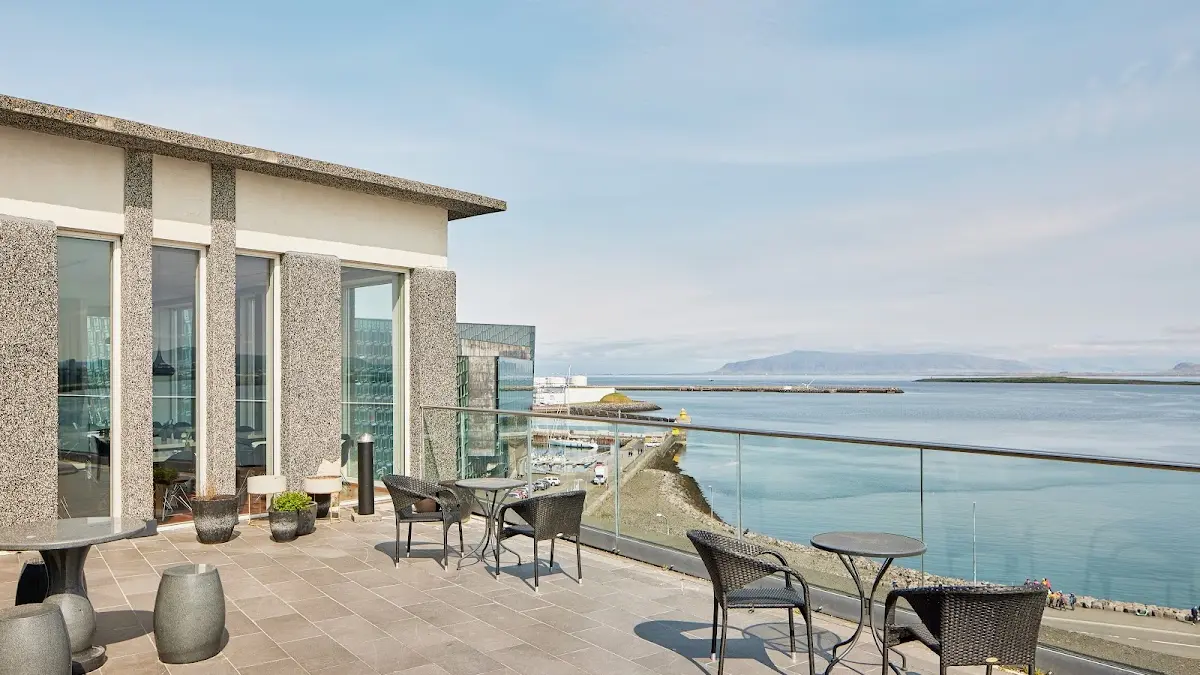
    Center Hotels Arnarhvoll sits on Reykjavík's Old Harbour, close enough to Harpa Concert Hall to walk it in five minutes, and it ranks last on this list for an honest reason: it's the least dark-sky-capable property here. Reykjavík's street lighting and downtown glow sit between the hotel and the sky, and no amount of clever positioning changes that. If a strong aurora display is the actual goal, Hotel Rangá or Hotel Húsafell will show you more, on the same night, with the same solar activity.

    What Arnarhvoll offers instead is a genuine city amenity: on request, staff monitor conditions overnight and phone your room if the aurora appears. It's a manual, staff-run service, not an automated forecast alert, so treat it as a safety net rather than a guarantee, and from most rooms you'll see a washed-out glow at best unless the display is strong. The SKÝ Bar on the 8th floor, with outdoor seating over Faxaflói Bay, is a better vantage than any window if the call comes.

    Guests rate it 8.2/10 on Booking.com across 2,211 reviews, with a location score of 9.5/10, among the highest in the city, and rooms start around $135/night. This is the pick for travelers who want to stay in Reykjavík proper, near restaurants and museums, with a genuine hotel to come home to between guided tours out to darker skies, not for anyone chasing the best sky in Iceland.

    Pros

    • Cheapest bed on this list at $135/night, with an 8.2/10 rating across 2,211 Booking.com reviews
    • 9.5/10 location score: 300 m from Harpa Concert Hall, 8 minutes on foot from Laugavegur
    • Aurora wake-up call service on request and the SKÝ Bar rooftop over Faxaflói Bay as a fallback vantage

    Cons

    • Real light pollution from downtown Reykjavík; not a dark-sky property by any measure
    • No observatory, telescopes, or remote dark horizon; Hotel Rangá and Hotel Húsafell both outperform it on aurora viewing itself

For most aurora travellers, the decision comes down to how much friction you're willing to tolerate between yourself and the sky. The Buubble Ölvisholt Bubble Hotel removes almost all of it: you lie down and the aurora is already overhead, at the lowest price on this list. Hotel Rangá removes the guesswork instead, with an observatory and a wake-up-call system refined since 2005, at roughly double the cost. ION suits travellers who want daytime design comforts and accept that the aurora is a bonus rather than the entire itinerary; the Center Hotels Arnarhvoll suits travellers who'd rather stay in Reykjavík itself and treat the wake-up call as a fallback, not the reason for the trip. Húsafell asks for a two-hour drive and pays it back with genuinely dark, remote skies and the best-documented sighting rate on the list.

Whichever lodge you pick, the two variables that actually decide whether you see anything are cloud cover and geomagnetic activity, not which hotel you booked. Check the Icelandic Met Office's aurora and cloud forecast the day before, and be ready to drive if your lodge's own sky is clouded over. The bed matters less than the forecast.

Frequently asked questions

Which lodge in Iceland is best for seeing the northern lights?

The **[Buubble Ölvisholt Bubble Hotel](/lodges/buubble-oelvisholt-review)** wins on the simplest measure: you watch the aurora from a heated bed inside a transparent pod, with no driving and no tour booking. It also costs less than any other lodge on this list, from €229 a night. If you'd rather have the aurora chase managed by staff with an observatory and a two-decade-old wake-up-call system, [Hotel Rangá](/lodges/hotel-ranga-hella-review) is the better fit, at roughly double the price.

Can I see the northern lights from my hotel room in Iceland without driving anywhere?

Yes, at two of the five lodges on this list. The [Buubble Ölvisholt Bubble Hotel](/lodges/buubble-oelvisholt-review) is the clearest case: the transparent pod is the window, so the aurora is visible directly from bed. [Hotel Rangá](/lodges/hotel-ranga-hella-review) and the [ION Adventure Hotel](/lodges/ion-adventure-hotel-thingvellir-review) both offer glass-walled common spaces (an observatory deck at Rangá, a dedicated Northern Lights Bar at ION) where you can watch without stepping outside. At Húsafell, the best views require walking away from the building, and at the Center Hotels Arnarhvoll in central Reykjavík, city light pollution means you're unlikely to see much from the property at all.

Is the Buubble Ölvisholt Bubble Hotel worth it for aurora viewing?

If aurora viewing is the main reason for your trip, yes. At €229 a night it's the cheapest lodge on this list, and no partition sits between your bed and the sky. The trade-offs are real: no Wi-Fi or TV by design, and the shared bathroom is a 30-50 metre walk from the pod, which matters more in January than in September. Guests rate it 8.8/10 on Booking.com across 144 reviews, which suggests most travellers accept the trade-off for the experience.

Where should I stay in Iceland for northern lights on a budget?

The [Buubble Ölvisholt Bubble Hotel](/lodges/buubble-oelvisholt-review) is both the cheapest and the most aurora-direct option on this list, from €229 a night. It's a self-contained experience rather than a full-service hotel: no restaurant, no Wi-Fi, and a shared bathroom a short walk from the pods. If you want a conventional hotel room with dining on site at a lower price than Rangá or ION, none of the other four lodges here undercut Buubble; they sit in the $249-566 range.

Do I need a rental car to see the northern lights in Iceland?

For four of the five lodges on this list, yes. The [Center Hotels Arnarhvoll](/lodges/center-hotels-arnarhvoll-review) sits in central Reykjavík itself, so no car is needed at all. The [ION Adventure Hotel](/lodges/ion-adventure-hotel-thingvellir-review), about 45 minutes out, is realistic to reach by pre-booked transfer. [Hotel Húsafell](/lodges/hotel-husafell-review) is two hours from Reykjavík with no public transport after dark, and even at the Buubble Ölvisholt Bubble Hotel, where you can stargaze without a car once you've arrived, you'll want one to reach the property and to chase clearer skies if your local forecast turns cloudy.

What is an aurora wake-up call service?

It's a feature, pioneered by [Hotel Rangá](/lodges/hotel-ranga-hella-review) in 2005, where staff monitor the sky through the night and phone your room the moment the aurora becomes visible, so you can sleep instead of standing outside for hours on speculation. [Hotel Húsafell](/lodges/hotel-husafell-review) offers a similar opt-in service. Neither guarantees a sighting; the call only comes if the aurora and clear skies actually align that night.

When is the best time to visit Iceland for the northern lights?

Roughly late August through mid-April, whenever the nights are dark enough. Midsummer (May-July) rules out viewing almost entirely because Iceland's nights never get properly dark. Within that window, the weeks around the spring and autumn equinoxes see a statistical uptick in geomagnetic storms, a real effect tied to the angle between Earth's magnetic field and the solar wind. Cloud cover, not solar activity, is the biggest variable working against you in any given week.

Are there bubble hotels or glass-roof lodges in Iceland for aurora viewing?

Yes. The [Buubble Ölvisholt Bubble Hotel](/lodges/buubble-oelvisholt-review) offers nine transparent geodesic pods near Selfoss with no partition between the bed and the sky. The [ION Adventure Hotel](/lodges/ion-adventure-hotel-thingvellir-review) takes a different approach, using floor-to-ceiling glass walls and a dedicated Northern Lights Bar rather than fully transparent rooms. Both let you watch the aurora without standing outside in sub-zero wind.

Further reading

Sources