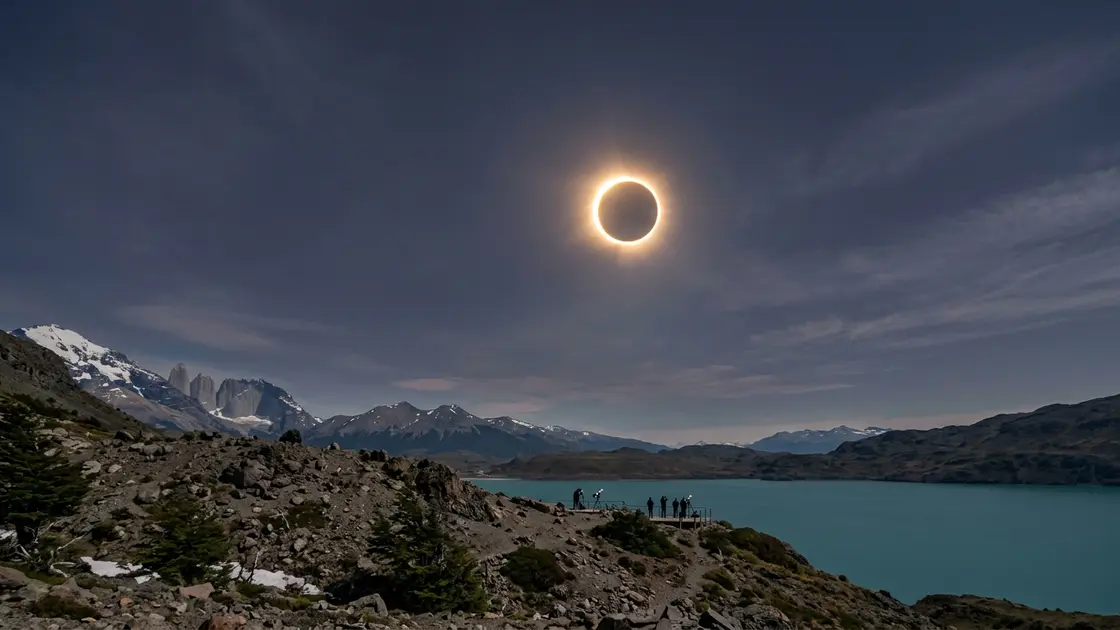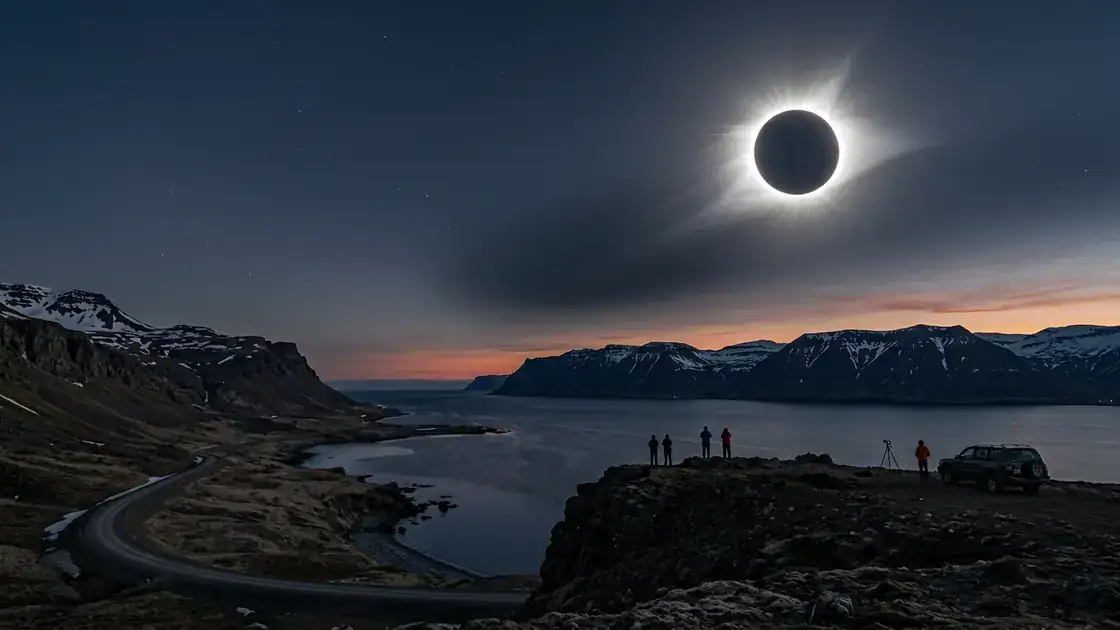
On the evening of August 12, 2026, the Moon's shadow crosses the North Atlantic and touches down in two places most stargazers have never had to plan a trip around: Iceland and mainland Spain. It's the first total solar eclipse visible from Iceland since June 30, 1954, and the only one Iceland gets this century. Spain hasn't stood inside the path of totality since August 30, 1905. Then, the same night, the sky offers a second act: the Perseids peak under a new moon, with no moonlight to wash out the fainter meteors.
Iceland's path of totality: Westfjords to Snæfellsnes
The umbral shadow first makes landfall in Iceland at Straumnes Lighthouse, on the Hornstrandir peninsula in Iceland's remote Westfjords, at 17:43:28 UTC. Iceland doesn't observe daylight saving, so that's also 5:43 PM local time. At the westernmost tip of the Westfjords, totality runs about 2 minutes and 13 seconds — among the longest windows anywhere along the eclipse's track, and worth the drive on its own.
The shadow then sweeps southeast across Snæfellsnes. At Ólafsvík, totality shortens slightly to roughly 2 minutes and 3 seconds — still well past the two-minute mark, long enough to actually watch the corona shift rather than catch it out of the corner of your eye. Reykjavík also sits inside the track: the partial phase there starts around 4:47 PM local time, with totality at around 5:48 PM.
Westfjords versus the capital
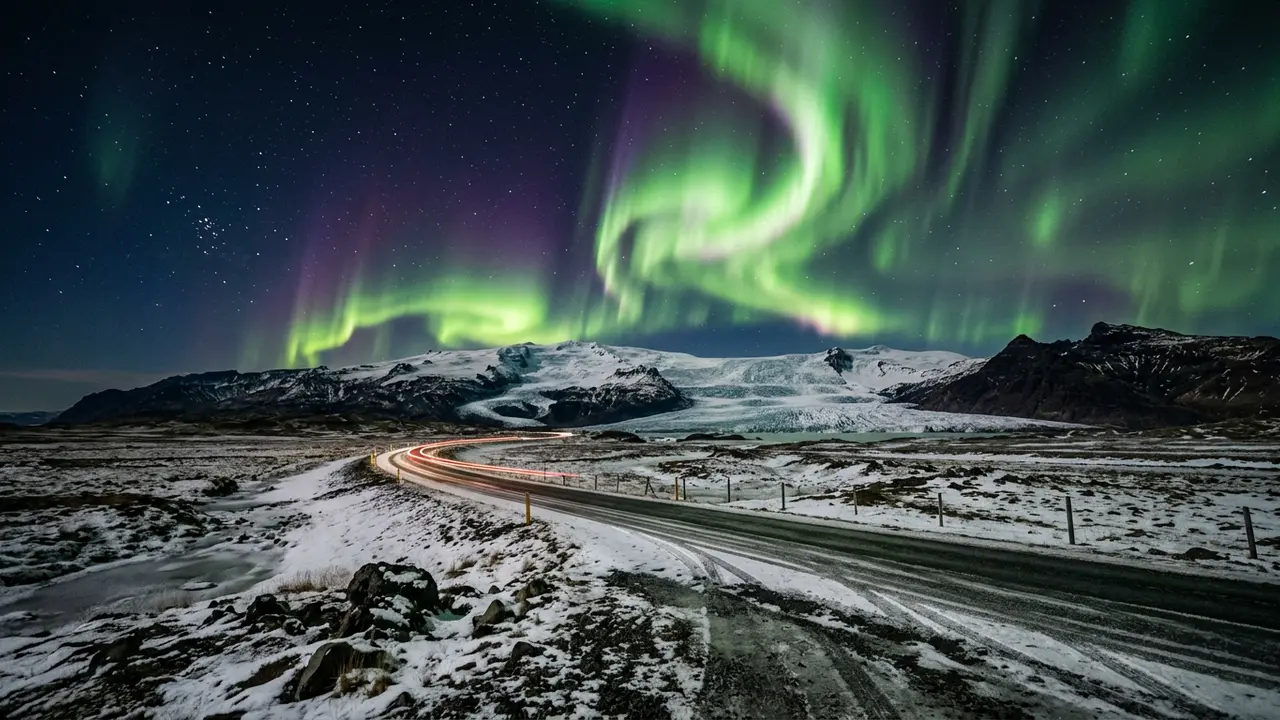
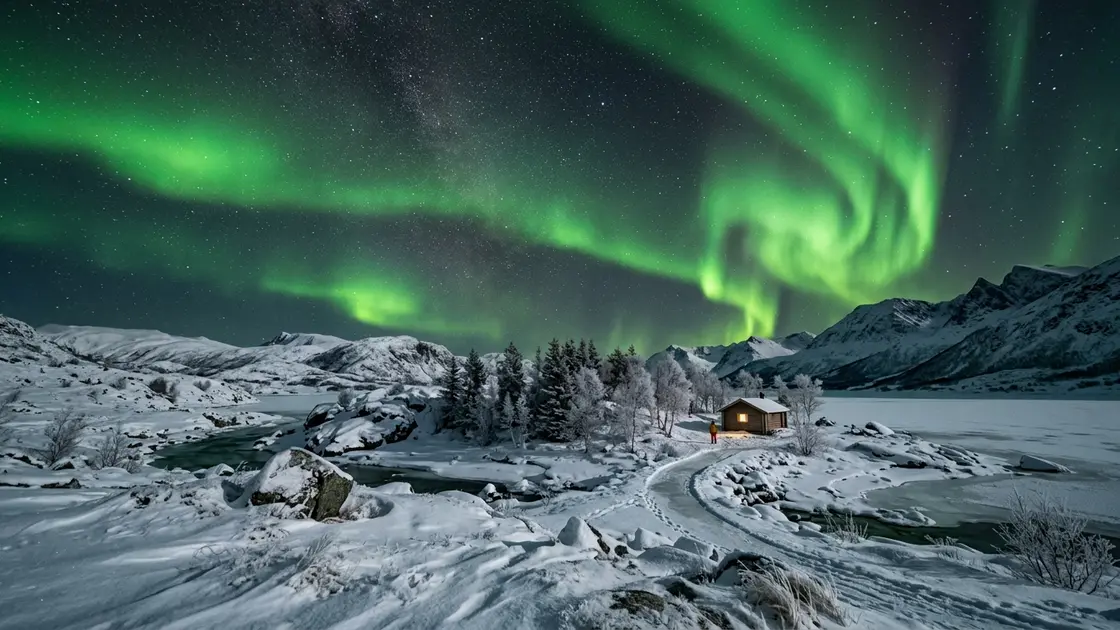
The Westfjords and Snæfellsnes buy you the longest totality and the darkest surrounding sky, but they're remote: expect a long drive from Reykjavík and limited lodging that fills up fast for an event this rare — the same where to base yourself for aurora-viewing in Iceland that aurora-chasers book will go fast for eclipse week too. Reykjavík is easier to reach and still inside the track, but it comes with more light pollution and more competition for a clear sightline if crowds gather. Either way, this is roughly a two-hour, mid-afternoon event rather than a dawn or dusk eclipse: partial phases start about an hour before totality and wrap up about an hour after.
Northern Spain: the first total eclipse since 1905
Across northern Spain, totality arrives roughly an hour before local sunset, timing that varies with longitude along the track. A Coruña, Zaragoza, Palma, Bilbao, and Valencia all sit inside the path:
- A Coruña: Galician coast, within the path
- Zaragoza: about 1 minute 24 seconds of totality
- Palma (Mallorca): within the path
- Bilbao: within the path
- Valencia: within the path
Madrid and Barcelona fall just outside the path — both cities will see a deep partial eclipse, not totality. If you're planning around either city, you'll need to travel to reach full darkness at midday.
The moonless Perseids double-header
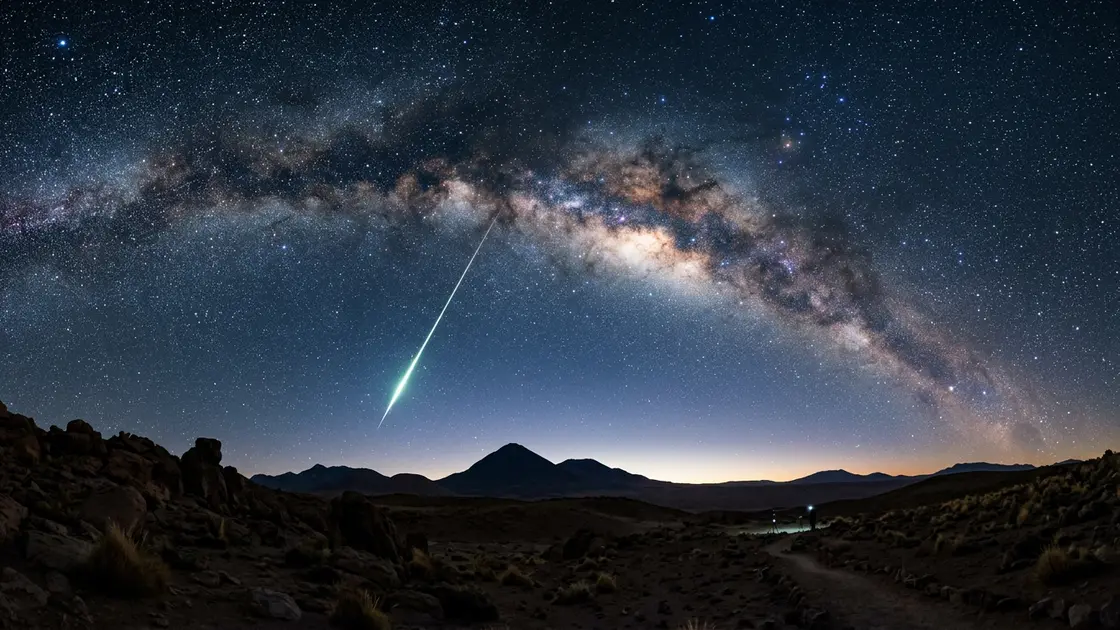
The Perseids are active in the hours after dark on the same night, running from the night of August 12 into the early hours of August 13 — for the exact peak time, see Perseid meteor shower. The shower's peak coincides with a new moon, meaning no moonlight to wash out fainter meteors. Under genuinely dark skies (Bortle 1–3), observers can expect 60 to 90 Perseids per hour at the peak. Pairing an eclipse afternoon with a moonless meteor peak the same night is the kind of alignment that doesn't repeat on any predictable schedule; it's the reason to build a full 48 hours around this date rather than just the two minutes of totality.
Eclipse glasses, clouds, and what actually goes wrong
During totality, and only during totality, it's safe to look at the eclipsed Sun with the naked eye — for up to roughly 2 minutes 18 seconds at the point of maximum totality. Before and after that window, during every partial phase, you need ISO 12312-2 certified eclipse glasses; regular sunglasses are not sufficient at any point. Check the certification marking before you fly, not at the viewing site.
The bigger risk isn't your eyewear, it's the sky itself. Both Iceland and northern Spain see variable August cloud cover, and a total eclipse gives you no second chance — no clear night next week to try again. Build in the flexibility to relocate within the path if a forecast turns against your fixed spot a day or two out, rather than committing to one location months in advance and hoping.
For meteor viewing after dark, get away from any town lighting and give your eyes 20 to 30 minutes to adapt before you start counting Perseids — a phone screen checked mid-session resets that adaptation and costs you the faintest meteors.
For the travelers who won't stop after this one, the umbraphile culture built around chasing totality worldwide explains why a single eclipse rarely satisfies.