Why an AlUla stargazing forecast means checking clouds, not aurora
Search «AlUla stargazing forecast» from a site built mostly around Nordic aurora-chasing, and old habits point toward a Kp index or an aurora oval map. Neither applies here. AlUla lies at roughly 26.6°N in Saudi Arabia's Al Madinah Province, thousands of kilometres too far south for the northern lights to ever register, whatever a forecasting app claims. A genuine AlUla stargazing forecast is a plainer, drier question than an aurora forecast: how much cloud cover is sitting over the desert on the specific night you've booked, and how bright is the moon going to be.
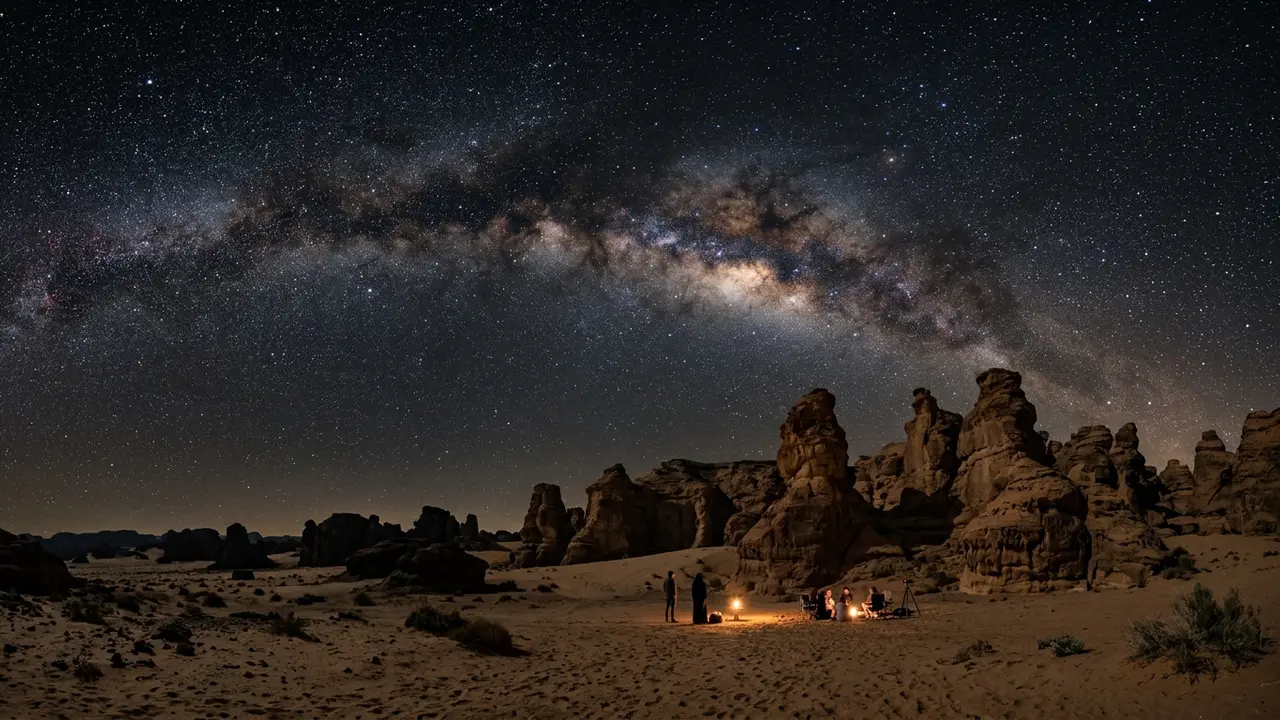
The light-pollution half of that equation is largely settled already. DarkSky International named the AlUla Manara and AlGharameel Nature Reserves as Saudi Arabia's, and the Gulf's, first-ever Dark Sky Park in October 2024[1], and Experience AlUla describes the desert as far from the glare of city lights, an oasis occupying a treasured place in the darkest desert where stargazing takes on a whole new magnitude[2]. What that accreditation cannot fix is whether cloud rolls in on the one evening you've actually planned around, or whether the moon happens to be full that week. Checking for both is what a forecast, in the practical sense, actually means here. The full destination rundown, including where to stay and how to get there, lives at AlUla Stargazing.
Featured · Destination
AlUla Stargazing
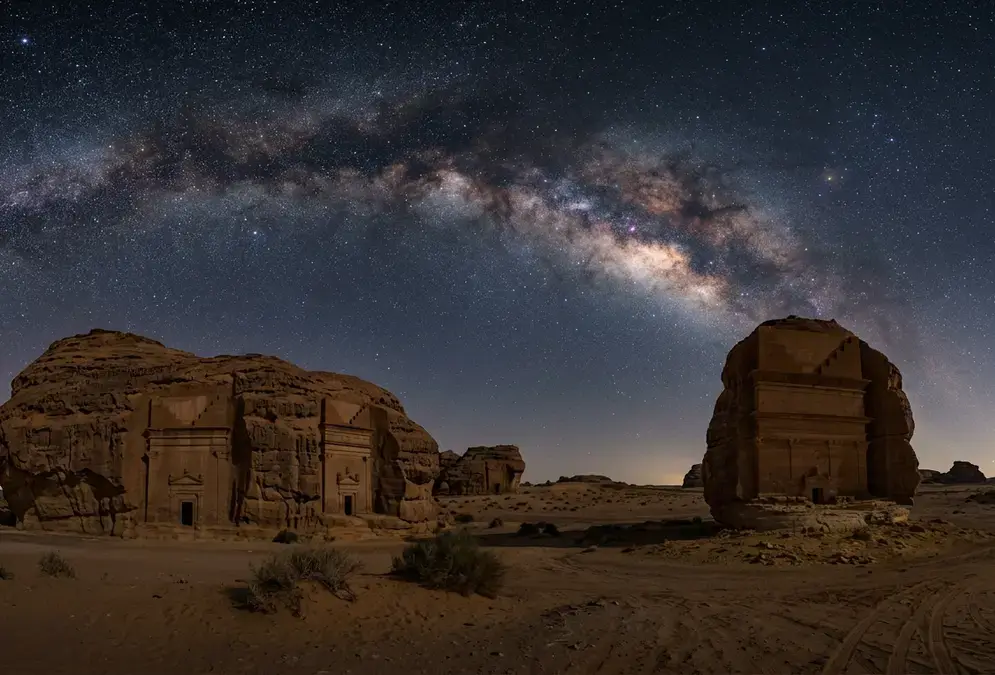
Stargaze above Hegra's 2,000-year-old Nabataean tombs in AlUla, the Gulf's first DarkSky-accredited Dark Sky Park. When to go, where to stay, and how to plan.
Reading a cloud-cover forecast for AlUla's desert sky
There is no live, AlUla-specific sky-conditions dashboard the way a handful of dedicated observatories run one. Experience AlUla's own booking terms for its flagship evening telescope tour put the point plainly: all experiences are subject to weather and visibility conditions[3], which is another way of saying a confirmed reservation is not a promise of a clear sky. That single line is the closest thing to an official forecast policy AlUla publishes, and it's worth taking at face value rather than reading as boilerplate.
In practice, checking conditions means opening a generic cloud-cover forecast, the same hourly weather app or clear-sky chart used to plan any outdoor evening anywhere, rather than anything aurora-specific. Search AlUla or the wider Al-`Ula region on a standard forecast service, look at the hourly cloud-cover percentage across your planned viewing window, and treat anything holding consistently under roughly 20 to 30 percent cloud as a genuine green light. There's no Kp value to weigh alongside it and no oval drifting south to track. Just cloud, checked the afternoon before, and the moon phase covered next.
Moon phase: the other half of an AlUla stargazing forecast
Cloud is only one variable in an AlUla stargazing forecast. The moon runs on an entirely separate calendar, and no cloud chart accounts for it. A bright moon washes out the Milky Way's fainter structure over the desert the same way it does anywhere else on Earth, regardless of how clear the sky reads that specific night.
Experience AlUla's own Gharameel tour restructures its format around exactly this: on full-moon nights, guides add a short landscape walk before setting up camp; on darker nights, the evening stays focused purely on stars and constellations[4]. That's a genuine operational acknowledgment that a full moon changes what's worth doing after dark, not a marketing line glossing over an inconvenient fact. Travelers chasing the sharpest possible Milky Way view should target a new-moon window, roughly the week either side of the new moon itself, when the sky goes properly dark and faint detail actually holds up against the naked eye.
“On full moon nights, visitors will take a short walk to admire the surrounding landscape before setting up camp to view the night sky. On darker nights, the tour will solely focus on stars and constellations.”
AlUla's cloud-cover calendar: the clearest and cloudiest months
Averaged across the year, independent climate data shows AlUla's clearer stretch running from roughly late May to mid-October, with the cloudier season filling the rest of the calendar, mid-October through late May. June is the single sunniest month, with skies clear, mostly clear, or partly cloudy about 95 percent of the time; December, the cloudiest month of the year, still sits overcast or mostly cloudy only around 27 percent of the time[5]. Put plainly, AlUla is a reliably clear-sky destination almost regardless of month, and the swings here are smaller than at most stargazing destinations covered on this site.
None of that erases the value of a same-day check. A clear-sky percentage describes an average across many Junes or many Decembers, not the specific night you have booked; a cloud system can still roll through during an otherwise reliably clear month. The comparison below lines up the two ends of AlUla's cloud-cover calendar, so you know which months carry the least risk and which are worth a closer look nearer your travel date. For the fuller picture on heat and comfort alongside cloud cover, see Best Time for Stargazing in AlUla. For why a clear sky can still disappoint, astronomical seeing vs transparency explains the difference.
| Period | Sky condition | Share of time | What it means for planning |
|---|---|---|---|
| Late May – mid-October | Clear, mostly clear, or partly cloudy | ~95% in June | Lowest cloud risk of the year, but daytime heat can exceed 40°C |
| Mid-October – late May | More frequent cloud, still mostly clear overall | ~27% overcast or mostly cloudy in December | The coolest, most comfortable months, with slightly higher cloud risk |
4x4 access, patchy signal, and why you check before you leave
Gharameel, the desert zone hosting AlUla's flagship dark-sky tour, requires 4x4 off-road access to reach, and mobile phones may lose reception once you're on site[6]. That combination changes when a forecast check actually matters: not once you're already bouncing across the desert track, but the afternoon before you leave the last stretch of paved road behind.
Check the hourly forecast and confirm the moon phase before you depart, not en route, since there's no guarantee of a signal to check again once you're deep enough into the reserve for the sky to actually look the way the accreditation promises. On a guided tour, the operator absorbs some of that risk and can adjust the plan on the ground. Heading out independently shifts the entire responsibility for checking onto you.
Putting an AlUla stargazing forecast check together
Turn all of this into one short routine the afternoon before a planned night out:
- Check an hourly cloud-cover forecast for AlUla or the wider Al-`Ula region, not a generic weekly icon strip, and look specifically at your planned viewing window.
- Confirm the moon phase separately from the cloud check; a new-moon week delivers the darkest sky, and a full-moon night still works if you don't mind the tour's landscape-walk format.
- Do the check before you leave for the desert, not once you've arrived, since Gharameel's remoteness means mobile signal isn't something to count on once you're there.
- Treat 'subject to weather and visibility conditions' as the real policy it is rather than fine print; Experience AlUla is telling you plainly that a booking is not a guarantee.
- Favor the cooler months, October through April, for comfort, and run a forecast check regardless of season, since AlUla's cloud cover swings by only a modest margin year-round.
Recommended tours
Tours are selected for quality, not commission. I earn a small fee if you book — at no extra cost to you.
None of this requires specialist equipment or a paid weather subscription. A standard forecast app, a moon-phase calendar, and the discipline to check both the afternoon before you drive out to Gharameel or camp near Hegra is the entire routine. AlUla's sky has stayed dark far longer than any app has existed to forecast it; the checking habit is simply what turns an already-clear desert into a night you didn't waste the drive on.