
Why Chena Hot Springs Works as a Destination, Not Just a Tour Stop
Most visitors first hear about Chena Hot Springs as a bullet point on a Fairbanks night tour: hotel pickup, a couple of hours at the pools, back in bed by 2 a.m. That works fine for a single evening. It also means leaving Chena Hot Springs Road while the sky might still be doing something interesting, because the van has a schedule to keep. If you'd rather stay based in Fairbanks and drive to a viewing spot instead, best aurora viewing spots near Fairbanks covers that self-drive version.
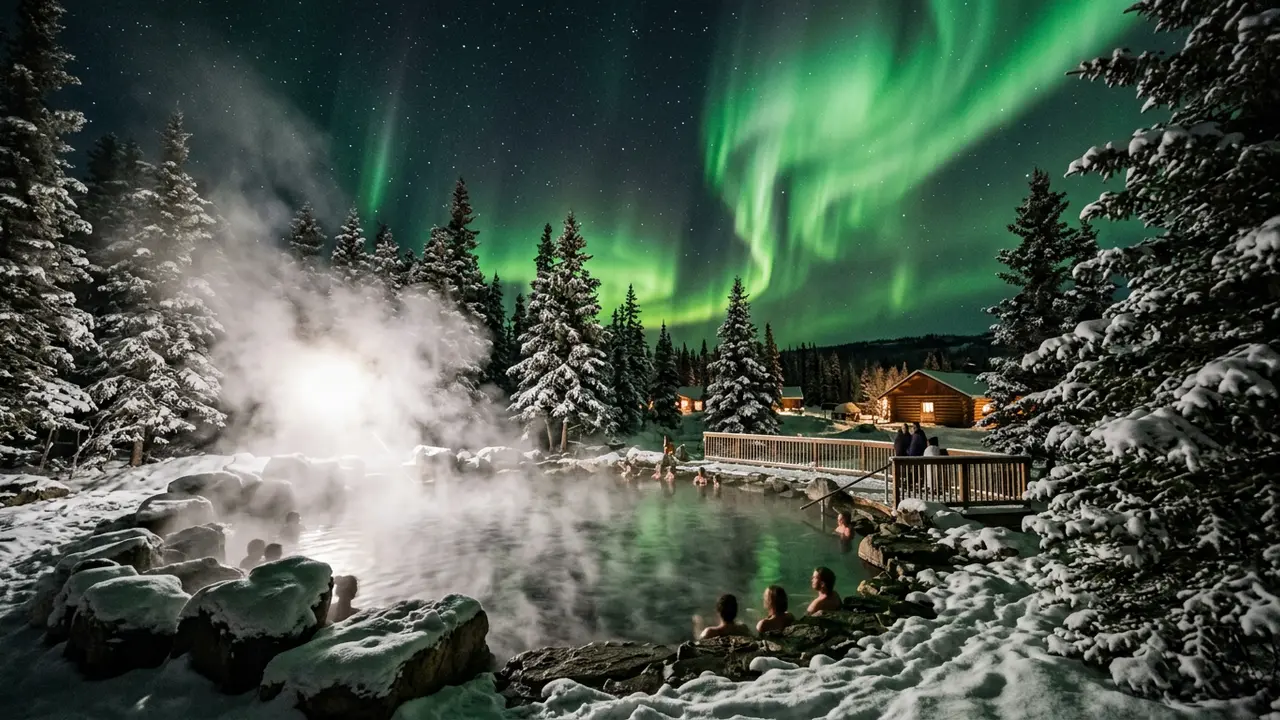
Staying at the resort removes that clock. The property runs 7 a.m. to 10:30 p.m., every day of the year[1], and once you're checked in, the pools, the aurora viewing at Charlie Dome, and the Aurora Ice Museum are yours to move between at whatever pace the sky sets. The resort's dark sky hasn't been formally measured on the Bortle scale, but the distance from Fairbanks' light dome is real, not marketing: once you're out here, the city's glow stops being something you have to angle your camera around.
If a single evening from town is genuinely all your schedule allows, the Northern Lights & Chena Hot Springs Tour from Fairbanks covers that version well. This guide is for the other one: staying at Chena Hot Springs as the destination itself, working out how long to stay, what to do between aurora checks, and whether the trip out is worth it if you're not spending the night.
Soaking at 90–110°F While You Wait for the Sky
The geothermal water that feeds the resort's pools comes up out of the ground at 165°F, then gets cooled to a soaking temperature of 90–110°F across the indoor pools, the outdoor Rock Lake, and the private hot tubs[1]. That range holds year-round, so a night that reads -20°F on the resort's thermometer changes nothing about how the water feels against your skin.
What it changes is everything else. Standing in water at body-plus temperature while the air around your head sits well below freezing does something to how a cold night feels that a heated indoor space cannot replicate. Steam sits low over the water. Hair freezes into stiff clumps within minutes of surfacing. None of that matters once green light starts moving overhead and you are already outside, already warm, already looking up instead of scrambling for a coat.
| Pool | Temperature | Best for |
|---|---|---|
| Rock Lake (outdoor) | 90–110°F | Aurora-visible open-air soak, snow at the rim |
| Indoor pool | 90–110°F | Windy or extreme-cold nights |
| Private hot tubs | 90–110°F | Booked separately, a quieter soak |
For room types, current rates, and what's included with a stay, the full review of the resort has the specifics. This section is about the pools themselves and how to use the wait between aurora checks well, not the booking mechanics.
Charlie Dome and the Aurora Wake-Up Call
The resort's dedicated aurora viewing happens at Charlie Dome, a summit reached by heated Sno-Cat from the property, with open sky on all sides and none of the tree cover that blocks so much of interior Alaska's horizon from ground level. Heated yurts up there mean the cold stops being a reason to give up and go back inside. Hot drinks are provided, and the entire point of the trip up there is to stay out until something happens.
Aurora season at Chena Hot Springs runs September through March, when the interior gets dark enough for a genuine shot at the lights, and staff run an Aurora Wake-Up Call service for guests who would rather sleep through the quiet hours than sit outside on the chance that nothing shows[2]. If activity picks up overnight, your room phone rings. That single detail changes the math on how many nights this trip needs: instead of forcing yourself outside every evening on a hunch, you can go to bed and trust someone else to be watching the sky for you.
Featured · Destination
Fairbanks Northern Lights
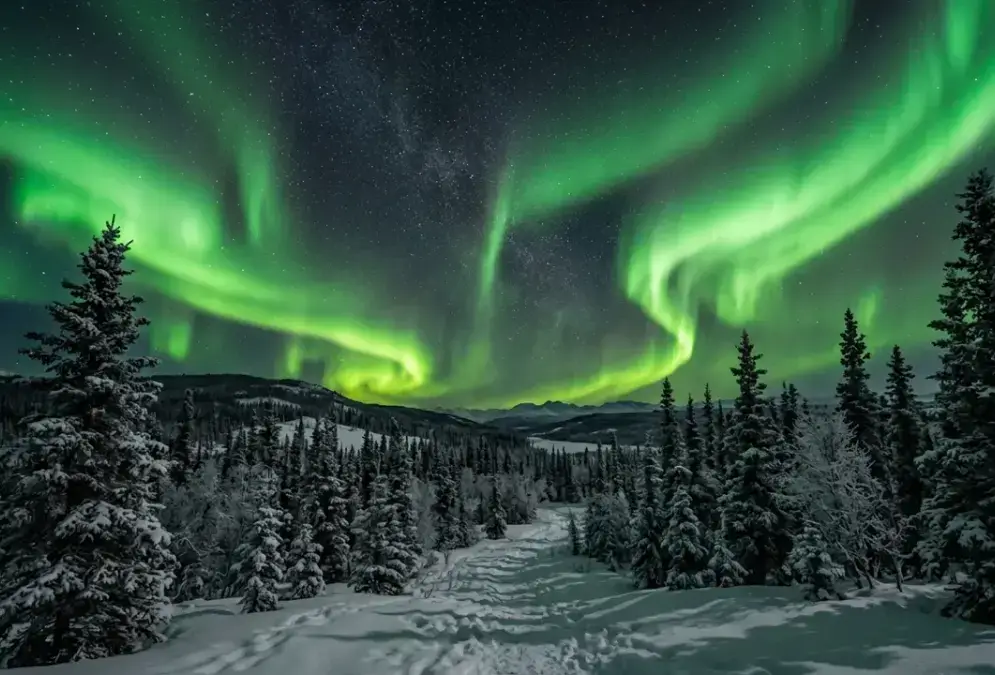
Fairbanks sits directly under the auroral oval at 64.8°N. Aurora season runs Aug 21–Apr 21, peaking Feb–Mar, with roughly 90% odds if you stay 3+ nights.
Fairbanks sits inside the same auroral oval that makes Chena worth the drive in the first place. The Fairbanks Northern Lights destination guide covers how that geography plays out across the wider region, including realistic odds for a multi-night stay.
The Aurora Ice Museum: A Permanent Ice Environment You Can Visit Any Night
Long before anyone built an aurora viewing program at Chena, the resort built something stranger: a permanent ice environment kept at a constant 25°F[3], built in 2005 from more than 1,000 tons of ice and snow[3], and maintained as what the resort calls the world's largest year-round ice environment[3]. Admission runs $20 for adults twelve and up, $15 for children six to eleven, with a six-year minimum age and complimentary parkas provided at the door[3].
It exists independent of the weather outside, which makes it the obvious answer to the question every aurora trip eventually asks: what do you actually do on the cloudy night, the one where the forecast was wrong and there's nothing to look at? You go stand inside a room built out of a frozen lake.
1,000+ tons
Inside, hand-carved sculptures fill spaces kept below freezing no matter the season outside, alongside an ice chapel and an ice bar serving an Appletini in a glass carved from the same block it's poured into, for an extra charge and a valid ID. Four ice hotel rooms are available for guests who want to sleep inside the exhibit itself, a genuinely strange experience distinct from any of the resort's other lodging options. A full walkthrough runs about 45 minutes, longer if a carving demonstration happens to be running that day; those are scheduled seasonally, so check with the front desk on arrival if timing one matters to you.
Bring a coat even though you're already dressed for -20°F outside. Twenty-five degrees inside a room built of ice does not feel warmer than the night air, and the contrast catches people who assume indoors automatically means warmer.
Where to Eat and Sleep Without Leaving the Property
Lodging at Chena Hot Springs covers a wide range, all within walking distance of the pools:
- Lodge rooms in the main building
- Private cabins
- Yurts
- Family suites
- Public-use cabins
- An RV park and campground
Recommended tours
Tours are selected for quality, not commission. I earn a small fee if you book — at no extra cost to you.
Which type makes sense depends less on budget than on how much you want to deal with in the middle of a January night: a cabin means stepping outside into the cold to reach the bathroom or the pool, while a lodge room keeps everything under one roof.
Read next · Lodge
Chena Hot Springs Resort
Chena Hot Springs Resort sits 56.5 miles northeast of Fairbanks with a geothermal soaking lake, aurora tours, and rooms from $169/night (2026 pricing).
Meals run out of the main lodge's dining room on a first-come, first-served basis, with a coffee shop and a lounge covering the gaps between sit-down meals. The produce on the plate is one of the stranger details of the place: fresh tomatoes and leafy greens are harvested daily from geothermal-heated greenhouses on-site, grown through winters that would otherwise make a fresh salad a long drive from the nearest grocery store in Fairbanks[1].
Room rates change with season and demand, and the resort's own lodging page tracks current pricing and what each room type includes. Check it before you book rather than assuming last year's rate still applies.
Planning Your Visit: Getting There and How Long to Stay
Getting to Chena Hot Springs is straightforward: it is a maintained road out of Fairbanks, no permits and no complicated logistics, and the resort covers the exact route and current shuttle schedule on its own booking pages. What matters more for planning is deciding how you want to arrive and how long to stay once you're there.
Self-drive or shuttle
Driving yourself gives you control over timing: you can leave Fairbanks with daylight left to explore, and stay out at Charlie Dome as long as the sky holds your attention without worrying about a shuttle's last departure. Winter driving on Chena Hot Springs Road calls for a vehicle with all-wheel or four-wheel drive and headlights you actually trust; the interior gets genuinely cold and genuinely dark, and a breakdown out there is a different problem than one on a city street.
Guests who would rather not drive can take the resort's shuttle service from Fairbanks, which removes the winter-driving question entirely at the cost of a fixed schedule. Either way, day visitors are welcome. You do not need to book a room to use the pools or walk through the Aurora Ice Museum, though staying overnight is the only way to get the Aurora Wake-Up Call.
Day trip or overnight stay
A day trip covers the pools and the Aurora Ice Museum comfortably, but it cuts you out of the one feature that makes this a genuine aurora destination rather than a hot springs with a nice view: sleeping there and being woken up if the sky does something. Aurora does not run on a day visitor's schedule, and the displays that show up at 1 or 2 a.m. belong to whoever is already checked in.
Two nights is a reasonable minimum if aurora is the actual goal, giving you a second chance if the first night clouds over. Three lets you add the ice museum properly, a full soak without watching the clock, and a spare evening if the forecast falls apart. If you're only in the Fairbanks area for a single night and cannot commit to the drive out and back on your own schedule, the Northern Lights & Chena Hot Springs Tour from Fairbanks is the better fit.