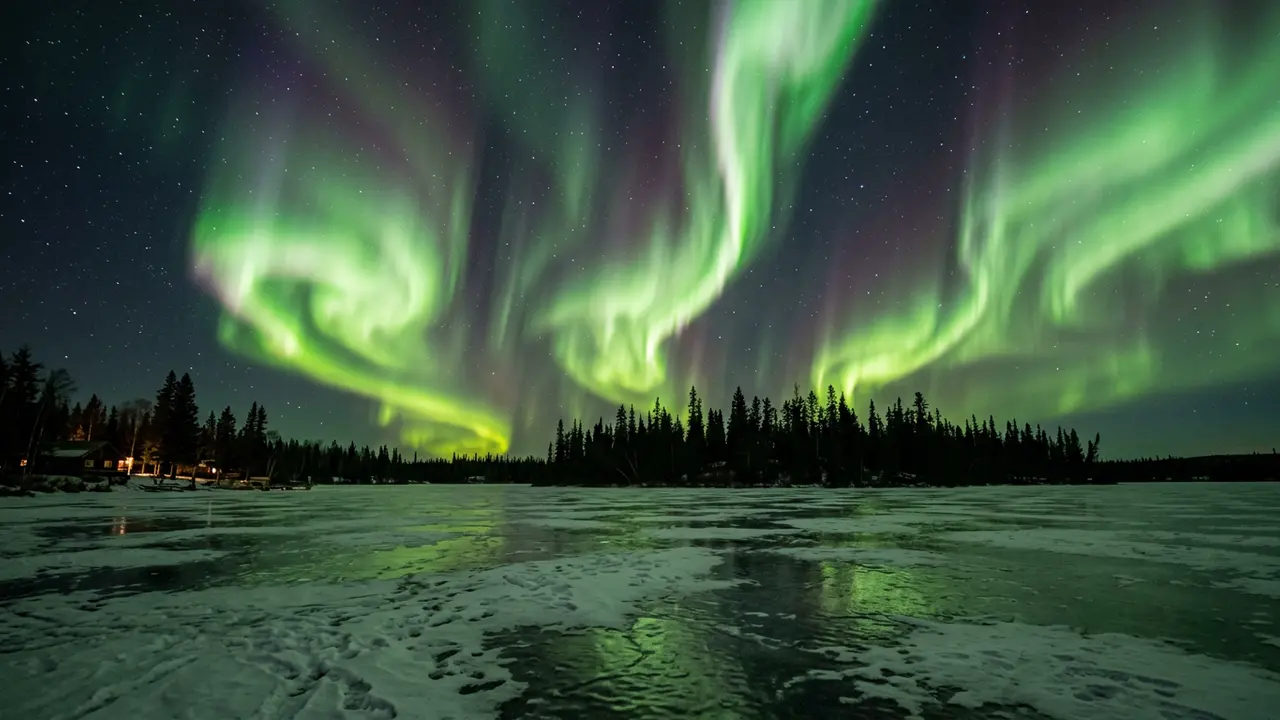

Why Fairbanks works for northern lights
Fairbanks lies directly beneath the auroral oval: the ring-shaped zone where Earth's magnetic field concentrates charged solar particles and drives them into the atmosphere. On clear nights, the lights appear roughly four out of five times, across a season that runs from August 21 through April 21.[1]
Most aurora destinations make you choose between sky quality and practical infrastructure. Fairbanks does not. Murphy Dome and Cleary Summit are 30 to 45 minutes from the city center by road. Hotels, heated tour operators, and gear rentals are all in town. The cold is genuine. Winter lows can reach -30°F (-34°C) in December and January,[3] but everything you need to manage it is available without booking a remote lodge or chartering transport.
4 out of 5
Planning your trip: season, best months, and how many nights
The aurora season opens August 21 and closes April 21.[1] That span covers nine distinct months, but they are not equivalent.
February and March are the standard recommendation, and they earn it. Cloud cover is lower than at the start of the season, nights are long, and the equinox effect adds a statistical lift: geomagnetic activity tends to peak near the March equinox as Earth's magnetic field aligns more favorably with the solar wind.[3] September runs a similar dynamic at the season's other end, with milder temperatures and often clearer skies after late summer.
Featured · Destination
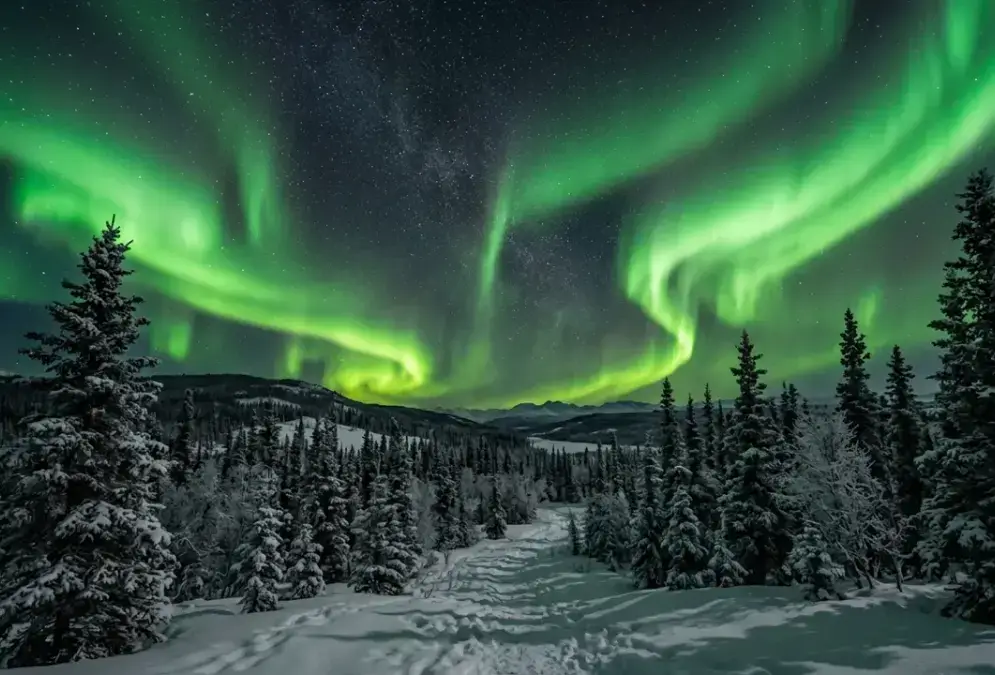
Fairbanks Northern Lights
Fairbanks sits directly under the auroral oval at 64.8°N. Aurora season runs Aug 21–Apr 21, peaking Feb–Mar, with roughly 90% odds if you stay 3+ nights.
On nights needed: a single night gives roughly 40–50% odds of a clear-sky sighting; three nights pushes that past 90%.[2] If aurora is the primary purpose of the trip, three nights is the working minimum. Five nights provides a safety margin when one or two nights cloud over completely. For the detailed probability breakdown, see the how many days in Fairbanks for northern lights guide.
Temperature, timing, and cold-weather prep
Fairbanks temperatures shift sharply across the season. Late August stays above freezing, typically 40–55°F (4–13°C). By late October you are below freezing, and December and January bring the coldest stretch of the season, with lows ranging from -10 to -30°F (-23 to -34°C).[3] February and March moderate to roughly -5 to 20°F (-20 to -7°C), and early April warms further still to 20–40°F (-6 to 4°C), with lows rarely dropping below freezing. These winter months are also when skies tend to be clearest and viewing probability is highest.
The best window for active aurora is 11 PM to 2 AM. Plan to be at a dark location by 10:30 PM rather than watching from your accommodation and running out when activity starts. Displays on quiet nights can peak and fade in under 20 minutes. Keep your car running if you are parked at a dark-sky site: cold-soaked engines in deep winter can be reluctant to start after an extended idle.
| Season period | Temperature range |
|---|---|
| Late August | 40–55°F (4–13°C) |
| Late October | 10–30°F (-12 to -1°C) |
| December–January | -10 to -30°F (-23 to -34°C) |
| February–April | -5 to 40°F (-20 to 4°C) |
Layering is the correct approach. Dress in three zones:
- Synthetic or wool base layer for moisture management
- Fleece or down mid-layer for insulation
- Windproof outer shell for wind and precipitation
For feet: insulated boots rated to at least -20°F (-29°C). Heavy mittens rather than gloves alone; individual fingers lose dexterity at -10°F faster than most people expect. A thermos matters when you are standing still for hours.
Check cloud cover through the Fairbanks aurora forecast the afternoon before heading out. A clear sky on one night can give way to total overcast within 24 hours.
Getting out of town: self-drive spots and guided tours
Light pollution ends at Fairbanks' city edge, and the best viewing sites are on maintained roads reachable by a standard rental car. These same routes also solve a separate problem: below about -30°F, ice fog can pool low over downtown and block a real display that's clearly visible a few hundred feet higher, so driving out is worth it even when the in-town sky looks hazy.
The main self-drive options are:
- Murphy Dome: 30 minutes north of town, 2,890 feet elevation[4], with panoramic views in every direction. The open hilltop catches any active display, and the parking area works as a heated waiting room.
- Cleary Summit: 45 minutes out on the Steese Highway, with an unobstructed north-facing view and minimal light pollution year-round.
- Ester Dome: 15 minutes west of downtown, the closest accessible dark-sky site to the city center.
- Chena Lake Recreation Area: south of North Pole, with open lake views that work well for aurora reflections on still nights.
Recommended tours
Tours are selected for quality, not commission. I earn a small fee if you book — at no extra cost to you.

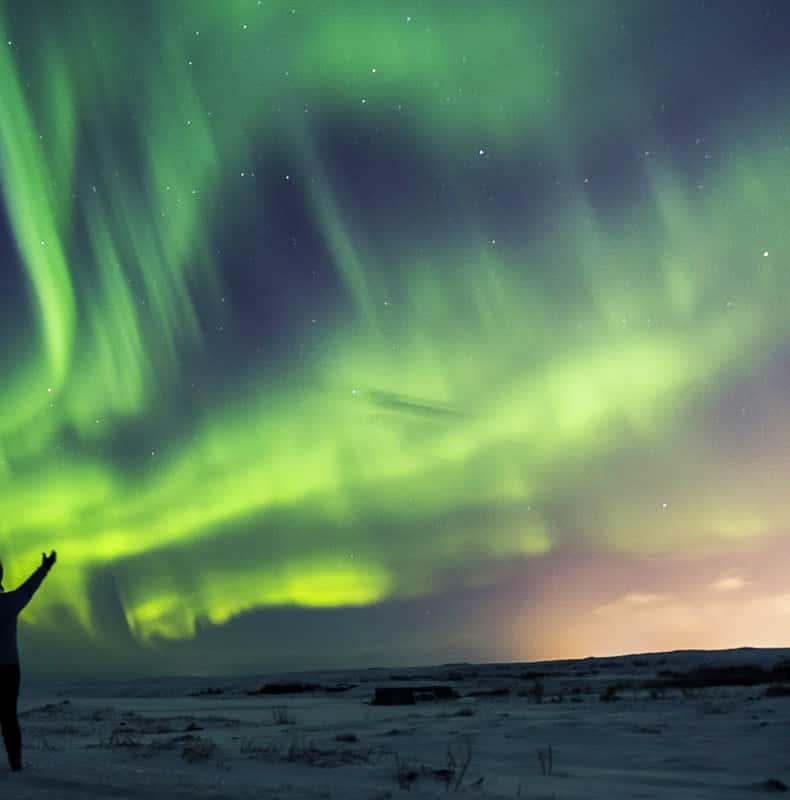

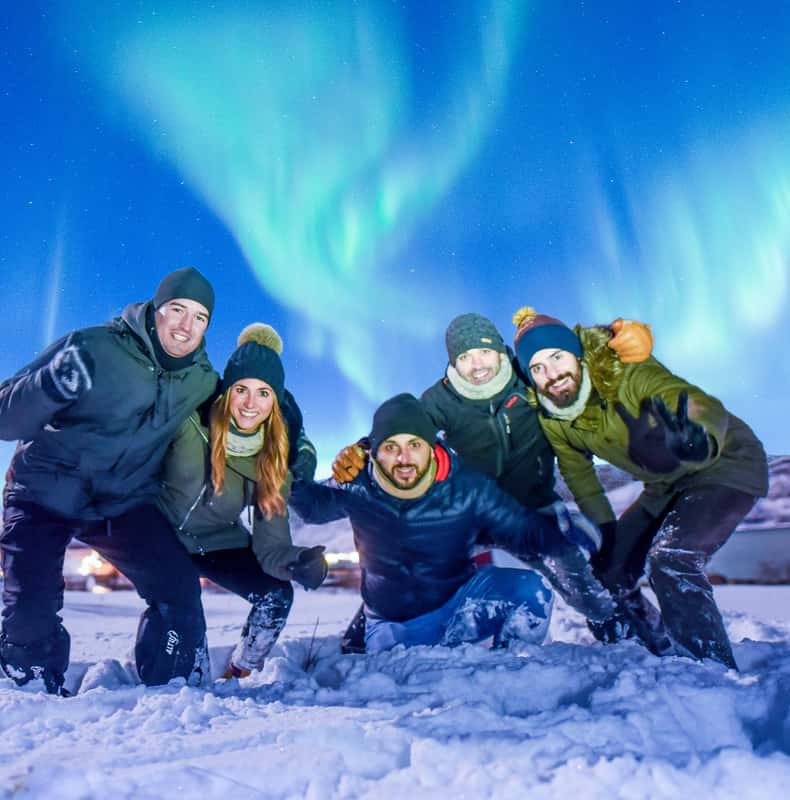
For self-drivers: fill the tank before leaving. The car is your primary warm shelter. Winter road conditions on these routes are manageable at slow speeds, but black ice is real and tires should be winter-rated.
Guided tours solve the warmth problem directly. Most operators run heated viewing cabins at dark locations, where you watch through large windows or step outside for photographs. Other formats include dog-sledding excursions with aurora breaks, snow-cat trips, and Dalton Highway drives north of the Brooks Range. Tours are worth considering if you prefer not to navigate icy roads alone after midnight, or want a photographer on hand. See the best aurora viewing spots in Fairbanks guide for a full breakdown.
Read next · Tour
Fairbanks Aurora Viewing Tours
Fairbanks aurora tours from $235. At 64.8°N under the auroral oval, the northern lights appear 240+ nights a year. Compare operators and guarantee policies.
What to expect: probability, the Kp index, and aurora colors
The aurora is not a scheduled event. Fairbanks' position inside the auroral oval gives it high probability, but clear skies and solar activity still have to coincide during your visit. Two variables determine the outcome: sky conditions and geomagnetic activity, and you can track both through real-time forecasts.
Fairbanks' latitude means the lights respond to geomagnetic activity levels that show nothing from Scotland or central Europe. The auroral oval sits directly overhead here, so modest solar wind disturbances produce a visible display. You do not need a G2 storm. Monitor real-time Kp index readings the evening of your outing, and check the cloud forecast equally carefully. The Kp index explained guide covers what each reading means at high latitudes and why the Bz component matters alongside the headline number.
Expect green as the dominant color, from a pale yellow-green arc on quiet nights to vivid emerald curtains on active ones. Stronger events add teal and white. Intense geomagnetic storms push purple and magenta into the curtain edges. Form varies: some nights produce a low stationary band that barely moves for hours; others show rapid rippling curtains, vertical rays, or a corona directly overhead where the beams appear to converge toward a single point.
One practical note: a 3-second camera exposure captures significantly more color and detail than your dark-adapted eyes see in the moment — see why aurora photos look more vivid than what you actually see for the full explanation. If your first test shot looks impressive, the display is real. Stay out. Allow 15 minutes away from any light source for your eyes to reach full dark adaptation.