
What "worth it" actually means for an aurora trip
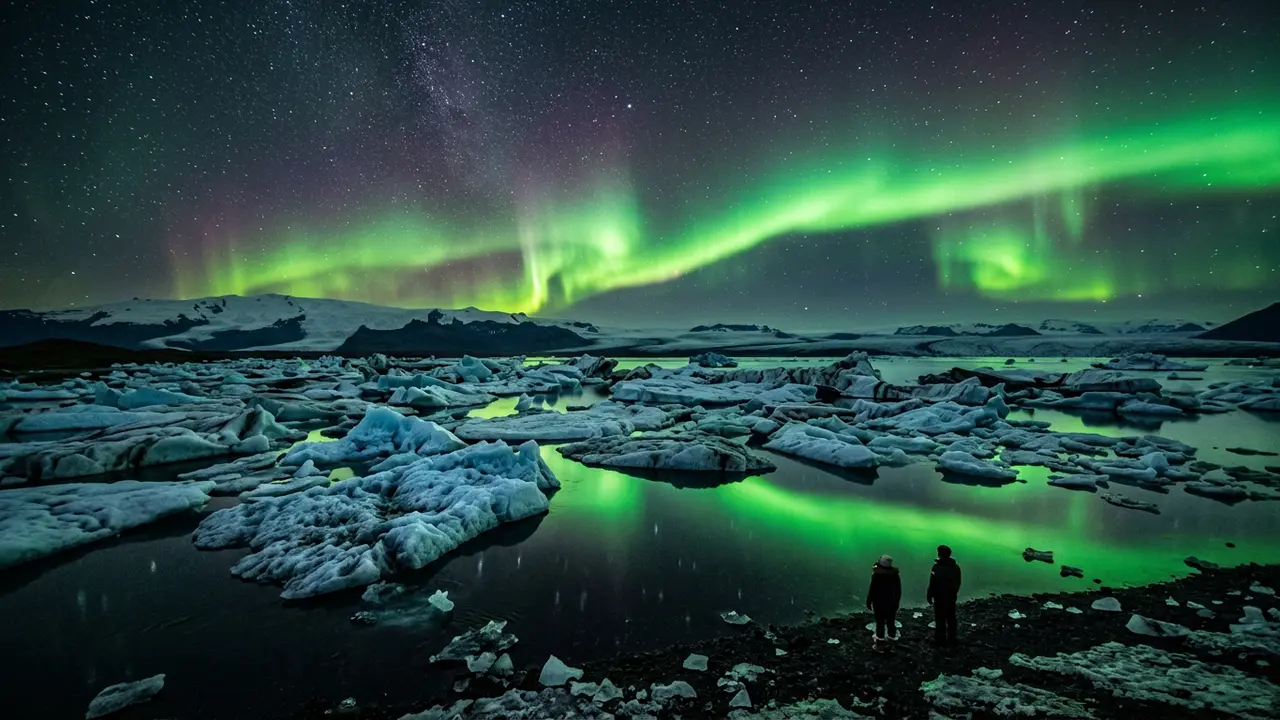
"Worth it" is doing a lot of work in that question, and most travel sites skip past it straight into a pitch. There is no guarantee of seeing the aurora anywhere on Earth: visibility depends on solar activity and, more decisively, on the weather sitting between you and the sky.[1] Iceland does not solve that problem any better than its Nordic neighbors do. What Iceland actually sells is a fallback: pay a premium over somewhere like Tromsø, and if the aurora skips you on any given night, you still have a black-sand coast, a glacier lagoon, and a volcanic interior to fill the daylight hours.
That trade only makes sense once you weigh it honestly against three things: what it actually costs against the Nordic alternative, what your realistic odds of seeing the lights look like once cloud cover enters the picture, and what Iceland's most-photographed stops feel like in person rather than in a drone reel. This piece runs those numbers, then lands on a clear verdict split by the kind of traveler you actually are, because the honest answer depends entirely on whether you came for the sky or for the ground beneath it.
The real cost gap: Iceland vs Tromsø, line by line
Flights to Reykjavík or Tromsø from most European and North American hubs land in a broadly comparable price range, so the real cost gap opens once you're on the ground. A week in Northern Lights in Tromsø averages around $1,100 total, excluding flights, which works out to roughly $157 a day, a figure that includes $85-a-night dorm-style accommodation that keeps the average low.[2] A week in Iceland runs $1,850 to $2,600 for a budget traveler and climbs past $7,000 for anyone booking comfort or luxury tiers.[3] Even at the budget end, Iceland costs roughly 1.5 to 2 times what the same week costs in Arctic Norway.
Some of that gap is structural rather than seasonal. Overall prices in Reykjavík run well above other Nordic capitals, and its hotels are the priciest in the region on top of that, a premium that holds regardless of when you book.[4] Car rental in Iceland runs around $100 a day, and a basic restaurant meal runs $20 to $30 a person, figures that look similar to Tromsø in isolation but stack on top of the pricier lodging once you add up a full week.[5]
| Cost category | Iceland | Tromsø |
|---|---|---|
| Total week (budget) | $1,850-$2,600 | ~$1,100 |
| Daily average | ~$265-$370 | ~$157 |
| Accommodation | Reykjavík hotels priciest in the region | Dorm-style options from $85/night |
| Car rental / transport | ~$100/day | Guided tours, ~$200+ for boat excursions |
| Restaurant meal | $20-$30 per person | $20-$40 per person |
None of this makes Tromsø the automatically smarter choice. It means the premium is real, it's roughly the size of a second flight, and you should decide whether Iceland's daytime landscape is worth paying for before you book, not after.
Your actual odds of seeing the aurora
Forget the Kp index for a moment. As aurora-forecasting guides for Iceland put it, cloud cover, not the Kp index and not light pollution, is the single biggest obstacle aurora hunters actually face.[6] That line matters more than any solar-activity number you'll read before the trip. A Kp 2 night is a genuinely low bar, and it's enough to produce a visible aurora from a dark spot in northern Iceland on a clear night, but that same Kp 2 night is worthless under a solid cloud deck, while a modest Kp 2 under clear skies delivers a real show.
Cloud cover gets measured in oktas, eighths of sky covered: zero to two oktas is excellent viewing, three to four allows partial viewing, and five or more is unreliable at best. That single number, not the colored bar on an aurora-forecast app, decides your night, and it varies sharply by region. Reykjavík and the south coast sit exposed to Atlantic low-pressure systems rolling straight off the ocean; Akureyri and the north, sheltered behind a mountain range, average ten to twelve clear nights a month in winter thanks to that natural shield. If your itinerary keeps you in Reykjavík the entire trip, you've picked the cloudier half of the country by default.
Timing helps more than location alone. You're roughly twice as likely to see the aurora around the March/April and September/October equinoxes than around the December/January solstice, a pattern travel-industry observers report consistently even if it isn't a guaranteed law of nature.[7] Combine an equinox-adjacent date with a base in the north, and book at least a week, the minimum most forecasters recommend to absorb the unpredictability in both weather and solar activity. For the mechanics behind the forecast numbers themselves, see Kp Index Explained and How to See the Northern Lights; the same fundamentals apply in both Iceland and Norway.
10-12
The overtourism reality behind the postcard
Iceland's tourism numbers are large enough to reshape the on-the-ground experience of its most famous stops. The country welcomed just under 2.3 million foreign overnight visitors in 2025[8], most of them dispersing along a handful of well-worn routes. The Golden Circle and the Blue Lagoon absorb a large share of that traffic, and during peak season it shows: crowded parking and busy trails at those sites are widely reported, and the sense of isolation the marketing promises is, in practice, out of reach at the country's headline attractions. Fragile moss gets trampled by tourists scrabbling across it for a photo, and vehicles driving off-road tear up ground that was never built to take that traffic.[9]
Iceland's own tourism strategy, running through 2030, names sustainability and "making tourism work better for communities and fragile environments" as the priority over further visitor growth.[10] That's a statement of intent, not evidence the strain has already been fixed; the infrastructure crowding at the Golden Circle today is the thing the policy is responding to, not something it has resolved.
None of this touches your aurora odds directly. But if "untouched Arctic wilderness" is specifically what you're buying, that is not the Iceland most visitors get during the day. The far north and the interior fjords still deliver real solitude; the Golden Circle on a July afternoon does not.
Where you should actually go: north Iceland vs the Reykjavík default
The single biggest lever you control in this whole equation is where you base yourself, and most first-time visitors get it backwards. Reykjavík is the default because it's where the international flights land and where most tour buses start, but it's also on the exposed, storm-facing side of the island. Northern Lights in Iceland covers the country's aurora-specific logistics in full, but the short version is this: if you can add a two-to-four-hour drive and a separate hotel booking, basing part of your trip around Akureyri or Húsavík in the north trades a bit of convenience for meaningfully better odds on any given night.
That regional split also decides how you should book. Reykjavík-based tours default to the Golden Circle and the south coast, the same crowded, cloud-exposed routes covered above. Aurora hunters serious about maximizing clear-sky nights either self-drive north or pre-book a north-Iceland specialist operator rather than relying on a Reykjavík day-tour desk. Neither option is hard to arrange, but neither happens by accident either; it takes deciding, before you book flights, that the north is where you'll actually spend your dark hours. If you're weighing that self-drive north alone in the October shoulder season, Iceland Ring Road October Solo breaks down the pacing and closure risk that changes once there's no second driver in the car.
Featured · Destination
Northern Lights in Iceland
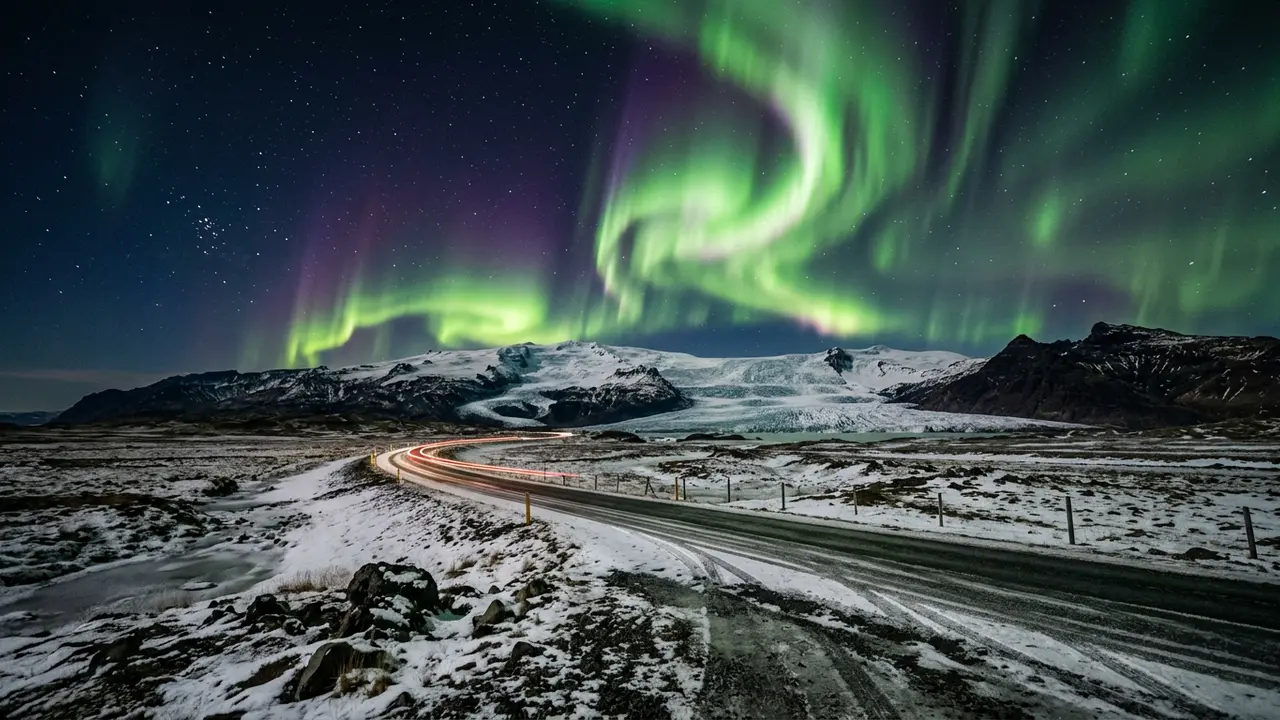
Iceland's whole-country aurora guide: best regions to base in, aurora season Sep–Mar, ice caves, winter driving reality, and where cloud cover ends every plan.
The one genuine advantage Iceland holds over Tromsø here is flexibility. A failed aurora night in Reykjavík still leaves you a full day of glaciers, geothermal fields, and waterfalls to fall back on. A failed aurora night in Tromsø, outside of whale-watching season, more often means paying for another tour just to have something to do.
The verdict: who Iceland is worth it for, and who should book Tromsø instead
Here's the honest split, without the marketing language.
Recommended tours
Tours are selected for quality, not commission. I earn a small fee if you book — at no extra cost to you.


Iceland is worth it if:
- You want a trip that still delivers even on a clouded-out night; the volcanic and glacial landscape justifies the cost on its own
- You're a first-timer who values English-language infrastructure, a well-developed road network, and tourist services that assume you don't already know how to plan an Arctic trip
- You have five to seven days and can build in flexibility rather than betting everything on one or two nights
- You're happy basing part of the trip in the north, away from the Golden Circle crowds
Read next · Article
Do You Need a Tour to See Northern Lights in Tromsø?
You don't need a tour for northern lights in Tromsø. The choice turns on winter driving confidence, budget, and whether you prefer certainty over flexibility.
Book Tromsø instead if:
- You're on a tight budget; Iceland's premium over Norway is real and it isn't small
- You're chasing aurora specifically with limited interest in daytime sightseeing, since a failed aurora night in Iceland still costs you the premium without the landscape upside if you don't care about it
- You want a quieter, less-trafficked Arctic experience; Iceland's headline attractions are genuinely crowded in a way Tromsø's fjords generally are not
The break-even case is the photographer or the adventure traveler who wants dramatic terrain in the frame regardless of what the sky does. For that person, Iceland earns its premium even on a clouded-out night, but the aurora-specific odds are no better than Tromsø's, and the weather gamble is, if anything, steeper on the exposed south coast. Plan your nights around the north and the equinox, treat the daytime landscape as the main event, and Iceland is worth it. Chase the aurora alone, on a budget, expecting solitude, and you'll be happier, and richer, in Norway. For a duration comparison against the Nordic alternative, see How Many Days in Tromsø for Northern Lights.