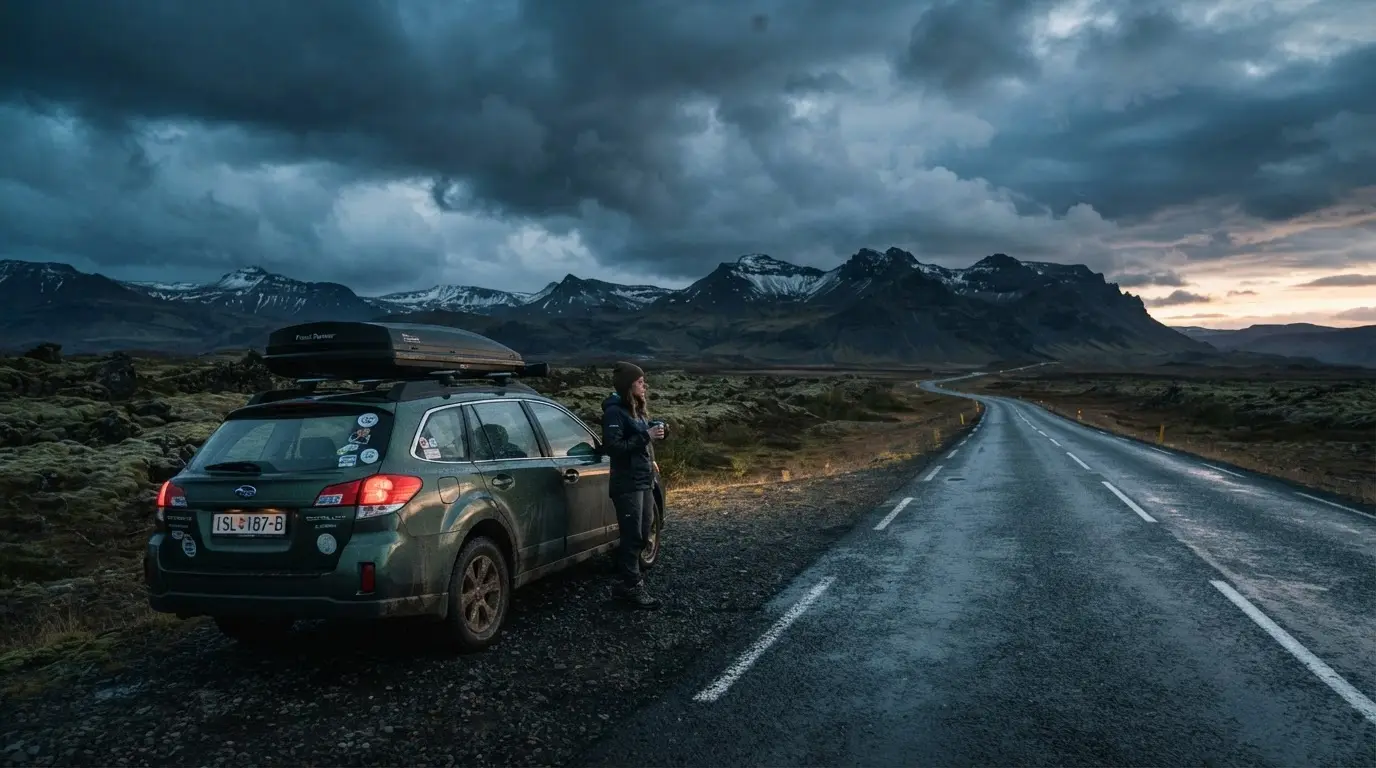

The daylight math that changes everything in October
Iceland's shoulder season looks generous on a map and stingy on a clock. On October 1, Reykjavík gets roughly 11 hours 20 minutes of daylight, sun up at 7:36am and down by 6:56pm[4]. By October 31 that daylight window has collapsed to 8 hours 6 minutes, sunrise pushed past 9am and sunset before 5:15pm[2]. Lose three hours of daylight over one month and a route that felt leisurely in September starts requiring you to finish driving before the light does.
That matters more than it sounds like it should, because the hazards that make Icelandic driving genuinely dangerous cluster at dawn and dusk. Refreezing meltwater turns bridges and shaded valley floors into black ice right as the light drops, and Iceland's own driving guidance is explicit that winter-type road conditions can already show up in autumn, not just in the deep-winter months most drivers brace for[5]. October isn't a warm-up lap before winter driving starts. For long stretches of the Ring Road, it already is winter driving, with a shorter runway of daylight to do it in.
None of that changes the fundamentals covered in getting around Iceland in winter: studded tyres, road.is, and the black-ice-and-wind basics apply whether you're driving with a partner or alone. What changes with a solo trip is how much slack you can afford to lose.
Why solo changes the risk calculus
Every general Iceland driving guide gives you the same fundamentals: check road.is, respect the wind, don't push the studded tyres past what the ice allows. None of that changes when you're alone. What changes is who's making the call when something goes wrong. There's no second driver to take the wheel if you're exhausted at hour six, no one to flag down a farmhouse while you wait with the car, and on the loop's emptiest legs, the East and stretches of the North, that same coverage gap means a breakdown isn't a quick call for help, it's a long wait for someone to happen by[9].
That's exactly the gap SafeTravel exists to close. The service is run by ICE-SAR, Iceland's volunteer search-and-rescue organization[6], and its core tool is a trip plan: a route and timeline left with a designated contact who isn't on the trip with you, so someone can trigger a search if you go quiet[7]. For a couple splitting the driving, a missed check-in might just mean a late dinner. For a solo driver, it's the fallback that exists if the plan and the road stop matching.
Iceland doesn't ask permission to change your plan for you, either. Single-lane bridges dot the Ring Road and its side roads, each with a 50 km/h limit and a right-of-way rule (the car closer to the bridge goes first) that still leaves the actual judgment call to whoever's behind the wheel[8]. With a passenger, that's a two-person read of the situation. Alone, it's yours, every time, wherever you are on Iceland's whole-country aurora guide.
What actually closes the Ring Road in October
October also closes one door while cracking open the odds on another. Iceland's unpaved highland routes, the F-roads, run a standard seasonal closure from October straight through to June[10] — so whatever pace you set, the ambitious backcountry detour off the classic loop was never on the table this month anyway. The Ring Road itself, Route 1, is a different story: paved, plowed first, and open in some form nearly all year.
Wind is what actually shuts it down. Iceland's Meteorological Office grades sustained wind on a five-step scale, and once it's reading above 30 m/s it's classified as extreme wind, dangerous[11], the point where driving stops being a judgment call and starts being a bad idea regardless of how careful you are. Well below that threshold, the same forecasts already flag conditions as requiring caution, which is the cue to slow down and reassess before the number gets worse, not after.
Featured · Destination
Northern Lights in Iceland
Iceland's whole-country aurora guide: best regions to base in, aurora season Sep–Mar, ice caves, winter driving reality, and where cloud cover ends every plan.
Two stretches of the loop carry most of the closure risk, and cold-season conditions can already be in play well before winter proper[5]. The Eastfjords have the country's second-highest concentration of closure-prone roads, including a roughly 113 km stretch near Mývatn with no services[12]. On the North section west of Akureyri, Öxnadalsheiði and Vatnsskarð are recurring closure points on Route 1 itself with nothing to detour onto, so a closure there pauses the whole loop until conditions clear[18]. A closure on either stretch doesn't just cost you a day of driving. It can strand the rest of your itinerary on the wrong side of it.
Pacing the trip: is 10 to 14 days too long?
Route 1's headline reputation, highest-priority maintenance, plowed first, generally open year-round except in severe storms[14], is true and slightly misleading at the same time. It describes most days. It says nothing about the two or three days in a two-week October trip when a front rolls in and a section closes anyway.
Here's the argument that actually answers the question, and it runs more conservative than it looks. Iceland's road authority doesn't publish a fixed closure-duration figure at all: a road officially marked closed on road.is stays shut for as long as conditions require, not a set window[13]. That's not a hypothetical. Holtavörðuheiði carries all of Route 1's traffic toward Akureyri and the Westfjords, and one of its closures was still unresolved when reported in mid-March 2026[19]. On a 1,309 km loop[1] where the East and North sections are the ones most likely to trigger a closure like it, a six- or seven-day itinerary has no slack to absorb an open-ended wait; every day is already committed to a drive segment and a booking. Ten to 14 days does, which is the entire case for the longer trip: not more sightseeing, more room to sit out a closure with no guaranteed end time and still finish the loop.
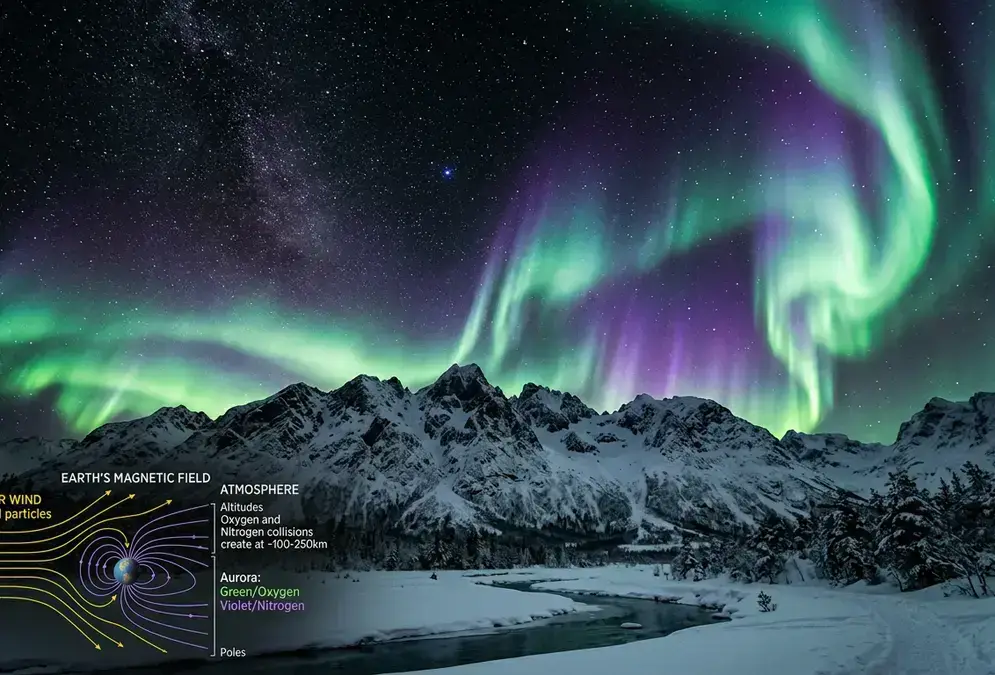
Featured · Article
What Causes the Northern Lights? The Science Explained
Solar wind collides with Earth's magnetic field, funneling charged particles toward the poles, where they excite oxygen and nitrogen into glowing color.
That's also the honest answer to whether 10-14 days is too long for a solo driver. It isn't padding if you're using it as insurance. It is padding if you fill every one of those extra days with more driving distance instead of banking them as buffer, which defeats the point. The how many days to give an Iceland aurora trip question has its own answer for couples and families; the solo, October-specific answer is however many days your itinerary needs, plus buffer days you don't spend anywhere in particular.
A solo risk-mitigation checklist for October
None of this argues against going alone. It argues for treating the trip like the solo one it is, with a short list of habits that cost nothing and change the outcome if the weather turns.
Start before you land. Jet lag and post-flight fatigue are named risks in Iceland's own driving guidance, not just a passing warning, precisely because a tired solo driver has no one in the passenger seat to notice the swerve[16]. Build in a night in Reykjavík before you pick up the car, rather than driving straight from the airport.
Once you're moving, don't treat one road.is check as good for the whole day: look again before you start driving each morning, and once more if several hours pass without a fresh check, since conditions can shift faster than the colour on the map updates[17]. From October through April, the field reports behind that colour come from a window that's only staffed between 07:00 and 22:00 daily[20], so a status checked outside those hours may simply be unconfirmed, not verified safe. Pair it with the 112 Iceland app, which lets you send your GPS location to 112 emergency services so they can find you[21], and file a SafeTravel trip plan before you set out[15].
If the East or North leg is the part you're least confident about alone, that's a reasonable place to hand the wheel to someone else for a night rather than the whole trip. A one-night aurora chase tour covers exactly that kind of local knowledge without committing you to a guided trip end to end, and basing your buffer nights at one of the best lodges for northern lights in Iceland means a bad-weather day off the road still isn't a wasted one.
Quick pre-drive checklist for solo October trips
- Sleep off jet lag in Reykjavík before you start driving
- Confirm road.is status again after any multi-hour gap
- Register a SafeTravel plan with an off-trip contact
- Keep the 112 Iceland app ready to share your location
- Consider a guided night for your shakiest driving leg