
Renting a car at Fairbanks airport
Multiple major rental agencies operate at Fairbanks International Airport (FAI). All have counters inside near baggage claim. No shuttle required.
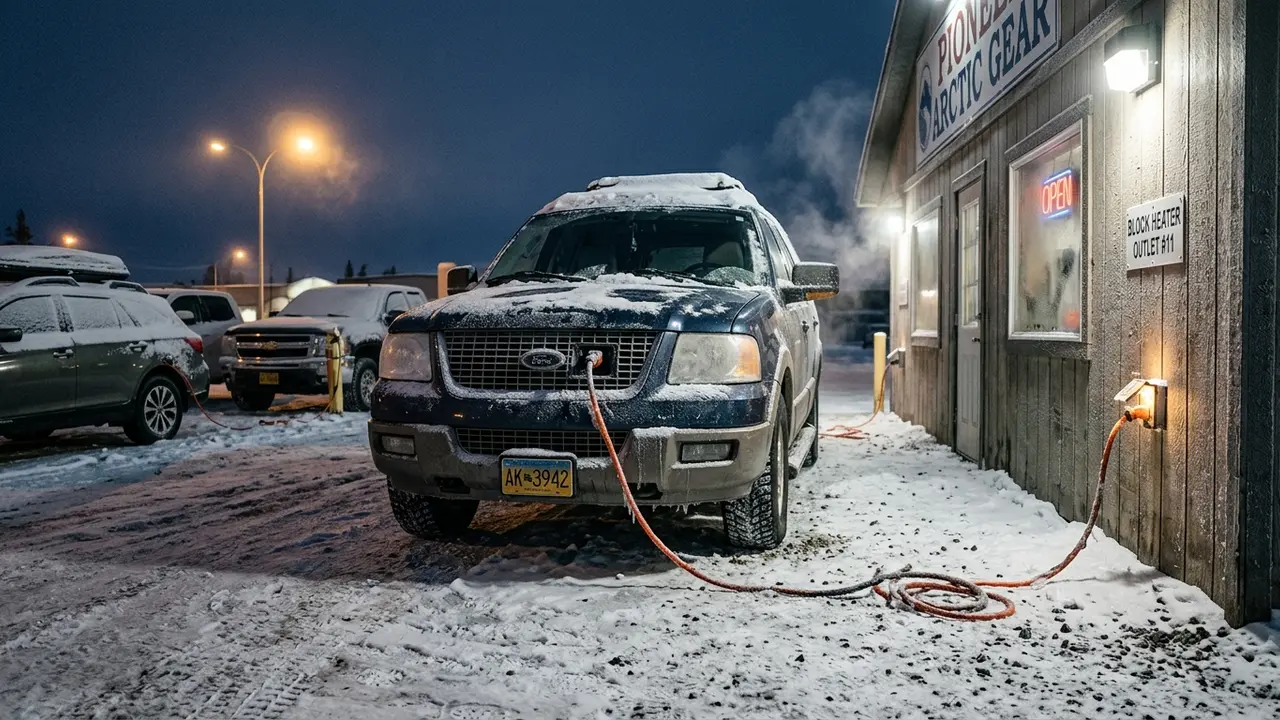
The key isn't just booking a car: you need a 4WD or AWD vehicle with a block heater. In aurora season (November through March), these are in short supply and book out fast[1]. Most guidance suggests reserving at least two months ahead.
Winter tires are standard in Alaska rental fleets. Studded tires, which offer better grip on hard-packed ice, are available as an upgrade — worth asking about if you plan to drive after a fresh snowfall.
2+ months
The cord comes with the car, but knowing where to plug it in is your first logistics task on arrival. Most Fairbanks hotels and parking structures have outdoor electrical outlets for this.
What a block heater does, and why -40°F makes it non-negotiable
A block heater is an electrical device fitted inside the engine block. It warms the coolant and oil while the car is parked, keeping the engine at a temperature that allows reliable starting at sub-zero temperatures. Plug in well before you plan to drive.
Without it, cold-soaked oil at -40°F can barely flow through a cold engine. Often the car won't crank at all. It's a predictable outcome for any vehicle that spent the night unplugged in extreme cold.
A few things become important at the extreme end of the temperature range[2]:
- At -40°F, avoid trying to open the hood. Cables and hinges can snap.
- Check tire pressure every morning. Air contracts in extreme cold; tires correct at noon may be visibly low before dawn.
- Even with a block heater, start the engine at least once daily when the car sits overnight in prolonged cold.
The two main aurora routes out of Fairbanks
Two roads do most of the work for aurora chasers leaving Fairbanks. The Steese Highway climbs toward Cleary Summit, high enough to solve a specific problem: below about -30°F, ice fog can seal off the sky over the valley floor while it's genuinely clear a few hundred feet up.
The north-facing orientation matters: you're looking out over the interior valley away from city light, and on a clear night the aurora often runs the full width of the horizon. The road is paved and AWD is the sensible choice on the grades after fresh snow.
Chena Hot Springs Road runs 56.5 miles (91 km) east from Fairbanks to the hot springs resort, taking just over an hour in normal winter conditions[3]. The road is fully paved and regularly maintained.
Established pullouts include the gravel pit near Mile 25, the shooting range area, and stops at Mile 35 and Mile 37[4]. Some campground areas along the route are not plowed in winter.
Cell service drops out past Mile 25[4]. Download offline maps before you leave, check the aurora forecast at Mile 25, and let someone know your general plan. The road sees no passing traffic at 2am.
| Steese Hwy / Cleary Summit | Chena Hot Springs Rd | |
|---|---|---|
| Direction | North | East |
| Distance | ~20 miles to Cleary Summit | 56.5 miles to hot springs |
| Road condition | Paved, AWD advised | Paved, regularly plowed |
| Cell service | Patchy | None past Mile 25 |
| Aurora appeal | North-facing panorama | Multiple established pullouts |
For a full breakdown of each pullout, see best aurora viewing spots near Fairbanks.
Murphy Dome, in the hills west of town, sometimes appears on aurora lists. Specific winter road conditions weren't confirmed in the sources I used; verify locally before committing to that drive.
Self-drive or guided tour: the honest trade-off
Self-driving gives you the one thing guided tours can't replicate: the ability to stay at a spot until the aurora fades, then move to another. If the sky opens at 2am on a clear stretch of Chena Hot Springs Road, you're there. If it doesn't, you haven't paid for a tour that ended at midnight.
The trade-off is preparation. Self-driving in winter Fairbanks requires understanding block heater routines, carrying cold-weather emergency gear (a sleeping bag in the trunk is not an overreaction), knowing your pullouts before you leave, and being comfortable on dark roads with no cell service. If any of those feel uncertain, a guided tour is the better choice.
Featured · Destination
Fairbanks Northern Lights
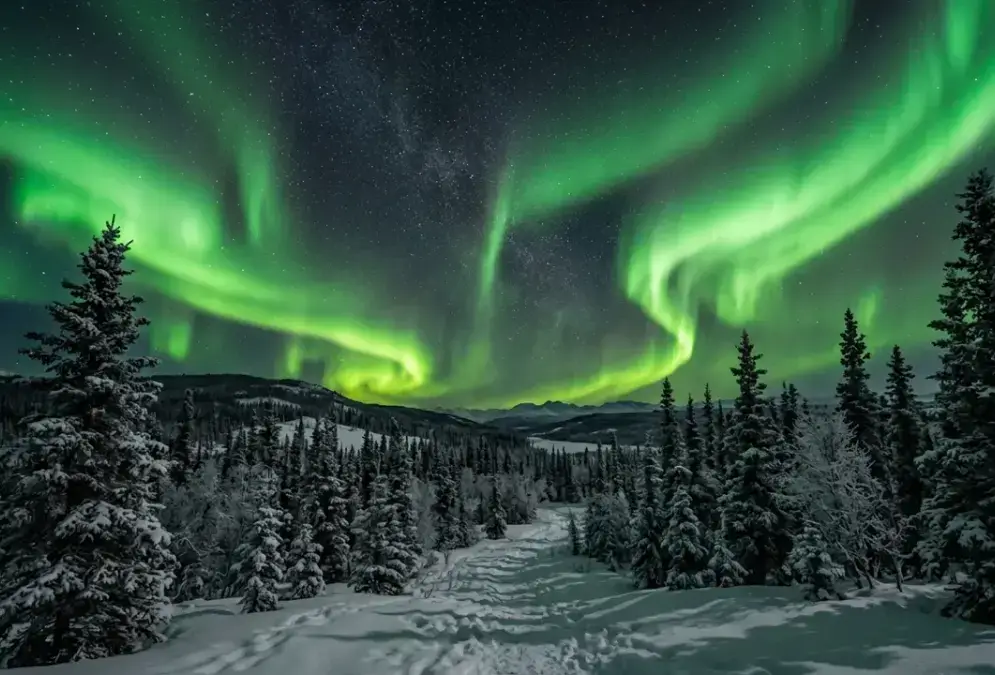
Fairbanks sits directly under the auroral oval at 64.8°N. Aurora season runs Aug 21–Apr 21, peaking Feb–Mar, with roughly 90% odds if you stay 3+ nights.
Guided aurora tours based out of Fairbanks typically include hotel pickup, a heated vehicle, and a local driver who monitors the forecast and knows the roads. Most operators cover multiple locations in one night, which helps when one spot clouds over. The drawback is fixed timing: if the best display of the trip runs from 1am to 4am, a tour returning at 1:30am is frustrating.
Recommended tours
Tours are selected for quality, not commission. I earn a small fee if you book — at no extra cost to you.
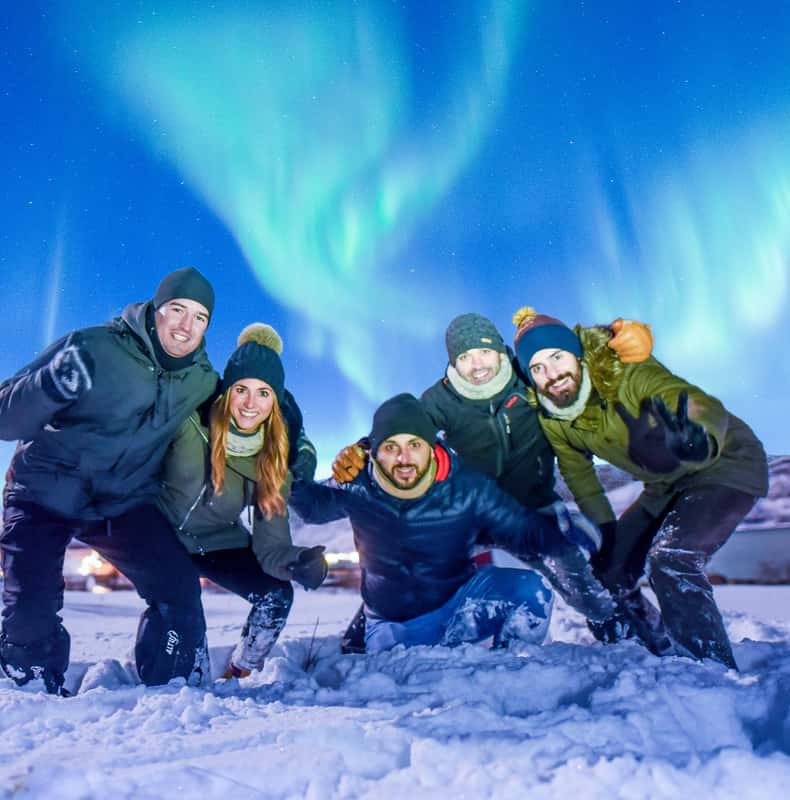
Before committing to a rental, compare Fairbanks aurora viewing tours for the season you're traveling. For first-time visitors, having a local driver handle the conditions monitoring is often worth the cost. For the full price breakdown against a rental, see guided tour versus driving yourself.
Before you book, check whether your rental agreement even allows the roads you're planning: major agencies at Fairbanks airport won't let their cars north of Fox, and Alaska's 511 road-condition system is only refreshed once a day at best. The full breakdown of both restrictions is in self-drive versus guided tour, weighed properly.
No Uber, no Lyft: what actually fills the gap
Uber and Lyft don't operate in Fairbanks. This is worth knowing before you arrive assuming on-demand transport will work as a backup.
Local taxi services exist, though I couldn't confirm from the research which specific companies operate reliably in winter or what their after-midnight availability looks like. The practical move: ask your hotel before you arrive. Most hotels in the downtown area maintain a contact list for local drivers.
Hotel and lodge shuttles are often the most reliable non-rental option for aurora visitors. Many properties catering to this crowd include airport pickups and sometimes transport to viewing areas. Ask at booking rather than on arrival.
Guided tour packages handle the logistics entirely for any booked structured night. Most Fairbanks aurora operators include hotel pickup in their itinerary, which removes the question for those evenings.
For anything spontaneous, the honest picture is this: you need a rental or a pre-arranged driver contact. Fairbanks doesn't have the transport redundancy of a larger city, and the cold makes improvising unreliable. See the Fairbanks northern lights guide for a full overview of where to base yourself, which affects how much you'll need your own vehicle.
Getting around downtown Fairbanks on foot
Downtown Fairbanks is small. The commercial core along Cushman Street runs maybe half a mile end to end, and the restaurants and shops catering to winter visitors cluster close enough to be walkable from most hotels in the area.
The temperature sets the limit. At -10°F with proper gear (insulated boots, face protection, real mittens), walking between blocks is routine. At -30°F, keep it short and cover exposed skin. At -40°F or below, a five-minute walk is fine; a long stroll is not.
What downtown walking won't do is get you anywhere useful for aurora. Every worthwhile viewing location is a drive out of town, and the light pollution over the city core washes out all but the strongest displays. Cushman Street is for coffee and food. The car is for aurora.
Pack hand warmers as insurance for any time you're out of a vehicle for more than ten minutes.
Read next · Guide
Aurora Viewing Spots Near Fairbanks, Alaska
Six ranked aurora-viewing spots near Fairbanks, from Cleary Summit to the remote Chatanika corridor, with drive times and road conditions for DIY chasers.