
Hegra, briefly: the reason most people book AlUla in the first place
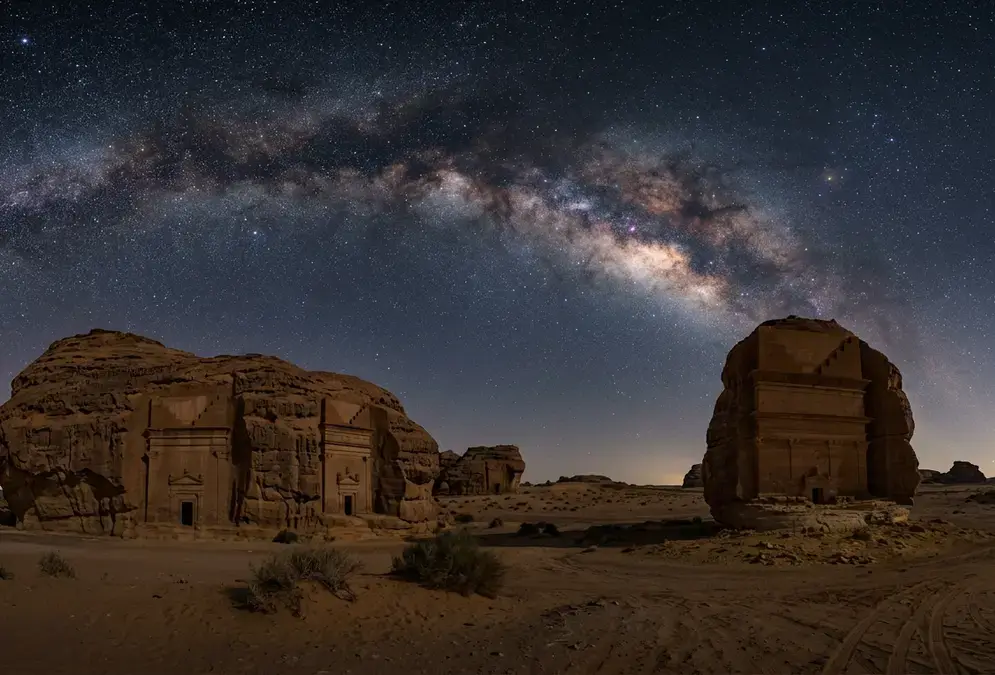
If you're reading this after already booking a stargazing trip to AlUla, you've probably read plenty about Hegra already. Saudi Arabia's first UNESCO World Heritage Site is a Nabataean necropolis of monumental rock-cut tombs, sister to Petra across the border in Jordan, carved into freestanding sandstone outcrops rather than a cliff face. It's the reason most travelers book AlUla in the first place, stargazing or not, and dedicated pieces in this cluster already cover it in depth.
Access runs through Experience AlUla, the official tour operator, not independent entry, and both hours and pricing shift with the season, so confirm current details before you build a day around a specific slot. Because this piece is about everything else worth a slot on the itinerary, the full daytime-touring breakdown, including when to book Hegra around the heat rather than the dark, lives in Best Time for Stargazing in AlUla and the AlUla Stargazing destination guide. What follows here assumes Hegra is already on your itinerary and asks what else deserves a spot next to it.
One practical note that applies to everything in this piece: Hegra and Jabal Ikmah sit exposed to full desert sun with almost no shade, so most operators run tours in the early morning or the hour or two before sunset. That timing has a knock-on effect worth planning around, since a tour ending near sunset can slide straight into an evening at Elephant Rock or a stargazing session without a long gap in between.
Elephant Rock (Jabal AlFil): the open-access sunset spot
Elephant Rock, known locally as Jabal AlFil, is the natural sandstone formation that looks exactly like its name promises: a towering weathered arch and trunk rising from the desert floor, about a 20-minute drive northeast of AlUla Old Town. Unlike Hegra, there's no tour to book and no ticket window. It's open daily from 16:00 to 23:30[1], with no ticket required to visit.
16:00-23:30
That opening window is deliberate. Elephant Rock is built around sunset, not midday: the rock glows deep orange as the light drops, food trucks and casual seating set up in the sand nearby, and the whole scene works as a warm-up act for a stargazing session later the same night rather than a separate outing. Go for the last hour of daylight, stay through blue hour, and you've covered the photo and the first stretch of dark sky in a single stop.
A few things worth knowing before you go:
- Bring your own water and shade; there's little of either on site beyond what the food trucks offer.
- Expect sand underfoot the whole way, so skip anything you're not willing to get dusty.
- The formation is a short scramble up close but not a hike, so most people treat it as a single sunset stop rather than a half-day outing.
Maraya: a mirrored concert hall, not a place to sleep
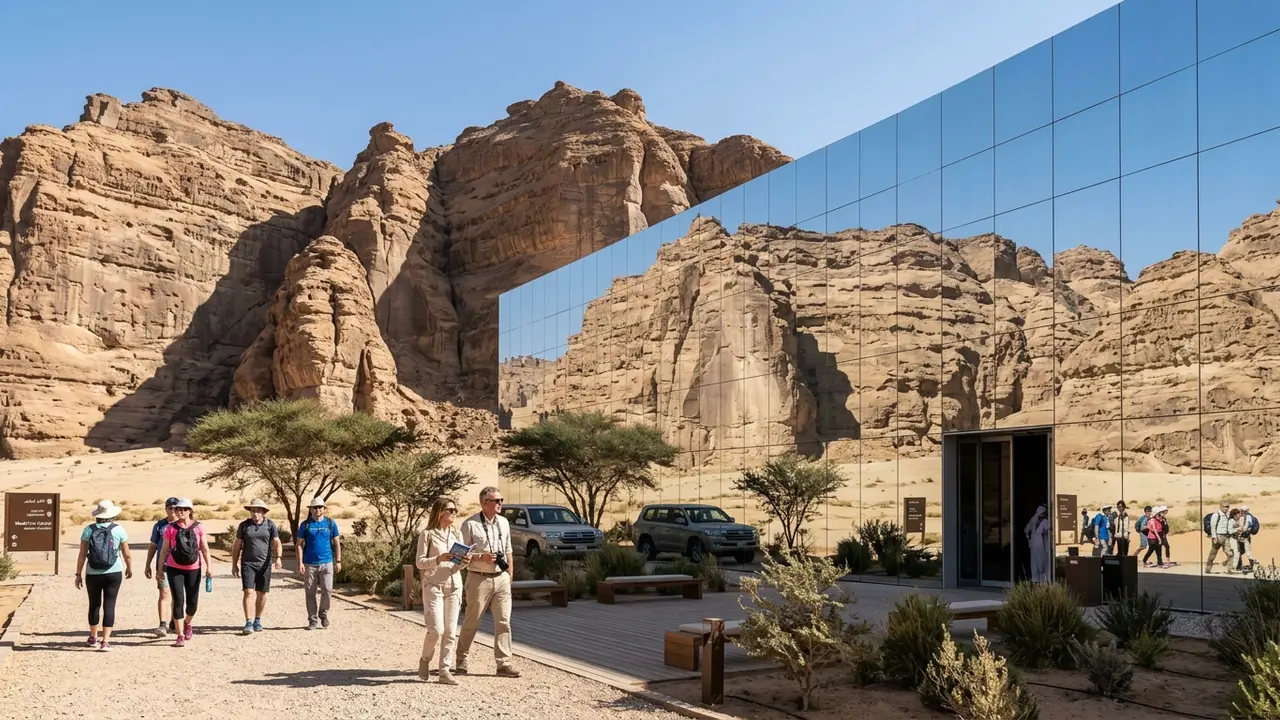
Maraya is worth clearing up before you build an evening around it: it's the mirrored building itself, a concert hall and multi-purpose venue, not a resort or a hotel brand. If you've seen a reference to "Maraya Social" online and assumed it was somewhere to book a room, it isn't; it's the complex's restaurant, not a lodging property.
What Maraya actually is: the largest mirrored building in the world, a Guinness World Records title earned for 9,740 square metres of mirrored façade, designed by the Italian firm Giò Forma[3]. Set against the Ashar Valley's sandstone cliffs, the effect changes with the light and the angle you approach from, the building all but disappearing into its own reflection at certain hours.
Inside, Maraya operates as a 500-seat concert hall and multi-purpose venue that has hosted Alicia Keys, Andrea Bocelli, Enrique Iglesias, John Legend, Usher, OneRepublic, and Seal, alongside spaces like The Great Hall, a VVIP green room, and several conference rooms; the complex's dining wing, Maraya Social, is a restaurant, not a place to check in for the night[4].
Maraya Social: dinner, not a room
Book a concert if one lines up with your travel dates, or a table at Maraya Social if it doesn't; either way, treat Maraya as a venue you visit, not a base you build your AlUla stay around. For that, look to the Ashar Valley's actual resorts nearby, including Our Habitas AlUla, a short drive from Maraya's mirrored walls.
Wadi AlFann: the land-art valley that isn't finished yet
Wadi AlFann, meaning "Valley of the Arts," is the most ambitious of AlUla's cultural projects and the one most likely to get oversold online: it is not open to the public yet. The official framing from the Royal Commission for AlUla is a phased unveiling starting from 2028 onwards, with permanent land-art installations planned across a large stretch of the valley from artists working at monumental scale. None of that is standing in the desert to visit today.
What is visitable right now is Desert X AlUla, a temporary biennial exhibition that its own organizers describe as a precursor programme to the finished valley, not the valley itself. The most recent edition opened in January 2026 and closed on February 28, 2026[5]; check current dates before planning a trip around it, since the installations are temporary and the schedule shifts with each edition.
Featured · Destination
AlUla Stargazing
Stargaze above Hegra's 2,000-year-old Nabataean tombs in AlUla, the Gulf's first DarkSky-accredited Dark Sky Park. When to go, where to stay, and how to plan.
Desert X AlUla: what you can actually see now
If your trip lands outside a Desert X window, there's nothing to see at the Wadi AlFann site itself yet, and that's worth knowing before it becomes a line item on your itinerary. Treat 2028 as the year this turns into a real stop, not this year's.
AlUla Old Town: mudbrick alleyways and the easiest night off
AlUla Old Town is the restored mudbrick village at the historic core of the valley, now rebuilt as a dining and visitor hub rather than a residential quarter. Narrow alleyways wind between reconstructed buildings, and a few of the specific historical claims floating around online, a precise century of founding, a fixed tour length, come from third-party listings rather than AlUla's own tourism sources. Treat those specifics with some caution rather than repeating them as settled fact until you can confirm them locally.
Recommended tours
Tours are selected for quality, not commission. I earn a small fee if you book — at no extra cost to you.

What's solid: Old Town works as a low-effort evening option on a night you'd rather not drive out to the desert. It sits close to several accommodation clusters, including Dar Tantora The House Hotel, built inside the restored village itself rather than out in the valley, which puts dinner, a walk through the alleyways, and your room within a few minutes of each other. For anyone stacking a stargazing trip with heritage touring, that combination, no transfer needed, low light pollution nearby, a meal within walking distance, makes Old Town worth an evening even without a specific landmark inside it to chase.
Read next · Lodge
Dar Tantora The House Hotel
Dar Tantora The House Hotel restores 30 candlelit mudbrick Dars in AlUla's Old Town, with 24/7 butler service and TIME's World's Greatest Places 2024 nod.
Wander it after dark rather than at noon. The restored mudbrick walls hold the day's heat and release it slowly once the sun drops, restaurant lanterns line the alleyways, and the whole quarter reads as a working village rather than a museum piece, which is arguably the point of rebuilding it as a dining hub instead of a static heritage site.
Fitting it all around your stargazing nights
None of the above competes with a clear night in AlUla's DarkSky-accredited zones; it fills the hours before one. A two-day version works for most first-time visitors:
- Day one: Hegra in the cooler part of the day, Elephant Rock at sunset, stargazing after dark if the forecast cooperates.
- Day two: Maraya, a show if the schedule lines up, Maraya Social if it doesn't, a walk through AlUla Old Town in the evening, and a second night under the sky.
Add a Desert X AlUla visit if your dates happen to overlap with the current edition; skip Wadi AlFann as a planned stop until 2028 changes that. For the stargazing half of the plan, from booking a guided night in the desert to picking a moonless week, see the AlUla Desert Astrophotography Tour; the destination guide linked earlier in this piece covers getting to AlUla and where to stay. The daytime side of AlUla is genuinely worth the extra day. It's just not the reason you booked the trip.
Traveling with kids or a mixed-fitness group makes the case for three days rather than two: Elephant Rock and Old Town both work fine for anyone who'd rather not hike, Maraya's concert schedule is worth checking before you fly rather than after, and a spare afternoon gives you slack if a Hegra tour slot doesn't line up with the day you first wanted.