Why AlUla's astrophotography gear list looks different
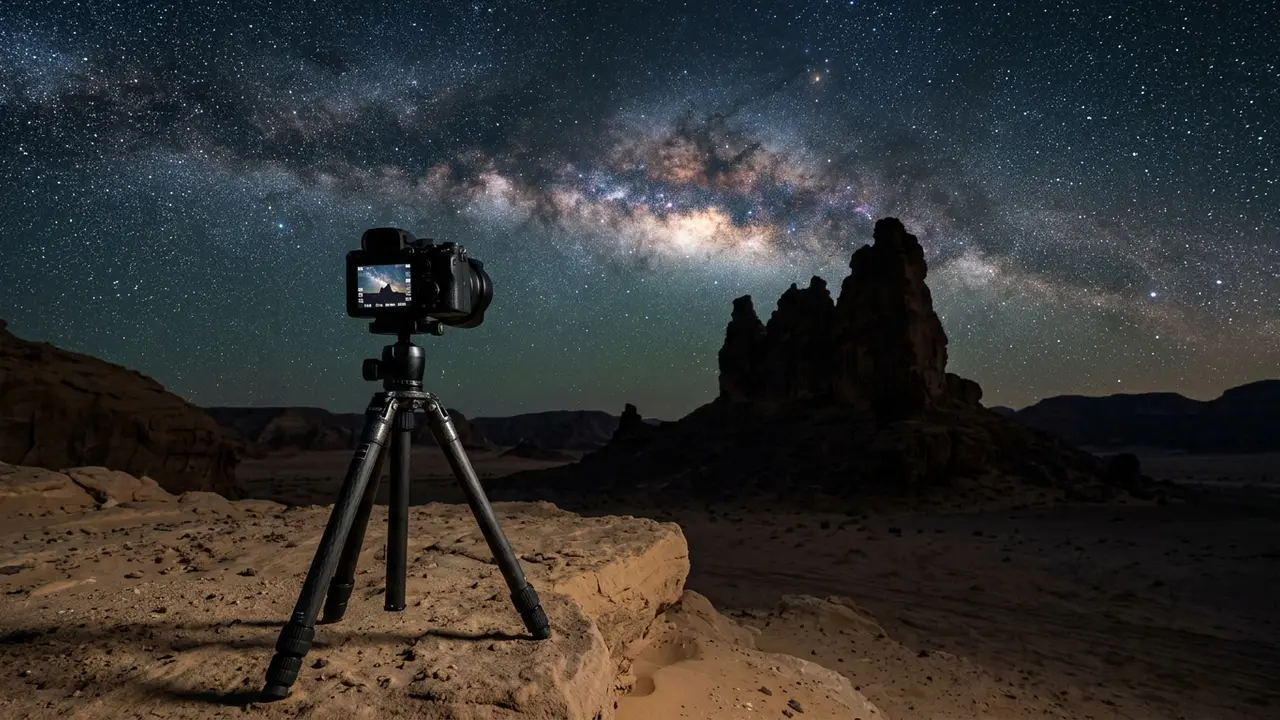
Most desert stargazing guides assume you're shooting sky alone: a wide black horizon, maybe a lone acacia tree, the Milky Way doing all the work. AlUla asks for more. The Nabataean tomb facades at Hegra and the sandstone towers of the AlGharameel Nature Reserve give you foreground worth composing around, and the gear list that gets you a good frame here is built for that pairing, not for empty dunes.
The astronomy is real too. AlUla became the first International Dark Sky Park in the Gulf in October 2024[1], and the accredited zones, AlUla Manara and AlGharameel, sit far enough from any settlement that a wide-aperture lens can pull detail out of the galactic core without fighting a sodium-orange sky glow. That combination, heritage silhouette plus a genuinely dark sky, is the reason a camera bag built for AlUla stargazing looks slightly different from one built for a generic desert night.
None of what follows requires a telescope or a five-figure camera body. It requires the right handful of items, packed for sand as much as for stars, and a realistic sense of what the official Stargazing at Gharameel tour, an evening by 4x4 into the reserve[2], actually provides for photographers.
Camera body and lens: the two decisions that matter most
You don't need a modified astro camera or a five-figure body to get a real AlUla Milky Way frame. Any interchangeable-lens camera from the last decade with full manual control over aperture, shutter speed, and ISO will do the job, and a full-frame body has a real advantage: cleaner files at high ISO, which matters more here than almost any other setting, since AlUla's night sessions push ISO into the 3200 to 6400 range.
Lens choice matters more than body choice. A wide-angle lens, low ISO, and a large aperture help gather more light and minimise noise[3] — in practice that means something in the 10 to 14mm range:
f/2.8
- A 10mm ultra-wide with minimal distortion, so the horizon stays straight across a frame that includes a tomb facade or a rock silhouette
- A 14mm, wide enough to load the full arch of the Milky Way core into a single frame
Both should be fast: f/2.8 or faster is the baseline, and a sturdy tripod with a remote shutter release is standard gear for this kind of long-exposure work, since a slower kit lens forces you to push ISO higher than any AlUla night sky needs. A 35mm f/1.4 is worth packing as a second option if you want a tighter frame on a single tomb or rock tower rather than the full sky.
If you're building an AlUla kit from scratch rather than adapting what you already own, put your budget into the lens before the body. A fast, sharp wide-angle prime on a mid-range APS-C camera will out-shoot a flagship full-frame body paired with a slow kit zoom, every time, under a sky this dark.
Tripod and shutter release: the desert wind problem
A tripod is not optional for any of this, and it needs to be a real one. Gharameel's desert floor is open and exposed, with nothing to break the wind once you're off the highway, and a lightweight travel tripod will vibrate through a 15-second exposure exactly when you need it stationary. Sturdy is the word that keeps coming up in AlUla photographer guidance, and it isn't marketing language: a shaky tripod on a windy night is the single most common reason a first AlUla Milky Way shot comes back soft.
Pair the tripod with an intervalometer or remote shutter release. Pressing the shutter button by hand, even carefully, introduces enough vibration to blur a long exposure, and a remote release eliminates it entirely. The same accessory automates one of AlUla's signature astrophotography techniques: shooting continuous 30-second exposures over several hours, ideally six, to build a seamless star-trail arc across the sky above a tomb or rock formation[3]. That isn't a five-minute project. Set the intervalometer, find somewhere to sit, and let the camera work while you actually look at the sky for once.
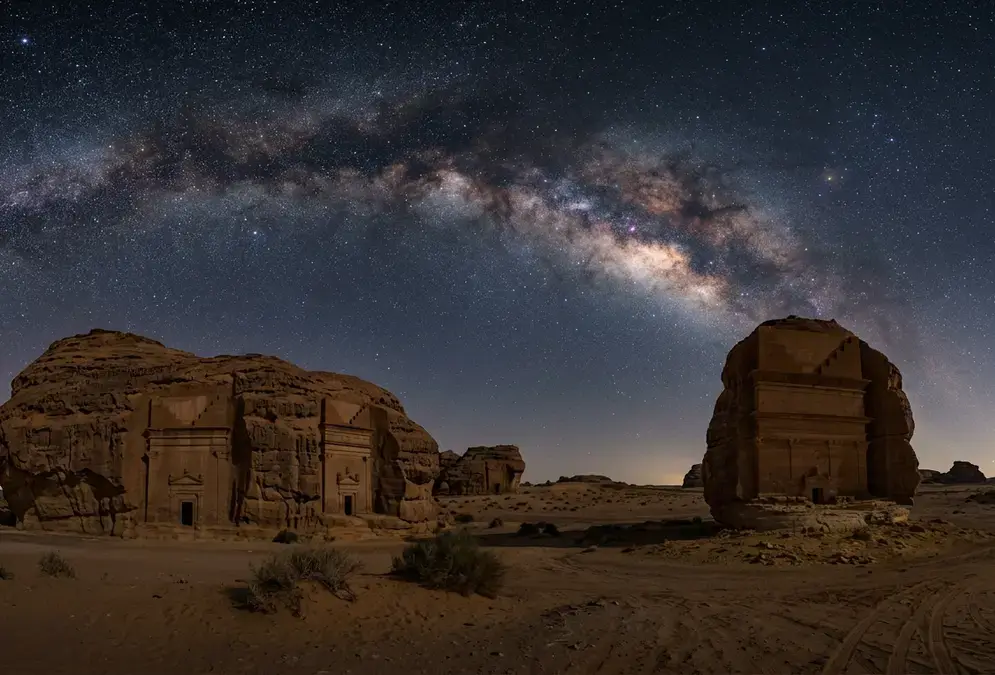
Featured · Destination
AlUla Stargazing
Stargaze above Hegra's 2,000-year-old Nabataean tombs in AlUla, the Gulf's first DarkSky-accredited Dark Sky Park. When to go, where to stay, and how to plan.
A star tracker, an iOptron or similar motorized mount, is worth the extra bag weight only if you're already comfortable with polar alignment and want longer, sharper exposures of the core itself rather than a star-trail composition. For a first AlUla session, skip it. The tripod and the remote shutter do more for your results than a tracker you're still learning to align at 1am in the dark.
Composition and settings: shooting tombs and rock towers, not just sky
AlUla's differentiator is pairing the Milky Way with something recognizable underneath it, and that starts with where you point the camera before you touch a single dial. AlUla photographer guidance is specific: look for dramatic rock formations that face due north, since that orientation keeps the galactic core rising behind your foreground rather than off to one side of the frame[3]. At Hegra, that means scouting a tomb facade during a scheduled guided visit, then returning mentally, if not literally, at night; at Gharameel, your guide can usually point you toward a formation that works.
Starting settings for a first frame: manual mode, ISO 3200 to 6400, the widest aperture your lens allows, and a shutter speed of 15 to 25 seconds. Focus manually, every time. Zoom in 10x on the brightest star in live view, turn the focus ring until that star is a tight point rather than a soft blob, and lock focus before you recompose. Autofocus hunts and fails in near-total desert darkness; don't trust it.
Recommended tours
Tours are selected for quality, not commission. I earn a small fee if you book — at no extra cost to you.
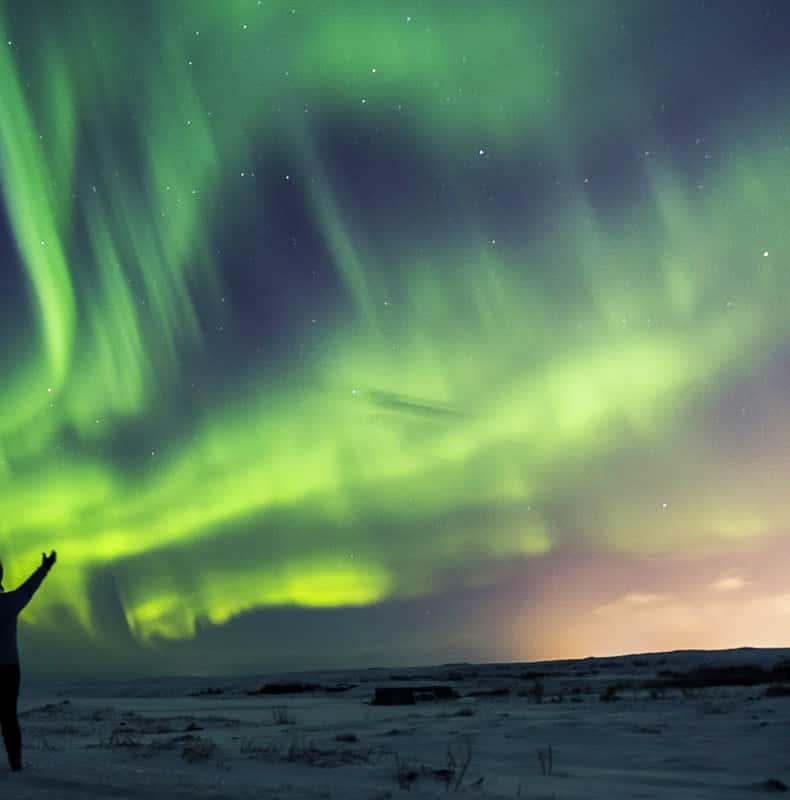
A star tracker isn't the only planning tool worth packing. Apps like Stellarium, Star Walk, or PhotoPills show exactly where the galactic core will sit above the horizon on your specific date, which lets you scout a north-facing rock formation in daylight and know precisely where to point the camera after dark rather than guessing.
For the best stargazing spots in AlUla, Gharameel and Hegra are only two of four real options, and each rewards slightly different framing. Gharameel's open 360-degree horizon gives you rock silhouette to choose from in any direction, while Hegra's tombs are fixed and monumental, worth a tighter composition than the wide desert shots Gharameel invites.
Protecting your gear from sand and dust
AlUla doesn't publish a dedicated dust-and-sand guide for its stargazing sessions, so most of what protects your gear here is general desert-photography practice rather than anything specific to Gharameel or Hegra. It still matters: fine desert sand works its way into a zipper, a port, or a lens seam faster than most photographers expect, and once it's inside a mount or a sensor chamber, it's there for good.
A short list of habits does most of the work:
Read next · Tour
AlUla Desert Astrophotography Tour
How to shoot the Milky Way at AlUla's Gharameel stargazing session: camera gear, dust protection, and why formal photo coaching still isn't included here.
- Pick one lens for the session rather than swapping in the field. Every lens change is a chance for windblown grit to land on an open sensor.
- Weather-sealed camera bodies handle a dusty night better than an unsealed one, if you have the choice between two cameras to bring.
- Carry a rocket blower and a microfiber cloth, and use them in that order. Blow grit off a lens before you ever wipe it; dragging sand across glass with a cloth is how you scratch a coating that survived a decade of normal use.
- Store gear in a sealed bag or case between shots rather than leaving it open on a tripod or a rock. A closed zip-lock case for spare batteries and memory cards keeps sand out of the one place you can't blow it clean.
- Avoid changing memory cards or batteries in open wind. Turn your back to the wind, or do the swap inside a vehicle, if the site allows it.
None of this is complicated or AlUla-specific. It's the same discipline any desert shoot demands, applied to a camera bag instead of a hiking pack. For the wider view on desert-night clothing and modest dress at Hegra and Jabal Ikmah, what else to bring for the desert night covers the layers and footwear side of the same trip.
Batteries, the tripod question, and booking the official session
Cold desert nights drain camera batteries faster than daytime shooting ever suggests, a fact that holds anywhere from Tenerife to Fairbanks and applies here too, even though no AlUla-specific source documents exactly how much faster. Treat it as ordinary desert-astrophotography practice rather than an AlUla quirk: carry at least two charged batteries, keep the spare in an inside pocket close to your body rather than an outer bag pocket, and swap it before the first one dies rather than after.
The tripod question is one every photographer asks before booking Stargazing at Gharameel, the official evening session out at the AlGharameel reserve. The honest answer: the official experience page does not publish any stated restriction on tripods or professional camera equipment[2]. That is not the same as a guarantee that anything goes. It means no policy has been published, not that every equipment question has been answered. If a tripod-heavy setup or professional gear is central to your plans, confirm directly with the Gharameel operator before you build a session around it, rather than assuming silence means permission.
If a coached angle on the same session appeals more than showing up with a self-taught checklist, AlUla's desert astrophotography tour walks through the same Gharameel evening with a photographer's expectations built in, including exactly what the guide will and won't help you with.