
What you're actually paying for
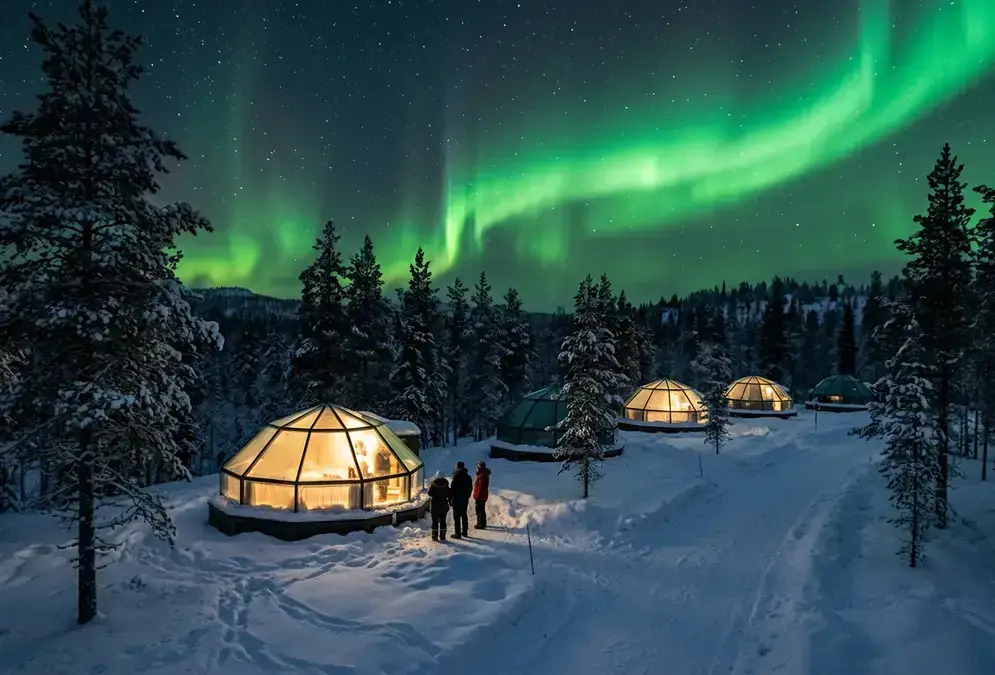
Lapland is not a budget destination, and the marketing rarely says so directly. Glass igloo accommodation, the region's signature stay, runs €300 to €1,200 per night depending on season and location, with peak aurora season (December through February) pushing rates past €800, and the shoulder months of November and March offering 30 to 50 percent savings[1].
Package tours that bundle a glass igloo with activities and meals, like the Aurora & Glass Igloo Explorer itinerary from On The Go Tours, run $3,600 to $4,280 per person (roughly €3,243 to €3,815) for five days and four nights[2], not including international flights. Independent travelers building their own trip should budget roughly £1,000 to £2,000 per person (about €1,150 to €2,300) for a three- to four-night trip[3]. Budget-conscious families do considerably better by skipping the igloo entirely: a budget hotel room in Rovaniemi runs from around €120 a night, and one travel blogger's real four-night family trip came to €3,296 total[4].
€300-1,200
For context beyond glass igloos and package tours, one family's real seven-night Lapland trip came to roughly €3,400 total, covering flights, lodging, and activities[5].
Book six to eight months ahead for early-bird rates, and if value is the priority, aim for January, which consistently turns up the season's best prices[5].
The weather gamble: is Lapland's climate really more reliable?
Nobody can guarantee the aurora, anywhere, ever, and Lapland is no exception. What Lapland does offer is a genuinely better starting hand than most competing destinations: a dry, continental climate that produces more stable, cloud-free nights than the damp coastal weather systems that dominate Norway's fjord coast. In Finland's far north, around Kilpisjärvi and Utsjoki, aurora activity is visible on roughly three nights out of four when the sky is actually clear[6].
Cloud cover, not raw geomagnetic activity, is the variable that actually decides whether you see anything. This is where Lapland's climate quietly does the heavy lifting: the region's cold, dry winters produce far more stable clear-sky stretches than a coastal location experiences at the same latitude.
Deep cold is the trade-off, and it's a real one. Expect commonly -10°C to -20°C, with cold snaps pushing into the -30s especially in the far north around Kilpisjärvi, temperatures that affect comfort, how long you can stand outside, and how your camera batteries behave. A three- to five-night stay improves your odds of catching at least one clear window, but the exact nights you land on remain a lottery no matter how you plan the trip.
Cloud cover, not raw geomagnetic activity, is the variable that actually decides whether you see anything.
The honest framing: treat the daytime activities as the core value of a Lapland trip and the aurora as the bonus, not the other way round. Visitors who build their entire itinerary around a single aurora-viewing night set themselves up for disappointment; visitors who plan a full week of things to do beyond the northern lights and treat a clear aurora night as a genuine bonus tend to leave happy regardless of what the sky does.
Lapland vs Tromsø: more aurora, or more clear sky?
Tromsø has the higher raw aurora frequency of the two destinations: sitting further into the auroral oval, the lights are active on more nights per year in absolute terms. But raw frequency is not the same as actually seeing anything, and this is where the comparison flips. Tromsø's coastal position under the Gulf Stream brings frequent cloud cover, roughly 80 percent cloud cover in December in a typical year[6], which cancels out much of that higher activity before it ever reaches your eyes.
Lapland's drier, more continental climate produces more stable clear-sky stretches, and that reliability is the actual product you're buying when you choose one destination over the other. Tromsø wins on perceived exoticism (being 'further north' carries a psychological pull) and on crowd levels outside peak Lapland season. Lapland wins on the metric that actually matters for a trip built around seeing the lights: more nights where the sky itself cooperates.
Tromsø also leans harder into adventure tourism, whale watching, fjord cruises, and dramatic coastal scenery, while Lapland leans into family infrastructure, Santa Claus Village, glass igloos, and a broader activity mix that doesn't require the same physical commitment. Neither approach is wrong; they suit different travelers. If your priority is genuinely seeing the northern lights rather than experiencing the most dramatic possible landscape while you wait for a cloud break, Lapland is the more reliable choice.
Lapland vs Iceland: reliability and family value vs dramatic landscape
Iceland offers something Lapland doesn't: dramatic, immediately photogenic landscapes, glaciers, waterfalls, geothermal fields, that justify a trip on their own regardless of what the sky does after dark. Lapland's landscape is quieter: snow-covered forest, frozen lakes, open fell country. It rewards a different kind of traveler.
Recommended tours
Tours are selected for quality, not commission. I earn a small fee if you book — at no extra cost to you.

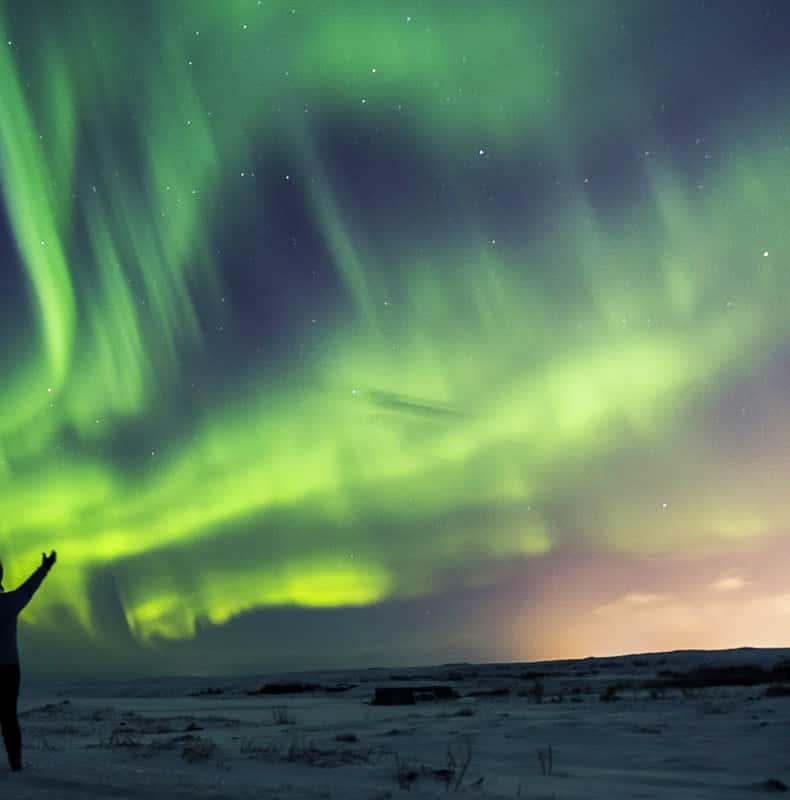

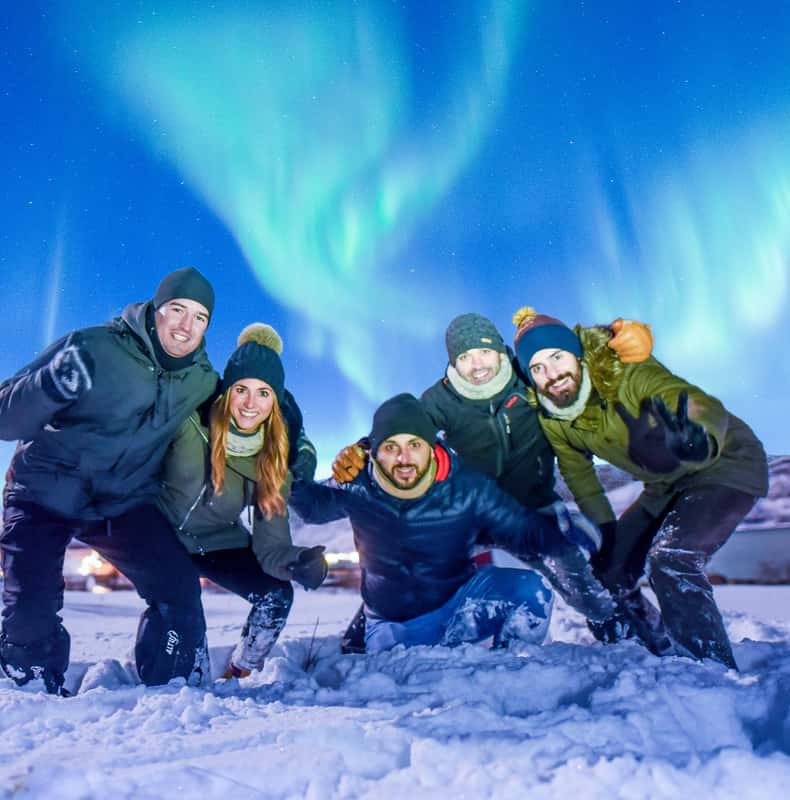
Where Lapland pulls ahead is reliability and logistics. Iceland's Ring Road can close entirely during a strong winter storm, stranding a day's itinerary; Lapland's roads stay open through the same conditions, plowed and studded-tire-ready[7]. Lapland's accommodation costs also run lower than Iceland's premium options at the high end, and the family infrastructure, Santa Claus Village, husky and reindeer farms, ski fells, gives Lapland a broader non-aurora activity base for travelers with kids in tow. For the getting to Rovaniemi logistics specifically, the drive from the airport is also a fraction of Iceland's typical multi-hour Ring Road transfers.
Featured · Destination
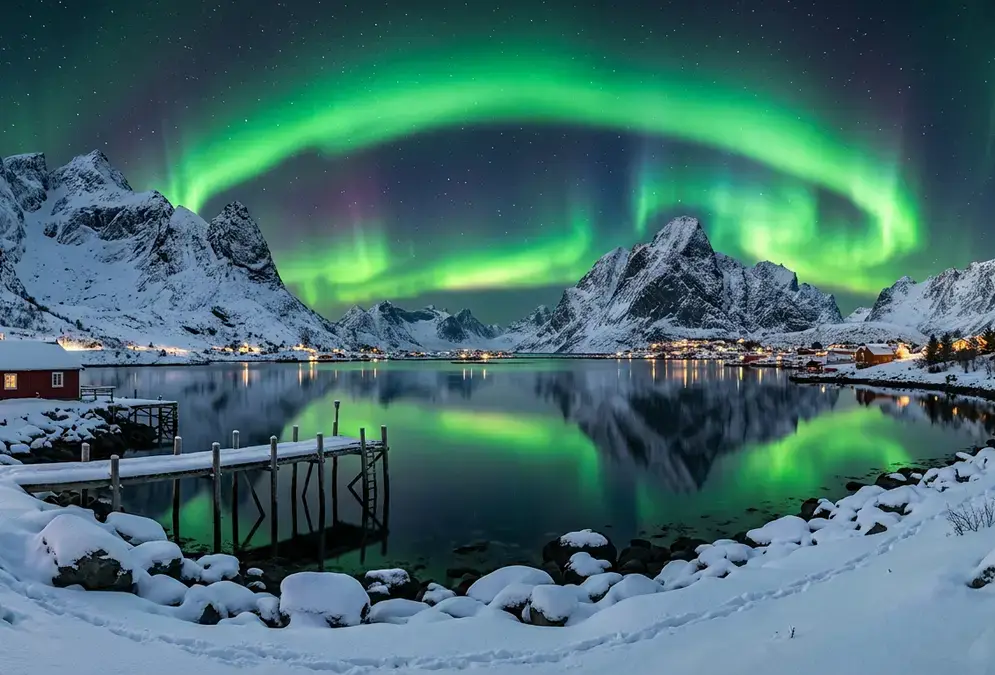
Northern Lights in Tromsø
At 69.6°N inside the auroral oval, Tromsø sees aurora at Kp 2. Peak season November–February. Best viewing spots, tour advice, and aurora forecast strategy.
The honest summary: choose Lapland for aurora reliability and family experiences; choose Iceland for dramatic, all-season landscape immersion that doesn't depend on the aurora showing up at all. A dedicated aurora-focused trip is a safer bet in Lapland. A landscape-first trip with aurora as a bonus leans toward Iceland.
Family value: is Lapland worth it with kids?
Lapland is genuinely family-friendly, with or without a single aurora sighting. Santa Claus Village is free to enter, and the paid add-ons, the Santa meeting, photo packages, guided tours, scale to whatever budget you're working with[8]. Husky and reindeer experiences, ice fishing, and skiing at Levi or Ylläs all work across a wide range of ages, and none of them require the sky to cooperate[9].
One family of four documented a real Lapland trip for £625 per person (£2,500 total), and that source's own general estimate for package holidays runs £700 to £1,700 per person, using cabins and self-catering instead of glass igloos and premium tours[10]. The genuinely free experiences, the snowy landscape itself, forest walks, snow play, cost nothing and are, by most accounts, the part of the trip families remember best[11].
Read next · Article
What to Do in Lapland Beyond the Northern Lights
Santa Claus Village, husky farms, Ranua's polar bears, ski fells, and Sámi culture: Lapland's daytime holds up whether or not the aurora shows tonight.
For families specifically, the practical approach is a four- to five-night stay, one or two paid excursions mixed with plenty of free outdoor time, a mid-range lodge rather than a glass igloo, and the aurora positioned honestly as a bonus rather than the headline. That framing removes the disappointment risk entirely: if the lights show up, it's a bonus night; if they don't, the trip already delivered on everything else it promised.
The verdict: who should go, who should skip it, and the decision matrix
Lapland is worth visiting if you understand exactly what you're paying for and what you're gambling on. It's the right choice if you're an aurora enthusiast willing to pay a premium for genuinely better odds, a family wanting a winter trip with plenty to do regardless of aurora luck, or a traveler who values predictable infrastructure over dramatic scenery. It's the wrong choice if you're chasing rock-bottom prices, need a guaranteed sighting (nobody can offer you that, anywhere), or find winter temperatures commonly down to -10°C to -20°C, occasionally colder, genuinely unbearable rather than merely uncomfortable.
The table below sets Lapland against its two most common points of comparison. Read it as a fit test, not a ranking: the destination that wins depends entirely on what you're actually optimizing for.
| Factor | Lapland | Tromsø | Iceland |
|---|---|---|---|
| Sky reliability | Drier climate, more clear nights | More raw activity, ~80% cloud cover in Dec | Unpredictable, coastal weather |
| Road/logistics risk | Roads stay open year-round | Coastal roads generally reliable | Ring Road can close in storms |
| Best for | Families, reliability-focused aurora trips | Adventure travelers, adult-focused trips | Landscape-first travelers |
| Typical 4-night cost (couple) | €1,200-10,000+ depending on tier | Comparable to Lapland, fewer budget options | Similar range, premium lodging costs more |
Visit in January, for meaningfully better rates and aurora odds that are just as good, often better, than the expensive Christmas peak. Whatever you decide, go in with the honest expectation: Lapland delivers a real winter adventure regardless of what the aurora does on any given night, and that's worth the price on its own.