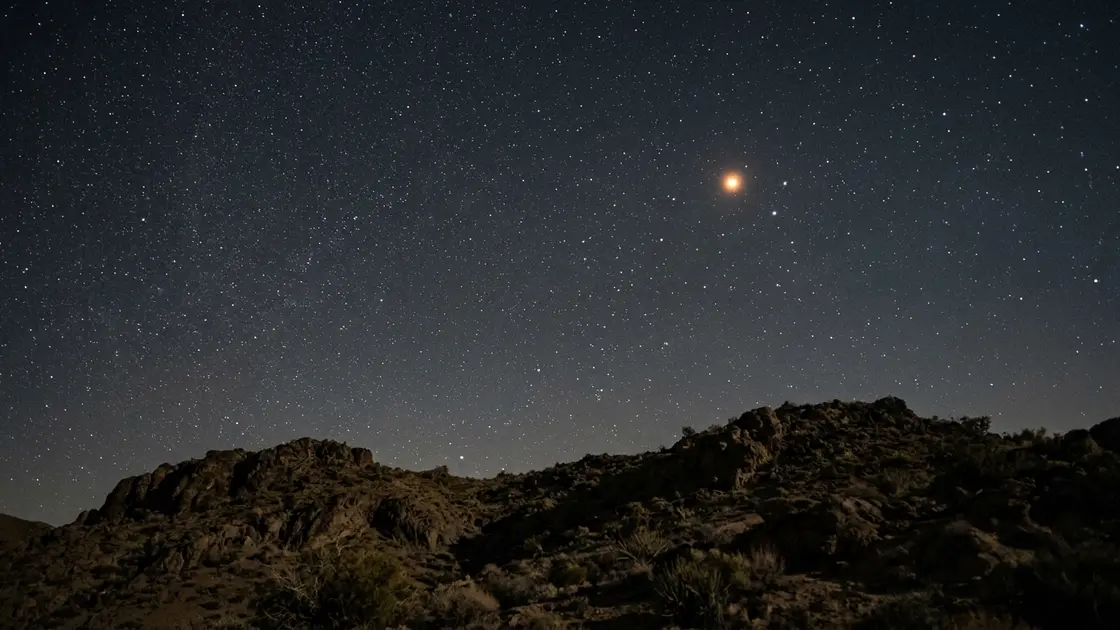
Roughly once every 26 months, Earth overtakes Mars on the inside track and parks directly between the Sun and the Red Planet. That alignment is opposition: Mars rises at sunset, climbs highest around local midnight, and sets at sunrise, reaching its brightest and largest appearance of the two-year cycle. The next one arrives on February 19, 2027 at 15:51 UTC, with closest approach to Earth following about 8.5 hours later on February 20 at 00:08 UTC.
What makes the February 2027 opposition different
Not all Mars oppositions are equal, and it pays to know what kind you are getting before you haul out a telescope. Because Mars travels on a noticeably elliptical orbit, its distance from Earth at opposition swings from roughly 55 million km at a perihelic opposition (when Mars is nearest the Sun) to over 101 million km at an aphelic opposition (when Mars is near its farthest point from the Sun).
February 2027 is an aphelic opposition. At closest approach, Mars sits about 101.4 million km (63.0 million miles) away, giving it an angular diameter of 13.8 arcseconds instead of the 24 to 25 arcseconds you get during a favorable perihelic pass. Even so, it peaks at apparent magnitude −1.3, which makes it brighter than every night-time star except Sirius and unmistakably rust-orange in the constellation Leo, right near the blue-white star Regulus.
Why Mars oppositions only happen every 26 months
Earth orbits the Sun in 365 days; Mars takes 687 days. That difference produces a synodic period of roughly 780 days (about 26 months), which is why Mars has an opposition year and an off year rather than an annual show like Jupiter or Saturn.
| Opposition type | Distance from Earth | Apparent size | Peak magnitude | Example |
|---|---|---|---|---|
| Aphelic (distant) | ~100–101 million km | ~13.8″ | −1.2 to −1.3 | Feb 19, 2027 |
| Intermediate | ~70–85 million km | ~16″–20″ | −1.8 to −2.2 | Mar 2029 / May 2031 |
| Perihelic (close) | ~55–60 million km | ~24″–25″ | −2.8 to −2.9 | Sep 2035 |
Because the 2027 opposition is a distant one, I wouldn't build an international flight solely around Mars this cycle. Treat it as a high-value backyard target or a bonus highlight if you are already traveling to a dark-sky destination in February.
What you can actually see: naked eye, binoculars, and telescopes
Your gear sets the ceiling on Mars more sharply than on Jupiter. Here is what each level of equipment delivers at 13.8 arcseconds:
- Naked eye: A steady, burnt-orange beacon rising in the east at dusk in Leo, outshining Regulus by more than two magnitudes and easy to spot even from a bright city street.
- Binoculars (7×50 or 10×50): Brings out the warm ochre tint against the blue-white field stars of Leo, though Mars remains a crisp dot rather than a detailed globe.
- Small to mid-sized telescope (130 mm to 200 mm aperture): At 150× to 200× magnification under steady air, you can pick out the bright northern polar ice cap and dark albedo features such as Syrtis Major, provided a Martian dust storm isn't veiling the surface.
If you are shopping for a starter scope ahead of February 2027, the best telescope under $300 roundup flags which apertures actually hold crisp planetary magnification, and our stargazing gear guide covers eyepieces and collimation.
Where to watch it: steady air beats pure darkness
Light pollution does not hide Mars at magnitude −1.3, so you do not need a Bortle 1 desert just to find it. What matters for surface detail is atmospheric seeing, meaning calm, laminar air high overhead so the tiny 13.8-arcsecond disc does not boil in the eyepiece.
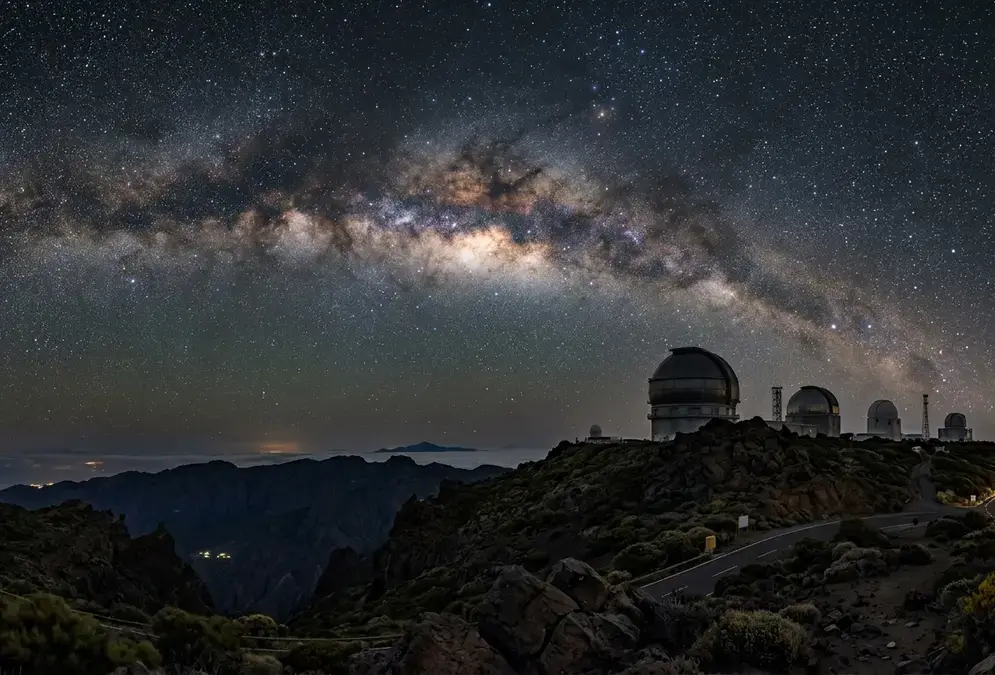
- La Palma, Canary Islands: High-altitude trade-wind inversion above the cloud deck delivers some of the steadiest planetary seeing in the Northern Hemisphere.
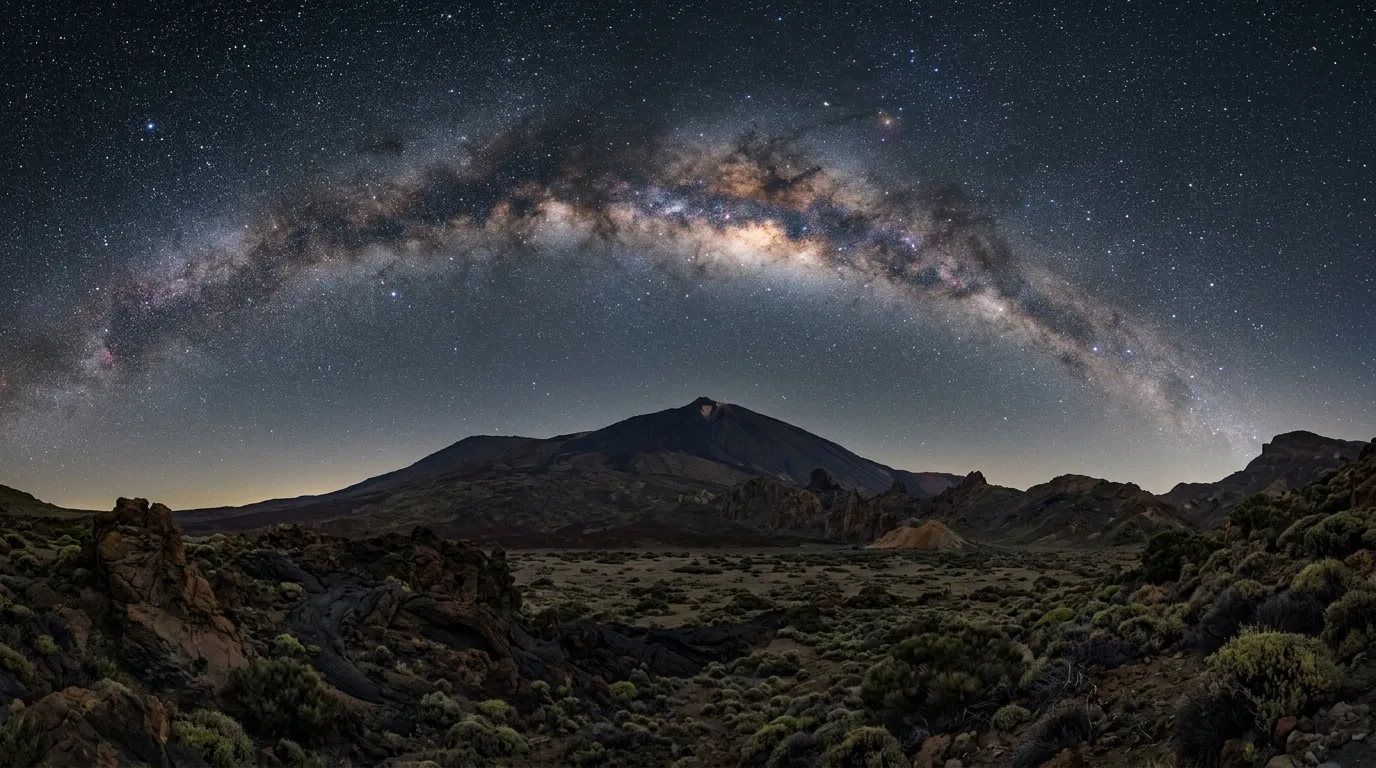
- Tenerife, Canary Islands: Teide National Park sits above 2,000 meters with easy road access and guided telescope sessions if you don't want to fly with optics.
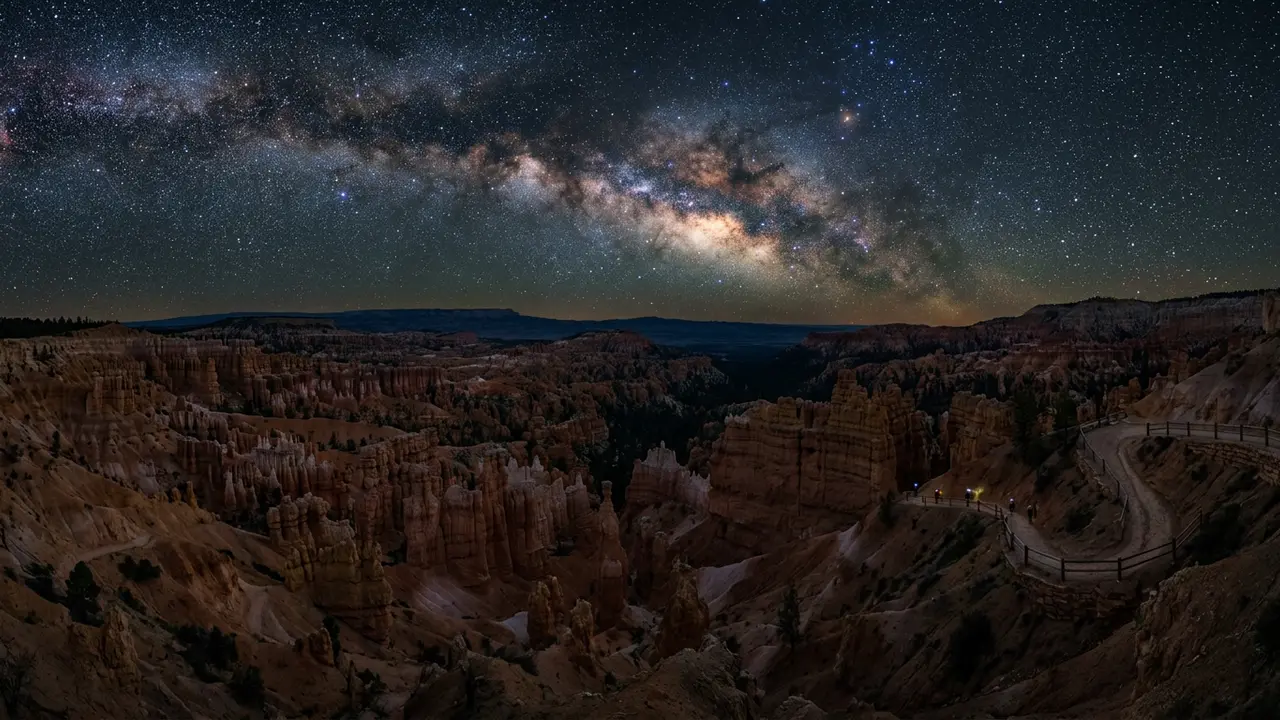
- Bryce Canyon, Utah: Dry winter plateau air and high elevation, though February nights drop well below freezing.
Wait until Mars climbs at least 35 to 40 degrees above the horizon (roughly 10 p.m. to 2 a.m. local time) before pushing magnification. Looking through less of Earth's atmosphere is free, and it does more for Mars than doubling your eyepiece budget.