When Did Teide Last Erupt? What It Means for Stargazers
Teide last erupted about 1,000 years ago; 1909 was Chinyero. The eruption timeline and what it means for stargazing: altitude, the Sky Law and SQM data.
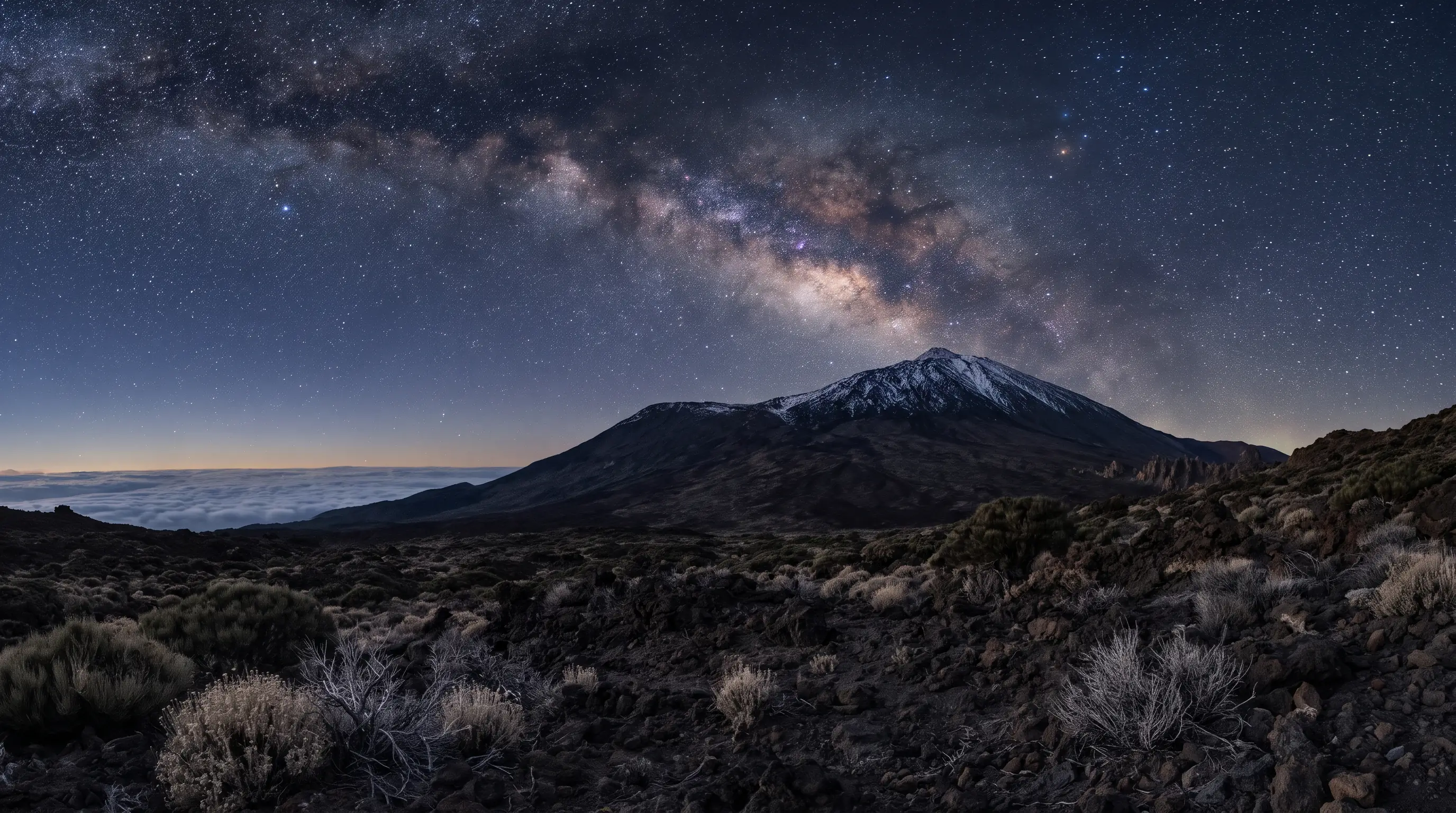
Teide's summit cone and the obsidian-bearing Lavas Negras flows come from its latest eruption, about 1,000 years ago.
In this article
Jump to a section
Teide last erupted about 1,000 years ago; 1909 was Chinyero
Three eruptions get blurred together, and each came from a different vent:
- Lavas Negras, about 1,000 years ago: Teide's own latest eruption, which formed the summit cone.[1]
- Chahorra, 9 June to 8 September 1798: an eruption on Pico Viejo, Teide's neighbour.[5]
- Chinyero volcano, from 18 November 1909: a separate volcano, and the last eruption on Tenerife.[2]
Is Teide still active, and should that change your plans?
Check the live alert level
Why Teide's sky is dark and how tourism dimmed it
Featured · Destination
La Palma Stargazing
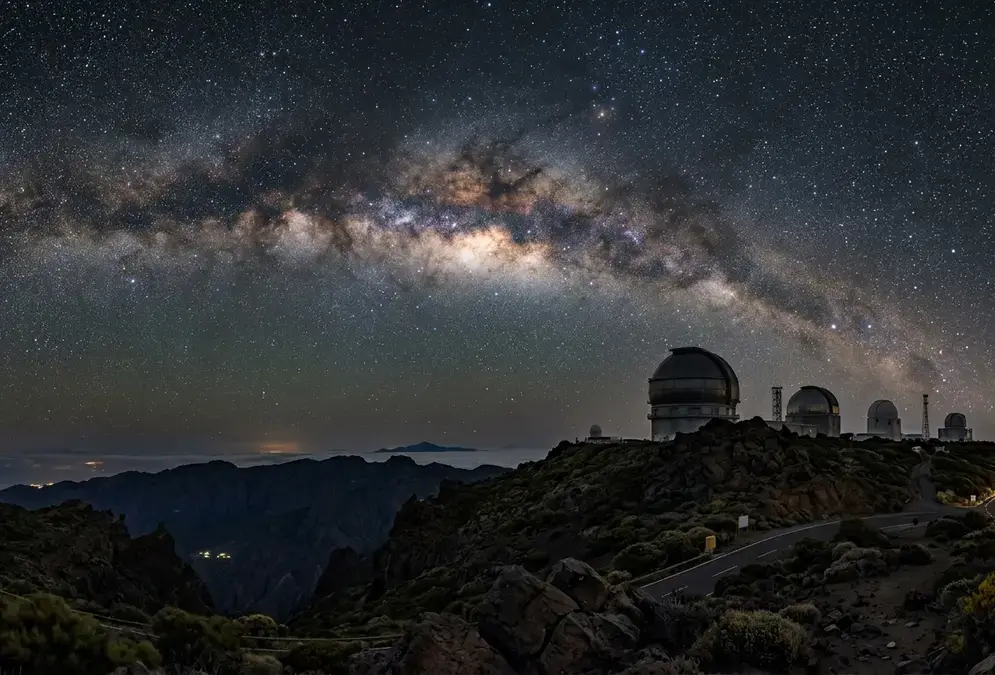
La Palma stargazing guide: the world's first Starlight Reserve since 2012, Bortle 1-2 skies above Roque de los Muchachos, plus where to stay and go year-round.
The 1988 Sky Law and what it protects
The Canary Islands' Sky Law (Ley del Cielo) was approved by the Spanish Parliament on 31 October 1988,[17] and it prioritises four factors:[18]
- light pollution
- radio-spectrum interference
- air pollution
- flight paths
Featured · Article
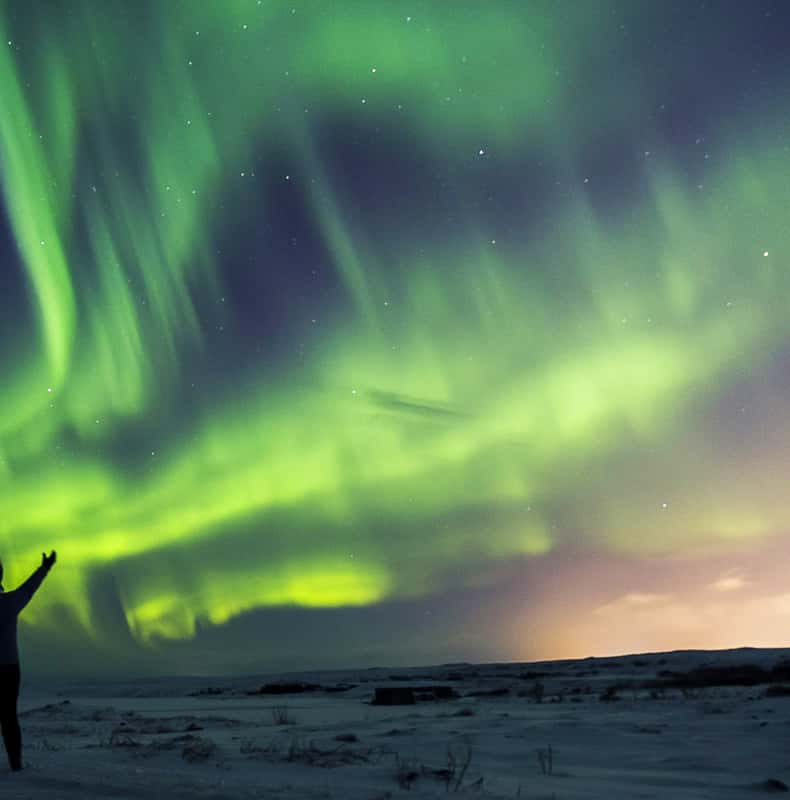
What Causes the Northern Lights? The Science Explained
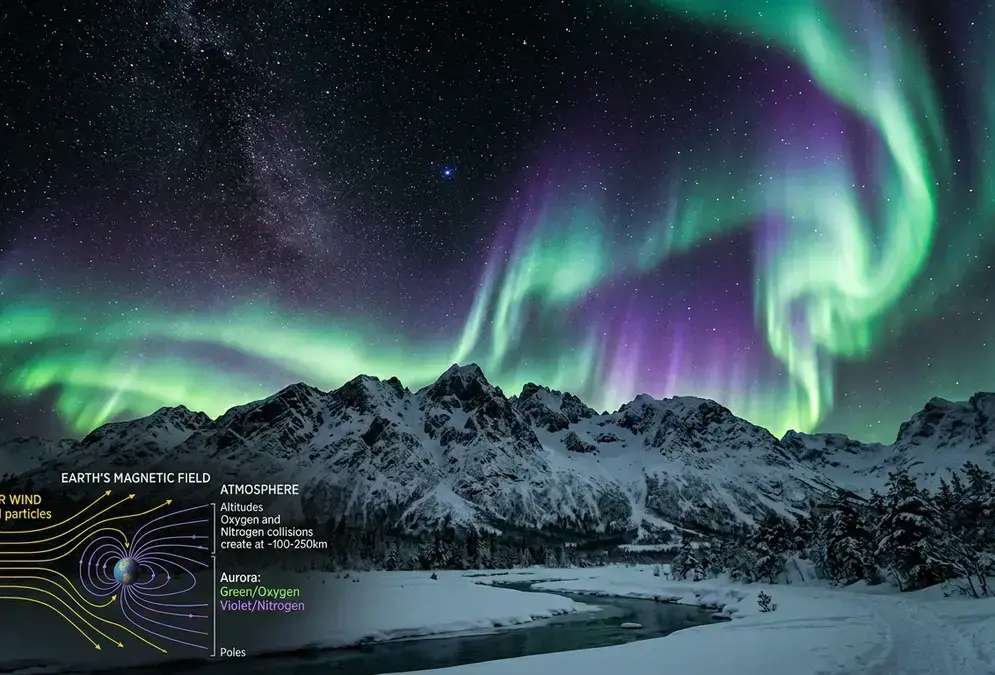
Solar wind collides with Earth's magnetic field, funneling charged particles toward the poles, where they excite oxygen and nitrogen into glowing color.
How dark the park measured, and when to go
Recommended tours
Tours are selected for quality, not commission. I earn a small fee if you book — at no extra cost to you.
Frequently asked questions
When did Teide last erupt?
Is Teide an active volcano?
Is Mount Teide going to erupt?
Why is Teide good for stargazing?
How dark is Teide National Park?
When is the best time to see the Milky Way from Teide?
Is Teide National Park a Starlight reserve?
What is the Canary Islands Sky Law?
Sources
26 references Show Hide
- worldheritageoutlook.iucn.org (opens in a new tab)
“both still active, with the latest eruption (about 1000 years ago) forming the summit cone and the obsidianic phonolitic Lavas Negras flows”
- webtenerife.co.uk (opens in a new tab)
“The last eruption to trouble Tenerife was on 18 November 1909 by the Chinyero volcano, which went from having nine mouths to just three.”
- iac.edu.es — Teide observatory (opens in a new tab)
“Located in Izaña (Tenerife) at 2390 metres above sea level, the site marks the point at which the municipal boundaries of La Orotava, Fasnia, and Güímar meet.”
- iac.edu.es — Tanja article.pdf (opens in a new tab)
“The highest value measured was 21.33 mag/arc sec² in two sites in El Teide National Park: near Montaña Roja and Llano de Ucanca.”
- Wikipedia (opens in a new tab)
“1798: The eruption of Chahorra occurred in the Pico Viejo on 9 June 1798 and ended on 8 September that year.”
- Wikipedia (opens in a new tab)
“1909: The eruption of Chinyero began on 18 November 1909 and lasted 10 days.”
- tenerifeweekly.com (opens in a new tab)
“The probability of a similar or greater eruption is estimated at 2.1% within the next 20 years, 5.1% over the next 50 years, and 10% in the following century.”
- worldheritageoutlook.iucn.org (opens in a new tab)
“twin stratovolcanoes Teide (3715 m a.s.l) and Pico Viejo (3135 m a.s.l.)”
- webtenerife.co.uk (opens in a new tab)
“When measured from sea level, it stands 3,718 m (12,198 ft) tall”
- tenerifeweekly.com (opens in a new tab)
“The National Geographic Institute (Ign) has reported volcanic activity in the Cañadas del Teide, close to Pico Viejo.”
- nationalgeographic.com (opens in a new tab)
“Teide’s elevation, paired with its dry and consistent climate, low levels of light pollution, and geographic isolation in the Atlantic, creates near-perfect conditions for observing the night sky.”
- worldheritageoutlook.iucn.org (opens in a new tab)
“a ‘sea of clouds’ that forms a visually impressive backdrop to the mountain”
- riull.ull.es (opens in a new tab)
“un descenso de 115 metros de la base de la inversión en el periodo 2003 - 2021.”
- iac.edu.es — Sky quality (opens in a new tab)
“Since 1990, site characterization studies have been carried out, funded by the IAC and co-funded by several external programs over the years.”
- arxiv.org (opens in a new tab)
“Its artificial skyglow increased with the development of the touristic industry and with the general population increase.”
- iac.edu.es — Teide observatory (opens in a new tab)
“led to Teide Observatory being dedicated mainly to the study of the sun.”
- iac.es — Law protects sky canary islands celebrates its twenty fifth anniversary (opens in a new tab)
“on 31 October 1988 the Spanish Parliament approved the Law on the Protection of Astronomical Quality of the IAC Observatories.”
- nationalgeographic.com (opens in a new tab)
“The law prioritizes four key factors essential for high-quality astronomical observation: light pollution, radio spectrum interference, air pollution, and flight paths.”
- iac.es — Ley cielo Canarias Paz Diaz OTPC rev 50.pdf (opens in a new tab)
“Para velar por el cumplimiento de esta Ley fue creada en enero de 1992 la Oficina Técnica para la Protección de la Calidad del Cielo (OTPC)”
- iac.edu.es — Tanja article.pdf (opens in a new tab)
“On 22 April 1992 legislation referring to the western part of the Tenerife was introduced; it refers to the part of the island that is seen from La Palma.”
- rtvc.es (opens in a new tab)
“La Fundación Starlight ha renovado las certificaciones del Parque Nacional del Teide y las cumbres de Tenerife como Destino Turístico Starlight y Reserva Starlight, respectivamente”
- rtvc.es (opens in a new tab)
“La certificación abarca el Parque Nacional del Teide, el ámbito del Observatorio de Izaña y sus instalaciones científicas y la zona de El Portillo.”
- iac.edu.es — Tanja article.pdf (opens in a new tab)
“The average value of the night sky brightness in Tenerife is 19.23 mag/arc sec².”
- nationalgeographic.com (opens in a new tab)
“From June to September, the nights are usually warmer, making it the best time to appreciate the center of our galaxy, the Milky Way, in all its splendor.”
- ocan.iac.es (opens in a new tab)
“In general, a global preliminary study made by M. Nievas and R. Barrena concluded that spring and summer nights are darker than autumn and winter nights.”
- ocan.iac.es (opens in a new tab)
“High clouds can affect the sky brightness up to 2 mag.”