Atacama Dark Sky Certification: No Badge, but Binding Chilean Law
As of January 2026, no DarkSky designation covers the Atacama; Chile's only two are in Coquimbo. Chilean law protects the skies instead, so plan around that.
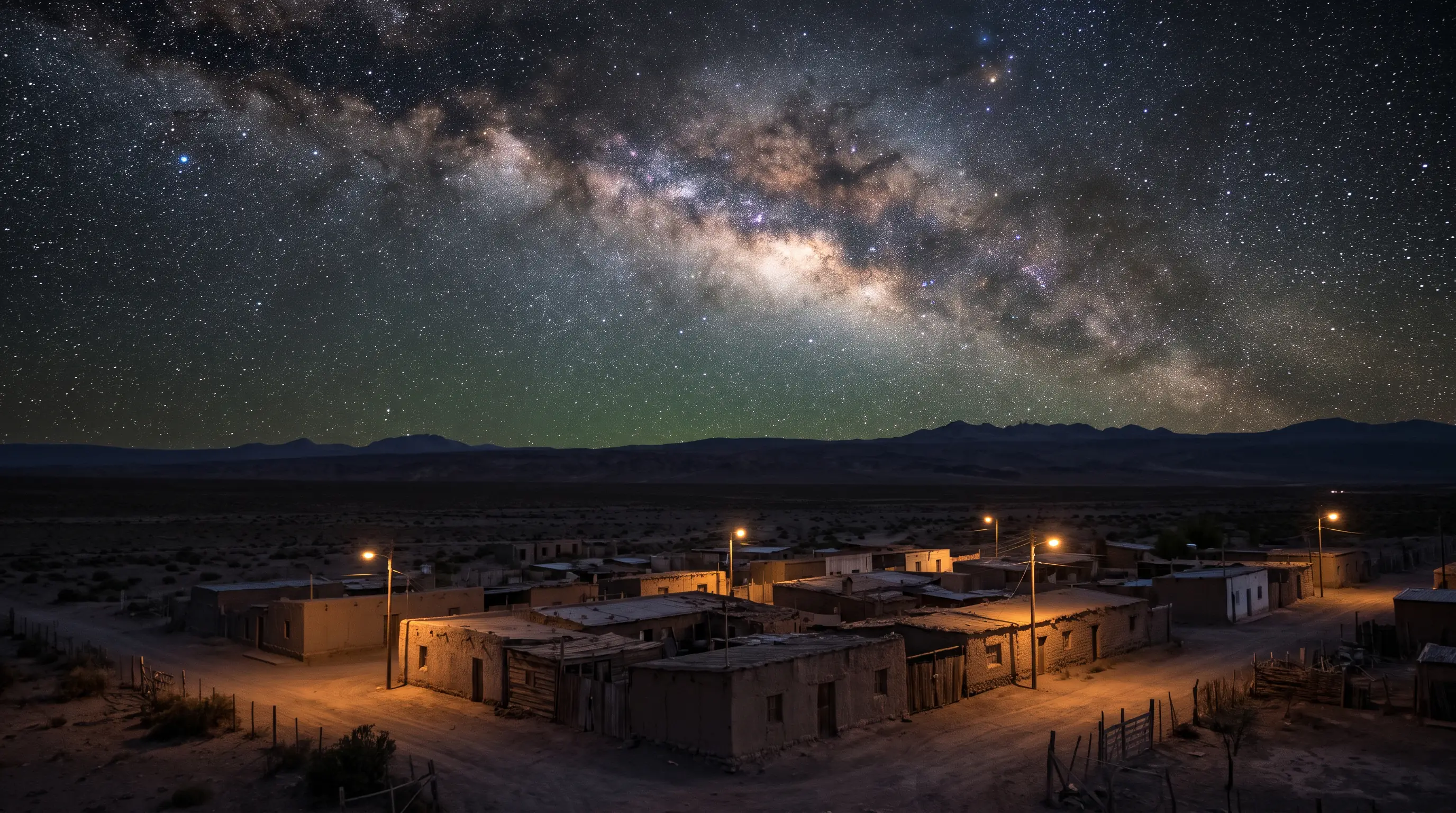
As of January 2026, Chile's only two DarkSky places, Gabriela Mistral and Río Hurtado, are both in the Coquimbo Region, not the Atacama.
- Lighting retrofit deadline
- 19 Oct 2029
- Current norm's blue-light deadline for existing lights, San Pedro included[3]
In this article
Jump to a section
Chile's two DarkSky places are both in Coquimbo
What DarkSky certification does and doesn't measure
| Category | What it asks for |
|---|---|
| Sanctuary | Zenith darkness of 21.5 magnitudes per square arcsecond or darker[11], at a very remote site with few nearby threats[12] |
| Park | Zenith darkness around 21.2 magnitudes per square arcsecond, with a naked-eye limiting magnitude of +6[13] |
| Reserve | At least 700 km² of public or private land[14] |
| Community | No night-sky-quality minimum[15], but all publicly owned lighting retrofitted within five years[16] |
| Urban Night Sky Place | An authentic nighttime experience despite significant artificial light[17] |
What protects the Atacama is Chilean law
Featured · Destination
Atacama Desert Stargazing
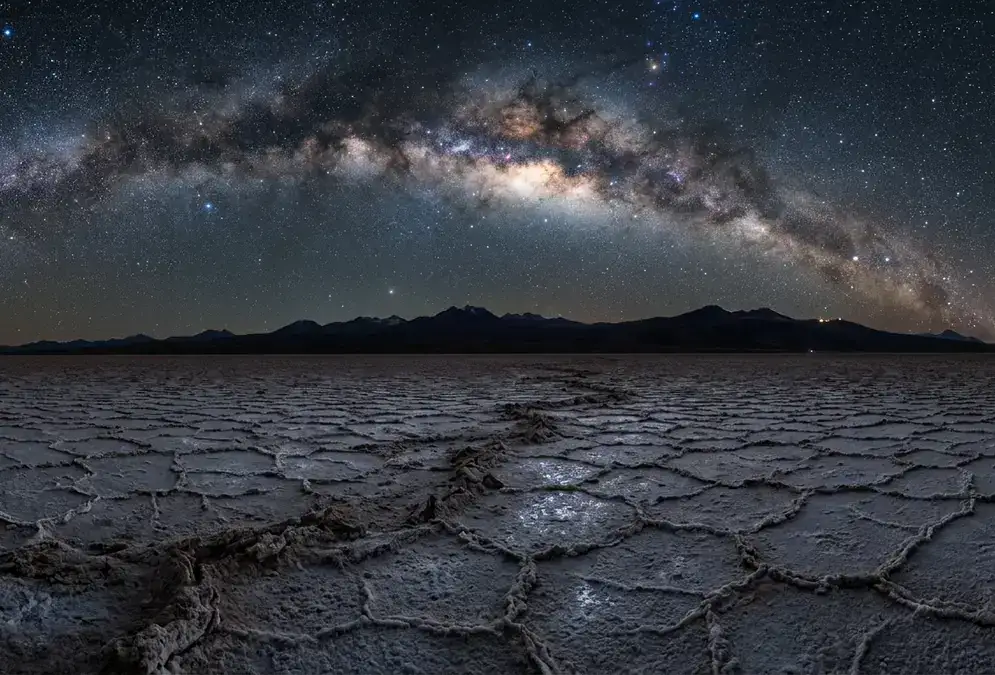
Earth's driest desert delivers Bortle 1–2 skies, 330+ clear nights a year, and the galactic core almost overhead. Guide: tours, lodges, season, getting there.
The Paranal buffer zone is still only a proposal
Recommended tours
Tours are selected for quality, not commission. I earn a small fee if you book — at no extra cost to you.
What it means for planning a stargazing trip
Featured · Article
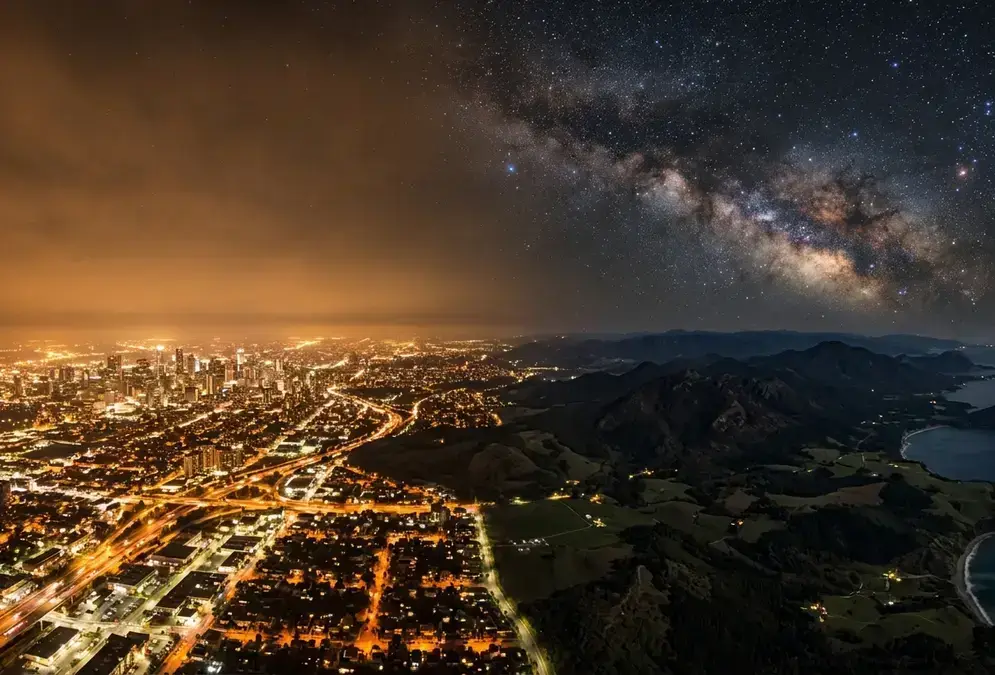
What Is Light Pollution? Definition, Types, and Solutions
Light pollution is artificial light brightening the night sky, affecting 80% of the world. Learn the 4 types, wildlife and health effects, and how to fix it.
Look-alike labels, certified places and the best months
- The Starlight Foundation, a separate scheme, certified three Coquimbo observatories as Starlight Tourist Observatories in May 2025: Mamalluca (Vicuña), Collowara (Andacollo) and Cruz del Sur (Combarbalá)[32].
- San Pedro de Atacama won the Green Destinations Silver Award 2026, a sustainable-tourism certification rather than a dark-sky one[33].
What it would take for San Pedro to earn the badge
Frequently asked questions
Does the Atacama Desert have dark sky certification?
How is a Dark Sky Sanctuary different from a Reserve or a Community?
Is San Pedro de Atacama a Dark Sky Community?
What is Chile's Norma Lumínica, and does it protect the Atacama?
Do you need dark sky certification to have a dark sky?
How long does DarkSky certification take, and what does it cost?
What protects Paranal Observatory from light pollution?
Does Starlight certification count as dark sky certification?
Sources
43 references Show Hide
- DarkSky International — Rio hurtado becomes chiles second international dark sky place (opens in a new tab)
“it is only the second place certified as an International Dark Sky Place in Chile and the third in all of South America.”
- DarkSky International — Rio hurtado chile (opens in a new tab)
“Published January 13, 2026”
- luminica.mma.gob.cl (opens in a new tab)
“Con plazo máximo a los 5 años desde la entrada en vigencia: 19 de Octubre de 2029”
- DarkSky International — Dark sky places faq (opens in a new tab)
“There is a one-time $250 U.S. fee to begin the application process.”
- DarkSky International — Rio hurtado becomes chiles second international dark sky place (opens in a new tab)
“The community of Río Hurtado, Limarí Province, Coquimbo Region, Chile, was certified as an International Dark Sky Community by DarkSky International.”
- DarkSky International — Gabriela mistral dark sky sanctuary (opens in a new tab)
“operate cutting-edge professional astronomy facilities at a near pristine, 36,000 hectare site in the Elqui Valley of northern Chile.”
- DarkSky International — Chilean astronomical site becomes worlds first international dark sky sanctuary (opens in a new tab)
“has been recognized and designated as the first International Dark Sky Sanctuary in the world”
- DarkSky International — Rio hurtado chile (opens in a new tab)
“In 2025, Río Hurtado adopted a comprehensive light pollution ordinance regulating outdoor lighting on both public and private properties.”
- DarkSky International — Rio hurtado becomes chiles second international dark sky place (opens in a new tab)
“Founded in 2001, the International Dark Sky Places Program is a non-regulatory, voluntary program”
- DarkSky International — Dark sky places faq (opens in a new tab)
“We offer five categories under the certification program. Candidates are qualified based on management, location, nighttime public access, resources, and night sky quality.”
- DarkSky International — Apply (opens in a new tab)
“where the night sky brightness at the zenith is routinely equal to or darker than (greater than) 21.5 magnitudes per square arcsecond in the visual band”
- DarkSky International — Apply (opens in a new tab)
“A Sanctuary differs from an International Dark Sky Park or Reserve in that it is typically situated in a very remote location with few (if any) nearby threats to the quality of its dark night skies”
- DarkSky International — Apply (opens in a new tab)
“These conditions correspond approximately to a visual-band zenith luminance of 21.2 magnitudes per square arcsecond or greater and a naked eye limiting magnitude (NELM) of +6.”
- DarkSky International — Apply (opens in a new tab)
“A combination of public or private lands of substantial size (at least 700 square kilometers, or about 173,000 acres)”
- DarkSky International — Apply (opens in a new tab)
“There are no night sky quality requirements for a Community.”
- DarkSky International — Apply (opens in a new tab)
“Retrofitting all publicly owned lighting within five years”
- DarkSky International — International dark sky places (opens in a new tab)
“Urban sites that promote an authentic nighttime experience despite being in the midst of significant artificial light.”
- planesynormas.mma.gob.cl (opens in a new tab)
“su versión predecesora, el D.S. N°686/1998 MINECON”
- diariooficial.interior.gob.cl (opens in a new tab)
“se aplica en todo el territorio nacional, con exigencias diferenciadas en las Áreas de Protección Especial que en él se indican”
- opcc.cl (opens in a new tab)
“Establece limites concretos en la emisión de luz en la banda del azul, limitándola al 7% en todo el país y al 1% en las Áreas de Protección Especial.”
- luminica.mma.gob.cl (opens in a new tab)
“Antofagasta, Calama, San Pedro de Atacama, Taltal”
- bcn.cl (opens in a new tab)
“f) San Pedro de Atacama;”
- eso.org — Eso2506 (opens in a new tab)
“INNA would increase light pollution above the Very Large Telescope (VLT) by at least 35%”
- eso.org — Eso2602 (opens in a new tab)
“In a letter sent to SEA on 6 February, AES Andes requested the withdrawal of INNA from evaluation.”
- eso.org — Eso2602 (opens in a new tab)
“The INNA case and its proposed location highlight the urgent need to establish clear protection measures in the areas around astronomical observatories.”
- minciencia.gob.cl (opens in a new tab)
“se propone establecer una zona núcleo de 50 km en que no se desarrollen actividades que pudieren alterar las condiciones habilitantes del sitio astronómico”
- minciencia.gob.cl (opens in a new tab)
“se propone la definición de una zona núcleo de 30 kilómetros de radio libre de emisiones activas, que asegure un ambiente radioeléctrico protegido para observatorios como ALMA o APEX.”
- DarkSky International — Apply (opens in a new tab)
“A “peripheral” or “buffer” area that supports dark sky values in the core and receives similar benefits”
- diariooficial.interior.gob.cl (opens in a new tab)
“Iníciese el proceso de revisión del decreto supremo Nº 1, de 2022, del Ministerio del Medio Ambiente”
- DarkSky International — Dark sky places faq (opens in a new tab)
“On average, applications take one to three years to complete, depending upon the type of certification and the scale of the application.”
- minciencia.gob.cl (opens in a new tab)
“la elaboración de una norma secundaria de calidad de cielo nocturno para el Desierto de Atacama”
- en.fundacionstarlight.org (opens in a new tab)
“The Starlight Foundation has officially certified three prominent astronomical centers in Chile’s Coquimbo Region as Starlight Tourist Observatories: Mamalluca (Vicuña), Collowara (Andacollo), and Cruz del Sur (Combarbalá).”
- eldesconcierto.cl (opens in a new tab)
“al obtener la certificación internacional Green Destinations Silver Award 2026”
- DarkSky International — Dark sky places faq (opens in a new tab)
“The International Dark Sky Place certification is not awarded in perpetuity.”
- bcn.cl (opens in a new tab)
“definiendo áreas dé forma circular de 150 kilómetros de radio.”
- DarkSky International — Gabriela mistral dark sky sanctuary (opens in a new tab)
“the land title makes certain demands of the owner including a limitation of activities solely to the support of astronomical research.”
- noirlab.edu (opens in a new tab)
“A minimum of 24 hours notice is necessary for scheduled public visit requests.”
- turismoriohurtado.cl (opens in a new tab)
“Observación amateur y profesional: visitantes y astrónomos pueden registrar fenómenos celestes con claridad única.”
- DarkSky International — Rio hurtado chile (opens in a new tab)
“The best time for astronomical visits is from November through March, when weather conditions are most stable.”
- chile.travel — Astro tourism in chile the best place in the world for stargazing 2 (opens in a new tab)
“In San Pedro de Atacama, you’ll find night excursions to places like Ayllu de Solor, the Cordillera de la Sal, or observatories on the outskirts of town, where light pollution is minimal.”
- chile.travel — San pedro de atacama the best time to travel that few people know about (opens in a new tab)
“Between December and March, the so-called altiplanic winter occurs, when humid air masses cause rain, high-altitude storms, and possible closures of routes to the main tourist attractions in the area.”
- chile.travel — San pedro de atacama the best time to travel that few people know about (opens in a new tab)
“From April, the scenario changes completely. The probability of rain drops to almost zero, the skies become intensely clear, and temperatures stabilize.”
- es.wikipedia.org (opens in a new tab)
“se ubica en el valle de Elqui, aproximadamente a 80 km de la ciudad de La Serena, en la Región de Coquimbo, Chile”