Four Ways to Spend Your One Aurora Night in Lapland
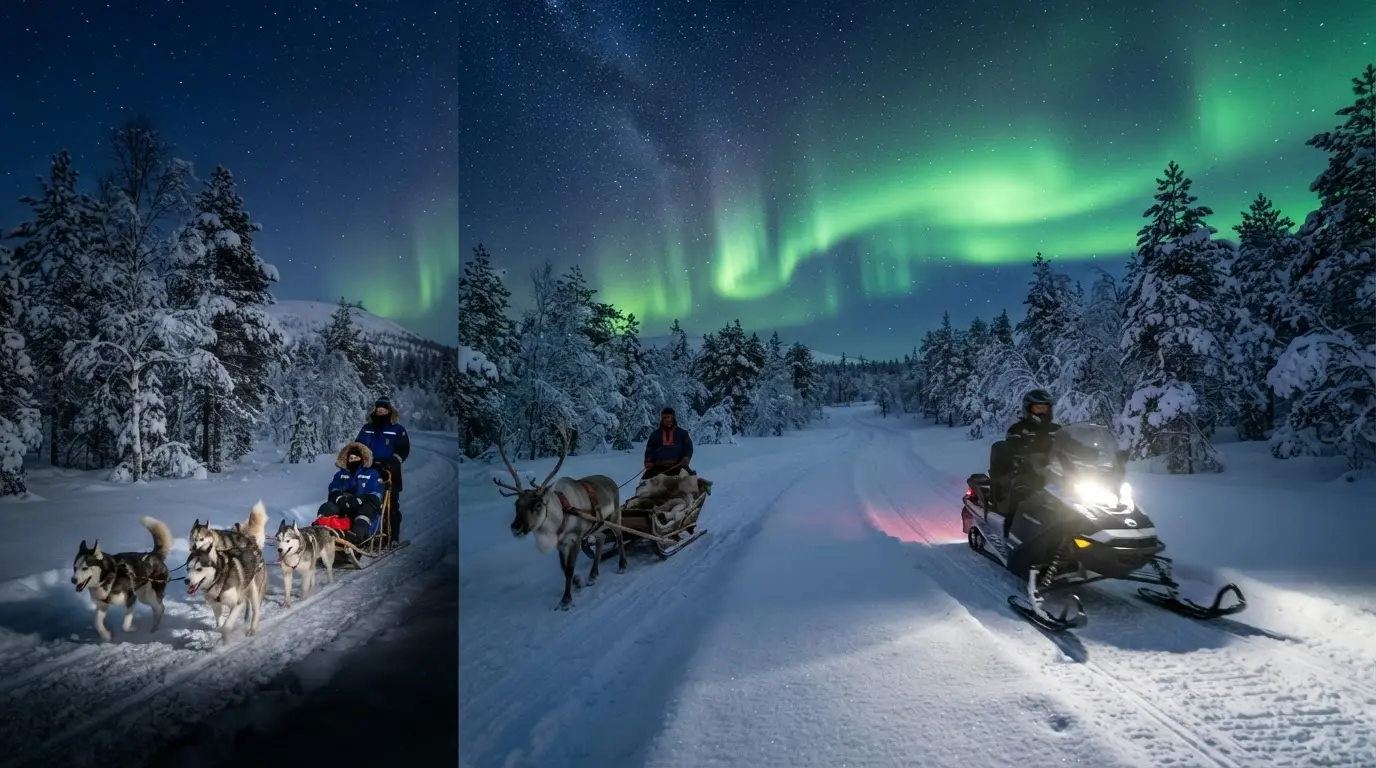
Book one evening in Finnish Lapland and four options land on the table: a husky sled run behind a team of dogs, a reindeer sleigh ride through silent forest, a snowmobile safari across frozen terrain, or a dedicated aurora photography tour built entirely around getting the shot. Each puts you outside after dark differently, at a different cost, and with a different tolerance for cold, speed, and standing still. None of that changes the one variable that actually decides whether you see anything: clear sky and a strong enough geomagnetic storm.
Even a modest Kp-index of 1 to 2 can produce a visible display once you're inside the Arctic Circle, where lower latitudes need a storm of Kp 5 or higher to show anything at all[4]. Every activity fights the same enemy regardless: aurora tours typically drive 20 to 30 km away from town to reach conditions dark enough to see clearly[5]. A snowmobile parked on a frozen lake and a photographer's tripod set up on the same lake are looking at the same sky; the difference is what you're doing while you wait for it to move.
Featured · Destination
Northern Lights in Finnish Lapland
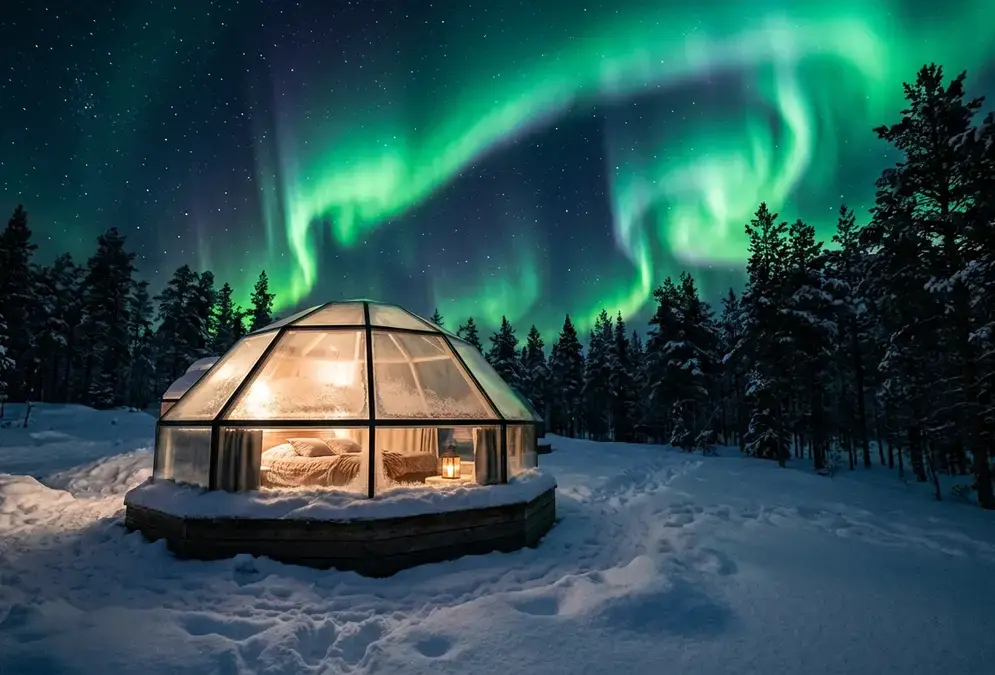
Finnish Lapland's whole-region aurora guide: glass igloos, Santa Claus Village, six bases from Rovaniemi to Inari, aurora season Sep–Mar, no road drama.
Budget separates the four roughly in two: reindeer and husky rides cost about the same, while snowmobiling and a dedicated photography tour usually cost more once fuel, rental gear, or a specialist guide's time are factored in. Physical exertion runs from near zero on a reindeer sleigh to standing and active on a dogsled, and the coldest-feeling option isn't always the coldest on paper, since wind chill from movement matters more than the number on the thermometer. Photography priority is the sharpest divide of the four factors: some activities put a camera in your hand for ten seconds, and one builds the whole evening around it. Family and beginner suitability tracks closely with all of the above, since toddlers, first-timers, and couples each fit one of the four noticeably better than the other three.
Husky Sledding: The Adrenaline Pick
Husky sledding is the most physically active of the four, and the only one where you're doing something rather than being driven. Guests typically ride two to a sled, trading turns standing on the runners and sitting low in the basket, while a team of dogs pulls at speeds up to roughly 15 km/h along groomed forest trails. Most tours run an evening session and end with a stop to feed and greet the dogs, which turns into as much of a highlight for most guests as the ride itself. That speed is the catch: the wind chill it creates makes the ride feel considerably colder than the thermometer reads, enough to knock the perceived temperature down 5 to 10°C from the static air reading[2]. Static air itself runs colder in deep winter than in early spring: December through February typically sits between -10°C and -30°C, while March and April are milder, usually -5°C to -15°C[6].
The physical bar is lower than the speed suggests. Preparing for a husky run mostly means core stability and the stamina to stand for stretches at a time, not athletic fitness[7]. That makes it accessible to most reasonably fit adults and older teenagers, though the standing position and the wind chill make it the least comfortable of the four for young children or anyone who runs cold. If the sensation of speed matters more to you than a guaranteed clean photograph, a husky sled aurora tour is the pick, dressed for wind chill rather than the forecast.
Dress for the wind, not the thermometer
A dogsled's 15 km/h pace turns a -15°C night into something closer to -25°C. Wind-blocking outer layers matter more here than on a stationary photography stop: the cold that catches people out is the ride itself, not the still night air.
Reindeer Sleigh: The Gentle, Family-Friendly Pick
Reindeer sleigh rides are the calmest of the four, and the default recommendation for families with small children, first-time winter travelers, or anyone who'd rather watch the sky than manage a moving vehicle. A single reindeer pulls a small sleigh at a walking pace, usually along a short groomed forest loop, often followed by a visit with the reindeer's owner and a cup of hot berry juice by a fire. You sit wrapped in blankets, without the wind chill that makes husky sledding and snowmobiling feel so much colder than the still air around them. Most operators price it similarly to a husky sled run, and it's frequently sold as an add-on to a reindeer-farm or Christmas-market visit rather than a standalone booking.
The trade-off is pace and distance: a reindeer sleigh covers far less ground than a snowmobile safari in the same window of time, so if the route doesn't clear a town's light dome, the sky above it can end up dimmer than one further out. Book a reindeer sleigh aurora tour that specifically routes toward darker ground rather than a Christmas-market loop, and confirm that with the operator before paying. It's also the most consistently marketed of the four as suitable for very young children. Some Lapland operators set the minimum age as low as two, though that's a policy worth confirming with the specific outfit rather than a region-wide standard.
Snowmobile Safari: Distance, Licence Rules, and Group Speed
Snowmobile safaris cover the most ground of any of the four, often reaching darker, more remote terrain that a reindeer sleigh or a fixed photography stop can't reach in one evening. A typical safari runs in convoy for a few hours, one snowmobile per driver-passenger pair, with a guide leading and stopping wherever the sky looks most promising. That range comes with the most paperwork of the four: driving one yourself on Finland's public trails and roads requires a valid driving licence, and you must be at least 18 to drive independently[1].
Confirm before booking whether the snowmobile safari includes a licensed-driver seat for the non-drivers in your group, since most operators build exactly that into mixed-group bookings. Once you're moving, a snowmobile's engine noise and headlamp are the one real downside for aurora-watching specifically: guides typically cut the engine and lights at designated stops, because a lit, running machine works against the point of letting your eyes adjust to the dark.
Who Actually Needs a Licence
A standard car (category B) or motorcycle (category A) licence satisfies the requirement[9], and a foreign licence works too: Finland doesn't require an international driving permit for it[10]. None of that applies if you'd rather ride pillion: a licensed driver can bring a passenger who has no licence at all, since two-seater machines are built to carry exactly one driver and one passenger[11].
Aurora Photography Tour: When the Sky Is the Whole Point
A dedicated aurora photography tour flips the priority of the other three: you're not booking it for the sled, the reindeer, or the machine, you're booking it because a guide who checks the forecast for a living has already picked a dark, wide-horizon spot and is going to help you get a photograph you'd otherwise miss. Guides typically carry tripods and sometimes loaner cameras, and know how to set a manual exposure for a night sky, which matters more than owning expensive gear. Sessions usually run several hours, most of it spent standing still and watching, since a long exposure needs the camera, not the photographer, to do the moving. Expect the operator to handle camera settings for you if you don't own your own gear, since a phone camera alone struggles to capture a faint aurora without a tripod and a several-second exposure.
That structure also means less activity and more standing still, which suits a couple or a solo traveler better than a family with young children unlikely to sit through an hour of quiet waiting. A Lapland aurora photography tour usually books a set window of several hours specifically around forecast conditions rather than a fixed evening slot regardless of the sky, so ask whether your date is weather-flexible before paying for one on a fixed calendar day.
Featured · Article
What Is Astrotourism? The Complete Beginner's Guide
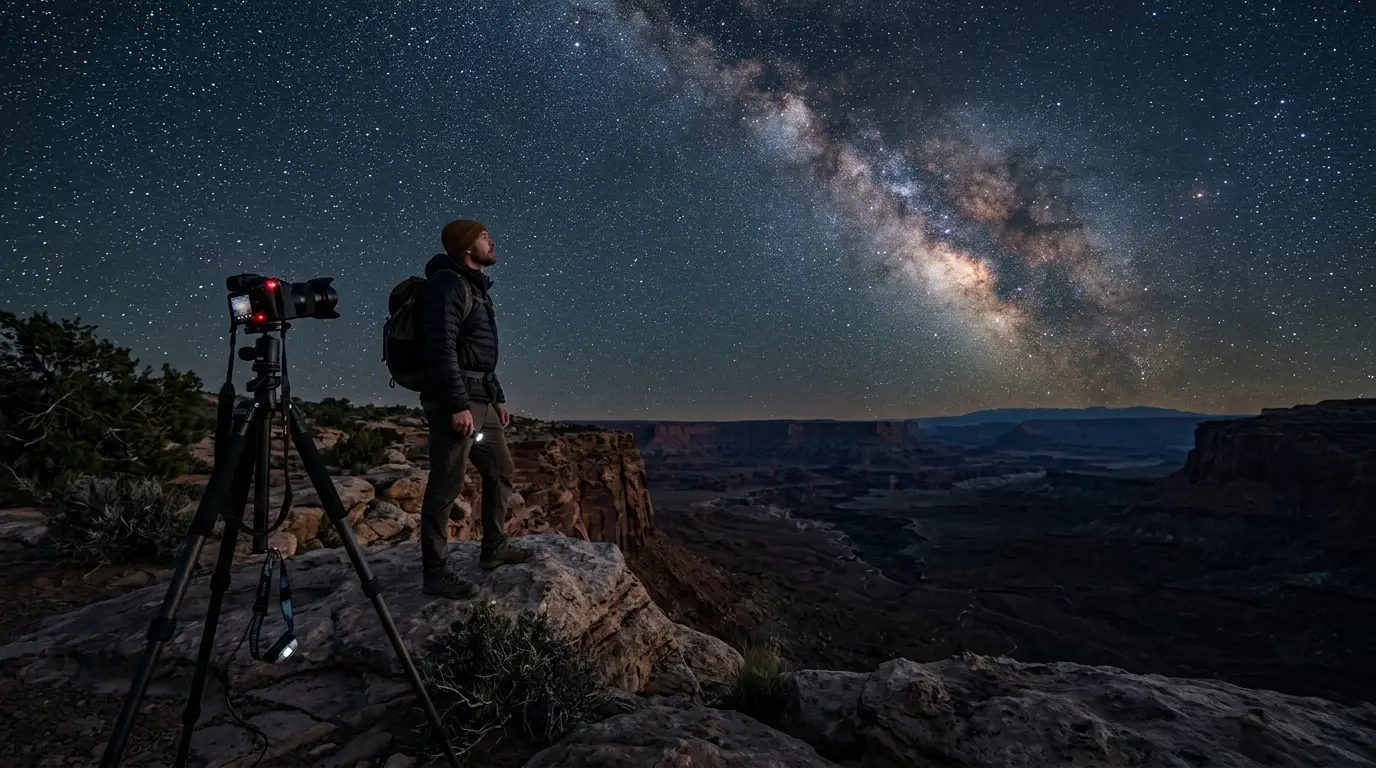
Astrotourism means travel built around dark skies: meteor showers, auroras, the Milky Way. What it means, where to go, and how to plan your first trip.
Which One Should You Book Tonight
None of the four beats the two things that actually decide whether you see the aurora: clear sky and a strong enough geomagnetic storm. Pick the activity that matches how much cold, movement, and photography you actually want, and check the forecast the same way regardless of which one you book.
Recommended tours
Tours are selected for quality, not commission. I earn a small fee if you book — at no extra cost to you.
If you're traveling with a toddler or just want the calmest ride, the reindeer sleigh wins outright. If you want speed and don't mind standing in the cold, book the husky sled. If covering the most ground toward genuinely dark sky matters most, take the snowmobile safari, whether you hold the licence or ride as a passenger. And if you came specifically for a photograph, nothing beats a dedicated aurora photography tour built around getting one.
| Activity | Budget | Exertion & cold | Photo priority |
|---|---|---|---|
| Husky sled | €€ mid | High - standing, wind chill | Low - hard to shoot while moving |
| Reindeer sleigh | €€ mid | Low - seated, gentle | Medium - slow pace allows a few shots |
| Snowmobile safari | €€€ higher, licence-gated | Moderate-high - seated but exposed | Low-medium - brief stops only |
| Aurora photography tour | €€-€€€ | Low - mostly stationary | High - built around the shot |
Whichever you book, the sky doesn't check which activity you paid for. During the September-to-March peak season, the northern lights appear in Lapland on roughly every second clear night[3]. If your schedule allows it, the honest strategy is to build in more than one evening and treat the activity itself as how you spend the wait, not a guarantee of what you'll see.