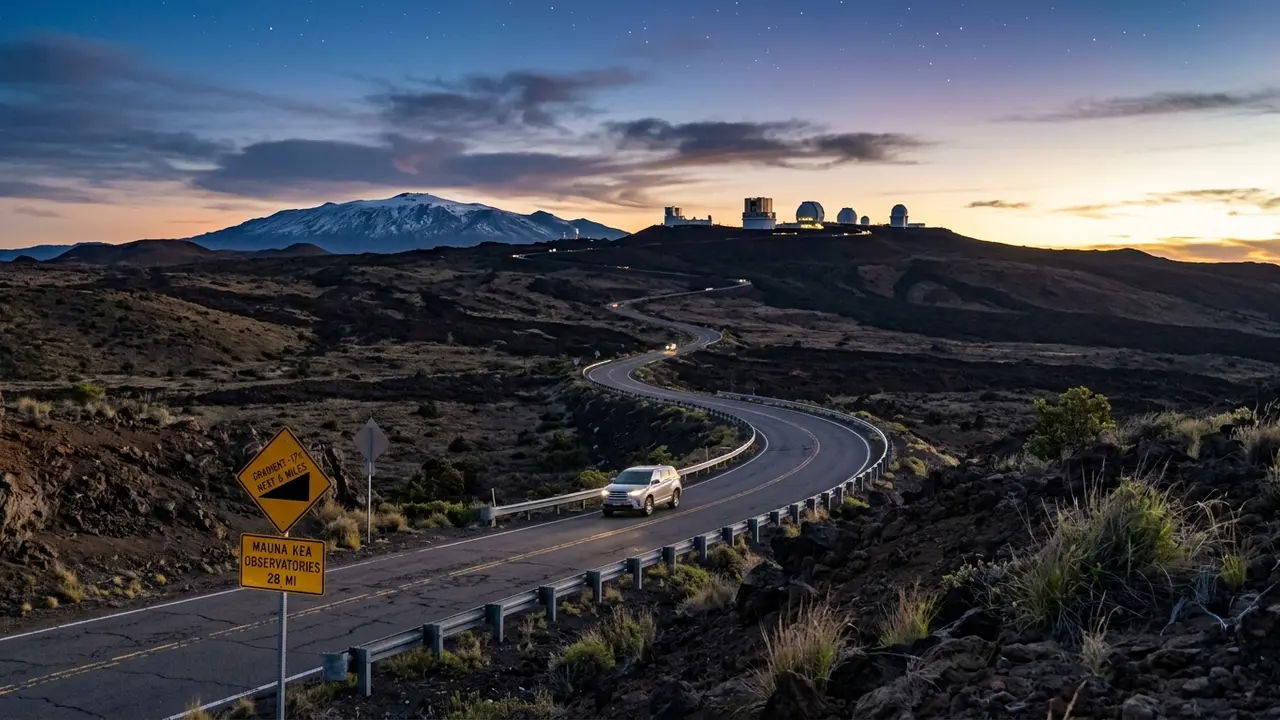

Mauna Kea is sacred ground first, plan your days around that
Before any talk of driving times or moon phases, sit with this: Mauna Kea is not a neutral backdrop you're renting for a night of photography. In Hawaiian tradition, the summit was regarded as the region of the gods[1], a place where benevolent spirits reside. Native Hawaiians know the mountain as Mauna a Wākea, and that status hasn't faded into folklore or history books; it shapes who visits the true summit, and how. For the deeper history and the etiquette an itinerary should build around, see Mauna Kea cultural significance and visitor etiquette.
Summit development, especially the proposed Thirty Meter Telescope (TMT), remains genuinely contested. A 'Save Mauna Kea' movement and Native Hawaiian groups regard further construction as sacrilegious, and that opposition has repeatedly halted work on the ground[2]. This isn't a settled historical footnote. It's an active dispute, and I'm not going to predict how it resolves.
The Office of Hawaiian Affairs has spent years pushing for better stewardship of the mountain, including a mediated process with the state and University of Hawaiʻi running from 2015 into 2017[3]. None of this is a reason to skip the mountain. It's a reason to build your itinerary around the place built for visitors, the Visitor Information Station, rather than the summit most travelers have no real reason to reach.
Featured · Destination
Mauna Kea
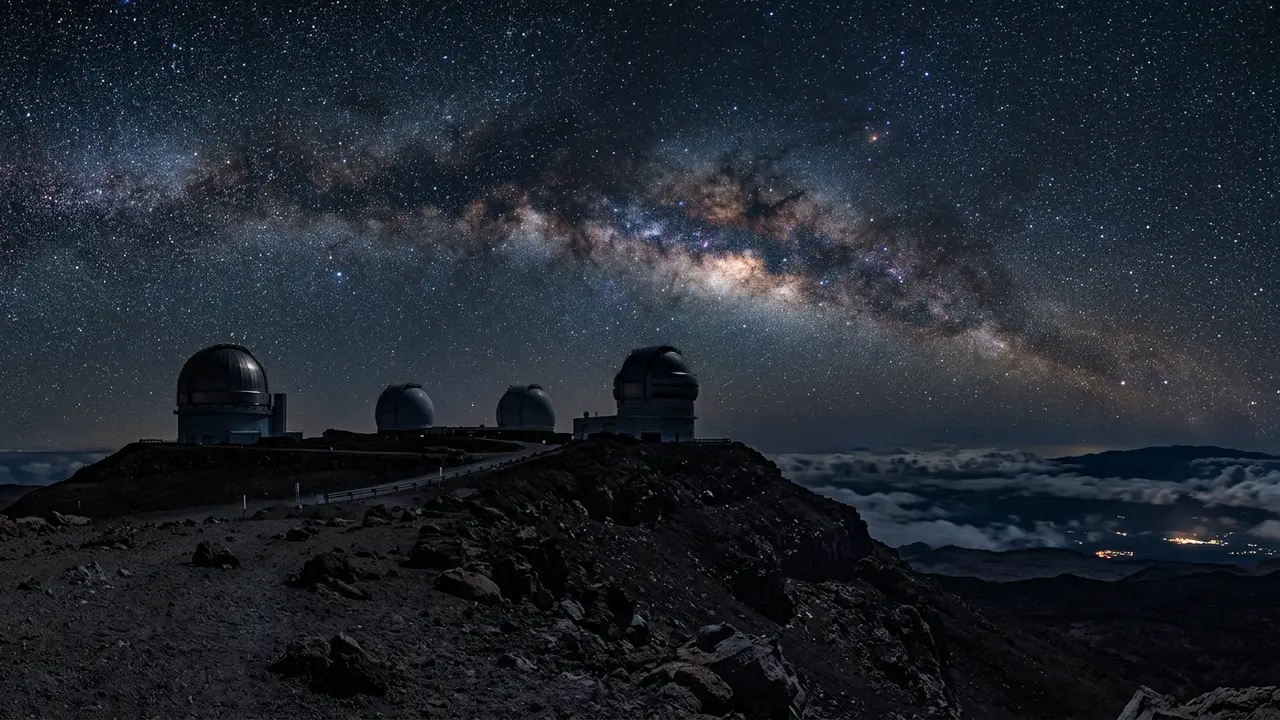
Mauna Kea is sacred to Native Hawaiians and home to world-class observatories. Here's how to plan respectful, safe Mauna Kea stargazing at the Onizuka VIS.
The short answer: two to four days, depending on what else you want to see
Here's the practical range: two days is the floor for a real Mauna Kea stargazing trip, and most travelers are better served by three, with a fourth if Hawaiʻi Volcanoes National Park is on the list too. The summit reaches 13,803 feet (4,207.3 m)[4], home to 13 observatories funded by as many as 11 countries[5], and that elevation is exactly why a same-day fly-in-and-stargaze plan doesn't work. Your body needs time to adjust before dark, and your itinerary needs a spare night in case the first one isn't clear.
13,803 ft
Two days: the bare minimum
This works if your schedule genuinely has no slack. Day one is arrival, the Saddle Road drive, and an acclimatization stop at the Visitor Information Station in the late afternoon. Day two is your one shot at a clear night, with an early flight out the next morning. It's tight, and it leaves zero room for a cloudy evening or a delayed flight, but it's enough to actually see the sky from Mauna Kea rather than just driving past it.
Three days: the comfortable plan
Add a second evening at the VIS, or a full day exploring Hilo or the Kona coast between your arrival and your stargazing night. This is the shape I'd actually recommend to most first-time visitors. It absorbs one bad-weather night without wrecking the whole trip, and it gives your body a full extra day above sea level before you're standing outside after dark at Visitor Information Station elevation.
Four days: fold in Hawaiʻi Volcanoes National Park
Add a full day at the national park, and Mauna Kea stops being the entire trip and becomes one strong night inside a broader Big Island loop. This is the version worth planning toward if you have any flexibility at all, more on pairing the two below.
Day one: crossing Saddle Road and banking your acclimatization time
Most Mauna Kea trips start on Saddle Road (Highway 200), the cross-island route connecting Kailua-Kona and Hilo. From Kona, that drive runs roughly 75 miles and about 1.5 hours to Hilo[6], and the turnoff for the Maunakea Access Road sits close to the Hilo side, around the 28-mile marker measured from that town[7]. However you slice it, day one is a driving day, not a viewing day, and it's worth treating it that way instead of trying to cram stargazing into the same afternoon you land.
The Visitor Information Station (VIS) sits at 9,200 feet (2,804 m)[8], and this is where day one earns its keep. Official guidance is direct: acclimate for at least 30 minutes at the VIS[9] before going any higher, and that half hour is the cheapest insurance you'll buy on this whole trip. Arrive in the late afternoon, let your body adjust while the light changes, and you've already banked the one part of the itinerary that can't be rushed.
A few things make day one go smoothly:
- Fuel up before you leave, since there's no gas station past the last town on the way up
- Check current road conditions before you commit to a departure time
- Pack warm layers even if you started the day at the beach
- Time your arrival at the VIS for late afternoon, not after dark
For the full destination picture, permits and all, see Mauna Kea Stargazing, and read the Onizuka Center Visitor Station program before you go, so you know roughly what a typical evening there looks like. For the airport-to-VIS drive in full, flights, Saddle Road, and where the pavement ends, see Getting to Mauna Kea.
Day two: the stargazing night at the Visitor Information Station
By the time the sun starts dropping on day two, you've already banked your acclimatization time and you know the drive. This is the night the whole trip is built around.
The VIS runs daily from 9:00 a.m. to 9:00 p.m.[10], with a free evening stargazing program that's been a fixture there for years: outdoor telescopes, staff on hand, and a rotating cast of visitors doing exactly what you came to do. The exact format has shifted over time, so treat any specific schedule you read online as a starting point, not a guarantee, and confirm current details close to your visit.
Altitude rules don't relax just because it's your viewing night. Only dependable, fully operable 4WD or AWD vehicles are permitted for summit travel, and 2WD vehicles aren't allowed past the VIS at all[11], so check your rental agreement, not just the vehicle's badge, since many contracts prohibit the drive outright. The VIS's own safety guidance also discourages visitors under 13, pregnant travelers, and anyone with heart or respiratory conditions from going higher[12]. If that's your group, the VIS is where your night happens anyway, not a consolation prize.
None of this is a downgrade. The VIS is a working visitor station built for exactly this purpose, with a genuinely dark, high-altitude sky, real telescopes, and staff who can talk through both the astronomy and the mountain's history. For season and moon-phase planning on top of the day count, Best Time for Mauna Kea Stargazing and Best Stargazing Spots on Mauna Kea fill in the details this article doesn't.
Stretch to three or four days: pairing with Hawaiʻi Volcanoes National Park
If you've got a third or fourth day, Hawaiʻi Volcanoes National Park is the natural pairing, and geography does you a favor: it sits on the same general loop as Saddle Road, not a detour off of it.
From Hilo, the drive to the park is about 30 miles and 45 minutes[13], short enough to fit as a half-day add-on without reshuffling the rest of the trip. Driving there directly from Kona is a longer commitment, about 95 miles and 2 to 2.5 hours via Highway 11[14], which is one more reason Hilo-based itineraries tend to flow more naturally once Mauna Kea is on the list.
Recommended tours
Tours are selected for quality, not commission. I earn a small fee if you book — at no extra cost to you.
A workable four-day shape looks like this:
- Day 1 — fly in, drive Saddle Road, acclimate at the VIS in the late afternoon
- Day 2 — stargazing night at the VIS
- Day 3 — Hawaiʻi Volcanoes National Park, staying over in Hilo or Volcano Village
- Day 4 — a slack day for weather, a second stargazing attempt, or the drive back to your departure airport
Featured · Article
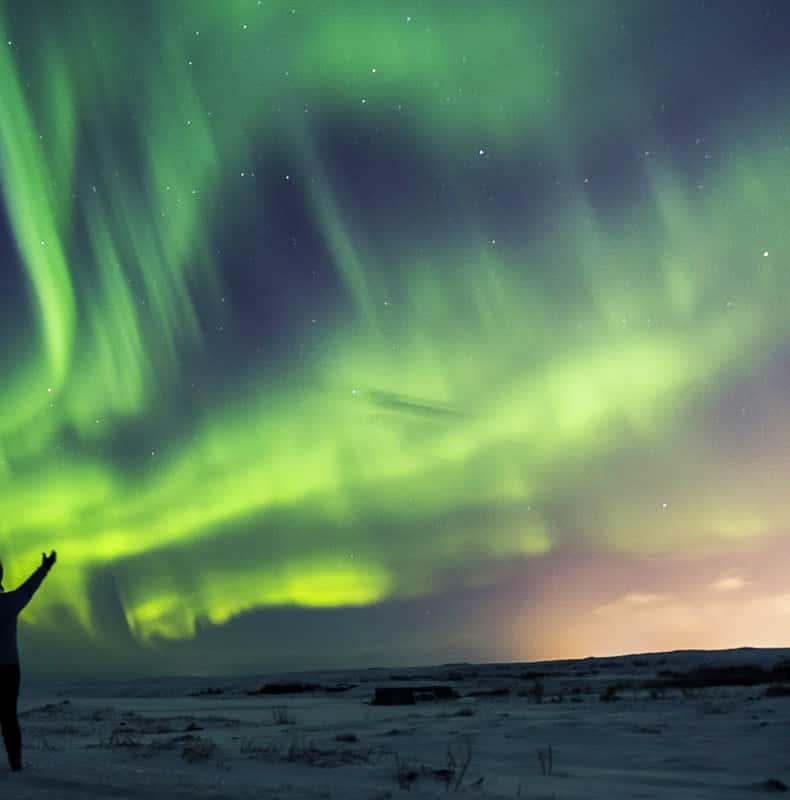
What Is Astrotourism? The Complete Beginner's Guide
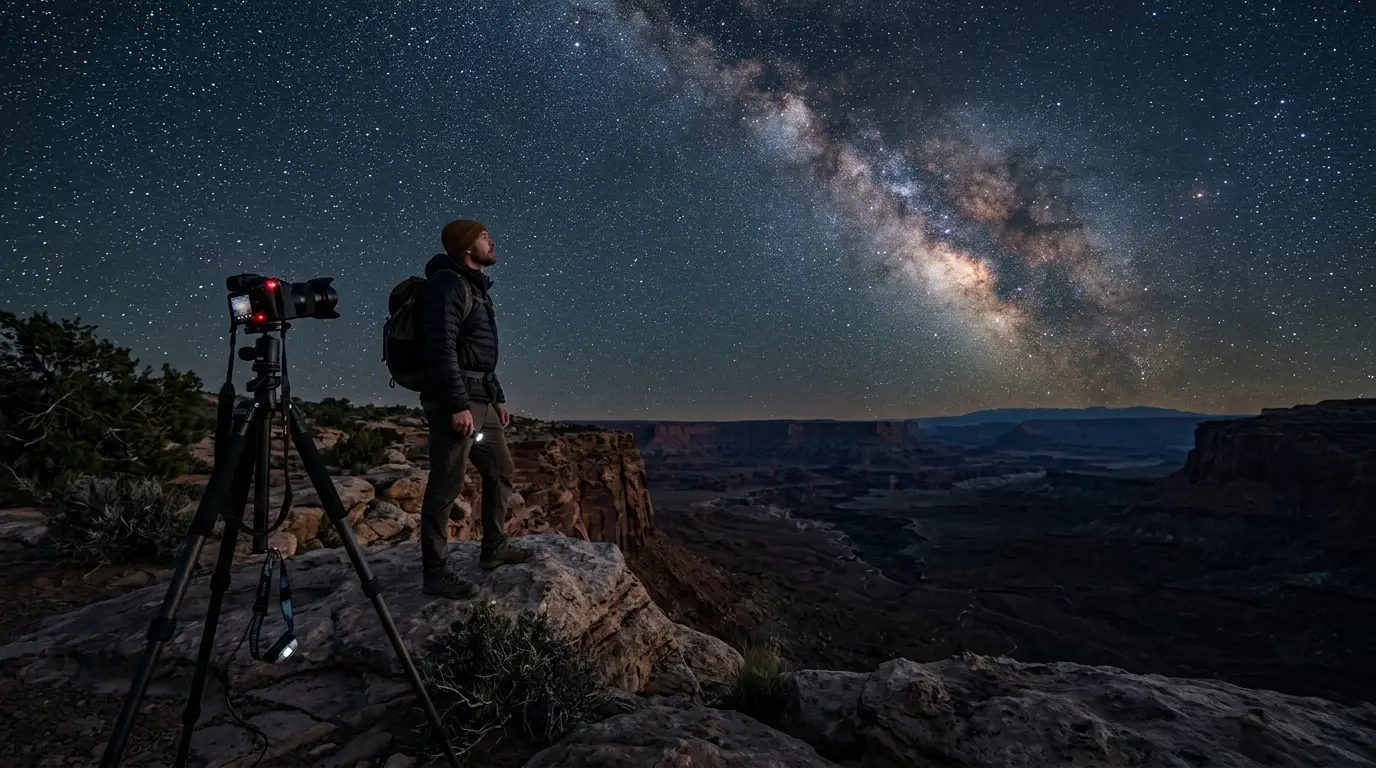
Astrotourism means travel built around dark skies: meteor showers, auroras, the Milky Way. What it means, where to go, and how to plan your first trip.
Three days works too. Drop either the buffer day or the park visit, depending on which one you'd actually regret skipping. I'd keep the buffer day myself: clear skies aren't guaranteed on a single try, and a scrubbed night with no backup is the most common regret I hear from first-time Mauna Kea visitors.
Looking past the park for more ways to fill a longer loop? Big Island Things to Do Beyond Mauna Kea rounds up waterfalls, coffee farms, and a manta ray night snorkel that all pair naturally with a stargazing night.
Where to base yourself: Hilo or Kona
Hilo and Kona sit on opposite sides of the island, and which one you pick changes the shape of your Mauna Kea days more than almost any other decision.
Hilo puts you closest to the mountain. a bayfront hotel in Hilo is a straightforward base for exactly this kind of early-start, late-return trip. Arnott's Lodge, on the same side of the island, is a long-running budget option built around the same rhythm. Kona adds real driving time on both ends of a stargazing night, but it pairs well with beach days, and Outrigger Kona Resort & Spa suits travelers splitting the trip between ocean and mountain. If shaving the drive matters more than staying near the coast, Kamuela Inn in Waimea sits closer to the Access Road turnoff than either coastal town.
For a fuller rundown of where to sleep before or after a Mauna Kea night, see Best Big Island Lodges for Mauna Kea Stargazing.
| Basing in Hilo | Basing in Kona | |
|---|---|---|
| Distance to the Access Road turnoff | Close — around 28 miles | Farther, plus the full Saddle Road crossing |
| Best if you want | An early start with minimal driving before your stargazing night | A day at the beach plus a night on the mountain |
| Nearby lodging examples | Hilo Hawaiian Hotel, Arnott's Lodge | Outrigger Kona Resort & Spa, Kamuela Inn (Waimea) |
Whatever base you choose, the math doesn't really change. Two days is the floor, three buys a genuine safety margin, and four turns a single stargazing night into a full Big Island loop that also does justice to the mountain's history and the park down the road. Still weighing whether the altitude, the driving, and the cost are worth it at all? Is Mauna Kea Worth It for Stargazing? walks through who the trip actually suits.