
Mauna Kea's sacred history, and why the summit remains contested
Mauna Kea is not a neutral backdrop for a night of stargazing, and any honest answer about visiting has to start there. Native Hawaiians regard the mountain as a shrine for worship, a home to the gods, and the piko, the cultural and spiritual center, of Hawai'i Island[1]. That status shaped how people related to the summit long before any telescope arrived: an ancient law once restricted access to the peak to high-ranking ali'i[2], the chiefs considered close enough to the gods to stand there. Modern astronomy shares that summit now, and the two histories have never fully reconciled.
The Office of Hawaiian Affairs (OHA) argues that for nearly fifty years, the state of Hawai'i and the University of Hawai'i prioritized astronomical development over properly caring for Mauna Kea's natural and cultural resources[3]. That complaint reaches further than any single project: OHA has been explicit that its legal action concerns how the entire mountain has been managed for decades, not one telescope[4]. Headlines about the Thirty Meter Telescope protests can make the dispute sound narrower than it actually is. Whatever the current status of that or any other project, the underlying disagreement over stewardship of the mountain remains unresolved, and visitors should treat it as exactly that: unresolved, not settled in anyone's favor.
the underlying disagreement over stewardship of the mountain remains unresolved, and visitors should treat it as exactly that: unresolved, not settled in anyone's favor.
The Visitor Information Station: what you'll find, and why it's the real destination
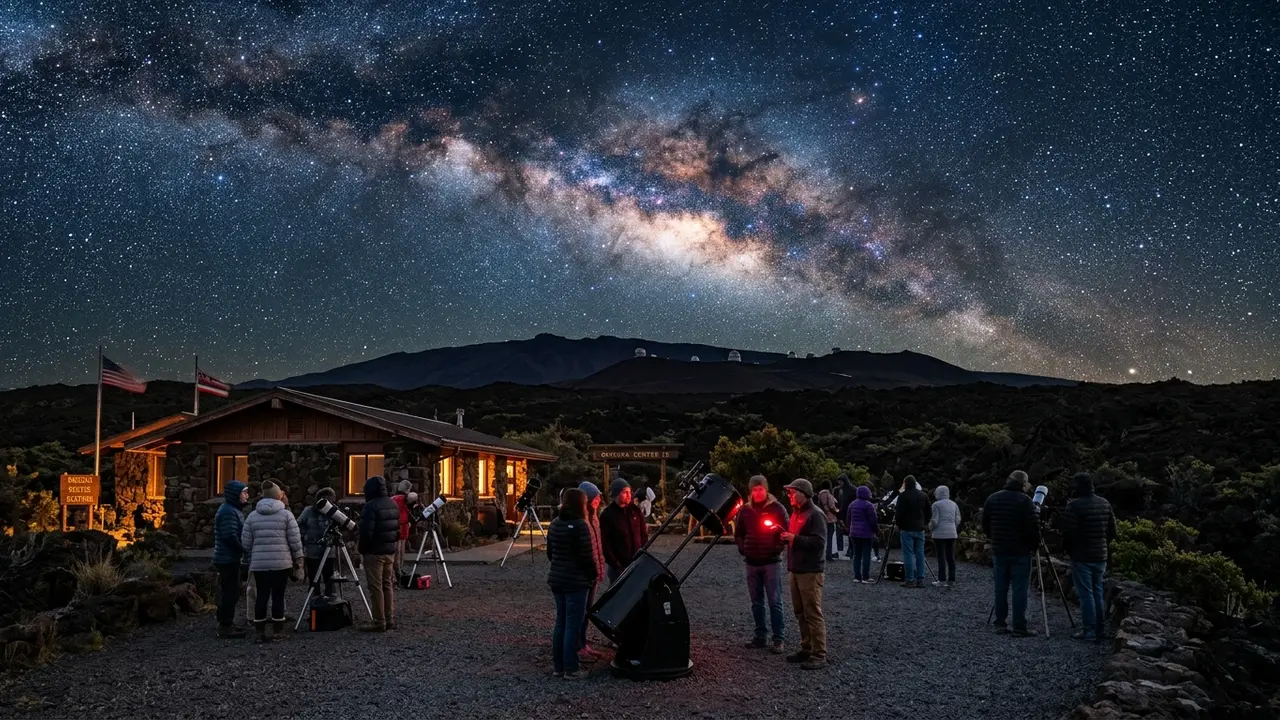
For nearly every traveler, the Onizuka Center for International Astronomy Visitor Information Station (VIS), not the summit above it, is where a Mauna Kea stargazing trip actually happens. It sits at 9,200 feet (2,804 meters)[5], comfortably above most of the island's cloud and haze, with daily hours running 9:00 a.m. to 9:00 p.m.[6]. That elevation does real work for the sky overhead: the true summit sits above the trade-wind inversion layer, which is why the air up there stays dry and largely free of cloud cover and atmospheric pollution[7], and the VIS benefits from much of that same clear-air advantage.
What you get at the VIS is a working visitor station built for exactly this purpose: outdoor telescope pads, staff who can speak to both the astronomy and the cultural context, and a parking lot full of people doing exactly what you came to do. Programs have historically run informally most clear nights after twilight, though the specific format shifts, so treat the details below as a starting point rather than a fixed schedule. See Mauna Kea stargazing for the full destination rundown, and the Onizuka Center Visitor Station program for a walkthrough of what a typical evening looks like.
Featured · Destination
Mauna Kea
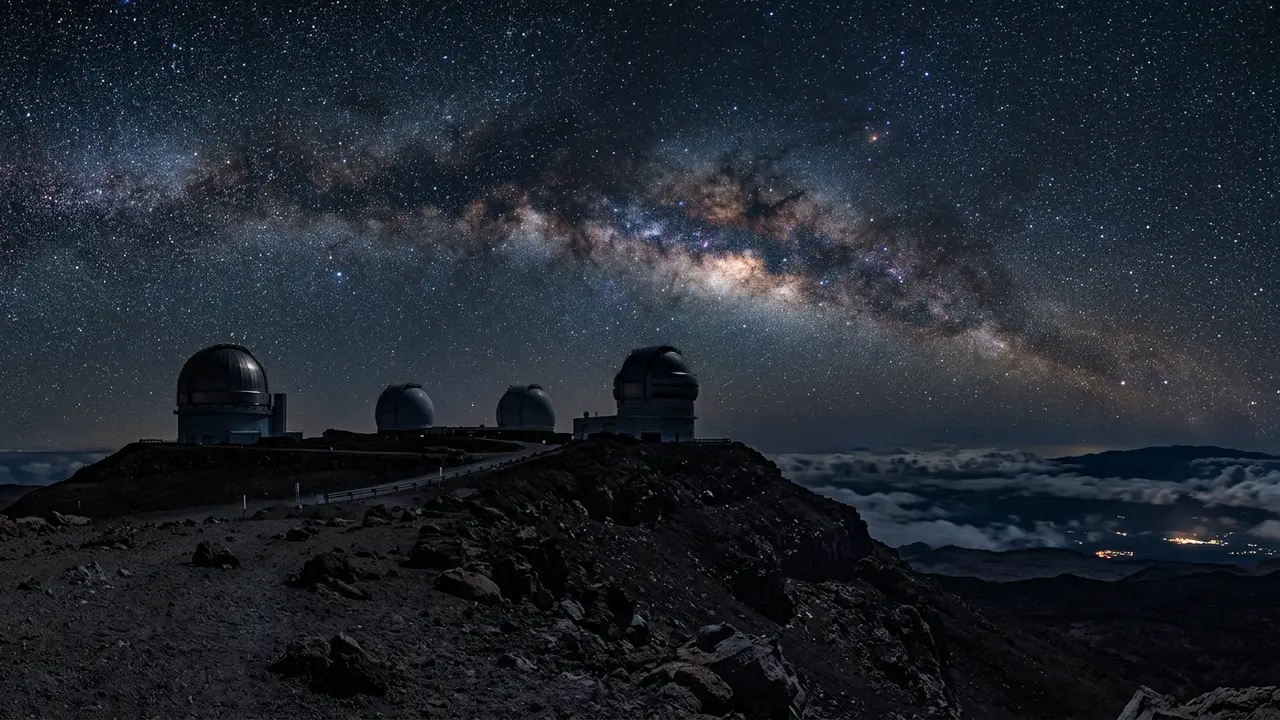
Mauna Kea is sacred to Native Hawaiians and home to world-class observatories. Here's how to plan respectful, safe Mauna Kea stargazing at the Onizuka VIS.
Roads, vehicles, and permits: what it actually takes to go higher
Two access points matter on Maunakea Access Road, and the rules at each are strict for real safety reasons. Summit access itself closes 30 minutes after sunset and reopens 30 minutes before sunrise[8], so nighttime stargazing at the true summit isn't really on offer to casual visitors regardless of vehicle. Above the VIS, the summit road is 4x4 only[9], and driving beyond the visitor center into that restricted area isn't allowed for standard vehicles[10], rental cars included. Most rental agreements prohibit the drive outright, whatever the badge on the vehicle says, so check the contract rather than assuming a rented SUV qualifies.
Permits work similarly: commercial tour operators and researchers have their own permit requirements, but a casual stargazing visit that stays at the VIS has not historically been treated as an activity needing one. Confirm current rules directly with the visitor center before you go, since policies here shift more than a typical trailhead's. For a fuller breakdown of routes, drive times, and vehicle options from both sides of the island, see getting to Mauna Kea.
| Visitor Information Station | True summit | |
|---|---|---|
| Elevation | 9,200 ft (2,804 m) | 13,803 ft (4,207.3 m) |
| Vehicle needed | Any vehicle reaching the turnoff | Dependable 4WD/AWD; rentals often prohibited |
| Night access | Open per posted hours, night programs on-site | Closes 30 min after sunset |
| Who it's for | Nearly all visitors | Only those with a specific, permitted reason |
Altitude, health, and who should stop at the Visitor Information Station
The summit's elevation, 13,803 feet (4,207.3 meters) above sea level[11], is the highest point in Hawai'i, and elevation is the real risk on this mountain, not a formality. The drop in atmospheric pressure and oxygen with increasing altitude can cause altitude sickness, which can become life-threatening as High Altitude Pulmonary Edema (HAPE) or High Altitude Cerebral Edema (HACE)[12]. None of that is theoretical: the VIS's own safety guidance treats acclimatization as a real step, not a suggestion, and recommends visitors acclimate at least 30 minutes at the VIS[13] before going any higher.
Recommended tours
Tours are selected for quality, not commission. I earn a small fee if you book — at no extra cost to you.
Certain visitors are advised not to ascend above the VIS at all:
- Anyone under 13 years old, since prolonged high-altitude exposure may cause permanent bodily damage[14]
- Pregnant visitors[15]
- Anyone with high blood pressure or a heart or respiratory condition[16]
- Anyone who has been scuba diving in the prior 24 hours[17], due to the decompression risk from the altitude change
~4,600 ft
None of this is reason to skip Mauna Kea. It's reason to plan the visit around the VIS rather than push higher without a specific, well-prepared reason to.
How to visit respectfully: etiquette on Mauna Kea
Respectful visiting on Mauna Kea comes down to a short list of concrete habits, not vague reverence. Stay on marked roads and paths rather than cutting across the landscape. Don't build ahu, the stone stacks visitors sometimes assemble elsewhere, and don't move or remove rocks, since both disturb ground that carries real cultural weight here. If you encounter cultural practitioners or a ceremony in progress, especially near the summit, keep your distance, lower your voice, and defer to them rather than treating the moment as a photo opportunity.
The single most useful habit is the one this whole guide keeps returning to: treat the Visitor Information Station, not the summit, as your actual destination. Doing so isn't a compromise on the stargazing experience; the VIS delivers a real, dark, high-altitude sky along with staff who can speak honestly to the mountain's history. For more on the cultural context and how to carry yourself well on a visit, see Mauna Kea cultural significance and visitor etiquette.
Planning the trip: getting there, timing, and joining a program
Both Hilo and Kona put you within roughly an hour or so of the Maunakea Access Road turnoff, though exact drive time depends on traffic and exactly where in each town you start; confirm current conditions before you go, and see getting to Mauna Kea for a full route breakdown from both coasts. Whichever base you choose, plan to arrive with enough daylight left to acclimatize at the VIS before dark.
There's no single official best month for a Mauna Kea stargazing trip. Some travelers plan around the new moon for the darkest possible sky, and milder months feel more comfortable for an evening spent standing around at 9,200 feet[5], but neither claim comes from an official seasonal statement, so treat them as reasonable defaults rather than rules; see best time for Mauna Kea stargazing for the fuller case. The VIS has historically run informal, free telescope programs on most clear nights, alongside a separate, more structured program that requires reservations; exact scheduling and booking details shift, so check the current official listing before building your evening around either format.
Featured · Article
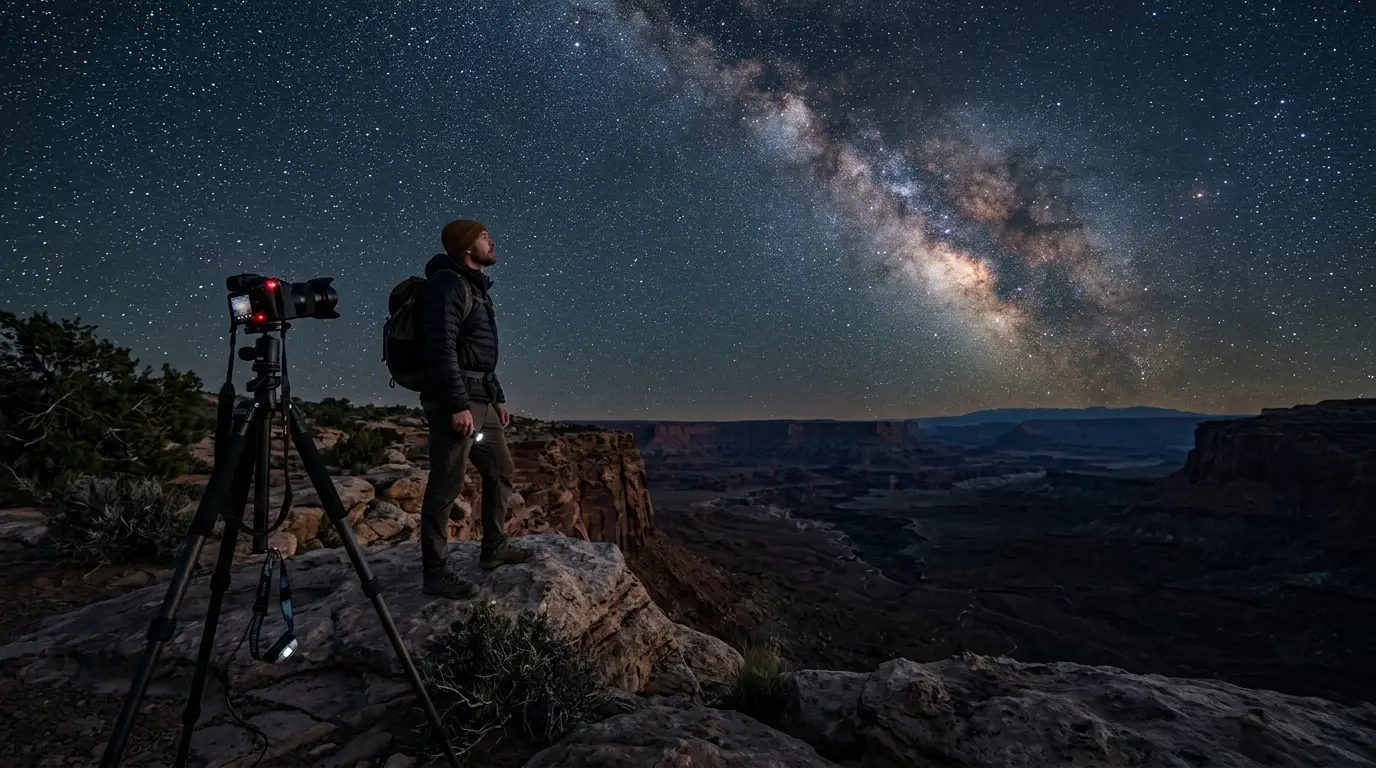
What Is Astrotourism? The Complete Beginner's Guide
Astrotourism means travel built around dark skies: meteor showers, auroras, the Milky Way. What it means, where to go, and how to plan your first trip.
Pack simply: warm layers, closed shoes, water, and a headlamp with a red-light mode if you have one, since it's the easiest way to protect your own and everyone else's night vision. Where you stay matters less than when you leave; best Big Island lodges for Mauna Kea stargazing covers bases on both the Hilo and Kona sides for exactly this kind of early-start evening. For a fuller day-count plan, see how many days for Mauna Kea stargazing, and if you're still deciding whether the trip makes sense for you at all, see is Mauna Kea worth it for stargazing.