All articles
Written by Maya Okonkwo
  • 9 min
  • 42 sources

Iceland Northern Lights in October vs. November: Which Is Safer?

Mid-October gives Reykjavík 9h49 of daylight, mid-November 6h31. Compare darkness, cloud, wind and winter road conditions to pick your Iceland aurora month.
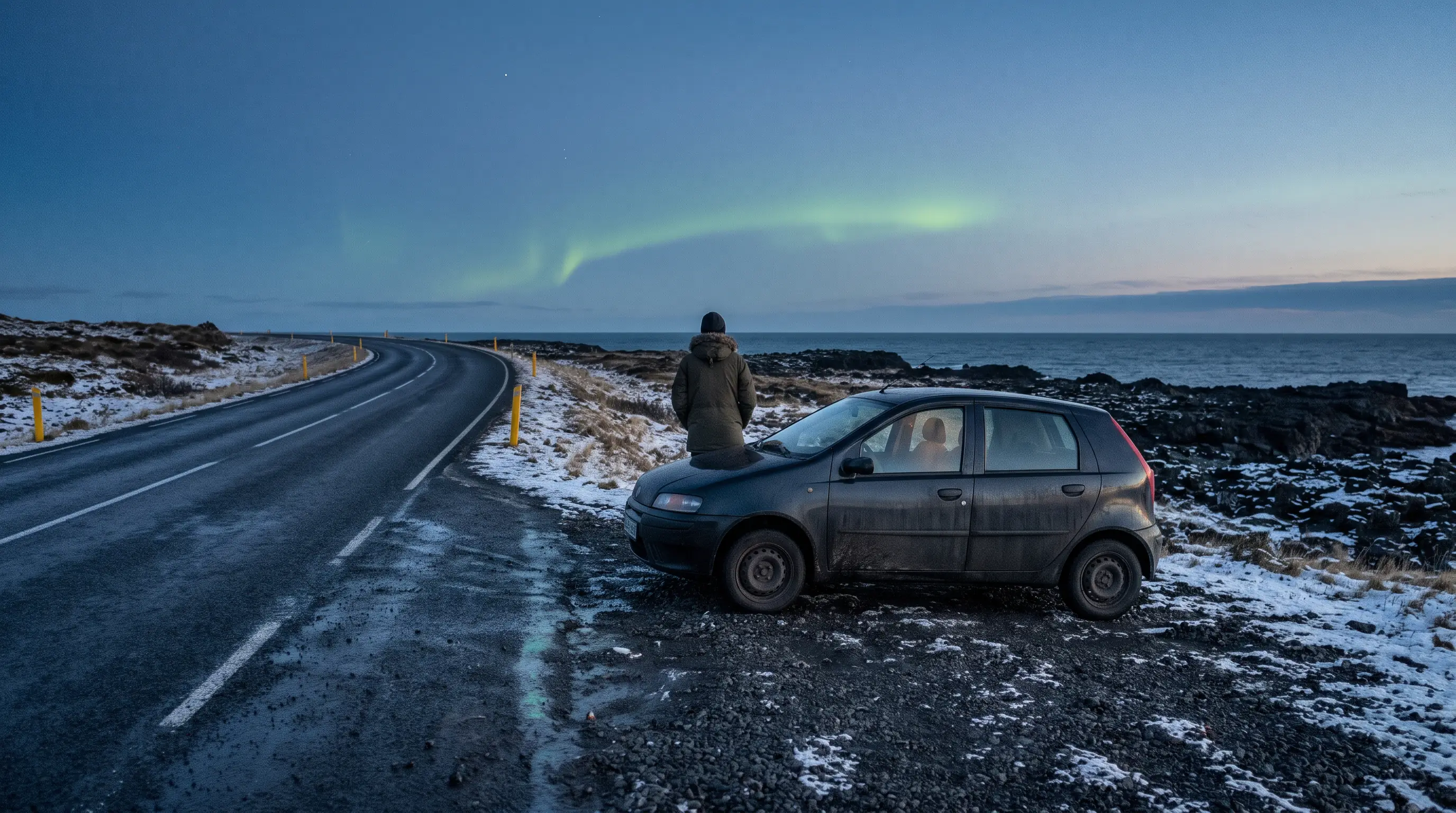
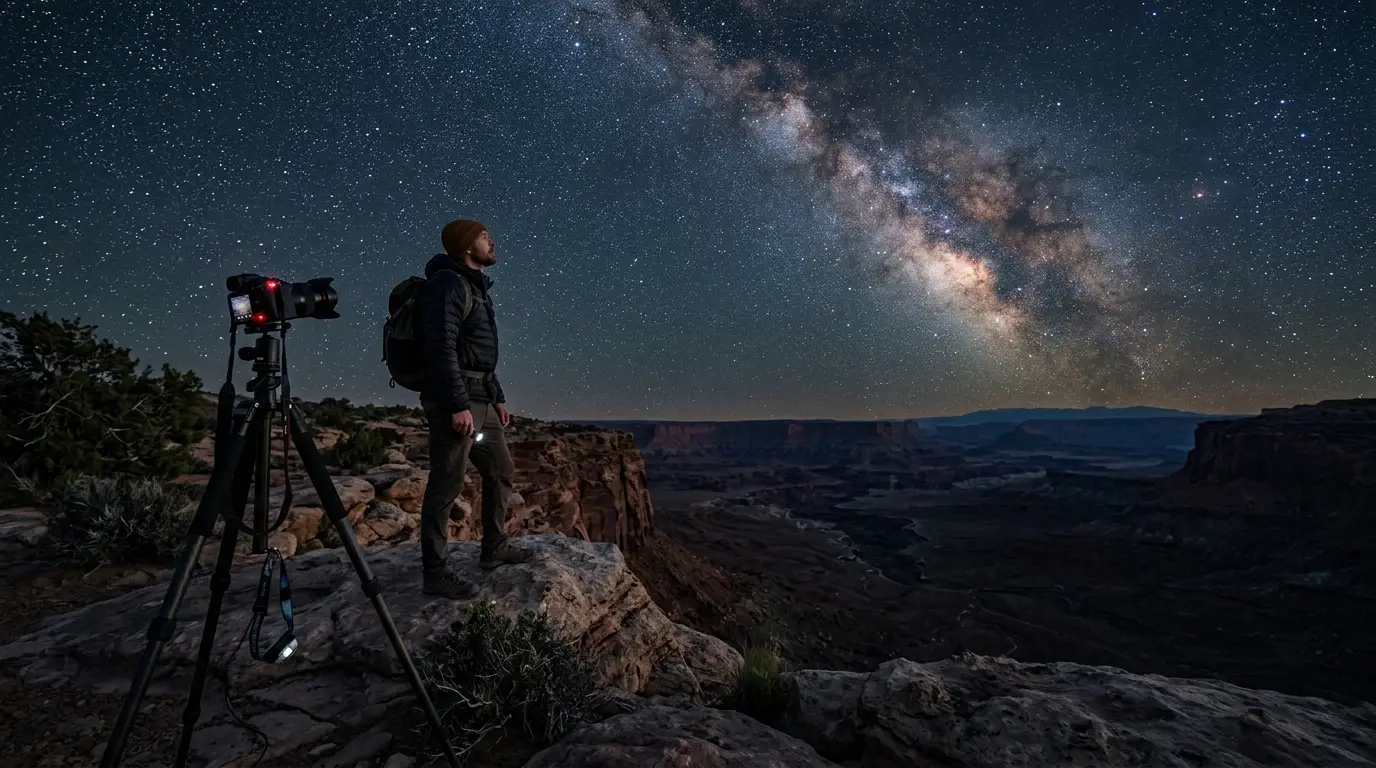
Iceland northern lights in October and November: green aurora over a snow-dusted coastal road, one car parked in a roadside lot, last blue twilight on the horizon

Iceland's northern lights season runs from late August to late April, according to SafeTravel's viewing guidance.

Mid-October gives Reykjavík 9 hours 49 minutes of daylight and mid-November gives it 6 hours 31, which is the one difference between the months that the data settles[1][2]. November's longer darkness has no proven visibility advantage and winter driving conditions can appear in autumn as well[3], so neither month can be called safer. For a trip with long drives I would choose October, because the 386 km Reykjavík–Akureyri leg is published at about five hours by car[30] and mid-November leaves only about an hour and a half of daylight beyond it; for a short stay near one base, November is the better fit.
Mid-month Reykjavík daylight
9h49 vs 6h31
October 15 against November 15, 2026[1][2]
Evening astronomical dark
20:47 vs 19:24
Astronomical twilight ends in Reykjavík, Oct 15 vs Nov 15[1][2]
Road-condition monitoring
24 hours
The traffic centre watches roads; monitoring is not clearing[4]

Choose by how much you will drive, not by the month's reputation

October is the month for a trip with long daily drives, and November suits a stay built around one base. The Reykjavík–Akureyri leg is 386 km, about five hours by car as a published estimate rather than a winter guarantee[30], inside a Ring Road of 1,322 km in total[31]. Set against Reykjavík's 9 hours 49 minutes of daylight in mid-October and 6 hours 31 in mid-November[1][2], that five hours leaves about 4 hours 50 minutes of light before the first stop in one month and about 1 hour 30 in the other. What counts as long depends on who drives and how often you stop, so the test is how much of the day's light one leg uses up.
The split comes from daylight: the driving window shrinks steadily through both months, while the evening darkness an aurora needs arrives earlier every week. Both months sit inside the season, since SafeTravel puts northern lights viewing at late August to late April[5], and the wider picture is in the best time to see the northern lights in Iceland. Both are workable.
'Safer' is the word in most searches, but closure counts, storm dates and clear-night odds do not turn into a safe-month ranking. The comparison sticks to what can be measured, in three parts:
  • Daylight and darkness: 2026 almanac times for Reykjavík and Akureyri on the 1st, 15th and last day of each month.
  • Cloud and wind: Met Office station rows for single Octobers and Novembers, never treated as long-term normals.
  • Road conditions: what SafeTravel and the Icelandic Road and Coastal Administration (IRCA) say, which applies to both months.
What you compareOctoberNovember
Reykjavík daylight, 15th (2026)9 h 49 min, sunset 18:076 h 31 min, sunset 16:27
Reykjavík astronomical dark, 15thTwilight ends 20:47Twilight ends 19:24
Akureyri daylight, 15th (2026)9 h 40 min, sunset 17:476 h 1 min, sunset 15:56
Reykjavík mean cloud, oktas (2022, 2023)5.6 and 5.95.4 and 5.2
Reykjavík mean wind, m/s (2022, 2023)3.3 and 4.83.9 and 4.5
Winter driving conditionsCan occurCan occur
Shown safer by the dataNoNo

How much daylight each month leaves in Reykjavík and Akureyri
Reykjavík loses just over three hours of daylight during October, from 11 hours 20 minutes on the 1st to 8 hours 6 minutes on the 31st[6][7]. November takes nearly three more, from 7 hours 59 minutes on the 1st to 5 hours 6 minutes on the 30th[8][9]. Light falls steadily, with no cliff in between.
The border between the months changes nothing: sunset is 17:13 on October 31 and 17:10 on November 1, and astronomical twilight ends at 19:58 and 19:56[7][8]. A trip that runs from October 28 to November 4 is the same trip whichever month the booking says. The useful comparison is a date, not a month: check sunset and the end of astronomical twilight for the exact nights you will be there, and build each day's drive to finish well before the first of them.
Green and purple aurora borealis swirling above a snow-dusted Icelandic ring road and distant glacier, long-exposure night photograph over the South Coast

Featured · Destination

Northern Lights in Iceland

Iceland's whole-country aurora guide: best regions to base in, aurora season Sep–Mar, ice caves, winter driving reality, and where cloud cover ends every plan.

Reykjavík, mid-month

Mid-month is where the two months part ways for a driver. The same date, one month apart, shows the contrast in the whole shape of the day:
  • October 15: sunrise 08:17, sunset 18:07, astronomical twilight ends 20:47[1]
  • November 15: sunrise 09:56, sunset 16:27, astronomical twilight ends 19:24[2]
Astronomical night begins when that evening twilight ends, so a November chaser can be in position by about 19:30 while mid-October asks for a wait until nearly 21:00. In exchange, October's day is longer by nearly 3 hours 20 minutes, which is the margin that lets a driver cover long legs in light. Read the twilight cells as the moment full darkness arrives, not as a measure of how long the night lasts, and remember that aurora does not always wait for the strict astronomical threshold.

Akureyri, earlier dusk

Akureyri follows the same curve with an earlier dusk, because it sits well north of Reykjavík. On October 15 it has 9 hours 40 minutes of daylight, sunset at 17:47 and astronomical twilight ending at 20:37[10]. By November 15 that becomes 6 hours 1 minute, sunset at 15:56 and twilight ending at 19:07[11].
On November 30 the sun is up from 10:50 to 15:11, which is 4 hours 21 minutes of light[12] and the thinnest driving window in this comparison. Even on November 15 Akureyri has half an hour less light than Reykjavík on the same date[2][11], so the north runs short first. I would not plan a north-coast leg in late November that depends on arriving before sunset.

What the longer November night does and does not give you

November's darkness gives you more hours to look, not better odds while you look. The Met Office states the condition plainly: aurora needs dark and partly clear skies[13], and November improves the first half of that requirement while doing nothing for the second. Cloud is the variable no itinerary can schedule.
The practical gain is the clock. Astronomical twilight in Reykjavík ends at 21:40 on October 1 and at 19:02 on November 30[6][9], so a late-November evening opens its dark window two hours and 38 minutes earlier. That is the difference between a chase after a late dinner and a chase before it.
The clock also decides how tired you are on the drive back. In early October the dark window opens after 21:00[6], so a chase that waits for a clear gap can slide toward midnight with a road still ahead of you. In November the same chase can be finished by 22:00 with the evening intact. For a first-timer that matters more than a few oktas of cloud.
Activity matters less than most trip planners assume. The Met Office says even grade 2, low activity, can be beautiful and grade 3, moderate, can be dazzling[14], so holding out for a high number before stepping outside costs nights. Weighing the grade, the cloud layer and the moon together is what an Iceland aurora forecast is for, and it is the same exercise in October and November.

What the Met Office station rows say about cloud and wind

Four monthly rows from one Reykjavík station give a scoped look at cloud and wind, and they do not agree on a winner. The Met Office records mean cloud cover in oktas, bright sunshine hours and mean wind speed for each station month[15], so each row below is what one October or November actually delivered, not a climate normal and not a night-only measurement.
  • October 2022: 5.6 oktas, 109.8 sunshine hours, 3.3 m/s mean wind[16]
  • November 2022: 5.4 oktas, 40.8 sunshine hours, 3.9 m/s mean wind[17]
  • October 2023: 5.9 oktas, 88.9 sunshine hours, 4.8 m/s mean wind[18]
  • November 2023: 5.2 oktas, 69.7 sunshine hours, 4.5 m/s mean wind[19]
At this station November was the less cloudy month in both years, by 0.2 oktas in 2022 and 0.7 in 2023, while wind went opposite ways: 0.6 m/s stronger in November 2022 and 0.3 m/s weaker in November 2023[16][17][18][19]. Two Octobers and two Novembers on the southwest coast are enough to undercut a flat claim that November is cloudier and nowhere near enough to prove the reverse. Treat them as anecdotes. Sunshine hours measure daytime, and a mean of five-odd oktas cannot be turned into the odds of a clear night.
The Met Office describes the Icelandic winter as the season of long nights and severe winter storms[20]. That describes the season and gives no onset date, so neither month gets a free pass on storms.

Road conditions do not follow the calendar

Autumn is on the list of winter driving seasons: SafeTravel's guidance places winter conditions in spring and autumn as well as winter[3]. October gets no exemption, and neither does a clear-looking evening in November.
Winter service is real and it is uneven. Fewer than half of Iceland's classified highway, roughly 5,000 of 12,000 kilometres, receives winter service from the IRCA[21]. Where a road sits in the priority order, and how it is being serviced today, is listed road by road on umferdin.is[22]. That is national coverage, not a promise about any Ring Road segment, so check the stretch you intend to drive instead of assuming the loop is cleared to one standard. Service is a priority, not a promise. Tyres, rental choice and the daily check are laid out in getting around Iceland in winter, and they matter equally in both months.

Recommended tours

Tours are selected for quality, not commission. I earn a small fee if you book — at no extra cost to you.

The traffic centre watches roads around the clock, every day of the year[4], but monitoring is not clearing. The 1777 phone line runs only from 06:30 to 22:00 daily[23], so a late chase leaves you with the website and not a person; plan the next day's route before you go out, not after midnight.
For the chase itself, SafeTravel advises monitoring the forecast and road conditions often because weather can change at short notice[24], and parking only in a designated lot[25]. Neither piece of advice changes between October and November. Choose the pull-off in daylight, when you can see the surface, and reach it before the light goes.

A map app does not know the road is closed

SafeTravel warns that Google Maps and other navigation apps may not accurately show closed or impassable roads[26]. Check umferdin.is before you leave town and again before any evening drive.

What to do when a road closes

Official guidance for a closure is to honour it and rework the day around it[32]. An open road is not an instruction to continue either: the road authority says drivers new to winter conditions may do better to skip unnecessary risks when sudden weather hits[33]. For the current picture, the IRCA's Traffic info site at umferdin.is/en shows real-time road closures and weather alerts in English[34], and the 1777 service answers travellers' enquiries by phone or email[35], with the phone line keeping the 06:30 to 22:00 hours above. SafeTravel adds one step to take before leaving: share a comprehensive travel plan with a trusted person who can take appropriate action[36].

Which month fits which trip

Pick October when the trip is a loop with long daily drives, and November when it is a short stay near one base with the chase close to the door. Late October behaves like early November, with sunset at 17:13 on the 31st[7] against 17:10 on the 1st[8], so a trip that straddles the boundary is not forced to choose.
Traveler photographing the Milky Way arc above a dark desert horizon on an astrotourism trip, tripod-mounted camera capturing star trails against a certified dark-sky park backdrop

Featured · Article

What Is Astrotourism? The Complete Beginner's Guide

Astrotourism means travel built around dark skies: meteor showers, auroras, the Milky Way. What it means, where to go, and how to plan your first trip.

  • Several days of Ring Road driving: October, and its first half in particular, when Reykjavík still has 11 hours 20 minutes of daylight on the 1st[6] against 5 hours 6 minutes on November 30[9].
  • A short stay near Reykjavík with local viewing: November works, because astronomical twilight ends before 20:00 on every November date compared, from 19:56 on the 1st to 19:02 on the 30th[8][9].
  • A first-timer who dislikes late nights: November or the last days of October, since early October asks you to wait until 21:40[6].
  • Driving alone: the arithmetic is the same, but nobody else can take the wheel when a stretch closes, a point developed in solo Ring Road driving in October.

One base near Reykjavík in November

A base in the capital needs no rental car to get started. Four ways to begin the chase from it:
  • Grótta: a coastal walk of about an hour from the city centre to the tip of the peninsula, no car or tour needed[37]. The lighthouse itself is reachable only at low tide, though it stays visible from a distance at high tide[38].
  • Heiðmörk Nature Reserve: reachable by public transport to Norðlingaholt, though a private car makes the trip smoother[39].
  • Öskjuhlíð hill: a vantage point for photographing the lights over the Reykjavík skyline[40].
  • A basic bus excursion: roughly three hours overall, starting with a 30-minute drive to dark areas such as Lake Kleifarvatn and the Bláfjöll Mountains[41].
A tour is optional. Independent viewing is possible, and what a tour adds is an experienced guide and a driver skilled in winter conditions[42]. None of it lets you ignore a closure or the forecast, so the daily road check applies to a short stay as much as to the loop.

My pick for a first driving trip

My own pick for a first trip that involves driving is early October, with several nights of margin. I have not seen an aurora yet, so that is planning judgement, not memory, but the daylight numbers lean heavily one way. Margin beats timing. A week with several evenings to spare gives clouds time to move, which no choice of month can do for a two-night trip, and how many days to spend chasing the northern lights in Iceland is worth settling before the month.

Frequently asked questions

Which is better for Iceland northern lights, October vs November?

Neither month has a demonstrated edge for the lights themselves, since both fall inside SafeTravel's late August to late April season[5] and the Met Office ties viewing to dark, partly clear skies[13]. November gives longer darkness, with astronomical twilight ending at 19:24 in Reykjavík on November 15 against 20:47 on October 15[1][2]. October gives more daylight for the drives between viewing spots.

Is November actually cloudier than October in Iceland?

On the Met Office's Reykjavík rows for 2022 and 2023, November was the less cloudy month: 5.4 against 5.6 oktas in 2022 and 5.2 against 5.9 in 2023[16][17][18][19]. Two years at one station do not establish a typical month, and a mean in oktas is not the chance of a clear night.

How much daylight does Iceland have in October versus November?

Reykjavík has 11 hours 20 minutes on October 1, 9 hours 49 minutes on the 15th and 8 hours 6 minutes on the 31st[6][1][7]. November runs from 7 hours 59 minutes on the 1st through 6 hours 31 minutes on the 15th to 5 hours 6 minutes on the 30th[8][2][9].

What time does it get fully dark in Reykjavík and Akureyri?

Reykjavík's astronomical twilight ends at 21:40 on October 1, 20:47 on October 15, 19:58 on October 31, 19:56 on November 1, 19:24 on November 15 and 19:02 on November 30[6][1][7][8][2][9]. Akureyri runs 10 to 18 minutes earlier on the dates compared[10][11][12].

Is Iceland's Ring Road safe to drive in November?

It can be, with daily checks, but November's shorter days leave less margin: Reykjavík has 6 hours 31 minutes of daylight on November 15[2]. SafeTravel places winter conditions in autumn as well as winter, so October is not exempt either[3]. Road service is organised in priority divisions, and umferdin.is shows how each road is serviced[22].

Does winter road service mean the Ring Road stays open?

No. The IRCA says plainly that no amount of money could keep its winter-serviced roads free of ice, so service means a priority and a schedule, not a guarantee[27]. Closures and other notices are published on umferdin.is and trafficinfo.is[28], so a road marked as serviced is still a road to check on the day.

Can I see northern lights in October without driving around Iceland?

Yes. October is inside the season[5], and the Met Office says even low activity can be beautiful[14], so a base with a short local attempt on each clear evening is a valid plan. Park only in a designated lot[25] and watch the forecast, because cloud decides the night.

Is the 1777 road information line open all night?

No. It runs from 06:30 to 22:00 daily, year round[23]. The traffic centre monitors road conditions around the clock[4], and notices appear on umferdin.is[28].

Can ice form on Icelandic roads without warning in October or November?

Yes. The IRCA calls road ice conditions unpredictable and says ice tends to form on very short notice[29]. A road that was clear on the afternoon drive can behave differently on the return after dark, in either month, so recheck conditions before each leg.

Sources

42 references Show
  1. Time and Date — Reykjavik (opens in a new tab)

    “| 15 | 08:17 ↑ (108°) | 18:07 ↑ (251°) | 9:49:46 | −6:28 | 05:37 | 20:47 | 06:33 | 19:51 | 07:29 | 18:56 | 13:13 (17.3°) | 149.180 |”

  2. Time and Date — Reykjavik (opens in a new tab)

    “| 15 | 09:56 ↑ (134°) | 16:27 ↑ (225°) | 6:30:50 | −6:09 | 06:59 | 19:24 | 07:55 | 18:28 | 08:56 | 17:27 | 13:12 (7.4°) | 147.980 |”

  3. safetravel.is — Driving (opens in a new tab)

    “Winter condition can occur in spring, autumn as well as winter. Driving on ice roads can be very challenging.”

  4. vegagerdin.is — Vaktstod (opens in a new tab)

    “The IRCA’s traffic centre monitors road conditions 24 hours a day, 365 days a year.”

  5. safetravel.is — Northern lights safety (opens in a new tab)

    “The northern lights season is usually from late August until late April.”

  6. Time and Date — Reykjavik (opens in a new tab)

    “| 1 | 07:36 ↑ (96°) | 18:56 ↑ (264°) | 11:20:06 | −6:25 | 04:51 | 21:40 | 05:52 | 20:40 | 06:49 | 19:44 | 13:17 (22.6°) | 149.773 |”

  7. Time and Date — Reykjavik (opens in a new tab)

    “| 31 | 09:07 ↑ (122°) | 17:13 ↑ (238°) | 8:06:05 | −6:28 | 06:22 | 19:58 | 07:17 | 19:03 | 08:14 | 18:06 | 13:11 (11.7°) | 148.521 |”

  8. Time and Date — Reykjavik (opens in a new tab)

    “| 1 | 09:10 ↑ (123°) | 17:10 ↑ (237°) | 7:59:38 | −6:27 | 06:25 | 19:56 | 07:20 | 19:00 | 08:17 | 18:03 | 13:11 (11.4°) | 148.483 |”

  9. Time and Date — Reykjavik (opens in a new tab)

    “| 30 | 10:43 ↑ (145°) | 15:49 ↑ (215°) | 5:06:15 | −4:58 | 07:29 | 19:02 | 08:27 | 18:04 | 09:33 | 16:59 | 13:16 (4.3°) | 147.542 |”

  10. Time and Date — Akureyri (opens in a new tab)

    “| 15 | 08:07 ↑ (109°) | 17:47 ↑ (250°) | 9:39:53 | −6:59 | 05:17 | 20:37 | 06:17 | 19:37 | 07:15 | 18:39 | 12:58 (15.7°) | 149.180 |”

  11. Time and Date — Akureyri (opens in a new tab)

    “| 15 | 09:56 ↑ (138°) | 15:56 ↑ (222°) | 6:00:37 | −7:01 | 06:45 | 19:07 | 07:45 | 18:07 | 08:50 | 17:02 | 12:57 (5.9°) | 147.981 |”

  12. Time and Date — Akureyri (opens in a new tab)

    “| 30 | 10:50 ↑ (150°) | 15:11 ↑ (210°) | 4:20:47 | −6:07 | 07:17 | 18:44 | 08:19 | 17:41 | 09:30 | 16:31 | 13:01 (2.9°) | 147.542 |”

  13. en.vedur.is — 2588 (opens in a new tab)

    “The spectacle of Aurora Borealis requires dark and partly clear skies.”

  14. en.vedur.is — 2588 (opens in a new tab)

    “Even grade 2 (low activity) can be beautiful and grade 3 (moderate) can be dazzling.”

  15. en.vedur.is — Data (opens in a new tab)

    “| nh | mean cloud cover, oktas | | sun | number of bright sunshine hours | | f | mean wind speed (m/s) |”

  16. vedur.is (opens in a new tab)

    “1 2022 10 4.9 7.6 11.2 4 2.9 -1.0 14 79.0 79.7 23.2 12 999.7 5.6 109.8 3.3”

  17. vedur.is (opens in a new tab)

    “1 2022 11 5.1 7.5 12.7 13 2.8 -1.4 4 75.0 76.6 31.5 14 991.5 5.4 40.8 3.9”

  18. vedur.is (opens in a new tab)

    “1 2023 10 5.4 7.9 12.3 19 3.4 -1.6 7 77.0 125.3 23.3 9 1005.4 5.9 88.9 4.8”

  19. vedur.is (opens in a new tab)

    “1 2023 11 3.3 5.3 9.0 21 1.2 -4.2 23 75.0 44.7 17.1 21 1007.4 5.2 69.7 4.5”

  20. en.vedur.is — 1268 (opens in a new tab)

    “The winter season is the abode of long nights, and severe winter storms.”

  21. vegagerdin.is — Winter services (opens in a new tab)

    “Roughly 5,000 of the 12,000km classified as Icelandic highway is serviced by the IRCA during wintertime.”

  22. vegagerdin.is — Winter services (opens in a new tab)

    “Winter service on roads is split into several prioritised divisions. On umferdin.is publicly available data show how winter service is carried out on each individual road.”

  23. vegagerdin.is — Vaktstod (opens in a new tab)

    “The 1777 traffic service is available from 06:30 to 22:00 every day, year round.”

  24. safetravel.is — Northern lights safety (opens in a new tab)

    “The weather can change with a short notice here in Iceland so monitor the weather forecast and the road conditions frequently.”

  25. safetravel.is — Northern lights safety (opens in a new tab)

    “Make sure that you park your car at a designated parking lot.”

  26. safetravel.is — Driving (opens in a new tab)

    “While Google Maps and other maps can be helpful in navigating, it is important to remember that they may not always accurately reflect closed or impassable roads.”

  27. vegagerdin.is — Winter services (opens in a new tab)

    “No amount of financial resources would make it possible to keep the roughly 5000km of winter-serviced roads clear of ice, owing to Iceland’s unpredictable, malleable weather.”

  28. vegagerdin.is — Vaktstod (opens in a new tab)

    “The latest notifications can be found on umferdin.is, and trafficinfo.is”

  29. vegagerdin.is — Winter services (opens in a new tab)

    “Road ice conditions can be unpredictable, and ice tends to form on very short notice.”

  30. visitakureyri.is (opens in a new tab)

    “By car the route, just following highway 1 northbound, takes about 5 hours (386 km).”

  31. visiticeland.com — Driving in iceland (opens in a new tab)

    “All 1322 kilometers of the Ring Road are paved and open throughout the year, although bad weather conditions during winter can cause temporary and local closures.”

  32. vegagerdin.is — Driving safely in iceland (opens in a new tab)

    “Travellers are furthermore asked to respect road closures and to plan accordingly.”

  33. vegagerdin.is — Driving safely in iceland (opens in a new tab)

    “Even if a road is not closed, travellers unused to winter conditions might be better off avoiding unnecessary risks if sudden weather events occur.”

  34. vegagerdin.is — Driving safely in iceland (opens in a new tab)

    “Travellers are always encouraged to consult with the IRCA’s Traffic info website, which provides real-time information on road closures and alerts on weather conditions in English, Polish and Icelandic, before planning their journeys.”

  35. vegagerdin.is — Vaktstod (opens in a new tab)

    “The traffic service responds to travellers’ enquiries through phone or e-mail, publishes announcements on umferdin.is, via text, and e-mail, as well as handling the switchboard service of the IRCA.”

  36. safetravel.is (opens in a new tab)

    “One of the most important steps for any traveler is to ensure that a comprehensive travel plan is shared with a trusted individual who is capable of taking appropriate action.”

  37. visiticeland.com — Reykjavik auroras (opens in a new tab)

    “The costal walk to Grótta reaches the tip of Reykjavík‘s peninsula, taking only an hour from the city center.”

  38. visitreykjavik.is (opens in a new tab)

    “Be aware of the fact that the lighthouse is accessible only during low tide, although it is still visible from distance if you go there during high tide.”

  39. visiticeland.com — Reykjavik auroras (opens in a new tab)

    “For solitude, head to the Heiðmörk Nature Reserve. It is possible to reach the area by public transport to Norðlingaholt, but a private car makes the trip smoother.”

  40. visiticeland.com — Reykjavik auroras (opens in a new tab)

    “To capture a photograph of the Northern Lights over the Reykjavík skyline the hill of Öskjuhlíð is an excellent vantage point.”

  41. visiticeland.com — Reykjavik auroras (opens in a new tab)

    “Basic excursions last roughly three hours, beginning with a 30-minute drive to reach dark, scenic areas such as Lake Kleifarvatn and the Bláfjöll Mountains.”

  42. visiticeland.com — Reykjavik auroras (opens in a new tab)

    “Although you can find the Northern Lights without joining a tour, taking one has the benefit of an experienced guide and a driver skilled in winter conditions.”