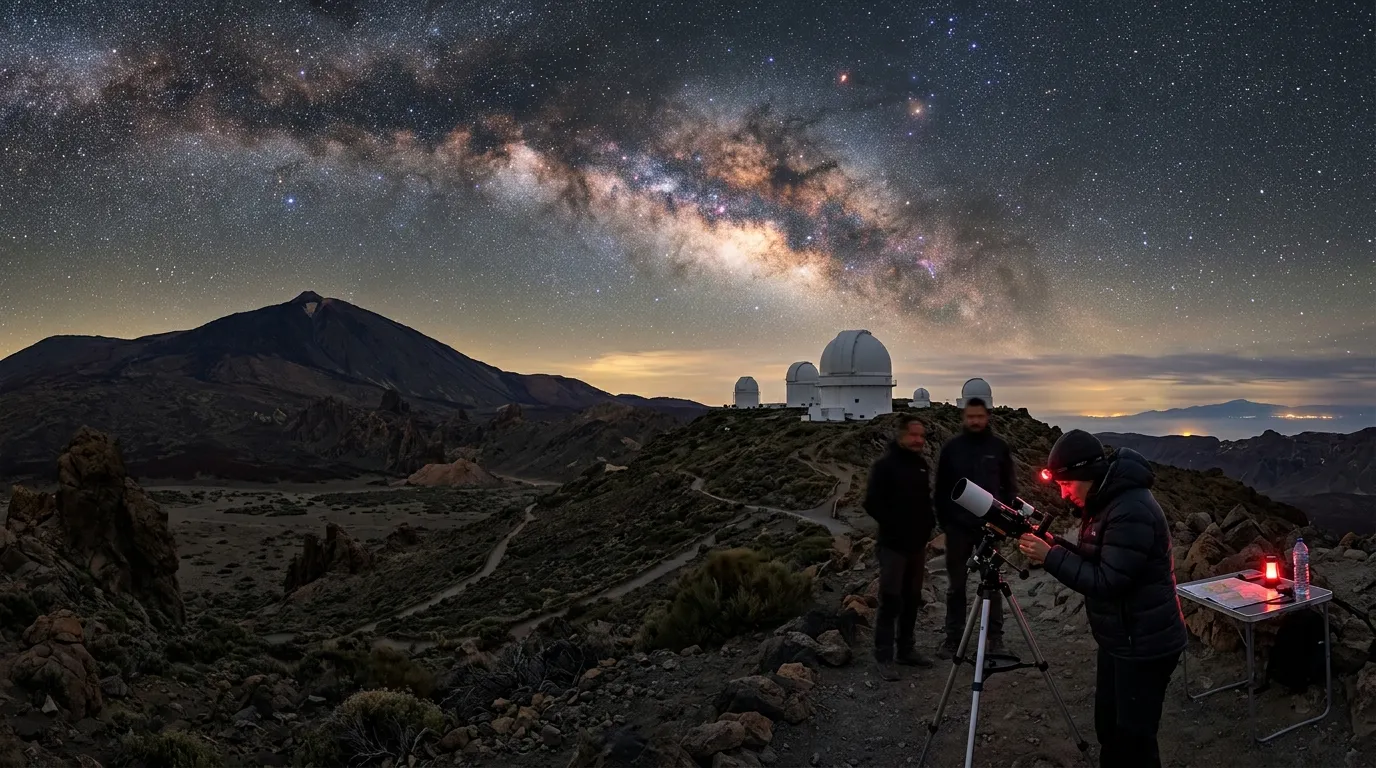

Tenerife's stargazing credentials: the triple crown
Tenerife holds a combination of designations that no other European destination can match. It is the only place on the continent where a UNESCO World Heritage site, a professional observatory operated by the Instituto de Astrofisica de Canarias, and a Starlight Reserve certification overlap on the same mountain.
Start with the UNESCO designation. Teide National Park was inscribed in 2007 under natural criteria, recognizing the volcanic landscape around Pico del Teide (3,718 m)[1]. The park boundary encloses most of the caldera above the cloud line, which means the dark-sky viewing area sits inside a protected landscape. That protection extends to the air above it through the Ley del Cielo (Sky Law), passed in 1988 and given its enforcement teeth by the 1992 implementing regulation (Real Decreto 243/1992), which together restrict outdoor lighting across the island, control flight paths near the observatory, and mandate shielded low-pressure sodium streetlights in all municipalities[2].
Next, the observatory. The Teide Observatory at Izaña (roughly 2,400 m) is not a visitor attraction. It is a working research facility that houses solar telescopes, night-time optical instruments, and atmospheric monitoring stations contributing to global climate records. Having a professional observatory on the mountain means there is an institutional stake in keeping the sky dark. The Oficina Tecnica para la Proteccion de la Calidad del Cielo (OTPC), the Sky Protection Office, enforces the Sky Law with real authority; municipalities that fail to replace non-compliant lighting face enforcement action. This is not decorative legislation.
2,900+
Finally, the Starlight Reserve certification. The Fundacion Starlight, a UNESCO-affiliated body, designated Teide National Park as a Starlight Tourist Destination and a Starlight Reserve. The certification audits sky quality, light-pollution controls, and the availability of astronomy-related tourism infrastructure. Tenerife passed all three.
In practice, what this triple crown means: on a moonless summer night at the caldera, you are standing under a sky that is legally protected, institutionally monitored, and served by enough tour operators that you can book a telescope session with a qualified guide within hours of landing. It is this combination, sky quality with legal backing behind it and a mature industry built to show it off, that separates Tenerife from a dark rural hillside in mainland Europe that happens to have good seeing.
Tenerife vs La Palma: where each one wins
The stargazing rivalry between these two Canary Islands is real, and anyone planning a dedicated astronomy trip needs to understand it before booking a flight.
La Palma wins on raw sky darkness. The island's northern Roque de los Muchachos Observatory sits at roughly 2,400 metres under Bortle 1 skies, the darkest classification on the scale. The island has the world's largest optical telescope, the Gran Telescopio Canarias (GTC), and its light-pollution laws are stricter than Tenerife's. Streetlights on La Palma are almost universally low-pressure sodium, and outdoor advertising illumination is restricted. If your goal is the darkest possible northern-hemisphere sky accessible without a polar expedition, La Palma is the better choice. No debate.
Tenerife wins on infrastructure and accessibility. The island has two airports with direct flights from most major European cities. The cable car to the Teide summit runs daily (09:00-18:40 in summer), the caldera has a state-run hotel inside the national park boundaries, and the stargazing tour market is competitive enough that you can find operators at every price point. La Palma has one airport with fewer direct connections, fewer hotels, and a smaller tour ecosystem. If you want to combine stargazing with a beach holiday -- a real beach, with warm water and resort amenities -- Tenerife gives you that; La Palma does not.
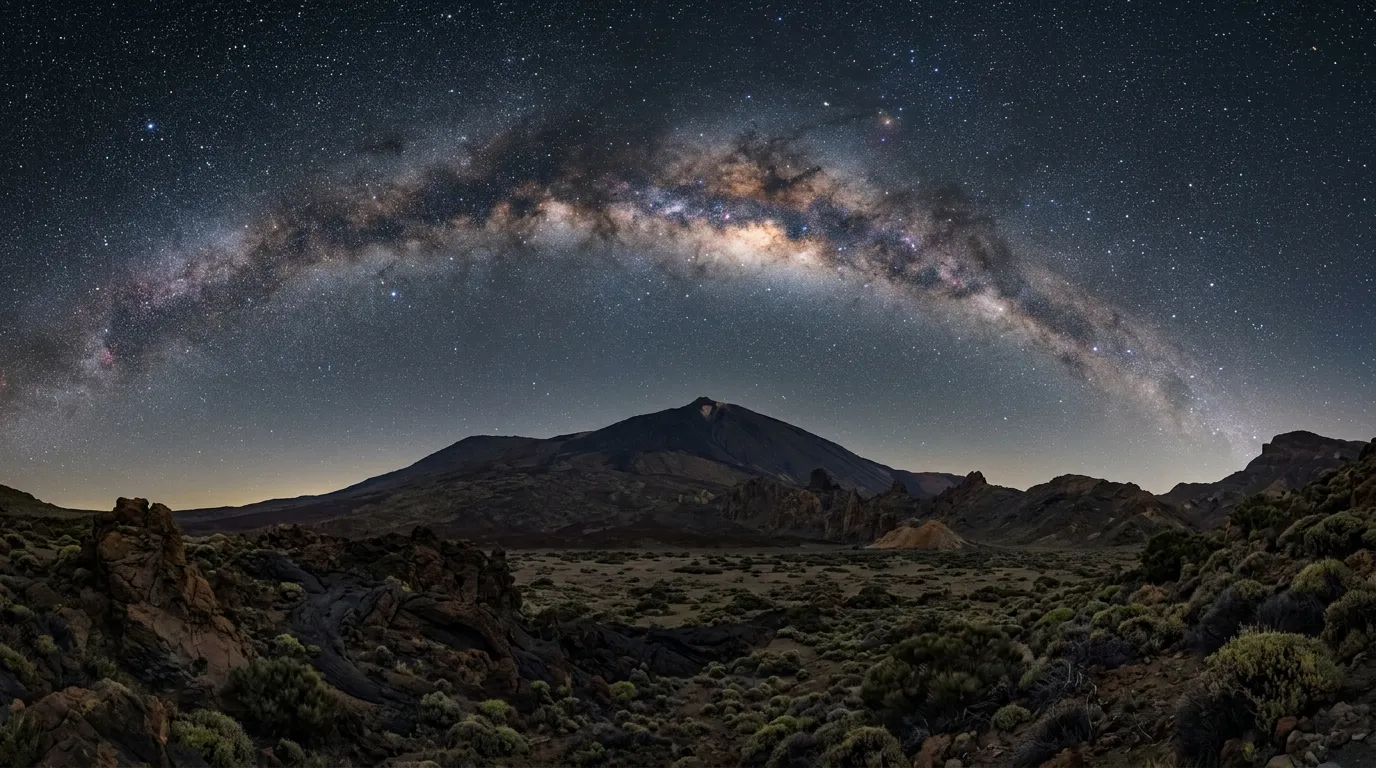
The sky-quality gap is real but often overstated in marketing copy. From the Teide caldera on a moonless night in June or July, the Milky Way core is sharply visible at roughly 30-35 degrees above the southern horizon. The dust lanes in the galactic bulge are distinct. The Andromeda Galaxy is a naked-eye smudge. This is a genuinely good dark sky. It is not as dark as La Palma, but it is meaningfully darker than anything you reach by driving two hours from a European city. For most first-time stargazers and many astrophotographers, the difference between Tenerife's Bortle 3-4 and La Palma's Bortle 1 is theoretical until they have enough experience to notice the faintest objects either sky reveals.
The practical reality: La Palma is a two-and-a-half-hour ferry from Tenerife (Los Cristianos to Santa Cruz de La Palma, operated by Fred. Olsen Express and Naviera Armas). If you fly into Tenerife, spend a week doing beach-plus-stars, and decide you want the purist experience, you can be on La Palma the same afternoon. The two islands work better as complementary destinations than as rivals. Tenerife is the gateway; La Palma is the upgrade.
For a granular comparison of specific viewpoints, the guide to the best stargazing spots in Tenerife walks through which miradores face south for core viewing, which are sheltered from the coastal light dome, and which require summit permits.
Tenerife vs the other Canary Islands
Gran Canaria, Lanzarote, and Fuerteventura each have moments of dark sky worth seeing. But none of them compete with Tenerife as a stargazing destination, and it is worth understanding why before you decide to skip Tenerife for a cheaper flight to another island.
Gran Canaria has a small observatory at the Roque Saucillo astronomical viewpoint, and the interior around Tejeda and Artenara is dark by rural standards. But the island has no professional observatory, no Starlight Reserve, no Sky Law enforcement body, and its tour infrastructure is a handful of small operators running sporadic sessions. The light dome from Las Palmas de Gran Canaria is visible from much of the interior on clear nights.
Lanzarote and Fuerteventura are broadly similar: largely flat, low-altitude islands with dark rural skies that work for casual naked-eye observing. Fuerteventura has a few guided astronomy tours offered by small operators, and the Sicasumbre astronomical viewpoint near La Pared gets used for astrophotography. But the sky is not protected by legislation, there is no professional research observatory, and altitude matters for seeing quality. Both islands peak below 1,000 metres, which means you are always looking through more atmosphere than you would be at the Teide caldera at 2,000-plus metres. The layer of turbulence and particulate haze near sea level degrades clarity in ways that first-time stargazers might not notice but that make a visible difference through a telescope.
Tenerife and La Palma are the only Canary Islands with the altitude, the professional observatories, the light-pollution laws, and the tour infrastructure to justify a dedicated stargazing trip. The other islands are fine for a holiday where you happen to look up on a clear night. They are not destinations you fly to specifically for the sky.
The honest downsides: light pollution, crowds, and Bortle expectations
Tenerife stargazing has real friction points that most marketing copy skips. Acknowledging them upfront matters because the gap between what the brochures imply and what you encounter at the caldera can be large enough to sour the experience.
The Costa Adeje light dome. From the Teide caldera, looking south-west, the glow of Tenerife's largest resort zone is visible on the horizon. It is not subtle. On a humid night with some atmospheric scattering, it extends well above the horizon line and washes out the lowest 10-15 degrees of the southern sky. The Bortle 3-4 rating for the caldera -- not Bortle 1, as some promotional material implies -- reflects this. A Bortle 3 sky is still a very good dark sky: the Milky Way is clearly visible, the zodiacal light is detectable, and deep-sky objects through a telescope show detail. But it is not the «darkest skies in Europe» claim that gets repeated. La Palma holds that title. Tenerife's honest rating is among the best accessible dark skies in Europe for the infrastructure it offers.
Recommended tours
Tours are selected for quality, not commission. I earn a small fee if you book — at no extra cost to you.
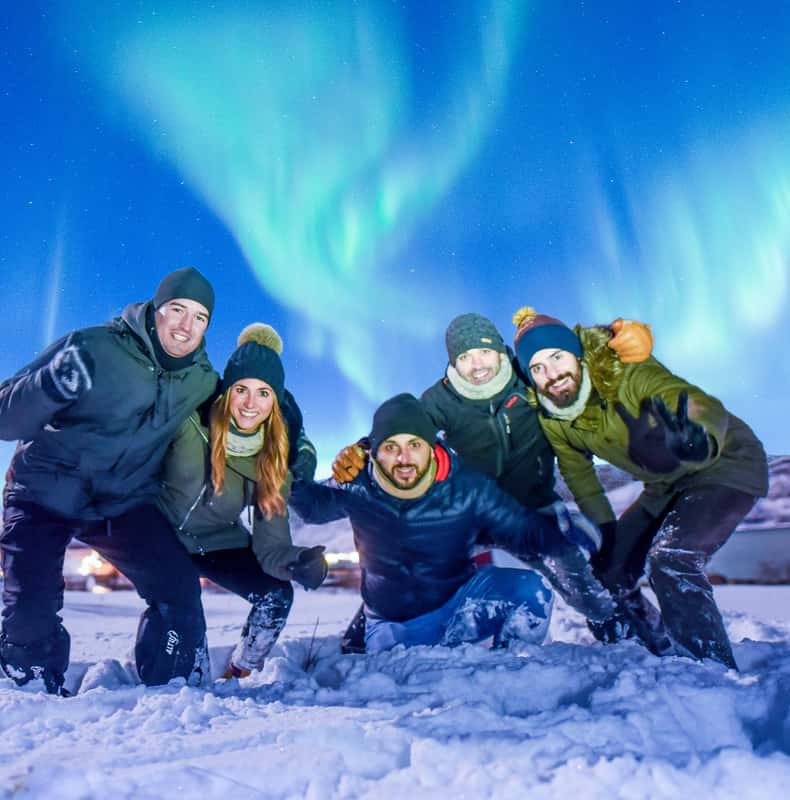
Five million tourists per year. The island's tourism volume means Teide National Park is rarely empty. On a summer new-moon weekend, the roadside miradores along the TF-21 and TF-24 fill with cars, tripods, and guided tour buses. The caldera becomes a social experience. If you want solitude under the Milky Way, Tenerife in July is the wrong combination of destination and month. May and September are quieter but still have good core visibility; November through March, while lacking the Milky Way core, give you the mountain nearly to yourself.
Read next · Article
Best Time for Stargazing in Tenerife
Tenerife stargazing peaks Jun-Jul with 99% clear skies. Trade winds, moon phase, and snow shape the real calendar. Month-by-month planning for the best windows.
The other logistical reality worth stating: road access can close. The TF-21 and TF-24 are well-maintained but subject to winter snow closures and occasional calima-related restrictions. The summit access permit for the final ascent to Pico del Teide is limited to 200 permits per day and regularly sells out days in advance during peak season[3]. If you book flights without checking permit availability, you can find yourself locked out of the summit entirely.
Tour quality varies. The competitive stargazing tour market on Tenerife is a genuine advantage, but it also means there is a wide range of quality. Some operators use large-aperture telescopes with qualified astronomy guides; others run bus tours with a laser pointer and a pair of binoculars. Reading recent reviews, checking whether the guide has an astronomy background rather than a tourism script, and booking a tour that matches your experience level (a complete beginner needs a different session than an intermediate astrophotographer) are real steps worth taking before you book.
For a comprehensive look at tour formats and what to expect from a guided session, the guide to the best time for stargazing in Tenerife includes the seasonal calendar and moon-phase planning that determines how dark the sky actually is on any given night.
The verdict: who Tenerife stargazing is for
Tenerife is worth the trip for a specific kind of stargazer, and it is a poor fit for another. The distinction matters more than the marketing.
Tenerife is for you if:
- You are a beginner who wants to see the Milky Way clearly for the first time through a telescope, with a guide who can explain what you are looking at. Tenerife's guided tour infrastructure is the best in Europe for novice stargazers. Book a session, show up, and the tour handles everything from telescope setup to constellation identification.
- You are traveling with family or a partner who is not a dedicated stargazer. The island works as a combined beach-plus-stars holiday. Your partner gets the pool, the paella, and the sunset over Los Gigantes; you get the caldera at night. That combination is hard to replicate elsewhere in Europe for the same cost and flight time.
- You want a gateway dark-sky experience that gives you a real taste of Bortle 3-4 skies without committing to a multi-leg journey to a remote observatory. Direct flights from London, Madrid, Berlin, and Amsterdam land at Tenerife South Airport in four to five hours. From the airport to the caldera is a 45-minute drive.
- You are an intermediate astrophotographer who has worked dark rural skies and wants to test your setup under better conditions before investing in a trip to La Palma or the Atacama. Tenerife at the caldera gives you 300-plus clear nights per year, the galactic core at 30-plus degrees altitude from April through September, and enough tour operators renting equatorial mounts that you do not need to bring your own tracking equipment[4].
Tenerife is not for you if:
- You are a purist chasing Bortle 1. Book the two-and-a-half-hour ferry to La Palma instead. The sky darkness difference is real, and a purist who arrives on Tenerife expecting La Palma conditions will spend the night frustrated by the southern light dome.
- You need solitude. The caldera on a new-moon summer night has dozens of other people doing the same thing you are. If you want to be alone under the stars, pick a winter date or choose a destination with lower visitor volume.
- Your budget is tight. Tenerife is a mainstream holiday island, and prices for accommodation, car rental, and tours reflect that. A dedicated stargazing trip with rental car, accommodation near the park, and guided tours runs comparable to a mid-range beach holiday. If you are counting euros and simply want a dark sky, a rural campsite in the Spanish interior gives you that for less, even if the sky quality is lower.
Featured · Destination
Tenerife Stargazing
Tenerife stargazing guide: Teide National Park's UNESCO Bortle-2 skies, 83 constellations visible. Observatory visits from €21, Parador hotel, and best tours.
For accommodation options inside or near the park, the best lodges for stargazing in Tenerife compares the Parador inside the caldera against hotels in Vilaflor, La Orotava, and the southern coast -- with honest notes on which properties have light pollution of their own.
Decision matrix: Tenerife vs La Palma vs Atacama
The table below compares Tenerife against the two destinations it gets measured against most often: La Palma, the immediate alternative in the same archipelago, and the Atacama Desert, the global benchmark for stargazing infrastructure in the southern hemisphere. The comparison is not about which destination is best in absolute terms -- it is about which one matches what you are actually looking for.
If you already know you want Bortle 1 skies, La Palma and the Atacama are on the table; Tenerife drops out. If you need direct flights from a major European hub and a combined beach holiday, Tenerife is the only option on this list. If money is no object and you can handle altitude, the Atacama gives you the darkest skies of the three and a landscape that justifies the trip on its own. The right answer is the one that fits your constraints.
| Factor | Tenerife | La Palma | Atacama |
|---|---|---|---|
| Sky darkness | Bortle 3-4 | Bortle 1 | Bortle 1-2 |
| Core altitude | 30-35 degrees | 30-35 degrees | 60-70 degrees |
| Clear nights/year | ~300 | ~250 | 330+ |
| Direct flights from EU | Yes, major hubs | Limited | No (via Santiago) |
| Tour infrastructure | Extensive | Moderate | Good, concentrated |
| Beach + stars combo | Excellent | Poor (black sand, cold water) | None |
| Altitude (viewing area) | 2,000-2,400 m | 2,400 m | 2,400 m |
| Best for | Beginners, families, combined holiday | Purists, astrophotographers | Dedicated stargazers, landscape photographers |