
When to go: season, the Milky Way, and how many nights to book
83 of 88
Where to stargaze: the mountain versus the coast
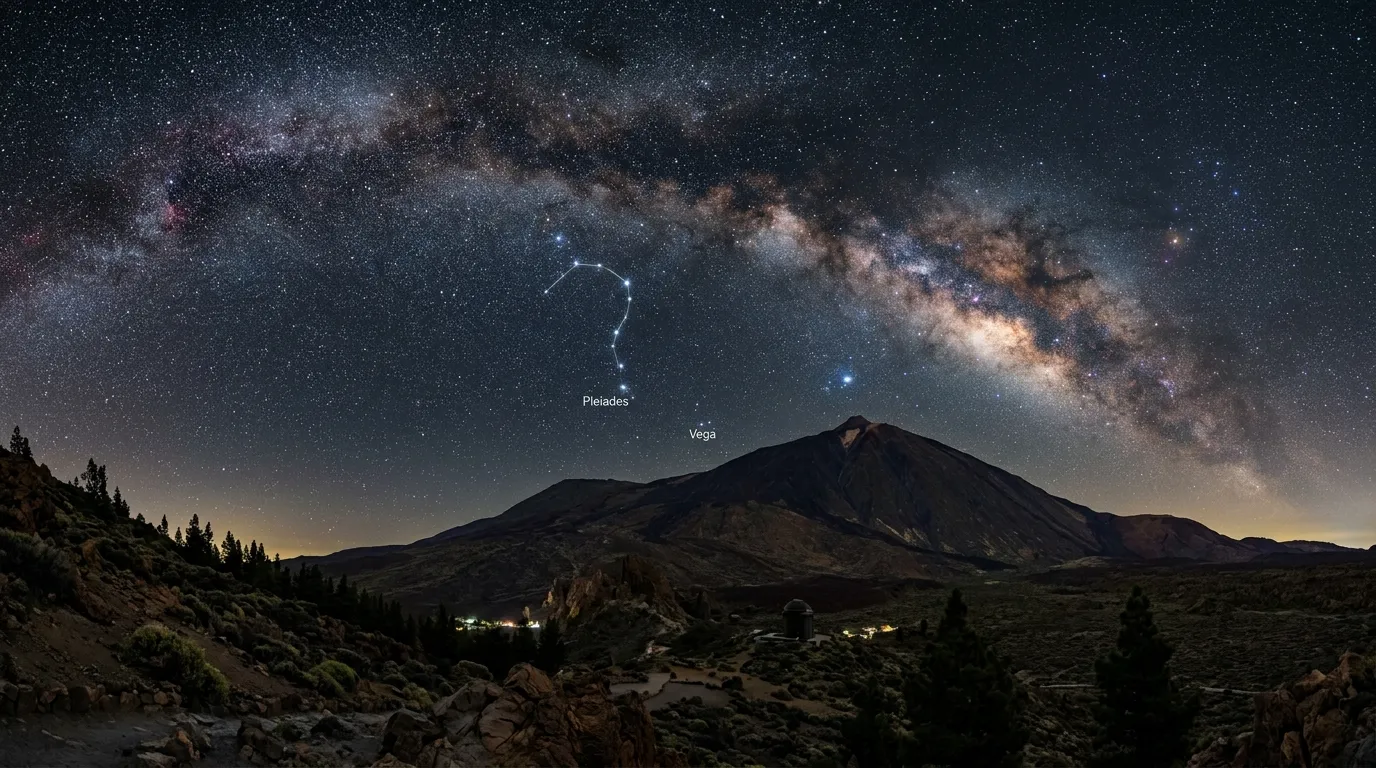
The best stargazing spots in Tenerife are all inside Teide National Park, above the trade-wind inversion layer at roughly 1,600 metres. Below that line, clouds and light pollution from coastal resorts degrade the sky significantly. The four main sites:
- Cable car base station (2,356 m): the highest paved access point, with a large parking area and toilets. Faces south, ideal for Milky Way core viewing in summer. The most popular independent stargazing location on the island.
- Roques de García: the iconic rock formations about ten minutes from the Parador, easily accessible from the TF-21. Good foreground for astrophotography and reasonably sheltered from wind.
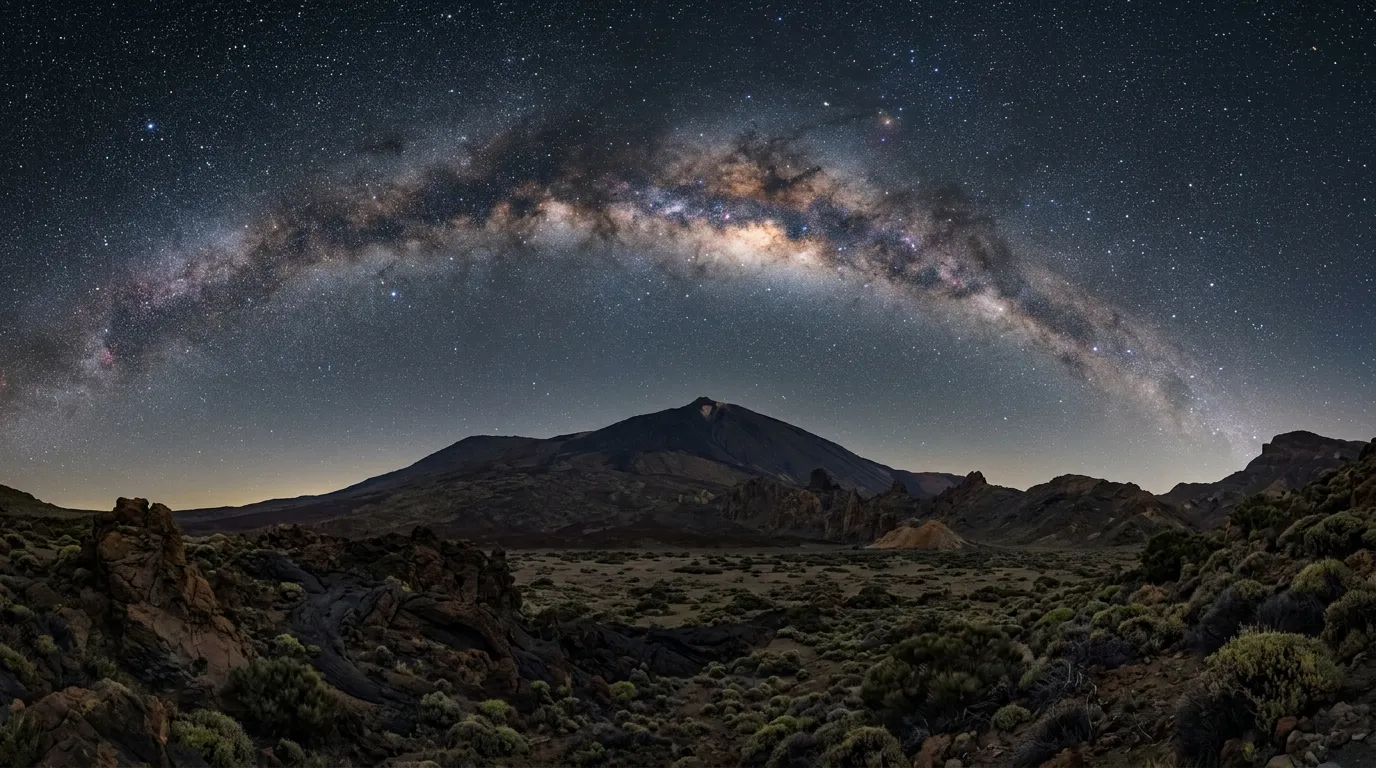
- Llano de Ucanca: the broad flat plain visible from the TF-21, offering wide open horizons in all directions. Bring a tripod that resists wind; the caldera funnels gusts across this exposed basin.
- Montaña Blanca trailhead: the starting point for the summit ascent, at roughly 2,350 metres. Quieter than the cable car base, with a clear southern exposure and fewer tripods set up around you.
Featured · Destination
Tenerife Stargazing
Tenerife stargazing guide: Teide National Park's UNESCO Bortle-2 skies, 83 constellations visible. Observatory visits from €21, Parador hotel, and best tours.
Tours, gear, and whether you need a telescope
What to bring for a night on the caldera:
- A down jacket: non-negotiable year-round. Even in July, the caldera floor drops to 10°C by midnight, and wind makes it feel colder.
- A windproof outer layer: the caldera funnels gusts across the open terrain, and standing still for two hours amplifies the wind chill.
- A red headlamp: white light kills dark adaptation in seconds and will earn you hard looks from anyone else set up nearby. Red preserves your night vision.
- Insulated boots: trainers lose heat through the sole on cold volcanic rock within twenty minutes. Winter nights demand insulated, waterproof boots.
- Binoculars (optional): a compact 10x50 pair adds more than most people expect.
- Water: the air at 2,000 metres is dry, and you will dehydrate faster than you notice.
The observatory, the temperature, and what the night actually feels like
Recommended tours
Tours are selected for quality, not commission. I earn a small fee if you book — at no extra cost to you.
Read next · Lodge
Parador de Las Cañadas del Teide
Only hotel inside Teide National Park at 2,150 m with on-site observatory. Bortle 2 skies, Milky Way photography at Roques de García, cable car 2 km away.
Tenerife or La Palma: which island does what better
| Factor | Tenerife | La Palma |
|---|---|---|
| Sky quality | Bortle 1-2 on the caldera; slight coastal glow visible to the south | Bortle 1 across the observatory ridge; the darkest protected sky in Europe |
| Light-pollution law | Ley del Cielo (passed 1988, implementing regulations from 1992); sodium streetlights island-wide, airport and port zones exempt | Ley del Cielo, enforced more strictly; full island-wide sodium lighting, no exemptions for coastal zones |
| Road access | Wide, well-maintained TF-21 and TF-24; manageable after dark in a standard rental | Narrow, steep switchbacks (LP-4, LP-4032); slow going at night, some sections unlit |
| Accommodation | Parador inside the park plus dozens of hotels on both coasts; Vilaflor and La Orotava as practical bases | Fewer options near the observatory ridge; most hotels are in Santa Cruz or Los Llanos, 45-60 minutes from the summit |
| Daytime activities | Beaches, whale watching, hiking, water parks, two airports with European connections | Hiking (Caldera de Taburiente), quieter beach towns, one small airport; better suited for a single-focus trip |
| Cost (tours) | €42-77 for guided stargazing; more competition keeps prices lower | Tours typically start higher; fewer operators and lower overall volume |
Putting it together: a practical checklist
- Pick the right month: May through September, with June and July providing the highest clear-night probability and the best Milky Way core altitude. Avoid December through March unless you are specifically after winter constellations and are prepared for near-freezing temperatures at altitude.
- Plan for three to five nights on or near the caldera. Fewer than three and you are gambling on weather; five gives you time for hiking and a daytime observatory tour alongside your night sessions.
- Reserve your summit access permit at least a week in advance if you want to climb beyond the cable car station. The caldera floor and roadside miradores need no permit.
- Pack properly: down jacket, windproof layer, insulated boots, red headlamp, and water. Binoculars and a camera tripod are worth bringing if you have them. Leave the telescope at home unless you specifically want to use your own equipment at altitude.
- Decide on tours early: a guided session costs €42-77, provides a telescope and instruction, and handles transport. Going independently costs nothing beyond fuel and gives you total flexibility on timing and location. Both approaches work; pick the one that matches how you like to travel.