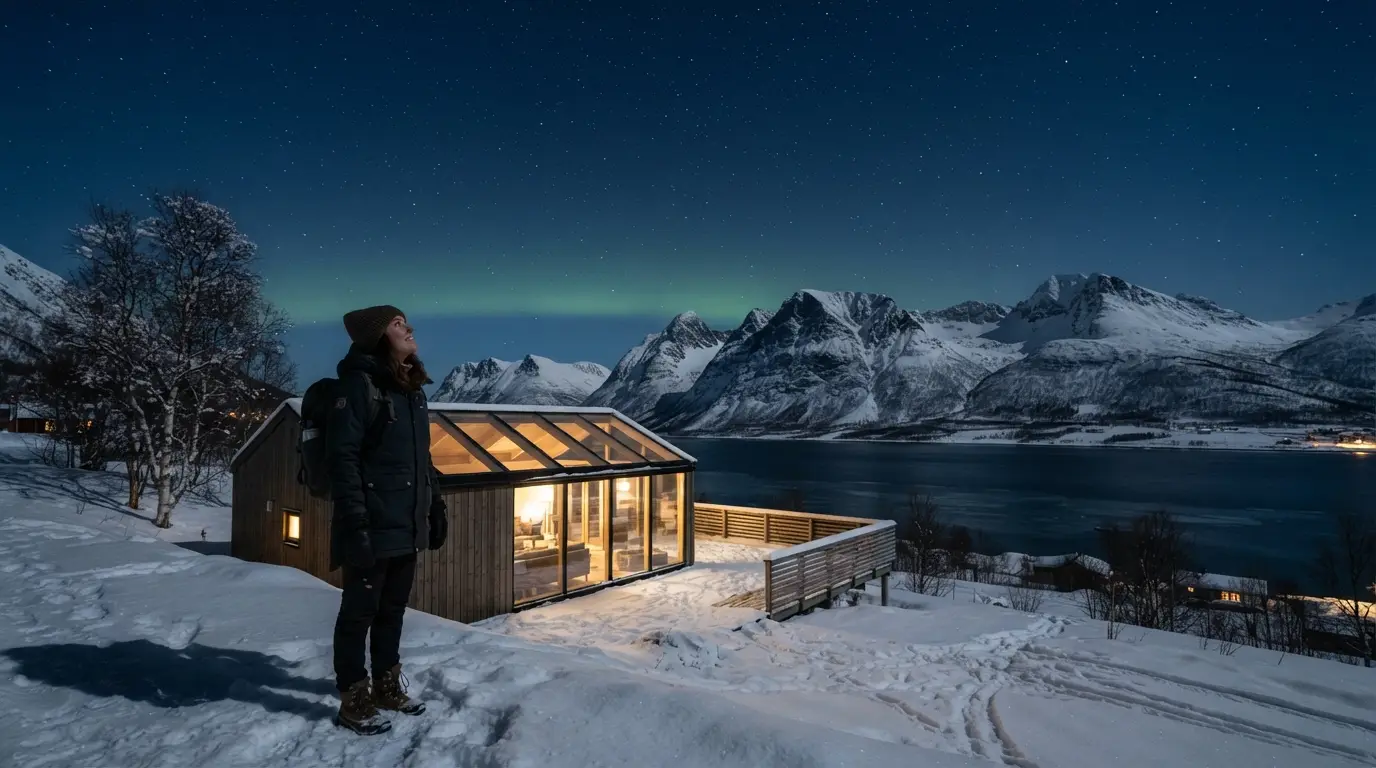

Why Arctic Norway is the trip I keep not booking
My three real dark-sky trips share one thing in common: none of them had any chance of aurora. The Atacama altiplano in Chile, NamibRand in Namibia, and Merzouga on the edge of the Sahara are all Milky Way deserts, all southern or low-latitude skies. Tromsø is the trip I announce every autumn and then quietly don't book, and I've stopped pretending the reason is money or annual leave.
The real reason is discipline, and it's an uncomfortable one to apply to myself. I tell readers not to lock in a Kp-chasing trip a year ahead on an average; then I do exactly that whenever I'm the one filling in the spreadsheet. So this is the honest version, not a guide dressed up as a plan, but the actual itinerary, priced three winters running, and the specific thing I'm still waiting on before I book a fourth time.
The Tromsø destination guide already covers the auroral oval geometry and the Kp 2 threshold that makes this city one of the more forgiving aurora locations on Earth. What it doesn't cover is this: the trip I've actually built, three times, and keep rebuilding instead of buying.
I keep landing on Tromsø over Abisko, the other Arctic town on my own wishlist, mostly for logistics rather than sky quality: more direct flight options, an airport close enough to the city that a delayed connection doesn't wreck the first night, and a real choice of lodging once I get there instead of one or two operators controlling the whole market. That's a planning decision, not a claim about which sky is better, since I have no first-hand basis to compare them.
Timing it to Solar Cycle 25, and the number nobody agrees on
The whole plan hangs on one variable: where we actually are in Solar Cycle 25. That's a data question before it's a booking question, so I've tried to nail it down properly rather than take the first headline I found.
The official prediction
NOAA's Solar Cycle 25 Prediction Panel put the official forecast at a solar maximum around July 2025, plus or minus eight months, with a peak smoothed sunspot number of 115, describing a cycle that would be "average in intensity and similar to Cycle 24"[1]. The same panel placed the preceding solar minimum around April 2020, which puts the entire ascending phase, rising solar and geomagnetic activity, running from 2020 through that predicted peak[4]. On that reading, 2026 still sits inside or just past the window of elevated activity, which is the version of the story most Tromsø planning pages, including this site's own destination guide, currently repeat. A peak smoothed sunspot number of 115 is itself a modest figure by historical standards, roughly on par with the cycle before it rather than an exceptional one, which is worth remembering before any headline promises an unusually spectacular season on the strength of the word "maximum" alone.
The disagreement I can't resolve
Except some more recent tracking suggests the real peak may already have passed, and run hotter than the panel expected. I went looking for a firm date on NOAA's own solar-cycle progression page and couldn't confirm one directly, only secondary aggregation repeating a figure I can't verify at the source. So I'm not going to print a specific month here as settled fact.
What I can tell you is that forecasters disagree by close to a year on where the top of this cycle actually sat, and both readings point the same direction for my own booking. If the earlier, hotter peak is right, activity is already sliding down the far side of the curve, which argues for going soon rather than waiting for a maximum that's already behind us. If NOAA's later window holds, the elevated stretch simply runs longer, and next winter is still solidly inside it. Either way, the answer is not "wait for Cycle 26."
For the mechanics of how a Kp reading at Tromsø's latitude turns into an actual sighting, the Kp index explained guide is what I'd send anyone to before they read a solar-cycle headline as a promise. The site's aurora season calendar tracks the year-to-year picture across every destination we cover, a more useful long-range view than chasing one cycle's exact peak month.
The 8-night rule, and why I won't book less
I tell readers never to book a single aurora night, and I'd be a hypocrite to plan my own trip around one. Tromsø's coastal weather changes fast: sunny one afternoon, a snowstorm rolling through by evening[5]. That's the practical, unglamorous reason multi-night trips beat single-night gambles. A week gives you three or four chances to be under clear sky when the Kp cooperates; one night gives you a single roll of the dice against weather that has no interest in your itinerary.
My own rule is 8 nights minimum, a night longer than the 4-night minimum this site recommends to readers, because I'm not local and I don't plan to do this twice. It buys margin against two or three consecutive clouded-out nights, which happens most winters at least once, without stretching the trip into a second week I'd have to justify against everything else on my calendar.
Featured · Destination
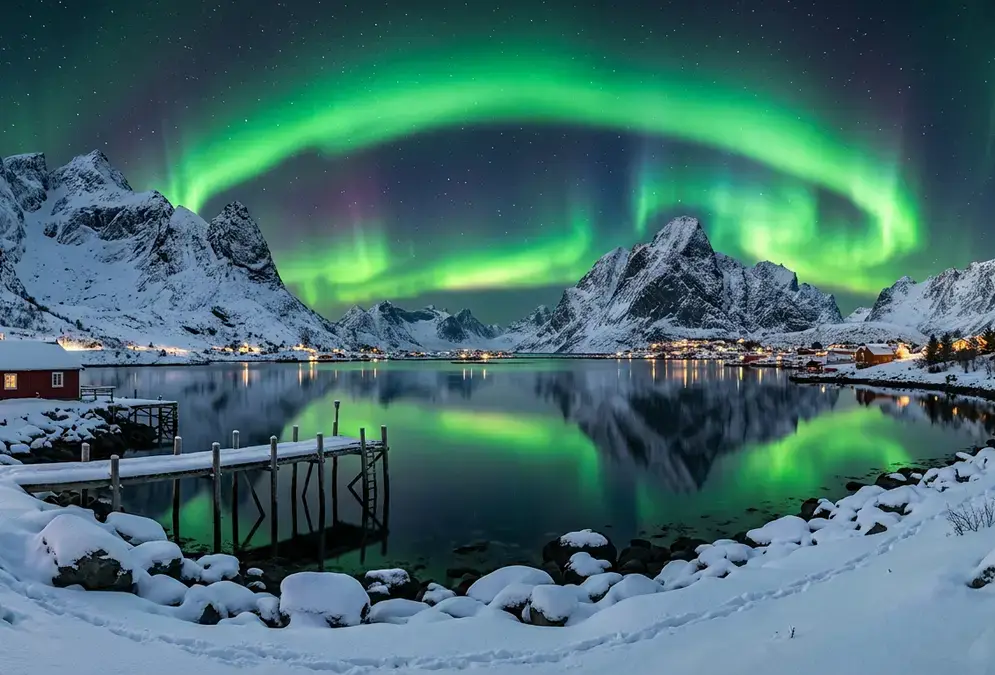
Northern Lights in Tromsø
At 69.6°N inside the auroral oval, Tromsø sees aurora at Kp 2. Peak season November–February. Best viewing spots, tour advice, and aurora forecast strategy.
Part of that margin is geography, not just duration. Skibotn, in the Lyngen fjord area roughly two hours from Tromsø and shielded by the Lyngen Alps, often clears when the coast doesn't[6]. That's the entire logic behind splitting the week rather than sitting in one place and hoping the sky cooperates where I happen to be standing.
The 4-night figure I quote to readers comes from balancing trip cost against diminishing returns: enough nights to survive a couple of clouded-out evenings, not so many that the marginal night stops paying for itself. My own 8-night version isn't twice as cautious for no reason, it's the number that still lets me split the week between two microclimates instead of committing every night to one location's weather.
The shape of the week: Tromsø, then Lyngen, then Tromsø again
The itinerary I keep redrawing has the same shape every time: two nights in Tromsø city to land and adjust to the time zone, then the bulk of the week out in the Lyngenfjord dark, then a last city night before the flight home. On the 8-night version, that's roughly two nights city, five nights Lyngen, one night back in the city, with a day either side eaten by travel and recovery from jet lag. It mirrors the same city-vs-outside tradeoff this site argues through for every reader; I'm just applying it to myself instead of recommending it from a distance.
| Lodge | Style | What would decide it |
|---|---|---|
| Aera Panorama Glass Lodge | Glass-roofed cabins, aurora visible from bed | Skip the 2 a.m. scramble to get dressed |
| Aurora Fjord Cabins Lyngen | Standard cabins, closer to the water's edge | Prefer the wider open sky over convenience |
The bookend nights
For the city nights, Radisson Blu Tromsø is the practical bookend: central, no driving required, an easy shuttle from the airport. It's not where the aurora happens, at Bortle 5 to 6 the city sky suppresses anything below a strong display, but it's where I recover from a transatlantic or transcontinental flight and where I'd rather be for a last night of packing than out in the fjord dark. It also means the one leg of the trip where I don't need a hire car or a transfer booked in advance, which matters when everything else on the itinerary depends on driving out and back on unfamiliar winter roads.
The Lyngen stretch, still undecided
The Lyngen stretch is where the spreadsheet stalls every time. The drive out is real either way: about 2.5 hours from Tromsø, whether by the ferry-and-road route (86 km) or the longer all-road option around the fjords (186 km)[2]. Wherever I land needs to earn that drive, and I haven't picked between the two options on my own shortlist. For where to actually stand once I'm out there, best aurora spots in Tromsø covers the specific pull-offs and viewpoints better than I will here. Whichever lodge wins, the deciding factor in the end will probably be availability on the actual week I book, not a preference I can resolve on paper months in advance.
Tours: the one night I'd actually book
I wouldn't book a guaranteed-sighting aurora tour for this trip, and that isn't me being precious about doing it myself. No operator controls cloud cover or the Kp index, and a guaranteed sighting promise for a natural phenomenon is marketing, not a service. A minibus chasing tour, small group, real-time forecast monitoring, driving toward clear skies, runs €108–180 per person[7]. That's money I'd rather put toward another night than a promise nobody can actually keep.
Recommended tours
Tours are selected for quality, not commission. I earn a small fee if you book — at no extra cost to you.

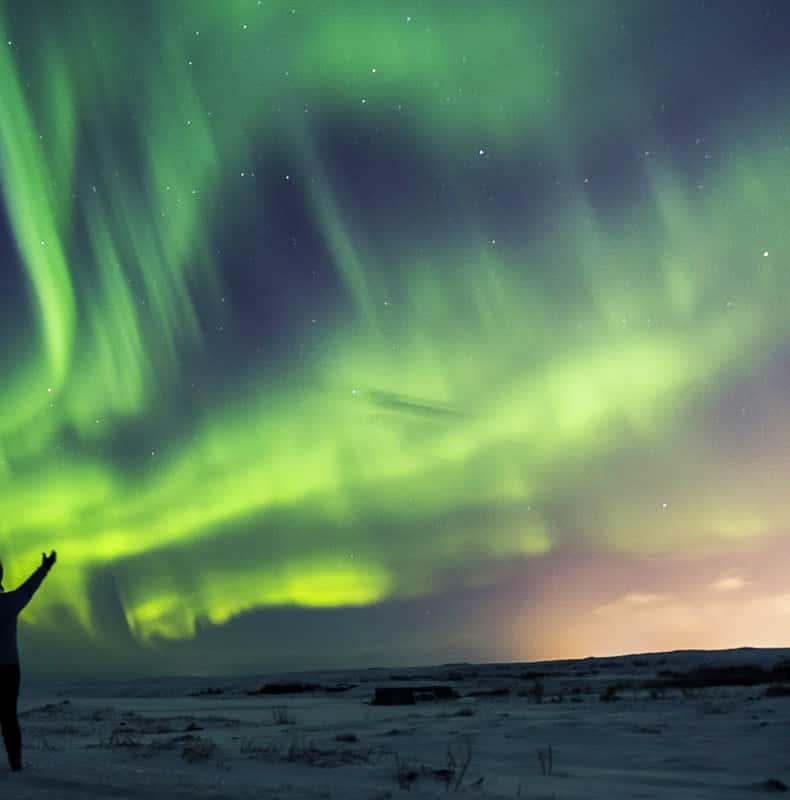

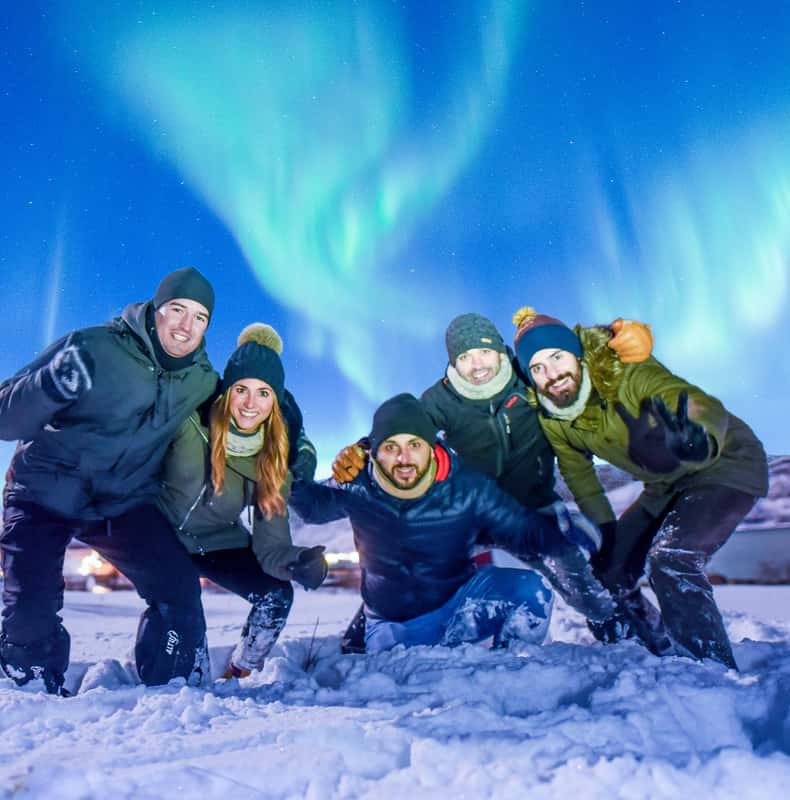
Where a tour earns its place is mobility, not certainty. I'd book one night with a chase tour, a guide who can drive toward clear sky if my own base clouds over, which matters most on the nights I'm out in Lyngen without a car and without a local's read on the weather. One night of insurance against a bad local forecast, not the whole week's plan, and at €108–180 for that single night[7] it's a cheap trade against losing an entire evening to a bank of cloud I can't see past from a fixed cabin. It also solves a problem a self-drive itinerary can't: knowing which direction to point the car when neither the Tromsø forecast nor the Lyngen one looks promising, which is exactly the judgment call a local guide gets paid for.
Featured · Article
What Is Astrotourism? The Complete Beginner's Guide
Astrotourism means travel built around dark skies: meteor showers, auroras, the Milky Way. What it means, where to go, and how to plan your first trip.
If I do book that night, it won't be a last-minute call. Peak season, December through February, is worth booking roughly 4–6 months ahead[8]; shoulder-season trips in September or October can usually be arranged closer to the date, sometimes just 2–4 weeks out.
What it actually costs, and why I still haven't booked
A mid-range week in Tromsø for two people, including flights, accommodation, food, and one paid activity, runs roughly €1,800–2,200[3]. Call it €900–1,100 per person all-in[3], the figure I scale up when I stretch a 7-night quote into my own 8-night rule.
Don't book a year out on a Kp average
A solar-cycle prediction tells you the odds are decent across a whole season, not that any single week will deliver. I wait until the seasonal forecast for that specific winter is close enough to firm before locking in flights, rather than booking a year ahead against a cycle-wide average.
The math on the spreadsheet
Add roughly an eighth on top of the 7-night base for the extra Lyngen night, one chase-tour night at €108–180 per person[7], and the two shortlist lodges' own published rates on top of the baseline, and the total lands somewhere I can afford most winters. Flights are already folded into that baseline, but they're the part of it that moves: origin and season swing the fare more than anything else in the trip. Across the three winters I've priced this out, the lodging-and-food side of the spreadsheet has stayed roughly stable; the total shifts almost entirely because of the flight quote, which is exactly the kind of variable that punishes booking a year ahead on a guess. Cost was never really the reason I haven't booked.
The one number I'm actually waiting on
The real reason is the same timing discipline I'd tell a reader to apply to their own Kp chasing: I want that specific winter's seasonal forecast to firm up before I commit a year out blind. Booking now, against a season nobody can forecast precisely yet, means betting on a cycle-wide average instead of a real forecast for that actual week. What would flip me from planning to booking is simple: a seasonal outlook for the coming winter, published close enough to the season that it's forecasting weather and Kp trends rather than restating the solar-cycle average I already know. I'd rather wait for the point where that forecast and the flight price both make sense, and book then, which is the honest reason this trip has stayed "next winter" for three winters running. If this is the winter the seasonal outlook finally lines up with the flight price, I'll say so here rather than quietly update the itinerary and let the old version stand.